
The first time I tried to plug into Chicago's founder world, I did what everyone tells you to do. I went to the events, collected the name tags, and had the same thin conversations with people who were clearly waiting to talk to someone else.
That approach wastes time.
Chicago rewards proximity, but not the fake kind. You do not need a bigger stack of business cards. You need a tighter circle of operators who will tell you when your pricing is off, your pitch is forgettable, or your runway problem is about discipline, not luck.
I wrote this as an operator's guide to Chicago's startup scene. I want to show you who matters, why they matter to you, and how I would approach this city if I were building from scratch again. That includes practical ways to connect, not just names to recognize. It also includes where my community, Chicago Brandstarters, fits if you want honest conversations instead of performative networking.
Chicago has real depth. You can build here, hire here, and find serious customers here without copying a Bay Area playbook that was never built for your business. The hard part is not access. The hard part is choosing the right rooms, the right companies to study, and the right people to learn from before you burn months on the wrong network.
That's what this guide is for.
1. Chicago Brandstarters
A founder told me over dinner that he got more useful advice in 90 minutes with seven operators than he had in six months of bouncing around Chicago events. I believe it. If you're early, stuck, or tired of polished small talk, I'd start with Chicago Brandstarters.
It's a free community for Chicago and Midwest founders building brands from idea stage to seven figures. The format is the point. Small private dinners every two weeks, usually 6 to 8 people, plus an active group chat where people trade blunt feedback, introductions, and actual help. That's a better setup than another room full of people scanning name tags.
I recommend it first because access is not your real problem. Signal is.
A lot of founder groups get diluted fast. Service providers flood in, everyone starts selling, and the conversations get careful and boring. Chicago Brandstarters avoids that with identity verification, LinkedIn vetting, and a culture of confidentiality. You get a room where people can admit what's broken and get useful answers.
Practical rule: If a founder community doesn't protect candor, you'll get polished stories instead of advice you can use.
The group is led by Kevin Tao, a co-founder of Chicago Brandstarters and founder of Litter Caterpillars, the first and only trash pickup group to clean up all 50 wards of Chicago. I care about that because communities reflect the operator running them. You want someone who builds in public, does real work, and attracts founders who do the same.
Chicago is deep. Analysts at Dealroom report that the city has 50 unicorns and a combined enterprise value of $256 billion. The hard part is finding the rooms where people will tell you the truth. That's where this community earns its spot in an operator's guide to Chicago. It helps you skip the performative stuff and get closer to founders who can sharpen your thinking.
What you actually get
Chicago Brandstarters is free. Take the free option seriously when the quality is this high.
Here's why I think it works:
- Small dinners: Recurring conversations with 6 to 8 founders beat random one-off introductions.
- Operator-led perspective: Kevin Tao has built companies himself, so the advice comes from experience, not recycled posting.
- Filtered membership: Identity checks and LinkedIn vetting cut down the usual noise.
- Better next steps: As members grow, they get pointed toward stronger-fit programs and communities.
The member feedback is practical, which I like. Charlotte Trecartin says it “helped me strengthen my network.” Nathan Czuba says it “helped me solve some problems in my business.” Kevin Du says “the reservoir of experience has provided me with essential advice.”
If you're building in software, ecommerce, or services, this is a strong first room. If you're also in a regulated category, pair founder support with real security discipline early. Affordable Pentesting for HIPAA is worth a look if protected health data is anywhere near your roadmap.
If you want a broader list of Chicago tech startups worth studying, keep reading. If you want a founder circle that saves you months of wasted meetings, Chicago Brandstarters is my pick.
Website: Chicago Brandstarters
2. Tempus AI
Tempus AI is what I point to when someone says Chicago can't produce serious tech companies. It builds AI-powered precision medicine tools and testing products for providers and life science teams. If you're building in health, diagnostics, oncology, cardiology, or anything regulated, pay attention.
The company gives you a useful model. It didn't stop at “we have data.” It turned clinical, molecular, and imaging data into products buyers can use. That's a different game from making a slick demo.
What founders can learn from Tempus
I like Tempus because it plays a hard game. Healthcare is messy, slow, and loaded with compliance work, but that's exactly why the moat can get real if you execute.
Its stack includes multimodal data, clinical decision support, and provider tools that fit into existing workflows. If you're browsing more Chicago tech startups worth studying, Tempus belongs near the top of your list because it shows how to build where sales cycles are long and trust matters.
In healthcare, speed alone won't save you. Workflow fit and compliance discipline matter more.
You should also be realistic. Tempus is an enterprise-style company. Pricing is quote-based, integration work can drag, and healthcare deployments don't move at ecommerce speed. If your team gets impatient when a pilot takes forever, don't copy this playbook blindly.
One more practical note. If you're handling protected health information or touching healthcare systems, security isn't optional. I'd budget for security work early, including Affordable Pentesting for HIPAA if you need outside validation.
Website: Tempus AI
3. project44
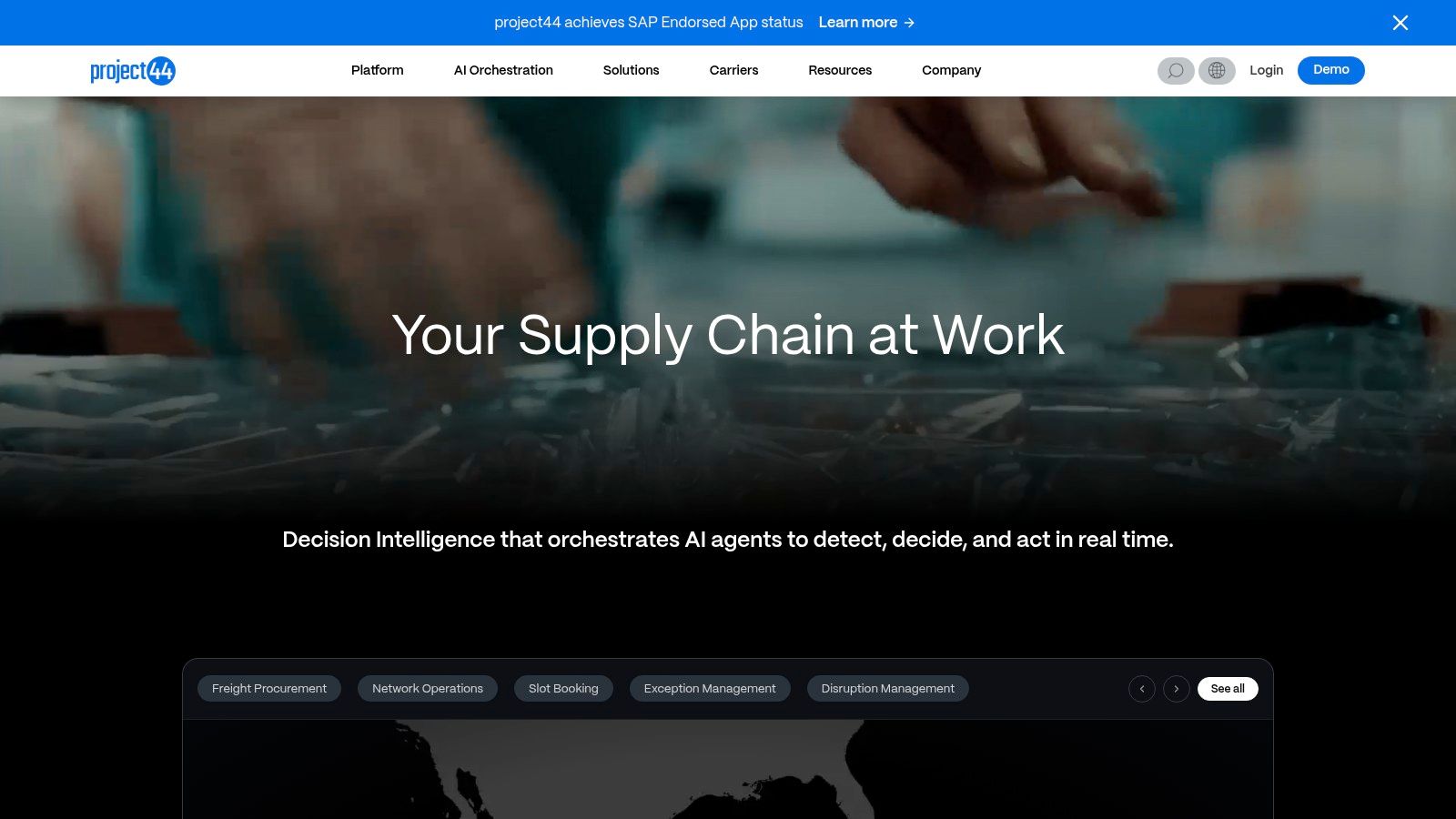
If you sell physical goods, late shipments can wreck trust faster than bad ads. That's why project44 matters. It gives shippers real-time visibility across parcel, LTL, FTL, ocean, rail, and air, then layers in predictive ETAs and exception management.
It functions as an air traffic control tower for freight. Your packages are moving through different carriers and systems, and project44 tries to put that chaos on one screen.
When I'd use it
This is not for the founder shipping a few boxes from a garage. This is for teams with supply chain complexity, multiple modes, and enough volume that one missed handoff can ripple through customer support, inventory planning, and retail relationships.
Chicago is a natural home for this category. The city has deep freight and logistics DNA, and project44 sits right in that lane. If supply chain is turning into your bottleneck, this guide to best practice supply chain management is a smart next read.
Here's the honest operator view:
- Best fit: Mid-market and enterprise shippers with real logistics complexity.
- Big upside: One platform across multiple transport modes is cleaner than stitching together carrier portals.
- Real downside: Pricing is enterprise and quote-based, so small brands will feel the pain.
- Watch-out: ETA and notification quality can vary by deployment, so test instead of assuming.
If your ops team still chases shipment answers across email threads and carrier dashboards, you don't have a visibility stack. You have a scavenger hunt.
For startup companies in Chicago that touch freight, retail, or B2B operations, project44 is one of the names I'd know cold.
Website: project44
4. ShipBob
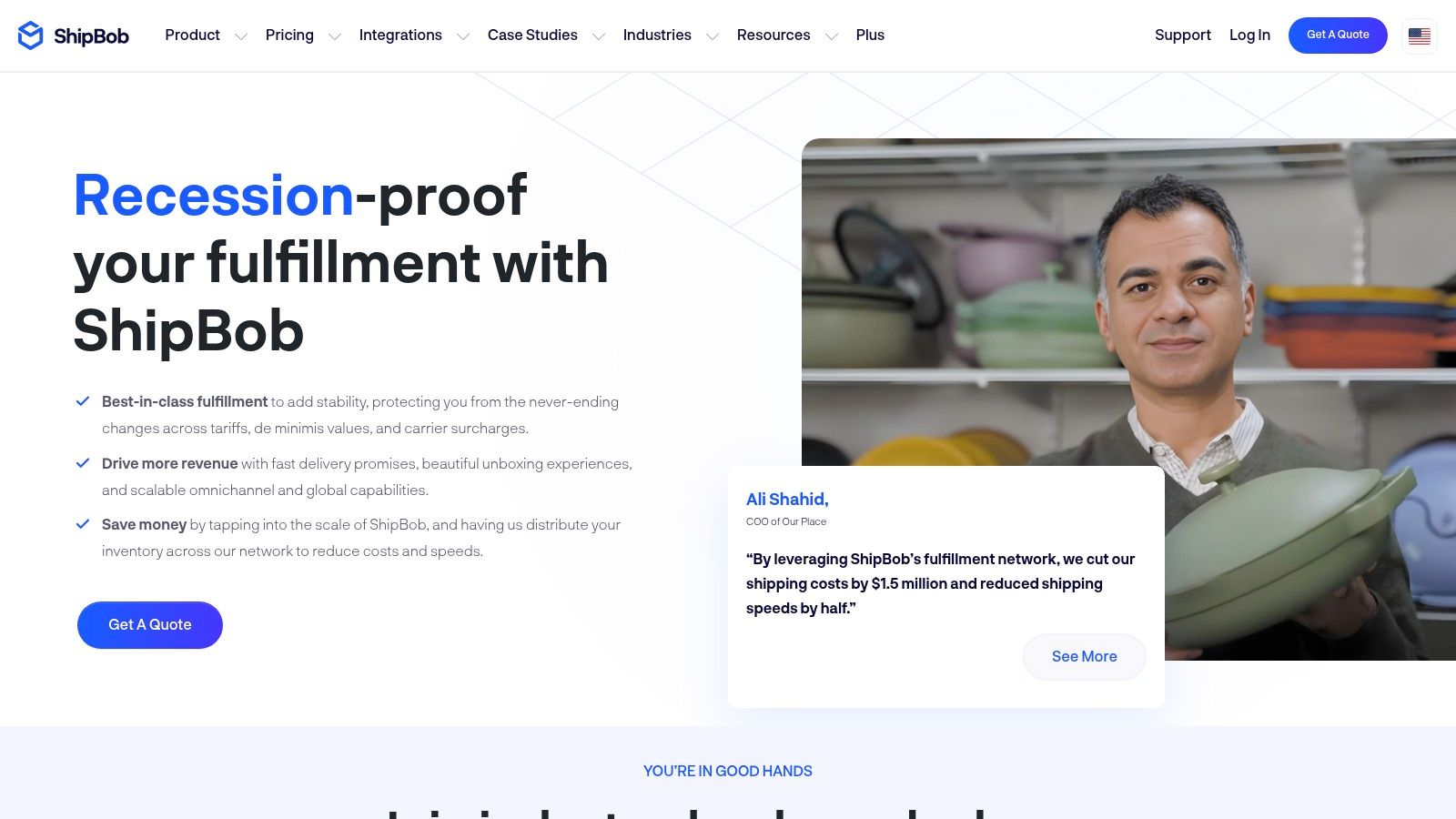
ShipBob is the practical one on this list. It helps DTC brands store inventory, fulfill orders, and ship faster without building their own warehouse operation first. If project44 is mission control, ShipBob is the warehouse crew that gets the box out the door.
I recommend ShipBob to founders who are moving out of the “my apartment is the fulfillment center” phase. Once packing orders starts stealing your time from product, sales, and hiring, you need support.
Why ecommerce founders like it
ShipBob has integrated WMS and OMS tooling, common ecommerce integrations like Shopify, and a pricing model that at least tries to be transparent around receiving, storage, and pick-and-pack. I like that because founders need a rough map before they talk to sales.
Its Chicago roots also matter if you're building in the Midwest. You can stay close to operations while still getting broader fulfillment coverage. That setup is useful when you need speed but don't want to manage a patchwork of local warehouses.
A few straight answers before you sign anything:
- Good fit: Ecommerce brands with enough order flow to justify outsourced fulfillment.
- Strong point: Startup-friendly onboarding is easier than building your own ops stack from scratch.
- Catch: Exact rates still depend on your SKU profile, packaging, and add-ons.
- Risk: Support quality can feel uneven during fast growth.
This is one of those tools that can save your sanity or create a new dependency. Model your margins carefully. The cheap-looking option gets expensive fast if your products are bulky, fragile, or weird to pack.
Website: ShipBob
5. M1
Most founders obsess over company finances and ignore personal finances until taxes punch them in the face. M1 is useful because it makes personal investing and money management easier for busy operators who don't want another dashboard to babysit.
It's a Chicago-based investing and personal finance app with commission-free trading, portfolio “Pies,” fractional shares, recurring auto-invest, and banking-style products like cash accounts, margin, and loans. If you're building a company and also trying to act like a functional adult with your own money, that's a good mix.
Why I'd suggest it to founders
I don't use M1 as a trader's tool. I use the idea of M1 as a founder tool. It helps you automate decisions that don't deserve daily emotional energy.
You pick an allocation, set recurring investments, and stop treating your retirement account like a side quest. That's useful when your brain is already full of CAC, payroll, and churn.
My rule: automate your personal finances before your company stress spills into every money decision you make.
If you're exploring funding paths and trying to understand the money side of startup companies in Chicago, this roundup on venture capital in Chicago is worth your time too. Just keep the distinction clear. Company financing and personal investing are different muscles.
The downsides are simple. M1 has limits if you want advanced order types, and a platform fee can apply for smaller balances unless waived. For most founders, that tradeoff is fine. If you want set-it-and-mostly-forget-it, M1 is clean.
Website: M1
6. ActiveCampaign
I've watched founders lose a quarter because their follow-up was a mess. New leads came in, trial users got the wrong emails, and nobody built the basic logic to move people from interest to purchase. ActiveCampaign fixes that problem fast.
It's one of the more useful Chicago-founded companies on this list because it helps you set up real customer journeys without hiring a marketing ops specialist too early. You get email, SMS, automations, and CRM functions in one system, which is exactly what a lean team needs when growth is starting to get messy.
Where it shines
The visual automation builder is the reason to care. You can build welcome sequences, abandoned cart recovery, lead nurture flows, win-back campaigns, and sales handoffs in one place. That saves time, but more importantly, it cuts mistakes.
I'd point founders here when they've outgrown basic newsletter software and need tighter execution. If you run ecommerce, SaaS, or any business with a longer buying cycle, this kind of setup matters. You stop sending one generic blast and start building paths based on what people did.
That's the bigger point in Chicago's startup scene too. The winners here usually aren't the loudest companies. They're the operators who set up better systems, follow up consistently, and make a small team perform like a bigger one. ActiveCampaign fits that playbook.
A few straight calls before you sign up:
- Best use case: small and mid-sized teams that need real automation, not just broadcasts
- Strong point: templates and integrations help you get campaigns live faster
- Watch-out: pricing can climb as your contacts and add-ons grow
- Common mistake: bad list hygiene can make billing more expensive than expected
My advice is simple. If your marketing still depends on manual sends and scattered tools, upgrade now. This is the kind of platform that helps you run tighter, which is exactly how smart founders in Chicago get ahead.
Website: ActiveCampaign
7. G2
I've watched founders spend months polishing a homepage while buyers make their shortlists somewhere else. A prospect hears your name, opens a few tabs, checks your site, then checks G2. That second step shapes the conversation more than a lot of teams want to admit.
G2 matters because it sits close to buying intent. People use it to compare options, scan reviews, and pressure-test the story every software company tells about itself. If you sell B2B software, your profile is part of sales, whether you treat it that way or not.
My advice is simple. Claim the free profile early, clean it up, and start asking happy customers for honest reviews now.
That last part matters. Early-stage SaaS companies usually have weaker brand recognition, fewer case studies, and less social proof on the website. A solid G2 page helps close that trust gap fast. It will not fix a weak product, but it will help you survive the first round of buyer skepticism and get more serious demos.
I also like G2 as a signal for how Chicago builds. This city produces companies that know how to sell, not just how to pitch. G2 fits that operator style. Clear positioning, proof from customers, and a category presence that keeps working after your team logs off. Chicago startups can build serious go-to-market engines, and G2 is one of the most visible places to show that in public.
Here's the mistake I see founders make. They wait until a competitor has stacked up reviews, won category placement, and defined the language buyers now associate with the market. By then, you are catching up instead of shaping the frame.
Get reviews before you think you need them. A thin G2 page makes your company look less mature than it really is.
The downside is cost. The paid layers, especially buyer intent data and heavier sales features, can get expensive for a small team. Still, the free profile gives you enough to justify the setup, and if you're plugged into the right founder circles in Chicago, you can learn how other operators are using platforms like this without wasting a quarter on trial and error.
Website: G2
7 Chicago Startups: Quick Comparison
| Product | Implementation Complexity 🔄 | Resource & Cost ⚡ | Expected Outcomes ⭐📊 | Ideal Use Cases 📊 | Key Advantages 💡 |
|---|---|---|---|---|---|
| Chicago Brandstarters | Low, simple small-group dinners + chat; selective vetting | Free membership; time and local presence required | ⭐ Practical problem-solving, introductions, faster learning | Local founders/brands in Chicago–Midwest seeking peer ops support | Vetted, non‑salesy operator-led network that yields durable relationships |
| Tempus AI | High, regulated data pipelines, EHR and clinical integrations | Enterprise/quote pricing; lengthy deployment and compliance costs | ⭐📊 Improved clinical decisions and R&D acceleration; revenue-generating tests | Biopharma, hospital systems, precision‑medicine startups needing clinical tools | Multimodal clinical data + EHR integration and strong enterprise footprint |
| project44 | High, multimodal carrier integrations and TMS connectivity | Quote-based enterprise pricing; suited for larger shippers | ⭐📊 Real-time multimodal visibility, predictive ETAs, fewer exceptions | Mid-to-enterprise shippers, retailers, 3PLs needing end-to-end visibility | Category leader with broad carrier coverage and predictive analytics |
| ShipBob | Moderate, onboarding and SKU mapping; turnkey integrations | Per-order fulfillment pricing; rates vary by SKU and add-ons | ⭐ Faster fulfillment, reduced ops lift, improved shipping coverage (2–3 days) | DTC startups and growing ecommerce brands needing turnkey 3PL | Startup-friendly onboarding, transparent pricing framework, nationwide network |
| M1 (M1 Finance) | Low, consumer-focused app with automated portfolios | Low-cost to start; platform fee if account < $10k; minimal admin | ⭐ Automated investing and household finance simplification | Founders wanting low-friction personal investing and retirement automation | Integrated brokerage + banking, fractional shares, recurring auto-invest |
| ActiveCampaign | Moderate, set up automations and templates; manageable complexity | SaaS subscription tiers; costs rise with contacts and add-ons | ⭐📊 Faster campaign execution, better segmentation and engagement | Early ecommerce/SaaS teams needing marketing automation without big ops | Visual automation builder, extensive templates and integrations |
| G2 | Low to moderate, basic profile setup is simple; paid programs add complexity | Free basic listing; advanced vendor features require paid, quote pricing | ⭐📊 Increased discovery, social proof, and qualified intent when rated well | B2B SaaS vendors aiming to collect reviews and drive buyer research | High SEO/market authority, verified reviews, free entry point to start collecting reviews |
Your Next Move as a Chicago Founder
A founder asked me once what they should do next in Chicago. They expected a list of events, investors, and startup names. I gave a different answer. Fix the bottleneck in front of you, then get in a room with people who will tell you the truth.
Start there. If ops is a mess, study ShipBob. If your pipeline is sloppy, set up ActiveCampaign properly. If you work in healthcare or another hard category, pay attention to Tempus AI and how they built around real complexity instead of startup theater.
I would not spend the next month collecting more tools, more coffee chats, or more vague advice. Chicago gives you plenty of surface area, but surface area is not support. What helps is targeted feedback, useful introductions, and a peer group that can spot your blind spots fast.
That is the operator's view of this city.
Chicago has serious company-building energy, and you can feel it once you get past the public noise. The mistake is assuming proximity solves access. It does not. If you are early, you need people who will look at your offer, your pricing, your deck, or your first hires and tell you where the weak spot is now, not six months from now.
I push community first for that reason. Small, trusted groups beat big networking nights almost every time. You get better feedback, stronger accountability, and a much higher chance of meeting someone who is relevant to your next move.
You should track your progress the same way you run the rest of the company. Measure whether you incorporated, whether you hired, whether you raised capital, and whether you are still building here over time. Founder Institute lays out that kind of follow-up clearly in its guidance on startup ecosystem metrics for economic development organizations. I like that framework because it forces you to look at outcomes, not activity.
My recommendation is simple. Pick one tool that removes your current constraint. Pick one channel you can stick with for customer growth. Pick one founder circle that gives you honest signal.
Then do the work.
If you want the kind of room I just described, take a serious look at Chicago Brandstarters. It is built for local founders who want real relationships, direct feedback, and fewer wasted conversations. If that sounds like your style, apply and see if it fits.
Leave a Reply