A crowded networking calendar can still leave you without a useful answer, introduction, or next decision. The popular advice says to attend more events, collect more contacts, and follow up with everyone. That approach treats every room as interchangeable. It isn't. A founder who needs candid peer advice should choose a different Chicago business network from a hardware builder seeking lab access, or an early-stage operator who needs one-to-one mentoring.
Chicago's founder ecosystem has enough scale to support several distinct paths. Chicagoland companies raised $4.73 billion in growth capital in 2023 across 516 companies and 587 deals, with 788 investors active in Chicago startups, according to Chicago Blend's ecosystem data. The practical question isn't whether you can find a room. It's which room can help with your next constraint.
This comparison looks at audience, meeting cadence, pricing, strengths, limits, and joining steps. It covers private founder dinners, startup hubs, hardware labs, cross-industry events, policy relationships, procurement support, and mentoring. If you're also comparing ecom growth networking groups, use the same test: choose the network that gives you the help you need now.
1. Chicago Brandstarters
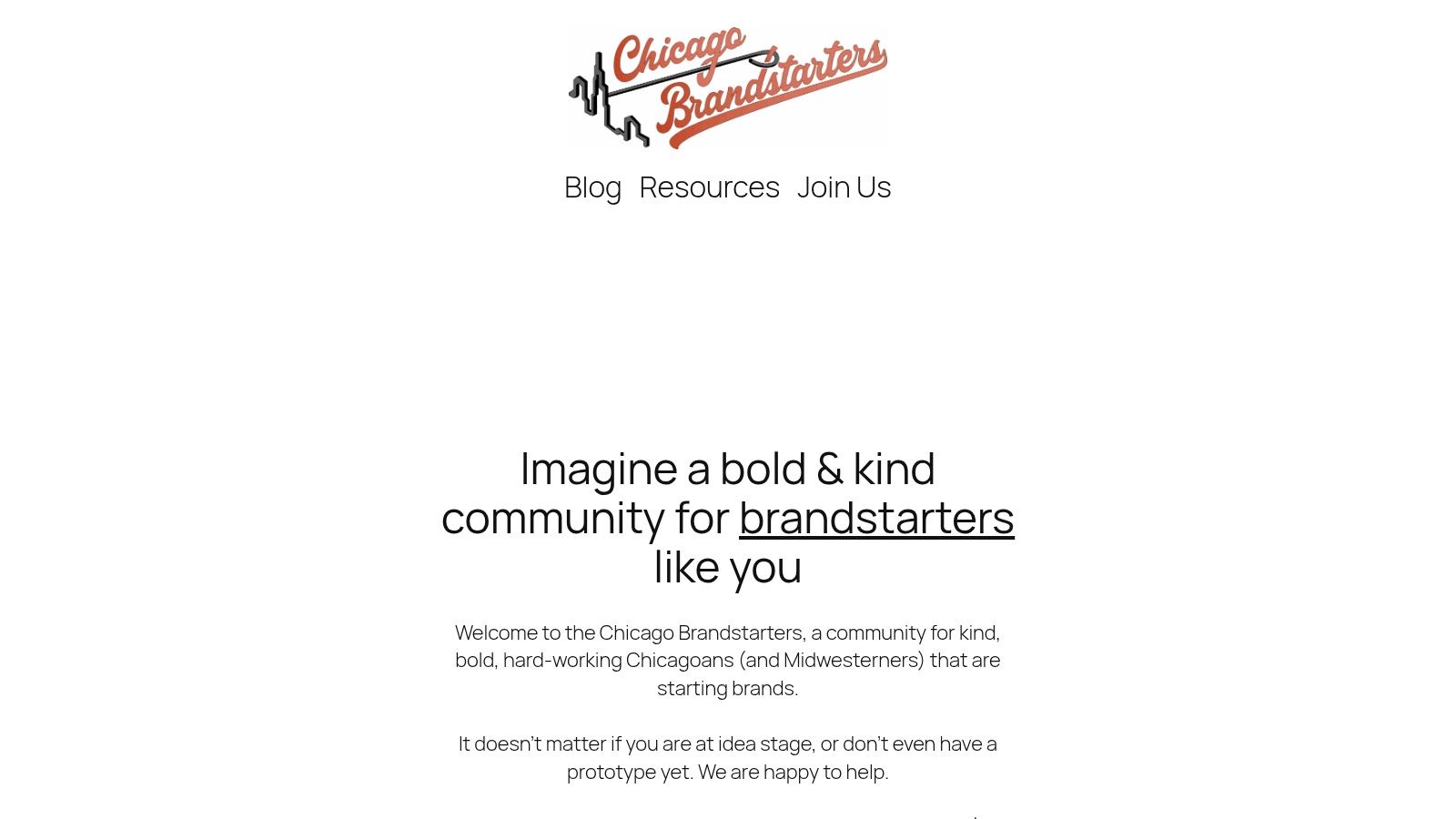
Chicago Brandstarters is the best fit for a founder who wants practical peer support without a membership fee or a sales-heavy room. The community is free, vetted, and built for kind, bold, hard-working Chicagoans and Midwesterners who are building brands from the idea stage toward seven figures. It suits product founders, e-commerce operators, solo builders, and people with a 9-to-5 who are testing a side hustle.
The format creates more room for honest conversations than a large mixer. Members join private 6 to 8 person dinners every two weeks, along with an active group chat where founders share tactics, hard lessons, and direct help. The community uses identity and LinkedIn verification, keeps discussions confidential, and excludes self-promotion and service selling. That combination matters when you need to admit that a launch failed, a supplier caused problems, or you don't know what to do next.
Practical rule: Choose a network where you can explain the problem you're actually facing, not the polished version you'd put on a pitch deck.
Why it works for early-stage builders
Founder Kevin Tao leads Brandstarters with operator experience rather than a formal accelerator curriculum. Members report solving stubborn business problems, receiving meaningful introductions, and gaining access to factory tours. The group also points growing companies toward programs such as Goldman Sachs 10KSB, EcomFuel, and Million Dollar Sellers.
The trade-off is focus. Remote founders and people outside Chicago or the Midwest may get less value from a local dinner format. Brandstarters isn't a funding vehicle, and it doesn't promise capital, a fixed curriculum, or formal certification. Its value comes from repeated contact, practical advice, introductions, and friendships that can continue between dinners.
Pros
- Cost: Membership is free, with $0 access to the community, dinners, and group chat.
- Format: Recurring private dinners create a smaller setting for problem-solving.
- Trust: Verification and confidentiality reduce the chance that a conversation turns into a sales pitch.
- Stage fit: Idea-stage founders, side-hustlers, early-revenue brands, and operators can participate without entering an accelerator.
Next step: Visit Chicago Brandstarters, review the community details, and apply if the private, reciprocal format fits how you work.
2. 1871
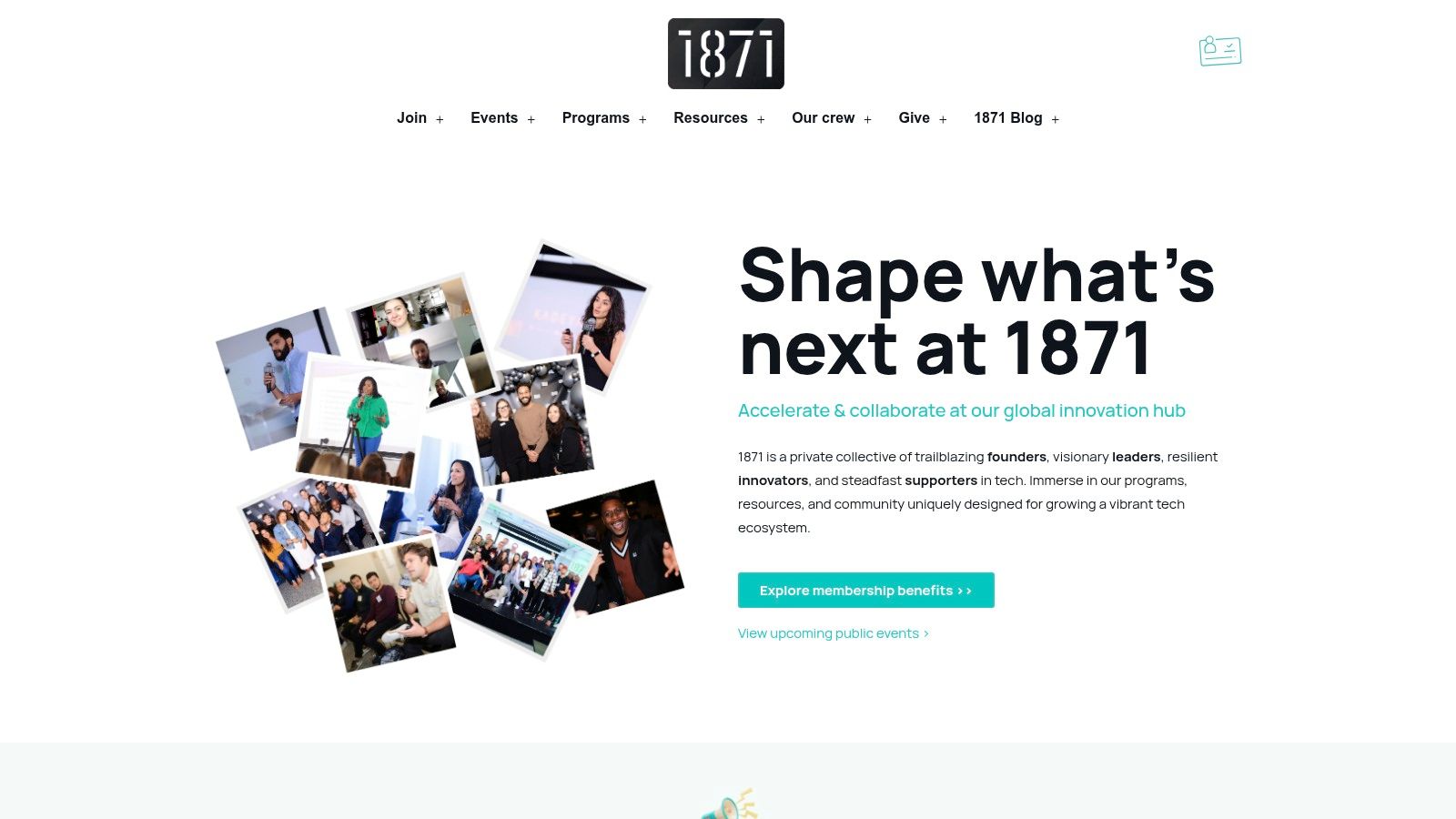
1871 fits founders building technology or digitally enabled companies who want a dense startup setting. The hub gives members access to coworking at the Merchandise Mart, workshops, mentors, investor connections, themed communities, and programming for founders, operators, and corporate innovators.
The main advantage is proximity. You can meet people working on software, marketplaces, digital services, and startup programs in one place. That density can help when you need a technical collaborator, an investor introduction, or a conversation with a corporate partner. The programming also spans idea-stage companies through scaling teams, so the fit can continue as your needs change.
Where 1871 earns its place
Team memberships include 24/7 access to shared desks at the Merchandise Mart, according to 1871's membership information. The central location also makes it easier to combine workdays, mentor meetings, and events without moving between unrelated venues.
The limit is business type. A local food brand, independent service company, or physical retailer may find fewer relevant conversations than a software founder would. The public membership page doesn't list pricing, so you'll need to contact the organization before you can compare its cost with other options.
You can also use 1871 as one part of a broader Chicago startup hub network rather than treating it as your only source of support. That approach makes sense if you need tech contacts during the week and a smaller peer group for candid operating questions.
Best fit: Technology startups, digital products, corporate innovation teams, and founders preparing for investor conversations.
Trade-off: You get scale and startup density, but the room may feel too broad or too tech-focused for a non-digital business.
Next step: Contact 1871 with a short description of your company, stage, team size, and the type of access you need. Ask which membership and community track matches your work.
3. mHUB
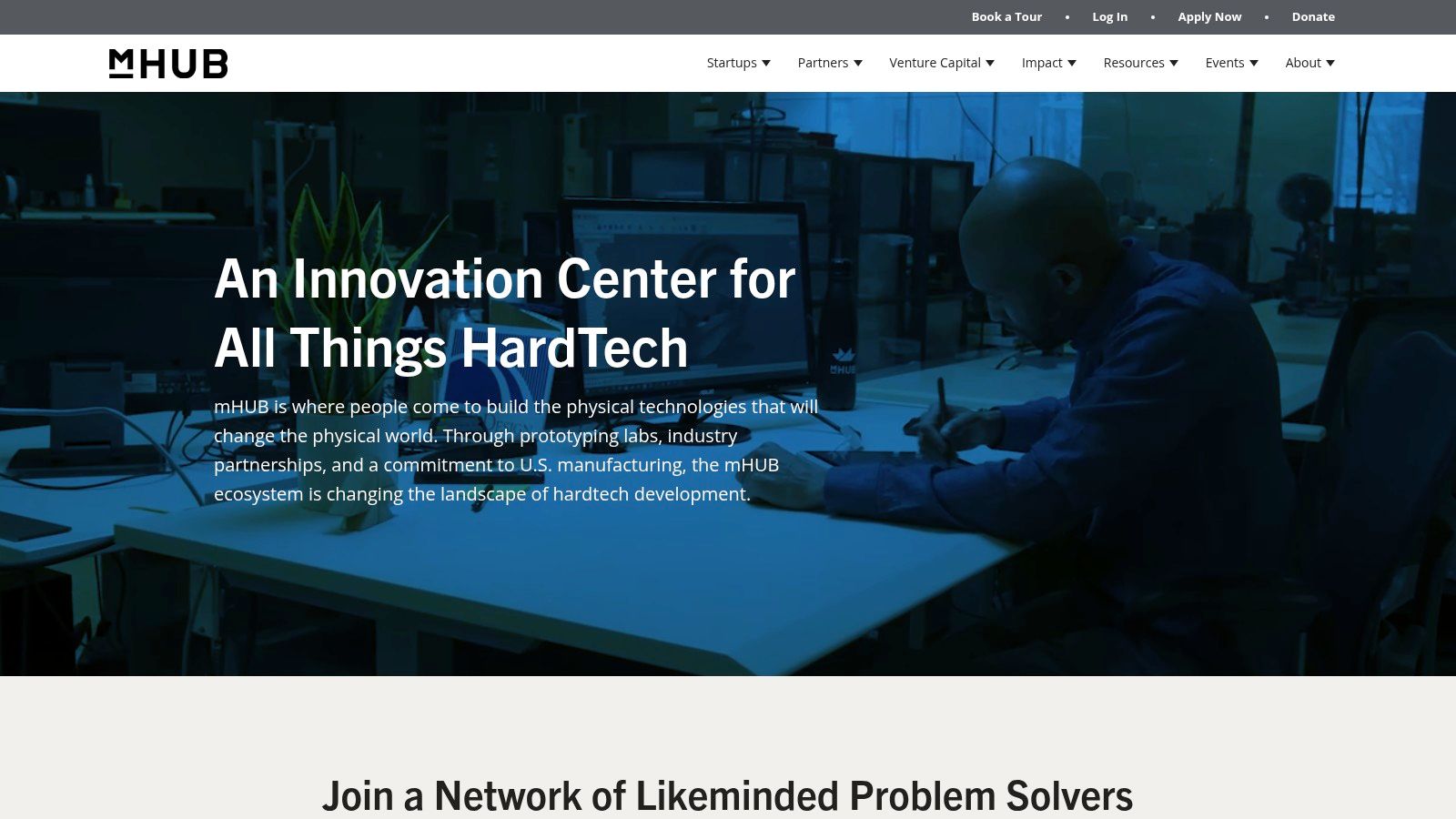
mHUB makes the most sense when your company needs to build something physical. Hardware, robotics, Internet of Things products, medical devices, and advanced manufacturing startups can use its prototyping resources, classes, mentor access, pitch events, and investor programming.
A hardware founder often needs more than introductions. You may need to test a component, understand manufacturing constraints, refine a prototype, or meet an engineer who can challenge your design. mHUB puts those conversations closer to the tools and people involved in making a product.
The practical hardware test
mHUB has prototyping equipment, educational classes, membership packages, and a community that includes manufacturers, engineers, and product startups. Its accelerator and event paths can also help founders prepare for investor exposure. The organization links its work to Midwest manufacturing and university relationships, which may matter when your supply chain or technical talent needs a regional base.
The downside is obvious. A software-only company probably won't use the labs enough to justify the commitment. Pricing varies by membership and requires outreach, so you should define the equipment, classes, workspace, and introductions you need before asking for a package.
A founder working through rapid prototyping in manufacturing should compare mHUB with a general coworking hub by asking one question: will this network help me make and validate the product, or will it only help me talk about it?
Best fit: Physical-product companies that need technical resources, manufacturing contacts, or prototype feedback.
Trade-off: The resources can be unusually relevant for hardware, but they won't help much if your business has no physical build cycle.
Next step: Send mHUB a clear product description and list the tools, classes, mentors, and funding preparation you need. Ask which membership or accelerator path matches your stage.
4. Chicago Innovation
Chicago Innovation works well for founders who need cross-industry relationships rather than a founder-only peer group. Its programming brings together innovators, executives, corporate participants, and civic leaders across the region. That mix can help a consumer brand, service company, civic startup, or business-to-business operator find conversations outside the usual startup circle.
Members receive access to member benefits and free tickets to multiple events each year. The organization also runs programs connected to the Chicago Innovation Awards, which can create visibility for companies that have a clear innovation story and are ready to discuss their work publicly.
What you'll get from the event model
The strength here is the event quality and range of attendees. You may meet a corporate buyer, a potential partner, an executive with a difficult operational problem, or another founder whose market differs from yours. That makes Chicago Innovation a reasonable choice when your next customer or partner may sit outside the technology ecosystem.
The limitation is cadence and depth. The model centers on events, so you may need to create your own follow-up structure after each conversation. It won't automatically give you the repeated, confidential peer contact that a small dinner provides. Sponsorships and award programs can also be competitive, and nonprofit membership rates require an inquiry.
Go in with one clear reason to meet people. A broad room becomes useful when you give yourself a narrow follow-up target.
Best fit: Early-stage founders in consumer products, services, civic work, and cross-industry businesses.
Trade-off: You gain broad access and visibility, but you must do more work to turn event conversations into ongoing relationships.
Next step: Review Chicago Innovation's membership options, choose the event type that matches your customer or partner goal, and schedule follow-up conversations before you attend.
5. Chicagoland Chamber of Commerce
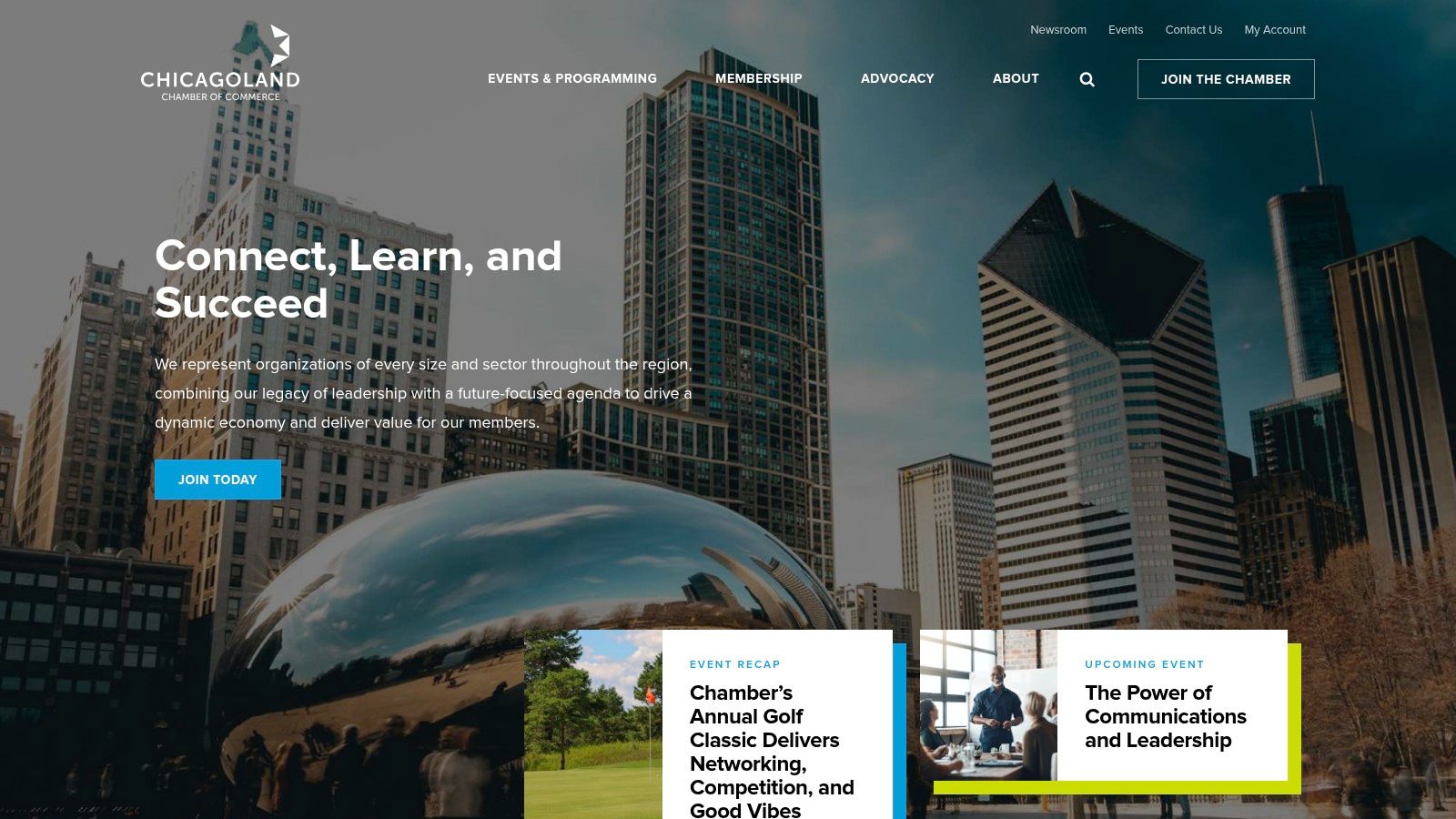
The Chicagoland Chamber of Commerce fits companies that need broader business relationships, policy awareness, and access to established employers. It convenes organizations of different sizes through events, committees, government affairs work, workforce programming, and business development opportunities.
A founder should consider the Chamber when the company has moved beyond basic validation and needs relationships with mid-market or enterprise organizations. You may want to understand regional initiatives, meet a potential corporate customer, find workforce contacts, or take part in business discussions that reach beyond startup circles.
When a chamber makes sense
The Chamber has tiered member benefits, affinity discounts, regular programming, a major annual meeting, and direct contact with membership advisors. Those perks can make dues easier to assess if your company will use them. The organization also gives you a path into committees, which can create more repeated contact than attending a single event.
The trade-off is atmosphere. A founder looking for a confidential group of peers may find the Chamber more corporate or transactional. Pricing tiers aren't fully public, so you'll need a conversation with a membership advisor before you can judge the financial fit.
Use the Chamber as a relationship and policy channel, not as a replacement for founder support. A company can benefit from both a broad business network group and a smaller room where the founder can discuss difficult decisions without a sales agenda.
Best fit: Growing companies that need policy connections, corporate access, workforce relationships, or regional visibility.
Trade-off: The reach is broad, but you may need to work harder to find founder-level intimacy.
Next step: Ask a membership advisor about the committees, events, discounts, and introductions that match your business. Request the current dues structure before joining.
6. Women's Business Development Center
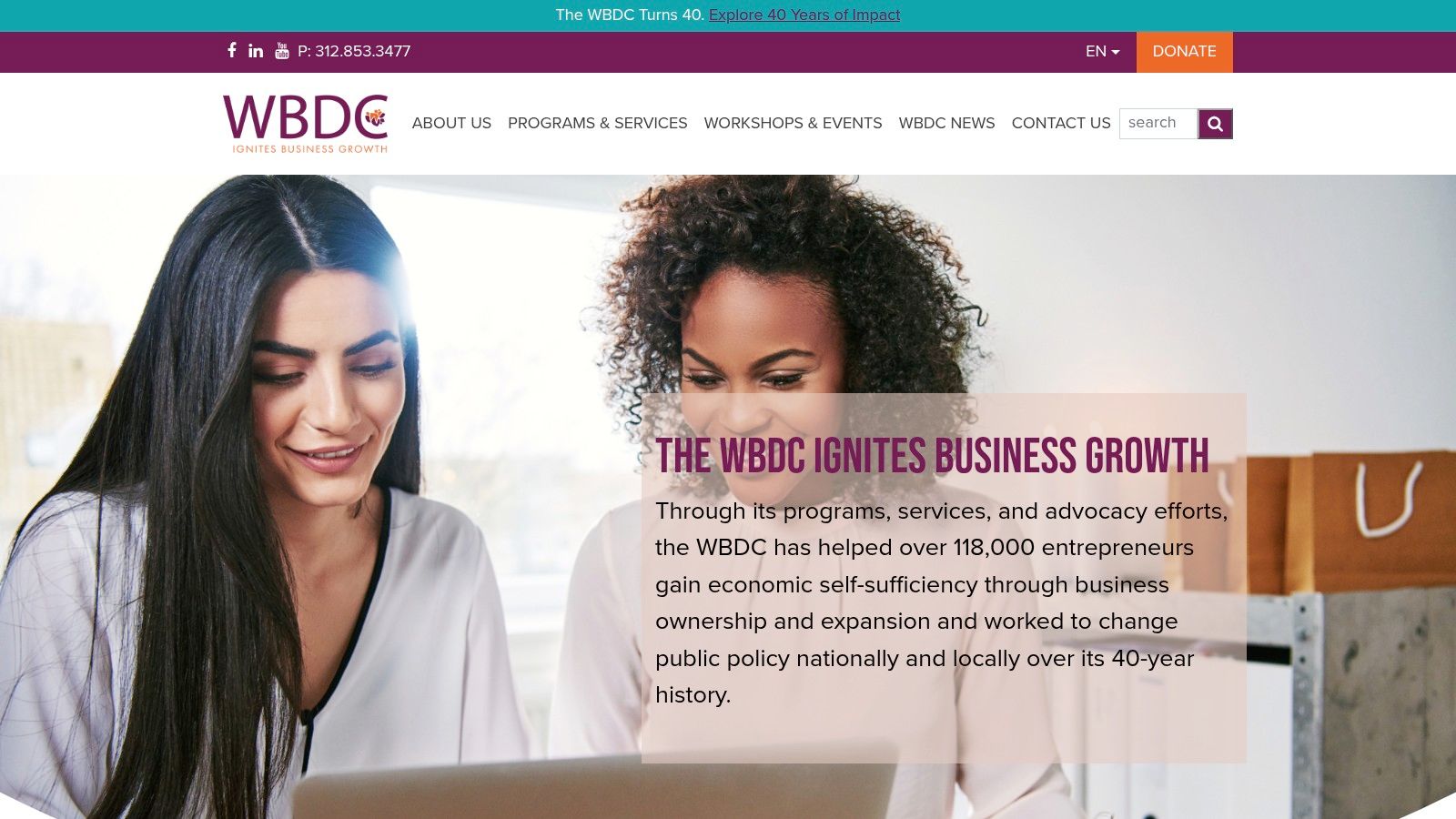
The Women's Business Development Center, or WBDC, helps founders who need advising, education, capital preparation, certification, and procurement support. It works especially well for women and diverse entrepreneurs who want a practical route into supplier diversity and contracting opportunities.
A founder may enter through one-to-one advising, an educational program, capital or credit-readiness support, or certification work such as Women Business Enterprise preparation. Many services are free or low-cost because public and private support helps fund the organization. Check current program rules before you apply, since availability and eligibility can vary.
A direct route to procurement
WBDC differs from a general networking group because it connects relationship-building with business readiness. If you want to sell to larger organizations, certification and procurement preparation can matter as much as meeting another founder. The organization's Midwest footprint and Chicago base also give entrepreneurs a regional place to find programs and guidance.
Some programs use cohorts or applications, which means you might not receive immediate access. Events can feel more instructional than social, so a founder seeking informal peer support may need a second network alongside WBDC.
Best fit: Women founders, diverse entrepreneurs, and early-stage companies preparing for capital, certification, or supplier opportunities.
Trade-off: You get structured guidance and contracting support, but the experience may feel like a class or advising session rather than a recurring founder dinner.
Next step: Review WBDC's current programs, identify the need that blocks your next sale or funding conversation, and ask whether advising, certification, or procurement support fits.
7. SCORE Chicago
SCORE Chicago is the clearest choice when you need a mentor rather than a broad membership community. The SBA-affiliated network provides free, confidential one-to-one mentoring for entrepreneurs across Chicago and Cook County, along with workshops and access to national resources.
This format works well for idea-stage founders and first-time operators who need help with validation, planning, finance, retail, e-commerce, technology, or daily operations. You can book a mentor, explain the decision in front of you, and leave with a more structured next step. Virtual and in-person options make it easier to use the service when your schedule doesn't support regular networking events.
The mentor-fit trade-off
SCORE isn't a curated peer community. You won't automatically develop a group of same-stage founders who know your story over time. Mentor quality also depends on fit, so you may need to try more than one person before you find someone whose experience matches your business.
That limitation doesn't weaken its use for specific decisions. A founder who needs to review a basic financial plan or test a business model can start without paying for a membership or committing to a cohort. You can also switch mentors as your questions change.
Use SCORE for a decision. Use a peer community for the emotional and operating context around that decision.
Best fit: First-time founders, idea-stage businesses, and operators who need direct guidance at no cost.
Trade-off: The advice can be practical and accessible, but the relationship is mentor-led rather than built around a private founder cohort.
Next step: Visit SCORE Chicago, create a mentoring request, and describe one concrete question instead of asking for general business advice.
Chicago Business Network: 7-Organization Comparison
| Organization | Implementation (🔄) | Resource requirements (⚡) | Expected outcomes (⭐📊) | Ideal use cases | Key advantages (💡) |
|---|---|---|---|---|---|
| Chicago Brandstarters | 🔄 Low, vetted join + recurring 6–8 person dinners | ⚡ $0 membership; local time commitment for biweekly events | ⭐ Practical problem-solving, introductions, stronger founder networks | Early-stage product/e‑commerce founders in Chicago/Midwest | 💡 Free, intimate, highly vetted peer network; confidentiality; operator-led |
| 1871 | 🔄 Medium, membership, workspace onboarding & program sign-up | ⚡ Paid memberships (varies); co‑working, programming time | ⭐ Access to mentors, investors, workshops; collaboration opportunities | Tech/digital startups needing coworking and growth programming | 💡 Dense startup ecosystem; strong partner credibility; 24/7 workspace |
| mHUB | 🔄 High, applications, safety training, lab access procedures | ⚡ Significant (membership/equipment fees); lab time and training | ⭐ Rapid prototyping, product validation, manufacturer introductions | Hardware, IoT, robotics, medtech and physical‑product founders | 💡 Advanced fabrication resources and manufacturing network; accelerators |
| Chicago Innovation | 🔄 Low–Medium, event membership and attendance scheduling | ⚡ Moderate (membership/events); travel/time for events | ⭐ Visibility, cross‑sector connections, awards exposure | Founders seeking broad corporate/civic introductions and visibility | 💡 High‑signal events; diverse attendee mix; awards/visibility channels |
| Chicagoland Chamber of Commerce | 🔄 Medium, committee involvement and member onboarding | ⚡ Tiered paid dues; staff time for committee participation | ⭐ Policy awareness, regional visibility, enterprise relationships | Companies seeking policy influence and mid‑market/enterprise ties | 💡 Broad cross‑industry access; tangible member perks; advocacy channels |
| Women's Business Development Center (WBDC) | 🔄 Medium, program/cohort enrollment and advising sessions | ⚡ Low–Moderate (many free/low‑cost programs); time for training/certification | ⭐ Advising, capital readiness, WBE/certification and contracting pathways | Women and diverse founders pursuing certification and procurement readiness | 💡 Deep focus on underrepresented founders; long track record; procurement links |
| SCORE Chicago | 🔄 Low, simple booking for one‑on‑one mentoring | ⚡ $0; time for mentor sessions; variable mentor fit | ⭐ Practical guidance on validation, finance, operations; ongoing support | Idea‑stage and first‑time founders needing hands‑on mentorship | 💡 Free, topic‑specific mentors; flexible virtual/in‑person options |
Choose the Room That Fits Your Next Step
Start with the problem in front of you. If you need candid peer support, private dinners, and a free place to discuss the parts of building a company that you don't share publicly, choose Chicago Brandstarters. Its 6 to 8 person dinners every two weeks, confidential culture, verification process, and group chat fit founders who value repeated contact over a large attendee list.
Choose 1871 if you build software or another digitally enabled company and want coworking, startup programming, mentors, and investor access. Choose mHUB if your company needs prototyping, fabrication, engineering relationships, or manufacturing support. Those two networks require a closer match between your business model and the resources you plan to use.
Chicago Innovation fits a founder who wants cross-industry events and conversations with corporate or civic participants. The Chamber fits a company that needs broader business relationships, policy connections, committees, and regional visibility. These networks can help when your buyers, partners, or workforce contacts sit outside startup circles, although you'll need to create your own follow-up rhythm.
WBDC makes the most sense when advising, certification, capital preparation, and procurement support drive the next step. SCORE Chicago fits founders who want free one-to-one mentoring and practical guidance on validation, planning, finance, or operations. You don't need to choose based on reputation alone. Choose based on the kind of help you can use within the next few weeks.
Chicago's founder pool also rewards a trust-based approach. The Chicago Blend Startup Diversity Report found that 36.5% of 307 new venture-backed Chicago companies founded between 2018 and 2023 had at least one woman founder, while 24.4% had at least one founder of color. The same analysis found that companies with a founder of color captured 44% of the city's venture capital funding during that period, while women-founded or co-founded companies received 14.9% of all VC funding. That difference gives curated introductions and peer knowledge a practical place in a founder's plan.
Pick one primary network first. Check its current website details, attend an event or apply, and judge the fit by the quality of the conversations that follow. A room's size matters less than whether someone helps you make a decision, introduces you to the right person, or stays engaged after the event ends.
Chicago Brandstarters gives Chicago and Midwest founders a free, vetted community with private dinners for 6 to 8 people every two weeks and a confidential group chat for practical peer support. If that sounds more useful than another sales-heavy mixer, visit Chicago Brandstarters and apply to join the next conversation.
Leave a Reply