Most advice about the format income statement gets the job backwards.
People act like the point is compliance. Fill out the rows. Match the accounting template. Hand it to your bookkeeper. Done. I think that's lazy advice. You are not building this document to impress an accountant. You are building it to answer one brutal question: is your business making money, and if not, where is it leaking?
If you only track cash in your bank account, you will fool yourself. If you only look at revenue, you will fool yourself faster. A founder needs a scoreboard that separates product economics from operating mess. That's what a properly formatted income statement does.
I learned to treat it like a restaurant ticket. Top line is what the customer ordered. Middle lines show what the kitchen spent to make it. Lower lines show what it cost to keep the lights on. Bottom line tells you whether dinner made you money or just kept you busy.
If you're pre-launch, you still need one. Build a projected version. If you're selling on Shopify, consulting on the side, or hacking on a SaaS tool after work, you still need one. This is how you stop guessing.
Why Your Accountant Hates Me For Saying This
Your accountant wants clean books. I want you to make sharper decisions.
Those goals overlap, but they are not the same. If you use your income statement like a compliance form, it becomes something you review after the month is gone and the mistakes are already paid for. If you use it like an operating dashboard, it helps you decide what to fix now.
That difference matters more than founders admit.
A Chicago hot dog stand owner and a SaaS founder both need the same answer. After serving customers and paying to deliver what was sold, is there enough left to run the business without kidding yourself? The format matters because it forces that answer into the open.
What this statement needs to do
You do not need accounting jargon. You need a report that helps you answer operator questions fast:
- Did the business earn the revenue? Revenue booked too early can make a weak month look strong.
- Do the unit economics work? After direct costs, is there enough gross profit left to cover rent, payroll, software, and sales effort?
- Are operating expenses pulling their weight? Marketing, admin, and founder salaries should support growth, not hide sloppy decisions.
- What distorted the bottom line? Interest, taxes, and one-time charges can make net income look better or worse than the core business really is.
This is why I tell founders to learn the format themselves, even if a CPA cleans up the final version.
Practical rule: If you cannot explain your income statement in plain English, you are still guessing at how your business makes money.
Why you need this before you feel ready
Early founders wait too long. They tell themselves they will build a real income statement once revenue is steady, once the bookkeeping is cleaner, once the business feels more official. That is backwards.
Build the format early because the format reveals your business model. A product business needs to separate materials, shipping, and fulfillment from overhead. A SaaS startup needs to separate subscription revenue, hosting, support, and sales costs from everything else. If you lump it all together, you can stay busy for months without seeing the leak.
Pre-launch founders should build a projected income statement and use it as a test. The U.S. Small Business Administration includes projected profit and loss statements in its guidance for writing a business plan because new businesses need a way to show how revenue, costs, and profit are expected to work before the numbers are historical yet, as explained in the SBA's business plan financials guide.
Do this sooner than feels comfortable. A rough income statement you use beats a polished one you build after the damage is done.
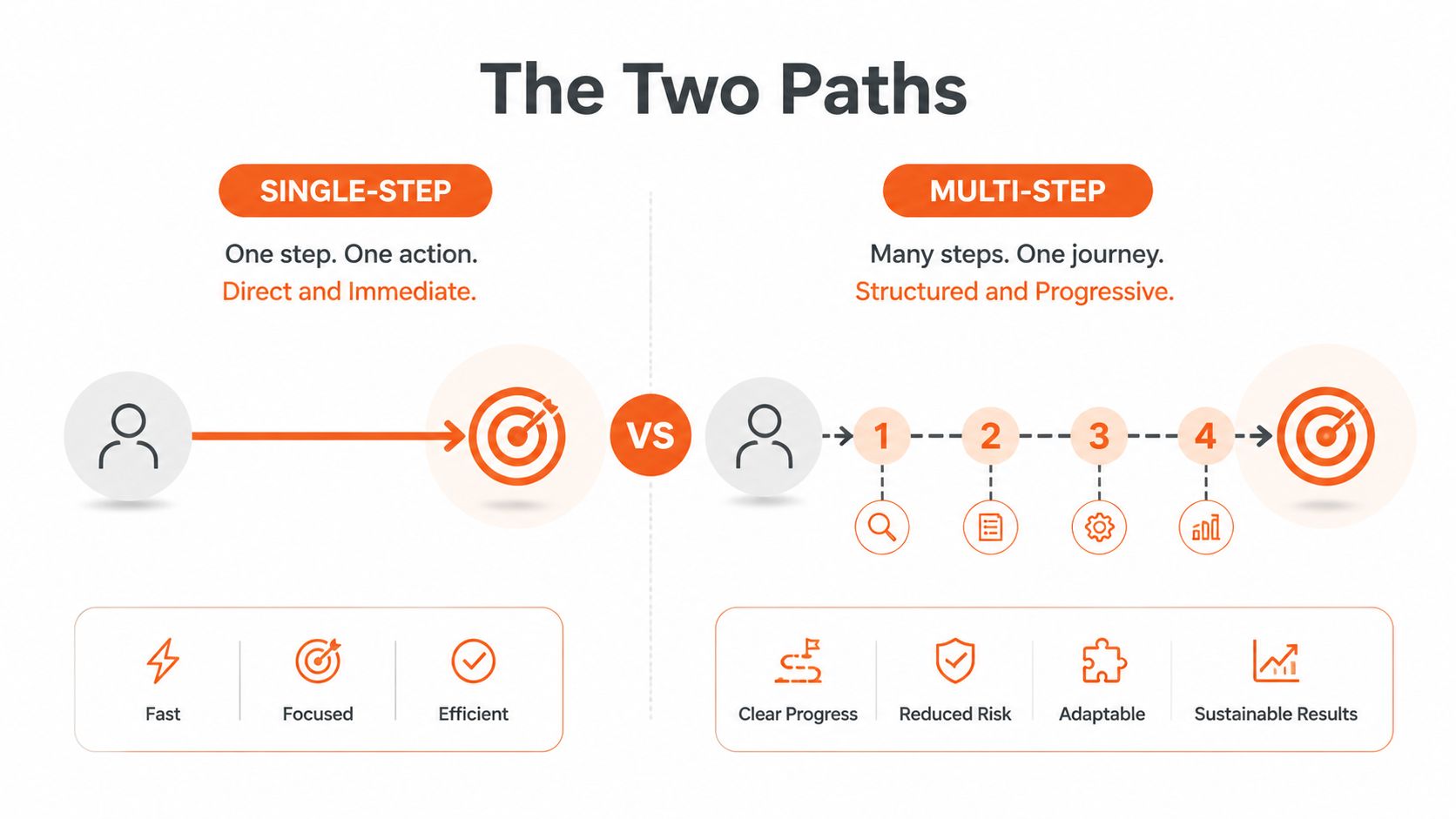
The Two Paths Single-Step vs Multi-Step
Founders get tripped up here because both formats can be technically correct, but only one usually helps you run the business.
A single-step income statement answers one question: did you make money after everything got dumped into the same bucket? A multi-step income statement answers the question you care about most: where is the money made, and where is it leaking out?
Single-step is fast, but blunt
The formula is simple:
Net Income = Total Revenue – Total Expenses
That speed is the whole appeal. If you run a tiny service business, freelance on the side, or you are still proving that anyone will pay you, single-step can be enough to build the habit of tracking profit.
But it hides the engine.
If a Chicago hot dog stand uses single-step, the owner can see whether cash came in over the month. They still cannot clearly see whether the core problem is food cost, labor tied to serving customers, or rent and admin overhead. Everything lands in one pile. That is fine for survival mode. It is weak for decisions.
If you want a clean template to start from, this Excel guide to profit and loss shows the basic structure well.
Multi-step is the operator format
Multi-step splits the business into layers so you can judge performance in stages:
- Revenue
- Less cost of goods sold
- Gross profit
- Less operating expenses
- Operating income
- Plus or minus non-operating items
- Net income
This format is better because it separates the business model from the noise.
A product brand needs to know whether the item itself makes money before ad spend, software, and founder salary muddy the picture. A SaaS company needs to know whether subscription revenue covers hosting, support, and service delivery before sales salaries and G&A enter the conversation. That is why public-company reporting commonly shows gross profit and operating income as distinct lines, as you can see in the SEC's guidance and filings database: EDGAR company filings.
I push founders toward multi-step early because gross profit is where the truth shows up first. If you are fuzzy on that number, fix that now with this guide to the calculation of gross margin percentage.
Which format should you use
Use the format that matches the complexity of your business, not your ego.
| Stage | Best format | Why |
|---|---|---|
| Solo service business with few direct costs | Single-step | Good enough to track whether money is left over |
| Ecommerce brand with inventory, shipping, or fulfillment | Multi-step | You need to see gross profit clearly |
| SaaS business with hosting, onboarding, or support costs | Multi-step | You need delivery costs separated from overhead |
| Investor updates, lending conversations, board review | Multi-step | Serious readers want to see how the business actually works |
My recommendation is simple. Use single-step only as a temporary shortcut. The moment you have inventory, fulfillment, direct labor, hosting costs, or meaningful paid acquisition, switch to multi-step.
Single-step tells you the score. Multi-step shows you whether your business wins like a hot dog stand with healthy food margins or loses like a SaaS startup buying growth while its service costs eat the subscription revenue. That difference matters more than compliance. It is how you decide what to fix.
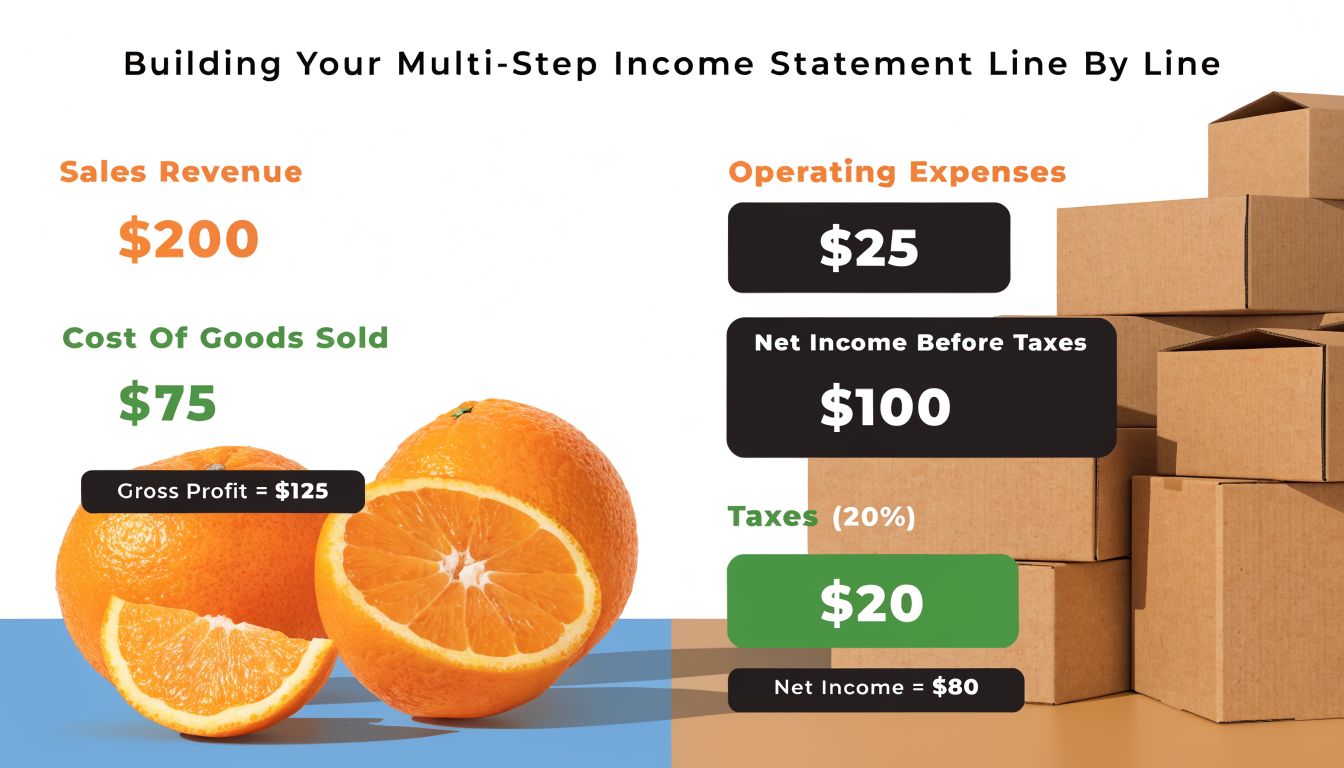
Building Your Multi-Step Income Statement Line By Line
Open Google Sheets or Excel. Don’t overthink layout. Put your company name at the top, the reporting period under it, and start stacking rows.
Your first version can be ugly. Ugly and clear beats pretty and useless.
Start with revenue
What it is: money earned from selling your product or service.
If you sell online, list gross sales, then subtract returns, discounts, and allowances to get net sales. Keep those lines visible. Refunds are information, not embarrassment.
Basic sheet setup:
- Gross sales
- Returns and discounts
- Net revenue
A simple formula might look like:
=SUM(B2:B5)for gross sales=B6-B7for net revenue
Why you care is simple. Revenue tells you whether the market wants what you sell. But it tells you nothing about whether the business is healthy.
Then isolate COGS
COGS means the direct cost of delivering what you sold. Think “kitchen ingredients,” not “restaurant rent.”
For a product brand, COGS often includes:
- Materials: the blank shirt, packaging, raw inputs
- Production: printing, assembly, direct labor
- Fulfillment: shipping to the customer, pick-and-pack if directly tied to orders
For a software company, COGS can include:
- Hosting: server costs tied to serving customers
- Support delivery: customer support tied to keeping accounts active
- Third-party tools: usage-based software costs directly tied to delivery
Subtract COGS from revenue and you get gross profit.
That line matters a lot because founders constantly misclassify costs. A Melio article notes that healthy consumer goods brands should aim for gross margins of 40-60%, and you can only see that clearly when COGS is separated from operating expenses.
If you want help thinking through the math in a spreadsheet, this Excel guide to profit and loss is a useful companion to your first build.
Gross profit is your product truth
Gross profit answers: after making and delivering the thing, do I still have enough money left to run a company?
That’s why I tell founders to stare at this line longer than net income.
If you sell a physical product, your gross margin can drift fast when shipping rises, returns climb, or you discount too aggressively. If you need a clean way to calculate and track that metric, use this gross margin percentage walkthrough.
Gross profit is where your business stops being a hobby and starts facing physics.
Next comes operating expenses
These are the costs to run the business, not the costs to make the product.
Common lines:
- Marketing spend
- Payroll for admin or management
- Rent and software subscriptions
- Contractors
- General and administrative costs
Subtract operating expenses from gross profit and you get operating income.
This line tells you whether your core business model works before financing and taxes. I like it because it strips away some noise. A founder can control pricing, COGS, staffing, and ad spend more directly than taxes.
Finish with non-operating items and net income
Now list the items that don’t describe the core engine:
- Interest expense
- Interest income
- Taxes
- One-off gains or losses
After those adjustments, you land on net income.
Here’s the simple version in table form:
| Line item | What to do |
|---|---|
| Revenue | Add sales, subtract returns and discounts |
| COGS | Add direct delivery costs |
| Gross Profit | Revenue minus COGS |
| Operating Expenses | Add overhead and running costs |
| Operating Income | Gross Profit minus Operating Expenses |
| Non-operating items | Add or subtract interest, taxes, one-offs |
| Net Income | Operating Income adjusted for non-operating items |
Keep the format boring
Use consistent row names every month. Don’t rename categories because you got inspired. Don’t bury ad spend inside “miscellaneous.” Don’t mix software tools, payroll, and shipping in one blob.
A good format income statement is boring on purpose. Boring formatting gives you trend lines. Trend lines give you decisions.
Formatting For Your Business Model Product vs SaaS
Your income statement should match how you make money. If you copy a generic template, you will hide the one thing you need to see. Whether the business engine works.
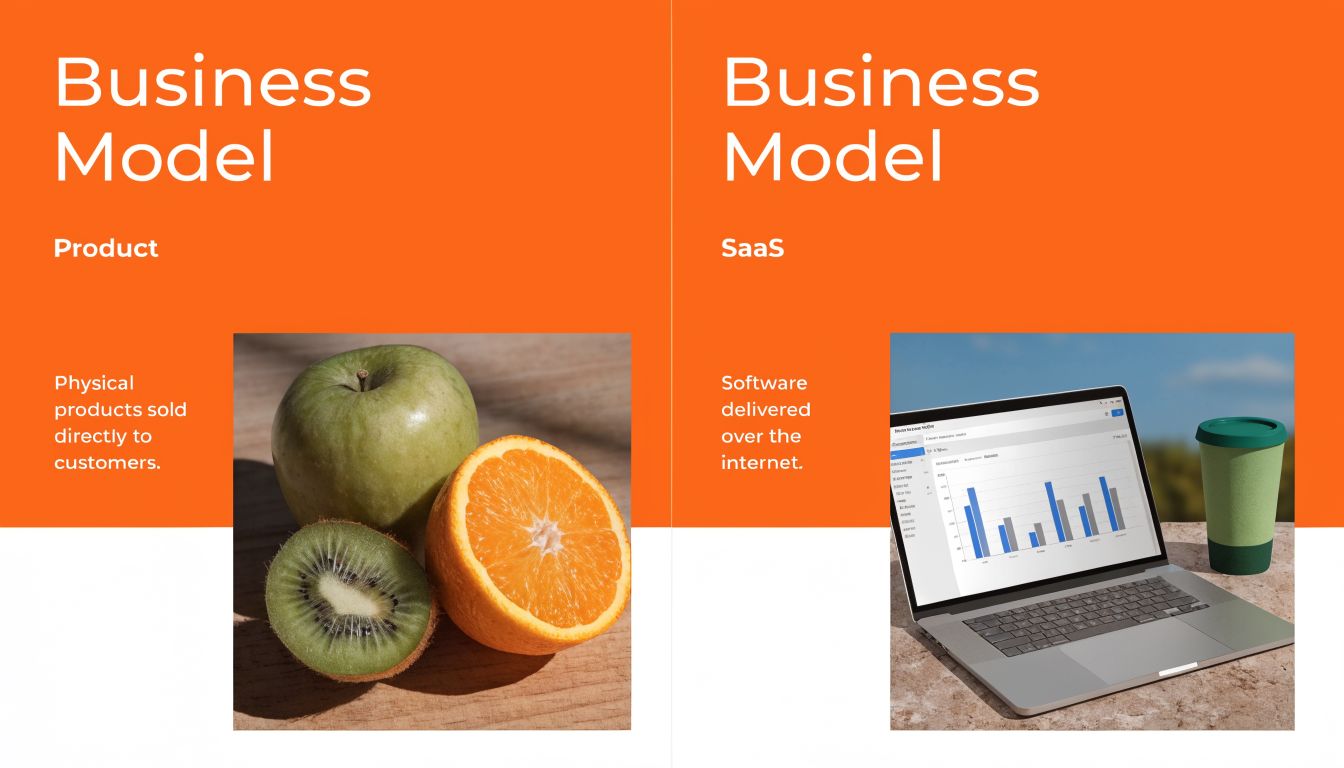
A Chicago hot dog stand and a SaaS startup both have revenue. That does not mean they should format the middle of the statement the same way. One business buys buns, beef, and packaging. The other delivers software, support, and uptime. If you force both into the same layout, you get accounting that looks tidy and decisions that get worse.
Product brand example
Say you sell Chicago-themed t-shirts online.
Your statement should make product economics obvious fast. Revenue comes from orders. Returns and discounts reduce net sales. COGS includes the shirt blank, printing, packaging, and shipping if you treat fulfillment as a direct delivery cost. I want those costs grouped cleanly so you can answer a simple question. Does each shirt leave enough money behind to fund the rest of the business?
Your operating expenses will usually include:
- Meta and Google ads
- Warehouse or storage
- Shopify apps
- Founder salary
- Photography and creative
- General admin
That format lets you separate item economics from growth spending. If gross profit is weak, your product model has a problem. If gross profit is healthy but you still lose money, your overhead or acquisition spend is the issue.
SaaS example
Now switch to a small inventory tool for local breweries.
Revenue is subscription revenue, not a one-time sale. Timing matters more here, so founders should learn the basics of understanding SaaS revenue recognition before they start celebrating booked contracts.
COGS looks different because software delivery looks different. It may include hosting, customer support tied directly to active users, and infrastructure required to serve the product. Operating expenses usually carry the heavier team costs. Sales, product management, engineering work that builds future features, design, and admin belong there.
This is the part founders often miss. A SaaS company can look expensive on the bottom half of the statement while the delivery engine is excellent. A product brand can show a decent month of net income while weak margins are choking the business.
Side-by-side view
| Line | Product brand | SaaS startup |
|---|---|---|
| Revenue | Product sales | Subscription fees |
| COGS | Materials, printing, packaging, shipping | Hosting, support delivery, service infrastructure |
| Gross Profit tells you | Whether the item economics work | Whether delivery economics work |
| OpEx | Ads, storage, admin, tools | Sales, product, admin, broader payroll |
I would format these two businesses with different priorities because the decisions are different. For a product brand, I care about margin by item, return rate, and shipping drag. For SaaS, I care about delivery cost per customer, support load, and whether revenue is recurring enough to justify the team you built.
Industry benchmarks help, but only if you compare yourself to the right model. Analysts at NYU Stern publish margin data by industry, and those tables make the point clearly: software businesses and retail businesses operate with very different gross margin profiles. Use that context to pressure-test your format, not to excuse a messy statement. NYU Stern margin data by industry is a good place to calibrate expectations.
If you plan to raise money, this formatting choice matters even more. Investors will judge whether you understand your model by how cleanly you separate delivery costs from overhead. A messy statement makes a weak pitch deck. A clean one gives you sharper charts, better talking points, and a stronger case in your pitch deck for investors.
Format the statement to expose the truth about your business model. That is the whole job.
From Spreadsheet to Story How to Present to Investors
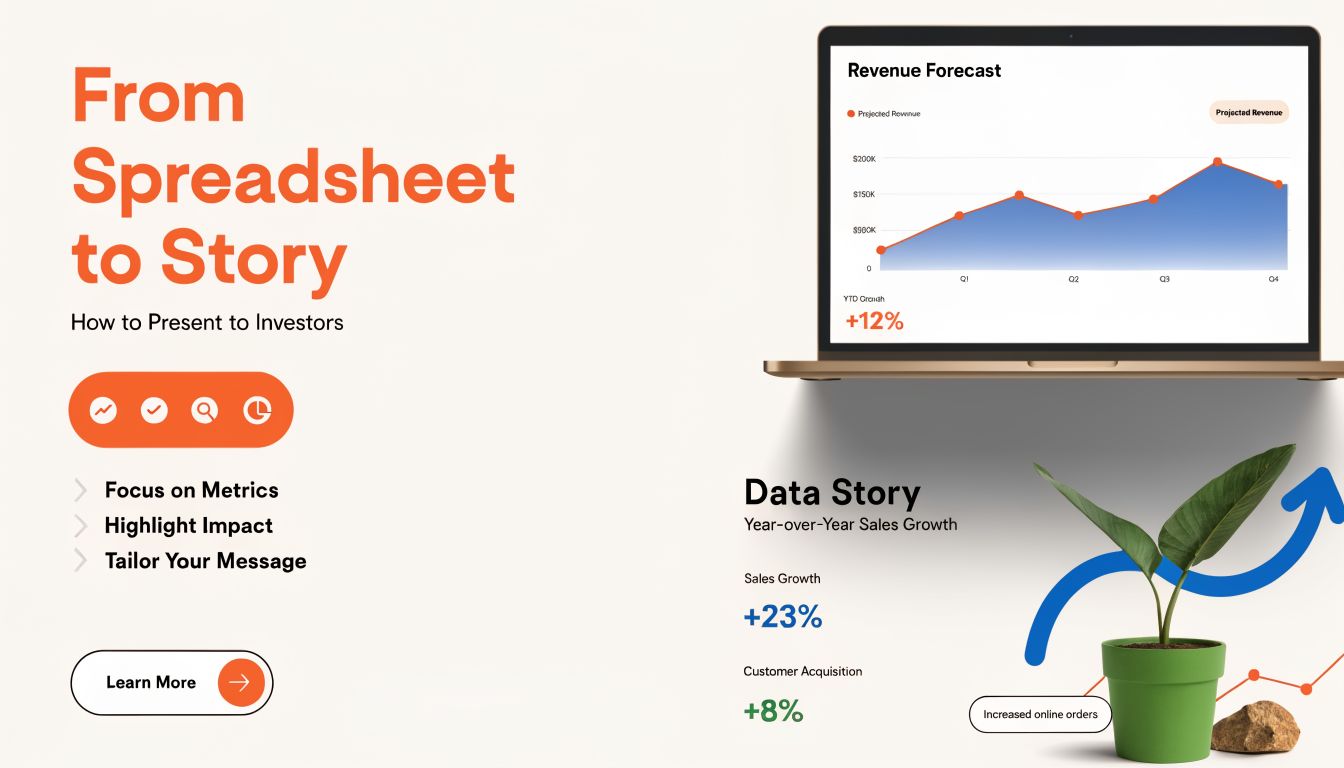
Investors are not buying your spreadsheet. They are judging whether you understand how your business makes money.
A clean income statement matters because it shows discipline. Your explanation matters more because it shows judgment. I want an investor to leave the meeting thinking, “This founder knows which part of the machine is working, which part is slipping, and what they plan to do next.”
Three lines I’d always be ready to defend
I would build the conversation around three lines only.
Gross profit
Tell the operational story. Did your hot dog stand make more per order because food costs dropped, or less because waste and refunds climbed? Did your SaaS startup improve margin because onboarding got cheaper, or did support costs start eating the subscription base? This line shows whether the core engine is getting stronger or weaker.Operating expenses
Show that you spent with intent. Hiring a salesperson, testing paid acquisition, adding software, or investing in content can all be smart decisions. Sloppy spending is the problem. Investors will forgive aggressive bets. They will not forgive a founder who cannot explain where the money went.Net income
Put the bottom line in context. If profit dropped because of a one-time legal bill, say that plainly. If profit improved only because you delayed spending you cannot avoid forever, say that too. I do not want this line presented like a magic verdict. I want the logic behind it.
If you are pre-revenue, show the model before the results
Pre-launch founders often assume they have nothing serious to show. That is wrong.
Use a projected income statement. Build it from visible assumptions, not fantasy. Revenue by month. Direct costs tied to delivery. Operating expenses tied to the team and tools you plan to use. The U.S. Small Business Administration gives practical guidance on creating financial projections that investors expect to see, including projected income statements as part of your business plan. SBA guidance on financial projections.
That projection tells investors whether you understand what has to happen for the business to work. It also shows whether you know what breaks first if sales come in slower than expected.
Talk like an operator
Skip polished finance language. Use plain English.
Say things like:
- “Gross profit fell because return rates jumped after we changed manufacturers.”
- “Operating expenses rose because we hired ahead of revenue in sales.”
- “Net income looks rough this quarter because of a one-time setup cost, not because customer demand weakened.”
- “This forecast is conservative on sales and honest on costs. I would rather explain a miss on upside than defend numbers I made up.”
That last point matters. Founders earn trust by naming risk clearly.
The strongest investor update is the one that proves you know what changed, why it changed, and what you will do about it.
Put the story in the deck. Keep the detail behind it.
Do not paste the full statement into a slide and hope people squint through it. Pull out the few charts or callouts that support your argument. Keep the full income statement in the appendix or data room where an interested investor can inspect it.
If you want a clean structure for that narrative, use this guide on how to create a pitch deck for investors. Your deck should carry the headline. Your income statement should survive scrutiny.
My rule is simple. Lead with the business logic. Back it up with numbers. Never ask investors to do the interpretation for you.
Your Next Financial Milestone
At this point, the format income statement should feel a lot less mysterious.
It’s a scoreboard. It’s a map of where your revenue goes. It’s also a lie detector. If your business looks healthy only when you blur costs together, the format is not the problem. The business model is.
So do the next obvious thing. Build one.
If you have revenue, build last month’s statement. If you’re pre-launch, build a projected version for your first few months of selling. Keep it simple. Revenue at the top. Direct costs next. Operating expenses below that. Then your bottom line.
Use one sheet. Update it regularly. Keep the row labels stable. Don’t wait for perfect bookkeeping software or some magical future finance hire. The act of formatting the statement will teach you where your business is fuzzy.
One more thing. Don’t confuse profit with cash. You need both views. Once your income statement is in shape, tighten your operating rhythm with a simple guide to cash flow management for small business. Profit tells you whether the model works. Cash tells you whether you survive long enough to benefit from it.
Build the sheet. Face the numbers. Then make better decisions.
If you’re a kind, ambitious founder in Chicago or the Midwest and you want honest feedback on the numbers behind your business, join Chicago Brandstarters. It’s a free community for builders from idea stage to seven figures who want real operator conversations, not performative networking.
Leave a Reply