You probably have a sketch, a rough CAD file, or a product idea bouncing around in your head. It feels real because you can see it. But until someone cuts material and makes the first part, it's still theory.
That gap is where most first-time founders get stuck.
I've seen it over and over. Someone has a smart hardware idea, maybe a bracket, enclosure, tool, fixture, or consumer product part. They assume manufacturing starts when a factory says yes. It usually starts earlier, inside a machine shop. That's where your idea stops being a drawing and starts becoming a thing you can hold, test, break, and improve.
If you're trying to figure out what is machine shop in practical terms, don't think “old-school metal room.” Think “the place that turns your design into a physical part with tolerances, finish requirements, and real-world constraints.”
So You Have an Idea Now What
The first version of a product usually looks worse than you hoped and teaches you more than you wanted.
That's normal.
You send a CAD file to a shop. A week or two later, a box shows up. You open it, and within five minutes you learn the handle is too sharp, the fastener choice was dumb, and the part that looked compact on your screen is bulky in your hand. Good. That's progress. Physical products get better through contact with reality.
If you're still at the sketch stage, start by getting your concept into something a shop can react to. That might mean a simple drawing, a rough 3D file, or even a mockup. If you need help moving from concept to something buildable, this practical guide to product prototyping is a useful first step.
The first job is not perfection
Your first goal isn't to get a production-ready part. Your first goal is to get a part that answers real questions.
Ask:
- Does it fit?
- Does it feel right in the hand?
- Does it assemble the way I thought it would?
- Did I design features that are annoying or expensive to machine?
Your prototype is a lie detector. It tells you which parts of your idea only worked on a screen.
A machine shop is often the first place that gives you honest feedback. That's why I treat early machining costs as learning costs, not just manufacturing costs.
What a Machine Shop Actually Does
A machine shop is a controlled subtractive-manufacturing environment where raw material is cut into precise parts. Its real value is dimensional accuracy and surface finish, which is different from general fabrication, where the work often centers more on joining or forming metal, as explained by Automech Group's machine shop overview.
That definition sounds technical. Here's the plain-English version.
A machine shop takes a chunk of material and removes everything that shouldn't be there.
Think of a sculptor with a block of stone. Same basic idea. The difference is that a machine shop works to exact dimensions and repeatable results, usually with metal or plastic and with far tighter control than hand tools can give you.
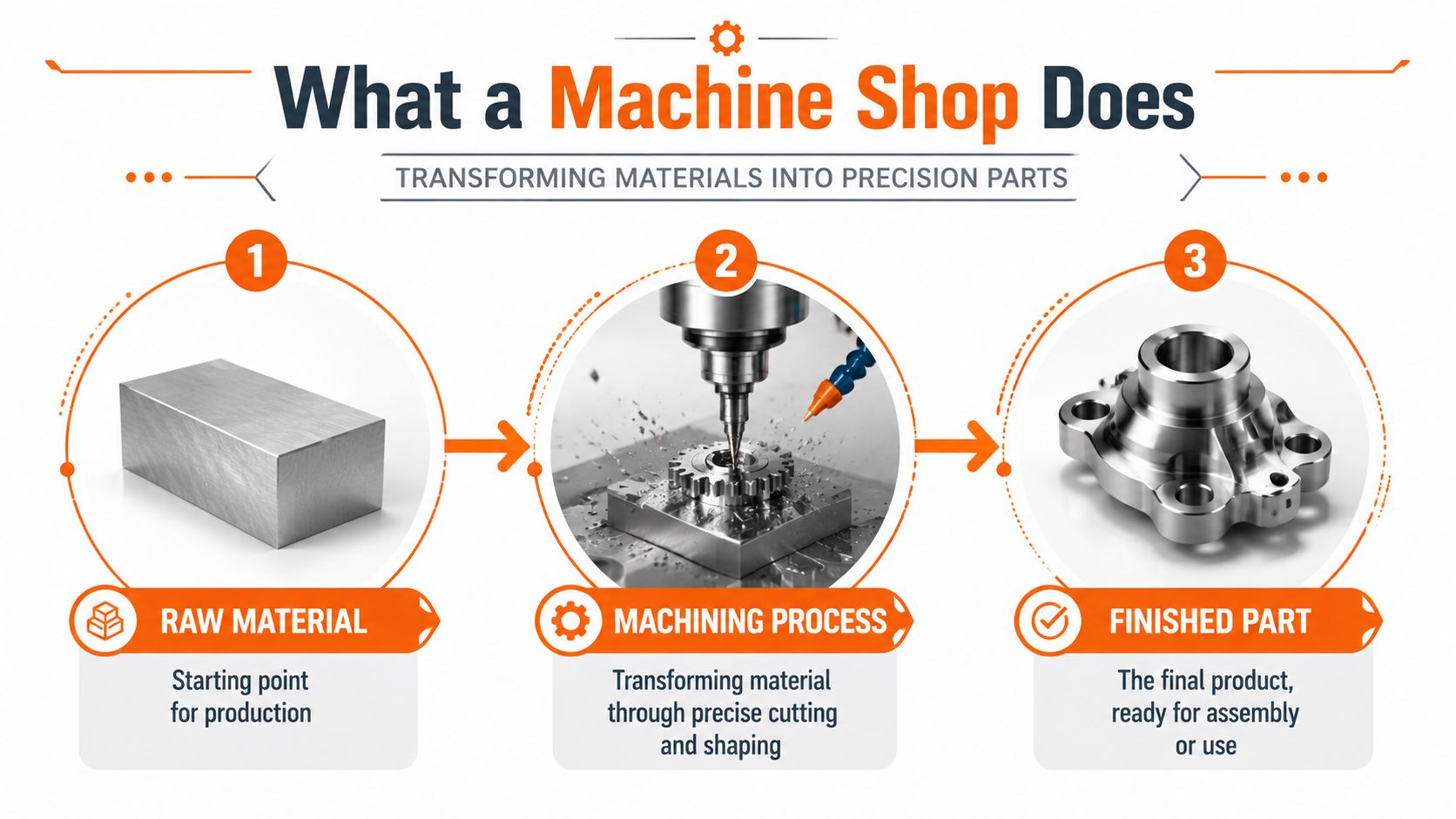
Subtractive manufacturing in plain English
If you're comparing processes, American Additive Manufacturing's comparison of subtractive and additive manufacturing is worth reading. It helps you decide when machining makes more sense than 3D printing.
For founders, the simple rule is this:
- Use machining when you need stronger materials, tighter dimensions, better finishes, or parts that behave like final production components.
- Use additive methods when speed, rough form testing, or design freedom matters more than final material behavior.
Milling and turning are the two big ones
If you understand these two words, you'll understand half your quote.
Milling
In milling, the material usually stays fixed while a cutting tool moves around it and removes material. I think of milling as carving. Shops use it for flat surfaces, pockets, slots, holes, and complex shapes.
If your part looks like a block, plate, housing, bracket, or enclosure, milling is probably part of the process.
Turning
In turning, the material spins while the cutting tool stays relatively fixed and shapes the outside or inside. I think of turning as pottery with metal.
If your part is round, like a shaft, bushing, pin, spacer, or threaded cylinder, turning is probably the right process.
Practical rule: If the part's geometry is mostly round around a centerline, ask about turning first. If it looks boxy or has multiple flat faces, think milling first.
Why founders should care
You don't need to become a machinist. You do need to stop sending vague requests like “Can you make this?”
A better message is: “This looks like a milled aluminum prototype with a couple of turned spacers. Can you review the CAD and tell me if I'm using the wrong process anywhere?”
That one sentence tells a shop you're serious and gives them something useful to respond to.
The Tools of the Trade Machines You Will Encounter
When you walk into a shop for the first time, the machines can feel intimidating. Don't let that throw you. You don't need to know every model name. You need to know what each type of machine means for your part, your lead time, and your bill.
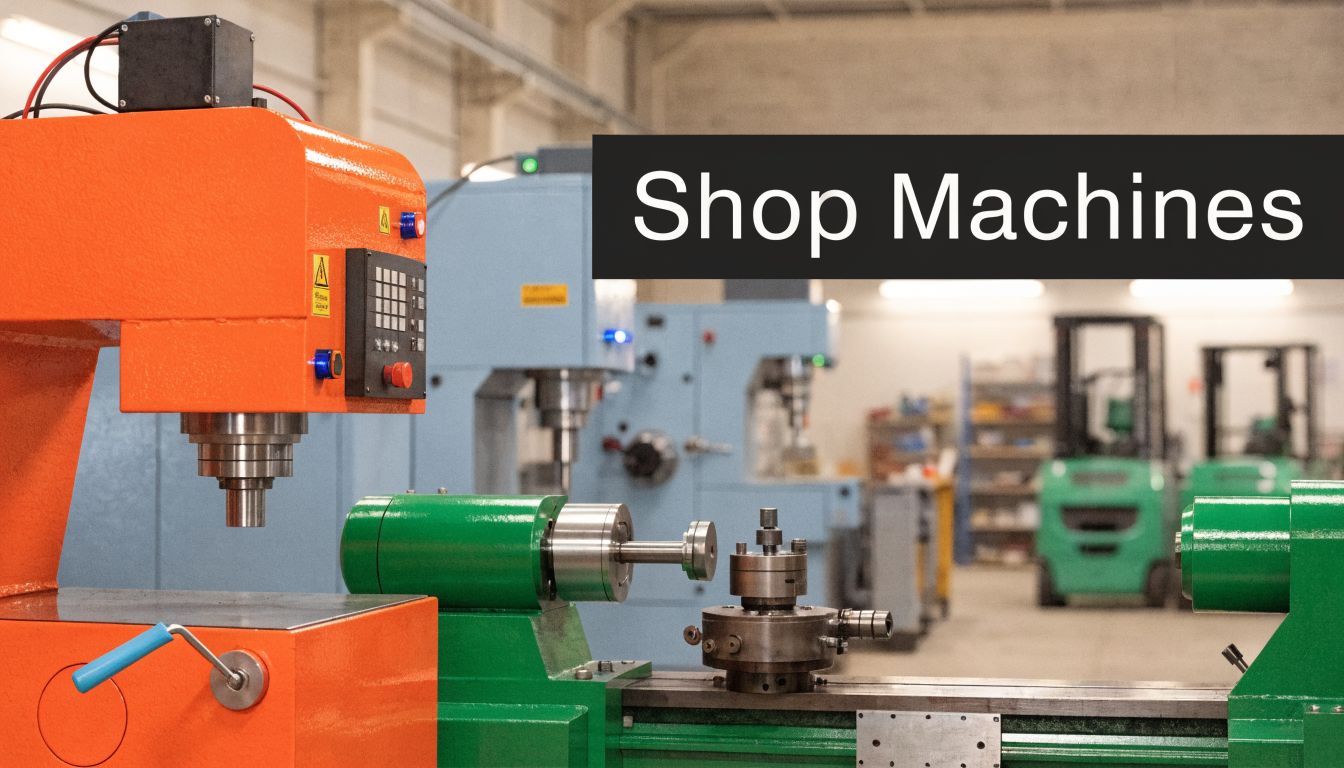
The machines that matter most
Here's the short founder version.
- Lathes cut round parts. Think shafts, pins, bushings, caps, and spacers.
- Milling machines cut flats, pockets, holes, contours, and many non-round shapes.
- Grinders improve finish and hit very fine dimensions on selected surfaces.
- Drill presses make holes, though many modern shops handle drilling on mills or CNC centers.
- CNC machining centers run programmed operations with repeatable motion and tighter process control.
The big split is manual versus CNC.
Manual versus CNC
Manual machines rely heavily on the machinist controlling movement by hand. That's useful for repair work, quick modifications, and simple one-off jobs.
CNC machines run from programmed instructions. Once the setup and program are dialed in, the shop can repeat the same operation again and again with much better consistency.
That matters because the modern machine shop changed hard when CNC became central to production. One industry history says shops moved over the last 50 years from mainly manual mills, lathes, and drill presses to CNC systems that became essential in the late 20th century for productivity, precision, and efficiency, as described in Premier Equipment's history of machine shop evolution. The same source explains that Henry Ford's Model T assembly time fell from a day and a half to an hour and a half, which forced machine shops to supply parts faster and with greater accuracy.
For a founder, here's the takeaway. CNC usually wins when your part has real geometry, repeatability requirements, or any chance of moving beyond a one-off.
If you're still deciding between printed mockups and machined prototypes, this guide on 3D printing in Chicago can help you choose the right first step.
What to look for on a shop floor
I pay attention to three things fast:
How they fixture work
Clean, thoughtful fixturing usually means they think through repeatability.How they store tools and parts
Sloppy handling creates scratches, mix-ups, and wasted time.How they talk about setup
Good shops know setup is where money is won or lost.
Here's a short video that gives you a feel for how a machine shop operates:
A founder doesn't need machine expertise. A founder needs enough literacy to tell the difference between a capable shop and a shop that's guessing.
From One Prototype to a Thousand Parts
A lot of founders think a machine shop is only for making one metal sample. That's too narrow.
A good shop helps through three different moments in your product's life. The first is getting a prototype in your hand. The second is improving the design so it's easier and cheaper to make. The third is building a repeatable process once demand shows up.
Prototype first, ego later
At the beginning, I want speed and honesty. I'm trying to learn where the design is weak.
That first machined part answers painful questions fast:
- Did I choose the wrong wall thickness?
- Are the holes placed in a way that makes assembly annoying?
- Did I add cosmetic details that increase cost without helping function?
If you're moving from concept into factory-ready thinking, this guide on how to manufacture a product is a helpful bridge between prototyping and production planning.
DFM is where shops save you money
This is the part founders skip, and it costs them.
DFM means design for manufacturability. It's the conversation where a shop tells you your design works, but it's harder than it needs to be. Maybe the inside corner radius is too tight. Maybe you picked a weird fastener. Maybe your part needs extra setups because of how you oriented a feature.
A good machinist can often spot cost traps before they hit your invoice.
If a shop never pushes back on your design, I worry. Smart shops question things.
For crowdfunding founders, the jump from “prototype exists” to “I need real production” gets messy fast. This guide on Kickstarter production steps gives a decent overview of the broader process around that handoff.
Production is more about process than heroics
Once your design settles down, the conversation changes. Now I care less about whether they can make one beautiful part and more about whether they can make the same part over and over without drama.
Modern machine shops are increasingly software- and data-enabled production environments. They compete on setup speed, repeatability, and engineering collaboration, as described in 3ERP's look at the modern machine shop.
That matches what I've seen. The value often sits in programming, fixturing, process control, and how quickly a shop can adapt when you revise a feature. The machine matters. The process matters more.
How to Pick and Vet the Right Machine Shop
Founders love to compare quotes. I do it too. But if you pick a shop mainly because it's cheaper, you're asking for expensive surprises later.
I vet shops the same way I vet early hires. I want signs of competence, discipline, and good judgment under pressure.
Start with fit, not price
A shop can be excellent and still be wrong for you.
Some shops act more like job shops. They handle varied work, custom parts, short runs, and weird requests. Others are more production-focused. They want repeat work, stable processes, and predictable demand. Founders should also check what materials a shop commonly machines and whether inspection and finishing happen in-house, as noted in Wikipedia's buyer-oriented machine shop overview.
That's why my first question is simple: “What kind of work do you do all day?”
If their normal work looks nothing like your part, I keep looking.
My vetting checklist
| Category | What to Look For | Why It Matters |
|---|---|---|
| Specialty | Job shop, prototype-focused, or production-oriented | You want a shop whose normal work matches your stage |
| Materials | Real experience with your material, not just willingness | Aluminum, steel, plastics, and specialty materials all machine differently |
| Inspection | Clear quality process and actual inspection tools | Tight parts need measurement discipline, not guesswork |
| Finishing | Deburring, anodizing, coating, polishing, or assembly support | Every handoff to another vendor adds risk |
| Communication | Fast replies, sharp questions, willingness to review files | Good communication catches mistakes before chips start flying |
| Capacity | Realistic lead times and room for repeat orders | A prototype supplier who can't support follow-ups becomes a bottleneck |
What I ask on the first call
I don't ask vague questions like “Are you high quality?”
I ask:
- What materials do you machine most often?
- Do you handle one-off prototypes, short runs, or repeat production?
- What inspection equipment do you use for first articles and repeat jobs?
- What finishing do you do in-house?
- If you see a feature that's expensive or risky, will you flag it before quoting?
If you want a feel for how industrial buyers look at machining suppliers, these Astro Machine Works notes from System Engineering & Automation are a useful outside reference.
My bias: I'd rather work with a slightly more expensive shop that communicates well than a cheaper shop that goes quiet for days.
The fastest test
Give them a small project first.
Not your hardest part. Not your whole product line. One contained job with enough complexity to reveal how they think. I watch how they quote, what questions they ask, whether they hit their promised date, and how the parts arrive.
That first order tells me almost everything.
Decoding the Quote Understanding Costs and Timelines
Machine shop quotes confuse founders because they often bundle together things that feel invisible. You see one number. The shop sees setup, tooling, machine time, material handling, inspection, and risk.
If you don't understand what drives the quote, you can't improve it.
What usually pushes cost up
Start with material. Aluminum is common. Stainless can be slower and tougher on tools. Exotic materials get painful fast. Even without exact numbers, you should expect material choice to affect both price and lead time.
Then there's machine time. This is the monster hiding in plain sight.
A simple block with a few holes is one thing. A part with deep pockets, thin walls, awkward internal corners, flipped orientations, and cosmetic finish requirements is another. Every extra operation is another chance for setup time, slower cutting, or inspection headaches.
Tolerance is where beginners burn money
New founders often over-spec everything because precision sounds professional.
It usually isn't.
If every dimension is treated like a mission-critical dimension, your quote climbs and your supplier gets cautious. Tight tolerances slow down machining and increase inspection work. They can also force a shop into extra setups or finishing steps.
Ask yourself one blunt question: Which dimensions affect function?
Those are the ones worth controlling tightly. The rest should be relaxed.
A part doesn't get better because every feature is expensive to machine. It gets better when the important features are controlled and the unimportant ones are left alone.
Why the first part feels overpriced
The first part includes all the thinking.
The shop has to review your files, choose tools, plan operations, create fixtures if needed, program CNC paths, prove out the process, inspect the result, and deal with whatever your design forgot to mention. That's why prototype pricing often feels high relative to the amount of metal in your hand.
After that, unit economics usually improve because the setup burden gets spread out.
What I want to see in a quote
A useful quote usually tells me enough to ask smart follow-up questions. I look for:
- Material callout so there's no confusion on alloy or stock type
- Quantity assumptions because one unit and repeat orders are different jobs
- Lead time estimate with any caveats around outside finishing
- Notes on exclusions like assembly, coating, or secondary operations
- Revision reference so the quote matches the exact drawing or CAD version
When a quote is too vague, I don't “trust the process.” I ask for clarification before approval.
Common Pitfalls and How to Avoid Them
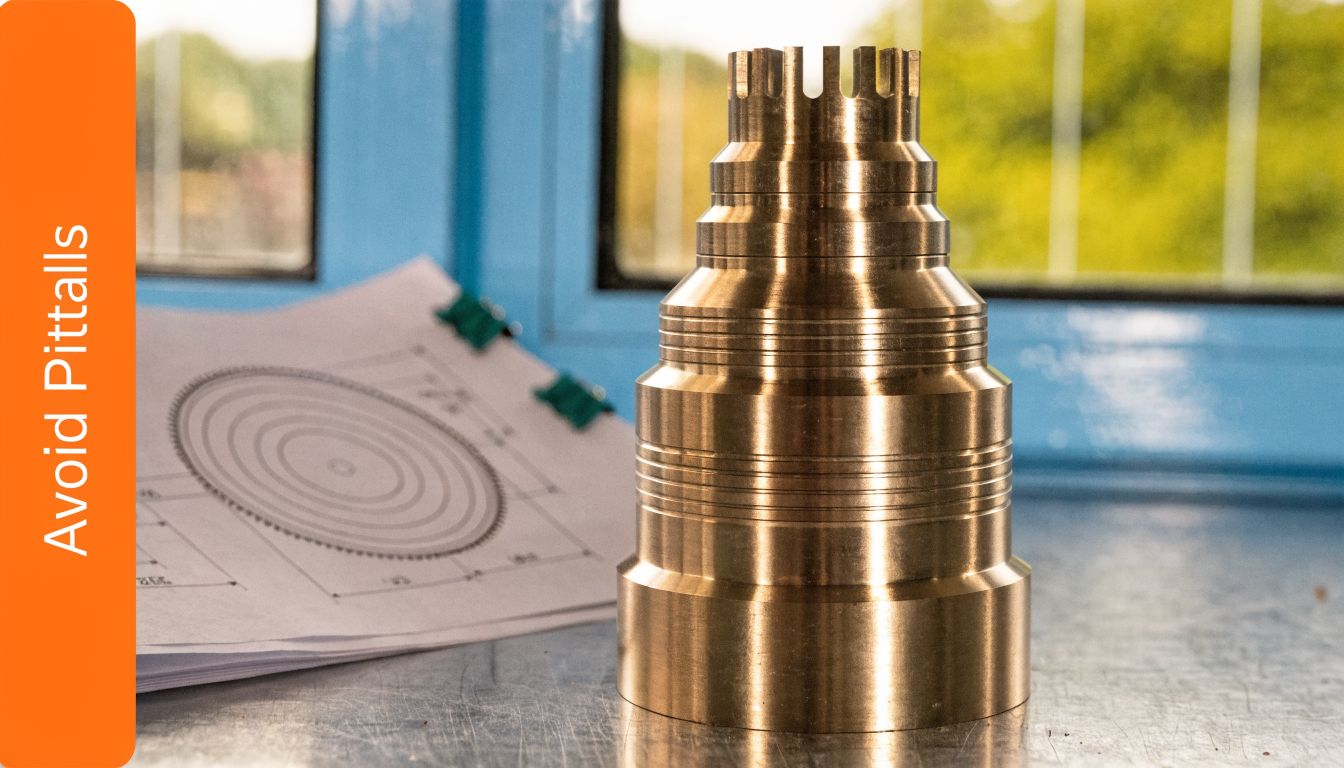
Most machine shop mistakes don't happen on the spindle. They happen before the machine even starts.
I've made enough of these mistakes myself that I can spot them early now. You should too.
Bad inputs create bad parts
Your drawing and model are your instructions. If they conflict, or if both are vague, the shop has to guess. That's where fights start.
I want clear dimensions, clear material notes, and obvious identification of the surfaces or features that matter most. If your part has a cosmetic face, say it. If a hole pattern is functionally critical, say it.
Long before CNC, machine shops grew out of 19th-century industrial production, with early milestones like James Nasmyth's milling machine in 1829, as described in KAAST's history of machining. The reason that history still matters is simple. Machining has always been about making standardized parts to specification. The shop can only hit a spec you communicate.
The usual founder mistakes
Over-tolerancing everything
This is probably the most common one. Tighten only what affects fit, motion, sealing, alignment, or appearance.Ignoring machinist feedback
If a shop says a feature is awkward, expensive, or fragile, listen first and defend later.Designing pretty CAD instead of practical parts
Sharp internal corners, hidden tool access problems, and unnecessary complexity look fine on a screen and create pain on the floor.Sending files with no context
Tell the shop what the part does. A machinist who understands the function often suggests a better path.
The fix is usually boring
Good manufacturing habits aren't glamorous.
Use this short pre-quote routine
Clean your CAD
Remove dead features and old geometry.Review your drawing like a stranger
If someone else opened it cold, would they know what matters?Mark the must-have dimensions
Don't make the shop infer your priorities.State the actual use case
Prototype, fit test, cosmetic sample, or production-intent part.
A machinist can save you from a bad decision. They can't save you from missing information.
Founder FAQ on Machine Shops
Do I need a perfect CAD file before contacting a shop
No. You need enough detail for a useful conversation.
If you have a rough model and know the part's function, many shops can tell you whether you're heading in the right direction. Don't wait forever polishing the file in isolation.
Should I use a machine shop or a 3D printer first
Depends on the question you're trying to answer.
Use 3D printing when you need a quick shape or fit check. Use machining when material strength, finish, tolerances, threads, or production-like behavior matter.
What if I only need one part
That's common. Many shops handle one-off prototypes.
Just be honest about quantity. Don't pretend you need production if you only need one test unit. Shops can smell fantasy demand from a mile away.
How do I know if a quoted lead time is realistic
Ask what the lead time depends on.
If finishing, material availability, fixture work, or programming are still open questions, the date is softer than it sounds. I'd rather hear a realistic answer than a fast answer.
What files should I send
Start with:
- A 3D CAD file
- A 2D drawing if you have one
- Material preference
- Quantity
- Any finish requirements
- A short note explaining what the part does
That last one matters more than founders think.
Do I need to know machining jargon
No. But learning basic terms helps. Milling, turning, tolerance, deburring, fixture, setup, and finish are enough to start having better conversations.
Should I work through a community to find suppliers
Sometimes, yes.
Warm intros can save you weeks of random outreach. Chicago Brandstarters has a free vetted founder community where people share practical supplier recommendations and product-building lessons, which is useful if you want honest operator feedback instead of polished sales talk.
What's the one thing you'd tell every first-time founder
Don't treat the machine shop like a vending machine.
Treat the shop like a technical partner. Share the function of the part, ask for pushback, and start small. That approach saves money, time, and ego.
If you're building a physical product and want real-world advice from founders who've dealt with prototypes, suppliers, and ugly first samples, check out Chicago Brandstarters. It's a free vetted community for Chicago and Midwest builders who want honest feedback, practical introductions, and fewer expensive mistakes.
Leave a Reply