
Category: Uncategorized

  • Grow Your Network: My Go-To Strategies of Business Networking for Real Partnerships

    Grow Your Network: My Go-To Strategies of Business Networking for Real Partnerships

    Let’s be honest. Most "business networking" feels fake. You walk into a room, swap a hundred flimsy business cards, and leave feeling more drained than connected. You’ve been told to "work the room," but what if the room itself is the problem? I believe there’s a better way. It’s not about collecting contacts; it's about curating real connections.

    Think of it like building a personal board of directors. But instead of stuffy executives, it’s a small crew of fellow founders who’ve got your back. These are the people who will celebrate your wins and help you troubleshoot your losses, no strings attached. In this guide, I’m going to walk you through 10 powerful strategies of business networking that ditch the fake hustle. We'll focus on what actually moves the needle: genuine relationships, honest talks, and growing together.

    These aren't vague theories. They are the exact, actionable frameworks I use at Chicago Brandstarters to build a community that supports real founders. Get ready to learn how to build a network that feels less like a chore and more like coming home. You'll see concrete examples and learn how to use these ideas immediately, so you can stop collecting contacts and start building your founder family.

    1. Intimate Peer Cohort Dinners

    Forget collecting business cards in a loud, crowded room. The most powerful strategies of business networking often happen in smaller, more intentional settings. Imagine a curated dinner with just 6-8 fellow founders, all navigating the same entrepreneurial rapids as you. This is the peer cohort dinner, a model that prioritizes deep connection over superficial contact collecting.

    People share a meal and conversation at a candlelit dinner table, fostering deep connections.

    Unlike a one-off event, these dinners happen regularly, building a foundation of trust that allows for real vulnerability. You’re not just sharing what you do; you’re sharing what’s breaking, what you’re scared of, and what you just figured out. This model is the cornerstone of how we operate at Chicago Brandstarters, where our bi-weekly dinners create a reliable support system.

    How I Implement This Strategy

    To make this work, you need more than just good food. You need structure and intention.

    • Set Ground Rules: Before anyone picks up a fork, establish a clear confidentiality agreement. This creates a safe space for open discussion.
    • Guide the Conversation: I use structured prompts to get things started. For instance, "What's your biggest business challenge this month?" or "Share a recent win and the specific tactic that got you there."
    • Send a Pre-Dinner Brief: I email attendees a short bio and the current focus of each person coming. This helps everyone arrive with context, ready to dive deep.
    • Follow Up with Action: After dinner, I send a recap with key takeaways or introductions I promised to make. This reinforces the value and keeps the momentum going.

    2. Community Chat-Based Knowledge Sharing

    The best networking strategies don’t just happen face-to-face; they thrive in the daily, quick conversations between founders. A curated group chat, like on Slack or WhatsApp, transforms occasional meetups into a constant source of support. It's your digital lifeline where you can ask for a last-minute contract review, share a sudden win, or find encouragement after a tough sales call.

    A laptop, smartphone, and notebook on a wooden desk with a 'FOUNDER CHAT' speech bubble.

    This model bridges the gap between formal events. It’s like having a living, searchable library of shared founder experiences. At Chicago Brandstarters, our Slack community is the connective tissue for our cohort, letting members tap into our collective wisdom anytime. A quick question about a new marketing tool at 10 PM gets three brilliant answers by morning. This continuous dialogue fosters a level of trust that scheduled meetings alone cannot build.

    How I Implement This Strategy

    A successful community chat is a well-tended garden, not just a group of people. Here’s how you can cultivate one.

    • Establish Clear Norms: From day one, I set guidelines for confidentiality, response times, and self-promotion. A "no-pitch" rule keeps the focus on mutual support.
    • Create Structured Channels: Organize conversations to prevent chaos. Use specific channels like #wins, #challenges, #ask-for-help, and #introductions so you can find what you need quickly.
    • Prompt Vulnerable Sharing: I actively encourage members to post their struggles, not just their successes. I might kickstart this by sharing a personal challenge or asking, "What's one thing keeping you up at night this week?"
    • Celebrate Generosity: I publicly thank members who offer exceptional advice or make helpful introductions. This reinforces the culture of giving that is essential for a thriving community.

    3. Identity Verification and Vetting for Community Quality

    Not all networking is good networking. One of the most critical strategies of business networking is curating the room itself. A high-quality community is built on trust, and that trust begins with a rigorous vetting process. You have to make sure every member is aligned, committed, and genuine. This isn't about being exclusive for its own sake; it's about creating safety by filtering out consultants, self-promoters, and anyone not truly in the trenches with you.

    This proactive gatekeeping maintains the integrity of the network. It's the bouncer at the door of your club, ensuring conversations are vulnerable and advice is freely given without fear of being sold to. At Chicago Brandstarters, our LinkedIn verification and multi-step application process are non-negotiable. I make sure that when you share a challenge, you’re sharing it with a fellow founder, not a salesperson in disguise. This approach protects the value of every connection you make.

    How I Implement This Strategy

    A strong vetting process acts as a quality filter, letting the right people in and respectfully guiding others elsewhere.

    • Establish Clear Criteria: I publicly share my standards. I let applicants know what I look for regarding founder stage, business model, and community values. Transparency manages expectations.
    • Ask Values-Alignment Questions: Go beyond metrics. I ask questions like, "How do you define generosity in a professional setting?" to gauge cultural fit.
    • Conduct a Brief Intro Call: For promising but uncertain candidates, a 15-minute call with me or a community leader can quickly reveal alignment and intent.
    • Communicate Rejections Kindly: If someone isn't a fit, I reject them with grace. I'll offer specific feedback or point them toward other resources that might be a better match.

    4. Values-Based Community Curation

    Effective networking isn’t just about who you know; it’s about what you stand for together. This is values-based community curation, one of the most powerful strategies of business networking for long-term success. It means you intentionally build a group around shared principles like kindness, generosity, and mutual support, rather than purely transactional goals. It’s a shift from a "what can I get?" mindset to a "what can we build?" culture.

    This approach attracts founders who prioritize impact and relationships. It’s like creating a garden where only certain plants thrive, naturally choking out the weeds of hyper-competitive, take-first networking. At Chicago Brandstarters, our community is built on the explicit value of being "kind givers." This simple filter ensures every member is here to contribute first, creating a safe, high-trust environment where real growth happens. It’s about building a network that feels less like a marketplace and more like a movement.

    How I Implement This Strategy

    A values-driven community doesn't happen by accident. It requires deliberate design and consistent reinforcement.

    • Define and Document Your Values: Be explicit. Write down your core principles. Is it "radical generosity," "brutal honesty with kindness," or "mission over ego"? I make them public.
    • Share Your Origin Story: I explain why these values matter to me personally. A story connects people to the mission far more than a simple rulebook.
    • Celebrate and Reward Value-Aligned Behavior: I feature members who exemplify our values. You can create an award like a "Giver of the Month" to publicly recognize and encourage selfless contributions.
    • Establish Clear Norms: I implement rules that protect our culture, such as a strict "no pitching" policy in community spaces. This guards against the transactional behavior you want to avoid.
    • Hold Members Accountable: You have to gently but firmly address actions that violate your shared values. Protecting the community's integrity is crucial for maintaining trust.

    5. Structured Problem-Solving Peer Advisory

    Conventional networking gives you contacts. This strategy gives you a board of directors for your biggest problems. Imagine presenting your most pressing business challenge to a trusted group of peers whose only agenda is to help you win. This is structured peer advisory, a facilitated format that transforms a group chat into a high-impact problem-solving session.

    Diverse group of young adults engaged in a peer advisory session, using a laptop and sticky notes.

    Unlike informal brainstorming, this model uses a strict protocol, like a well-run courtroom, to ensure the founder asking for help gets clear, unfiltered, and actionable feedback. It’s a core component of our dinners at Chicago Brandstarters, mirroring the focused "hot seat" format popularized by organizations like EO (Entrepreneurs' Organization) and Vistage. You're not just getting opinions; you're getting a dedicated brain trust focused entirely on your success.

    How I Implement This Strategy

    To turn advice into action, you need a disciplined process. A structured format prevents conversations from spiraling and keeps the focus tight.

    • Define Clear Roles: I assign a facilitator to guide the process and a timekeeper to enforce the agenda. The person presenting shares their issue uninterrupted first.
    • Establish Ground Rules: Before starting, everyone must agree to provide kind, honest, and specific feedback. The goal is to build up, not tear down.
    • Use a Timer: I allocate specific time blocks for each phase: problem presentation, clarifying questions, and feedback. This ensures the session stays on track.
    • Capture Action Items: I designate one person to document key insights and the specific next steps the presenter commits to. This creates accountability and a clear path forward.

    This approach is one of the most powerful strategies of business networking because it delivers immediate, tangible value. If you want to dive deeper into this framework, you can learn more about how mastermind groups for entrepreneurs use it to accelerate growth.

    6. Vulnerability-First Culture Over Performative Positivity

    Stop performing and start connecting. Many networking events pressure you to present a flawless highlight reel, but the most effective strategies of business networking do the opposite. They build a culture where sharing struggles is not just accepted but encouraged. This is about trading your polished mask for authentic vulnerability. It creates a space safe enough for real problem-solving and deep, supportive relationships.

    When you admit what’s keeping you up at night, you invite real help, not just a handshake. This approach transforms networking from a transactional chore into a transformational support system. At Chicago Brandstarters, I build our entire community around this principle, creating spaces where "honest war stories" are the currency of connection. It’s this shared struggle that forges the strongest bonds.

    How I Implement This Strategy

    Fostering vulnerability requires deliberate, consistent effort. You have to make people feel safe enough to lower their guard.

    • Lead by Example: As a leader or host, I am the first to share a genuine struggle or recent setback. My candor sets the tone for everyone else.
    • Prompt for Honesty: Instead of asking "How's business?", I ask "What's the hardest thing you're dealing with right now?" This explicitly invites real talk.
    • Respond with Empathy, Not Fixes: When someone shares a problem, you listen first. Offer support and understanding before you jump to solutions. Avoid toxic positivity like "Just stay positive!"
    • Establish Confidentiality Norms: I create a "what's shared here, stays here" rule. This is fundamental to building trust and encouraging openness. You can learn more about how we apply this concept in our guide to vulnerability in leadership.

    7. Strategic Referral and Connector Networks

    Effective business networking isn't just about who you know; it’s about who your network knows. Instead of building your connections one by one, you can tap into a curated ecosystem of experts. Think of this strategy as having a special forces team on call. You create a trusted, external circle of mentors, advisors, service providers, and investors who are aligned with your values and can offer high-level support when you need it.

    This isn’t about creating a public directory or a sales channel. The power is in the careful vetting and the warm, situational introductions. At Chicago Brandstarters, I partner with groups like Goldman Sachs 10KSB and EcomFuel, not to promote them, but to have them available as a resource for our members facing specific growth challenges. This approach ensures you get relevant, high-quality guidance without the noise of unsolicited pitches.

    How I Implement This Strategy

    Building a reliable external network requires diligence and a focus on mutual benefit, not just transactions.

    • Vet for Values, Not Just Skills: Before adding anyone to your trusted circle, you must ensure their values align with yours. A brilliant advisor with a cutthroat approach can damage your culture.
    • Make Introductions with Context: I only connect people when there's a clear, mutual win. A warm introduction should solve a specific problem for one person and offer a relevant opportunity for the other.
    • Maintain a Clear Boundary: You have to keep your community space sacred. Advisors and mentors should provide value through office hours or specific sessions, not by pitching their services in your primary communication channels.
    • Create Escalation Pathways: I guide my members to seek peer support first, then a mentor for broader advice, and finally an external advisor or investor for specialized needs. Properly finding the right people is crucial, and you can learn more about finding business partners to strengthen this process.

    8. Founder-Led Facilitation and Organic Leadership Development

    Instead of relying on a single, top-down leader, the most resilient communities empower their own members to lead. Founder-led facilitation turns participants into stewards of the group’s culture. It’s a powerful strategy that distributes ownership and prevents organizer burnout. This model is like a self-sustaining ecosystem; it ensures the community’s values are deeply embedded in its operations because the members themselves are upholding them.

    This model is the engine behind Chicago Brandstarters. I don't run every event. Instead, we have a documented system that allows different members to step up and facilitate, ensuring our gatherings remain authentic and founder-focused. This approach develops leadership skills within the group, making the entire community stronger and more self-sufficient. You move from a "hub and spoke" model to a true, interconnected web.

    How I Implement This Strategy

    To build a self-sustaining community, you need to create a clear path for members to take the lead. This requires trust, documentation, and a supportive framework.

    • Document Your Process: I created a simple playbook for facilitators. It outlines the event format, key values, and prompts for guiding conversation. This empowers new leaders to step in confidently.
    • Rotate Roles Clearly: Define and rotate responsibilities like sending invites, facilitating the discussion, and handling follow-ups. This prevents any single person from becoming a bottleneck.
    • Provide Mentorship: I've established "facilitator office hours" and pair new facilitators with experienced ones. A little guidance goes a long way in building comfort.
    • Gather Constant Feedback: After each event, I ask attendees for feedback specifically on the facilitation. I use this input to help our member-facilitators grow and refine their approach.

    9. Free Membership Model with Graduated Pathways

    Effective business networking shouldn't be about exclusive, high-cost clubs; it should be about accessibility and genuine value. A free membership model with graduated pathways flips the script by removing the financial barrier to entry. This strategy invites you, an early-stage founder, into a high-value community for free. It nurtures you with resources and connections, while providing clear, optional routes to paid programs as your business scales and your needs evolve.

    Think of it like an open-door policy that builds a massive, engaged ecosystem. You offer immense value upfront, building trust and loyalty. This approach is central to my model at Chicago Brandstarters, where our free community provides foundational support, while partnerships offer pathways to specialized, paid programs when a founder is ready. It’s a sustainable model that grows with you, seen in communities like Y Combinator’s free resources that lead to their core accelerator.

    How I Implement This Strategy

    Success hinges on transparency and delivering real value at the free tier. Your community should never feel like a bait-and-switch.

    • Be Transparent: I clearly explain my business model. I let members know how the free community is sustained and how paid programs fit into the ecosystem. This builds trust.
    • Create Clear Pathways: You should visibly map out the journey. For instance, a founder might start with your free peer meetups, then access a paid workshop, and eventually graduate to a high-touch mastermind.
    • Deliver Genuine Free Value: Your free offering must be valuable on its own. Provide access to strong peer connections, foundational resources, or expert-led Q&A sessions.
    • Make Aligned Recommendations: I only guide members toward paid offerings when it directly addresses their current stage and challenges. A personalized, needs-based approach is crucial.

    10. Confidentiality-Protected Knowledge Exchange

    True strategic growth comes from sharing the unshareable: your actual numbers, your biggest fears, and your half-baked ideas. Most networking environments don't allow for this level of candor. A confidentiality-protected knowledge exchange creates a vault of trust. In this vault, you can discuss sensitive business information without fear of it leaving the room. This safety transforms generic talk into high-value strategic sessions.

    This isn’t just a handshake agreement; it’s a foundational rule that enables real talk about unit economics, pricing strategies, or investor feedback. It's the cone of silence you need to get real. At Chicago Brandstarters, our confidentiality-first approach is non-negotiable, allowing you to openly dissect challenges. It’s a core principle behind effective executive peer boards and mastermind groups, where the value is directly tied to the vulnerability of the participants.

    How I Implement This Strategy

    Creating a secure space for sharing requires clear and consistent reinforcement of the rules.

    • Establish the Mantra: I start every meeting by repeating the core principle: "What's shared here stays here; what's learned here leaves here." This separates confidential details from universal lessons.
    • Use a Simple Agreement: Have members sign a straightforward, one-page confidentiality agreement. It’s less about legal threats and more about formalizing a shared commitment to privacy.
    • Define the Boundaries Clearly: During onboarding, I explain what is confidential (e.g., your name, company, specific numbers) versus what is shareable (e.g., a general business framework or a new marketing tactic).
    • Get Explicit Permission: Before I ever share a member’s story or win publicly, even for marketing, I always get their explicit written consent. This builds lasting trust and shows respect for their privacy.

    10-Strategy Business Networking Comparison

    Strategy Implementation Complexity 🔄 Resource Requirements ⚡ Expected Outcomes ⭐ / 📊 Ideal Use Cases 💡
    Intimate Peer Cohort Dinners High 🔄 — recurring coordination, skilled facilitation Moderate ⚡ — venues, catering, facilitator time High ⭐📊 — deep trust, durable relationships, rich peer mentoring Founders seeking depth over breadth; early-stage builders needing peer validation
    Community Chat-Based Knowledge Sharing Low–Medium 🔄 — setup + ongoing moderation and norms Low ⚡ — platform subscription, moderators, time to archive Medium ⭐📊 — fast tactical help, continuous connection, searchable knowledge Geographically dispersed or very busy founders; maintain momentum between events
    Identity Verification & Vetting for Community Quality Medium–High 🔄 — applications, checks, re-evaluation process Medium ⚡ — admin time, LinkedIn/reference checks, possible background checks High ⭐📊 — higher trust, fewer bad actors, safer sharing environment Communities prioritizing psychological safety and cultural fit; exclusive cohorts
    Values-Based Community Curation Medium 🔄 — define values, model behavior, enforce norms Low–Medium ⚡ — leader commitment, content & recognition systems Medium–High ⭐📊 — loyal membership, reduced toxicity, distinct brand identity Impact-driven founders; regions or groups seeking a counterculture to aggressive networking
    Structured Problem-Solving Peer Advisory High 🔄 — structured agendas, prep, facilitation and follow-up Medium–High ⚡ — facilitator training, meeting time, documentation High ⭐📊 — actionable solutions, accountability, measurable member wins Founders with specific solvable problems; groups valuing peer board-style feedback
    Vulnerability-First Culture Over Performative Positivity Medium 🔄 — culture building, leader modeling, safety norms Low–Medium ⚡ — leader time, small-group spaces, mental-health resources High ⭐📊 — reduced isolation, authentic connections, healthier founder wellbeing Founders facing burnout/loneliness; communities valuing authenticity over hustle
    Strategic Referral & Connector Networks Medium 🔄 — curate partners, manage introductions, transparency rules Medium ⚡ — partner management, vetting, coordination for warm intros Medium–High ⭐📊 — access to mentors/advisors, smoother scaling pathways, network effects Communities preparing members to scale; markets lacking local resources
    Founder-Led Facilitation & Organic Leadership Development Medium 🔄 — role rotation, documentation, facilitator mentoring Low–Medium ⚡ — training time, playbooks, feedback loops Medium ⭐📊 — sustainability, distributed ownership, leadership growth Groups planning for long-term sustainability and founder succession
    Free Membership Model with Graduated Pathways Medium 🔄 — design clear graduation funnels and partner integrations Low ⚡ — partnership coordination, tracking member progression Medium ⭐📊 — broad reach, trust-building, referral funnel to paid programs Early-stage, cash‑strained founders; mission-led communities building pipelines
    Confidentiality-Protected Knowledge Exchange Medium–High 🔄 — craft agreements, enforce violations, clear norms Medium ⚡ — legal review, onboarding, enforcement mechanisms High ⭐📊 — candid strategic discussion, safe sharing of sensitive metrics Communities discussing pricing, unit economics, investor terms where secrecy matters

    Your Turn: Choose Connection Over Contacts

    I've just unpacked ten powerful strategies of business networking that turn the old, transactional approach on its head. From intimate peer dinners to building a culture of vulnerability, each strategy shares one thing: putting authentic human connection over a long list of contacts. This isn't just a feel-good philosophy; it's a fundamentally better way to build your business and your support system.

    Think of it like building a bridge. Old-school networking is like throwing a single, flimsy rope across a canyon and hoping it holds. The strategies I discussed are about meticulously laying a foundation, placing sturdy pillars of trust, and constructing a robust bridge that can bear the weight of your real challenges and opportunities. A network built on shared values, mutual support, and genuine vulnerability will not only withstand storms but will actively help you navigate them.

    From Theory to Action: Your Next Steps

    The shift from a "contact collector" to a "community builder" is a conscious choice. You don't need a thousand LinkedIn connections; you need a handful of people you can call at 10 PM when a server crashes or when you close a huge deal. The real magic happens not in the crowded conference hall but in the quiet, confidential conversations where you can be fully yourself.

    Here's how you can start putting these ideas into practice today:

    • Audit Your Network: Instead of asking "Who can help me?", ask "Who can I help?". Identify three people in your existing circle you can support this week with an introduction, a resource, or a simple check-in. This is the foundation of a giving-first ecosystem.
    • Initiate One Deep Connection: Forget the mass outreach. Identify one person you admire and craft a thoughtful, personal message focused on a specific, shared interest. Your goal isn't to get something from them; it's to start a genuine dialogue.
    • Find Your Cohort: Seek out a community that aligns with the principles we've discussed, one built on vetting, trust, and shared values. Stop trying to build your support structure from scratch, alone.

    Mastering these modern strategies of business networking isn't about becoming a better schmoozer. It's about becoming a better leader, a more resilient founder, and a more fulfilled human being. It’s about building a professional life so intertwined with real relationships that your "network" becomes indistinguishable from your community of trusted friends. This is where your most meaningful growth will come from.


    Tired of navigating the founder journey alone? The principles in this article are the very foundation of Chicago Brandstarters. If you're a kind, ambitious builder in the Midwest looking for a vetted community of peers to solve problems with, I invite you to learn more and see if you're a fit for our founder cohort at Chicago Brandstarters.

  • Your Founder’s Guide to Shipping to Amazon FBA Without Mistakes

    Your Founder’s Guide to Shipping to Amazon FBA Without Mistakes

    Let’s be honest—shipping to Amazon FBA for the first time feels like a monster task. I've been there, staring at a pile of boxes in my Chicago apartment, totally overwhelmed. This guide isn't another dry, corporate manual. It's my collection of hard-won lessons from navigating this exact process, mistakes and all.

    My goal is to give you a clear, actionable roadmap so you can get your products into Amazon's hands without the headaches and costly errors.

    Why FBA Shipping Is a Game-Changer for New Brands

    When you're launching a brand from your garage, handling every order yourself feels heroic at first. You pack the boxes, print the labels, and make the daily trip to the post office. But that system doesn't scale. Not even a little.

    Shipping to Amazon FBA is your first real step from being a hobbyist to building an actual, automated business that can run without you.

    Think of it like this: right now, you're the chef, waiter, and dishwasher of your own restaurant. Using FBA is like hiring a world-class kitchen and serving staff for a tiny fraction of the cost. You get to focus on creating the menu (your products and marketing) while Amazon handles all the cooking, serving, and cleanup (storage, packing, shipping, and even returns).

    This frees up your most valuable resource—your time—to work on your business, not just in it.

    Here's a quick look at the core benefits you unlock by shipping your inventory to Amazon's fulfillment centers.

    Benefit What It Means for You
    The Prime Badge Instant credibility and access to millions of Prime shoppers who demand two-day shipping.
    Automated Fulfillment Amazon picks, packs, and ships orders for you, 24/7. No more late-night packing sessions.
    Customer Service & Returns Amazon's team handles customer questions and processes returns on your behalf.
    Scalability Your business can grow from 10 orders a day to 1,000 without you needing more space or staff.
    Multi-Channel Fulfillment You can even use your FBA inventory to fulfill orders from your own website or other channels.

    Ultimately, using FBA lets you compete on logistics with major brands from day one, even as a solo founder.

    The Power of the Prime Badge

    The single biggest reason to jump into FBA is getting that Amazon Prime badge on your listings. For millions of shoppers, that little blue checkmark is a non-negotiable symbol of trust and speed. It instantly turns your unknown product into a credible option.

    Without it, you’re practically invisible to Amazon's most loyal customers.

    For new founders, shipping via FBA isn't just convenient; it's mandatory to compete. It’s the cost of entry to play in the big leagues and tap into a customer base that expects two-day shipping as the standard.

    You're not just buying logistics; you're buying credibility. This is especially true for founders in places like Chicago, where you're competing on a national stage from day one. The strategy is so essential that a staggering 82% of active Amazon marketplace sellers worldwide used FBA in 2023.

    This isn't a fringe tactic; it's the standard playbook. That usage rate climbs even higher in mature markets like the United States, hitting 84%, driven by Amazon's massive infrastructure and over 200 million Prime members. You can read more about these FBA adoption trends to get the full picture.

    So, as we dive into the nuts and bolts of creating your first shipment, remember the "why." You’re not just learning a technical process. You are building the logistical backbone that will let your brand grow far beyond what you could ever manage on your own.

    Creating Your First FBA Shipping Plan in Seller Central

    Jumping into Seller Central to build your first FBA shipment can feel like trying to land a plane with half the instruments missing. The dashboard is a sea of buttons and menus, and it’s damn easy to get lost. But I promise you, once you get through the “Send to Amazon” workflow a couple of times, it becomes muscle memory.

    This is where the theory ends and the real work begins. Amazon's official docs give you the basics, but I'm going to walk you through the details they leave out—the stuff that actually saves you from expensive mistakes.

    Getting Your Shipment Ready

    Before you tell Amazon what you're sending, you need to tell it who is sending it and how it's packed.

    First, set your Ship-from address. This seems simple, but it’s critical. Amazon uses this location to calculate your inbound shipping costs and decide which fulfillment centers get your inventory.

    Next, you'll want to create case pack templates. Think of these as a recipe for your shipment. Instead of punching in the box weight, dimensions, and units every single time, you create a template once. The next time you ship that product, you just pick the template, and everything auto-fills.

    This one simple action saves an insane amount of time and prevents fat-finger errors that cause massive headaches. I’ve seen founders waste hours on every shipment because they skip this step. Don't be that founder.

    This infographic breaks the whole journey down into three core phases you'll be managing.

    An infographic illustrating the three-step process flow for shipping products to Amazon: Prep, Ship, Sell.

    From prepping your products to seeing them live on Amazon, this visual map keeps the end goal in sight.

    The Nightmare of Incorrect Box Contents

    Here’s where you can really get into trouble. You have to tell Amazon exactly what is in every single box. It's tedious, but getting this wrong is a fast pass to inventory chaos.

    I learned this the hard way.

    Early on, I was rushing and accidentally swapped the box content info for two different SKUs. I told Amazon Box A had my blue widgets and Box B had my red ones, but it was the other way around. The result? A two-week nightmare of stranded inventory, wrong product listings, and dozens of confused emails with Seller Support. It was a completely avoidable, self-inflicted wound.

    Your box content information is your sworn testimony to Amazon. If you lie—even accidentally—the system will catch it, and you'll be the one stuck cleaning up the mess while your products sit idle instead of selling.

    To avoid my mistake, here are your options:

    • Use a 2D Barcode: Amazon can generate a special barcode you stick on the box that contains all the content info.
    • Upload a File: You can fill out a spreadsheet with the contents of each box and upload it.
    • Enter it in Seller Central: For small shipments, you can manually type the information directly into the workflow.

    "Why Did Amazon Split My Shipment?"

    One of the most jarring things for a new seller is when Amazon tells you to send your 100 units to three different fulfillment centers across the country.

    Why on earth do they do this? It's all about inventory placement.

    Amazon wants your products strategically positioned across its network to slash delivery times for Prime customers. Think of it like a grocery store stocking milk in coolers all over the store, not just in one corner. By splitting your shipment, they get your items closer to potential buyers in different regions. This is great for the customer, but it can jack up your inbound shipping costs.

    While you can’t completely control this, you can influence it. Enrolling in the FBA Inventory Placement Service lets you send all units of a single SKU to one designated fulfillment center for a per-item fee. This simplifies your logistics but adds a direct cost. For many, it's a worthwhile trade-off, especially when you’re starting out and want to keep things simple.

    Mastering FBA Prep, Packaging, and Labeling

    Amazon's warehouses are insane feats of automation, but the entire system hinges on one simple thing: perfect prep.

    Think of it this way: your product is a passenger on a high-speed train. If every passenger has the right ticket (label) and is sitting in the right car (packaging), the train runs on time. But one wrong ticket, one person in the wrong car, and the whole operation grinds to a halt.

    Getting your packaging and labeling right is non-negotiable. A tiny mistake—a smudged barcode, the wrong size poly bag—can get your entire shipment rejected. This will cost you weeks of lost sales and create a logistical nightmare you don't want.

    Trust me, this is your blueprint for getting it right every time.

    A label printer, shipping boxes, labels, and prep supplies on a table for Amazon FBA.

    Your Product’s Passport: The FNSKU Label

    Every single item you send to an Amazon fulfillment center needs its own unique identifier. This is the FNSKU (Fulfillment Network Stock Keeping Unit) label. It’s your product’s passport into Amazon’s kingdom, linking that specific unit directly back to you, the seller.

    You might be thinking, "My product already has a UPC barcode. Isn't that enough?"

    Almost always, the answer is no. Unless you've been approved for "commingled inventory" (which I strongly advise against), you have to cover up that existing UPC with a fresh FNSKU label.

    Why? Because a UPC is generic. An FNSKU is yours. Without it, your premium-quality widget could get mixed in with identical, lower-quality ones from other sellers. That leads to customer complaints and bad reviews for something that isn't even your fault.

    I learned this from a friend's experience. He was launching some beautiful kitchen gadgets, but his first shipment got flagged because his inkjet-printed FNSKU labels were slightly smudged. The scanners couldn't read them. He had to pay Amazon a hefty per-unit fee to re-label every single item, wiping out his profit on that first batch.

    Don't let a $0.01 label cost you hundreds of dollars in fees and delays. Your FNSKU is the most critical piece of the FBA prep puzzle. Treat it that way.

    The best move here is to invest in a thermal label printer like a Rollo or a Zebra. They don't use ink, so the barcodes are crisp, durable, and won't smudge. It's one of the best early investments you can make for your brand.

    Individual Unit Prep Requirements

    Once your FNSKU is ready, you have to prep each individual unit according to Amazon’s strict rules. These aren't suggestions; they are hard requirements.

    • Poly Bags: Any product with an opening needs to be in a sealed poly bag with a suffocation warning printed on it. Think plush toys, clothing, or items in an open-faced box.
    • Bubble Wrap: If it's fragile (glass, ceramics), it needs to be bubble-wrapped securely enough to pass a 3-foot drop test onto concrete without breaking. If you wouldn't feel comfortable dropping it yourself, it's not prepped correctly.
    • Sold as a Set: Selling multiple items as a single unit, like a set of three notebooks? They must be bundled together with a label that says "Sold as Set" or "This is a Set, Do Not Separate" clearly visible.

    Amazon is also getting serious about reducing packaging waste. Since 2015, they’ve managed to avoid over 2 million metric tons of packaging material. Programs like "Ships in Product Packaging" (SIPP) let you ship certified products in their own box without an additional Amazon overbox. This saves you money on prep and shows customers your brand cares about sustainability.

    Prepping Your Master Cartons

    After prepping your individual items, it's time for the master cartons—the big boxes you'll use to ship everything to Amazon. Each box needs two labels, and their placement is crucial.

    1. The FBA Box ID Label: You’ll print this directly from Seller Central during the "Send to Amazon" workflow. It tells the warehouse staff exactly what’s inside.
    2. The Carrier Label: This is the standard shipping label from your carrier, whether that's UPS, FedEx, or an LTL freight company.

    Stick both labels on the top or side of the box, but never on a seam where a box cutter will slice it open. A clean, scannable label is your product’s golden ticket through the warehouse doors. Nail this, and you're much closer to seeing your products go live.

    Picking Your Shipping Method: LTL vs. SPD

    Workers demonstrating SPD vs LTL shipping, moving goods on pallets inside and outside a warehouse.

    Alright, your products are prepped, labeled, and boxed up. Now for the moment of truth: How do you actually get this mountain of inventory from your garage to an Amazon fulfillment center?

    You’ve got two main paths, and your choice will have a huge impact on your cost, speed, and frankly, your sanity.

    The options are Small Parcel Delivery (SPD) and Less-Than-Truckload (LTL) freight.

    Think of it this way: SPD is like mailing a bunch of individual packages through UPS. LTL, on the other hand, is like hiring a moving truck for your inventory. You stack all your boxes neatly on a pallet, wrap it up, and a freight company hauls the whole thing away.

    When to Stick with Small Parcel Delivery (SPD)

    When you're starting out, SPD is your best friend. It’s straightforward, fast, and doesn’t require any special equipment like a pallet jack or a loading dock.

    I used SPD for my first dozen or so shipments. It was the perfect way to test the waters and get a feel for the process without tying up tons of cash in inventory. If you can haul your boxes to a UPS Store, you can handle an SPD shipment.

    Here’s when SPD makes the most sense:

    • Your shipment is small: If you're sending less than 10-15 boxes or under 150 lbs total, SPD will almost certainly be your cheapest option.
    • You need it there fast: Amazon typically delivers and checks in individual parcels much faster than LTL pallets.
    • You're working from home: Operating out of a small office or your garage means you probably don't have the space or a loading dock to deal with a freight truck.

    The process couldn't be simpler. You print the carrier labels from Seller Central, slap them on your boxes, and either drop them off or schedule a pickup. It’s familiar ground.

    Making the Jump to LTL Freight

    There will come a point where SPD stops making sense. As your brand grows, you'll find that shipping dozens of individual boxes becomes incredibly expensive and time-consuming.

    That’s your cue to graduate to LTL.

    The tipping point is almost always about weight and cost. As a rule of thumb, once your shipment pushes past the 150-200 lb mark, it’s time to at least start comparing LTL rates. The cost-per-pound for freight is dramatically lower.

    For founders sourcing from overseas, getting a handle on freight is non-negotiable. You can learn more about using freight forwarders for Amazon FBA to manage these larger shipments, but the core principles are the same.

    Moving to LTL feels like a huge step, but it’s one of the first signs that you’re building a real, scalable business. It means you’ve moved beyond the hobbyist stage and are now thinking seriously about logistics.

    However, LTL comes with its own set of rules. You can't just toss boxes on a pallet. Amazon has strict requirements for how you must build a pallet to be accepted at their fulfillment centers.

    Building a Bulletproof Pallet

    • Pallet Type: Use a 40" x 48" four-way access wooden pallet. It has to be in good condition—no broken boards.
    • No Overhang: Boxes cannot hang over the pallet edge. Everything must be flush.
    • Stacking: Stack boxes like a bricklayer, interlocking them for stability.
    • Height & Weight: The total pallet height cannot exceed 72 inches, and the total weight must be under 1,500 lbs.
    • Wrapping: Wrap it tightly in clear plastic shrink wrap, securing the boxes firmly to the pallet.

    After you build it, you'll print four special LTL labels from Seller Central and place one on the center of each of the four sides. The freight carrier will also give you a Bill of Lading (BOL)—this is the official receipt for your shipment. Do not lose this document.

    SPD vs LTL Freight: Which Is Right for Your Shipment?

    To make it even clearer, here’s a quick breakdown to help you decide.

    Factor Small Parcel Delivery (SPD) LTL Freight (Pallets)
    Best For Smaller shipments (under 150 lbs or <15 boxes), beginners, and urgent restocks. Bulk shipments (over 150 lbs), routine inventory replenishment, and cost-conscious sellers.
    Cost Higher cost-per-pound. Becomes uneconomical for larger shipments. Much lower cost-per-pound. Significant savings on shipments over 200 lbs.
    Speed Faster. Amazon processes and checks in individual boxes quickly. Slower. Freight transit and check-in times are longer, often by several days or weeks.
    Equipment None needed. Just boxes, tape, and a printer. Requires a pallet, pallet jack, and a loading dock or liftgate service for pickup.
    Complexity Simple and straightforward. Similar to mailing a standard package. More complex. Requires proper pallet building, labeling, and coordinating with a freight carrier.
    Amazon Prep Slap a shipping label on each box. Build, wrap, and label a full pallet according to strict Amazon guidelines.

    Ultimately, the choice comes down to your shipment's size and your tolerance for complexity. Start with SPD, and as your volume grows, embrace LTL to protect your profit margins.

    The Smartest Choice: Amazon’s Partnered Carrier Program

    Whether you choose SPD or LTL, I almost always recommend using Amazon’s Partnered Carrier Program.

    Seriously, it's a no-brainer.

    Amazon has negotiated insane discounts with carriers like UPS for SPD and various freight companies for LTL. The rates you get through this program are so low that you’ll almost never beat them on your own.

    Plus, the billing is integrated directly into your Seller Central account, and the tracking is seamless. It simplifies the entire process and saves you a ton of money. It’s one of the few easy wins in this business.

    Understanding the Real Costs and Sidestepping Common FBA Pitfalls

    Shipping to Amazon FBA isn't just about paying UPS. The hidden costs and rookie mistakes can wreck your profit margins if you aren't paying close attention. This is where thriving brands separate themselves from the ones that quietly fizzle out.

    Let's talk about the money.

    Your most obvious expense is the inbound shipping fee—what you pay the carrier to haul your boxes to Amazon's warehouses. But the real danger lies in the costs you don't see coming.

    The Profit-Killing Unplanned Fees

    Amazon's fulfillment centers are machines built for ruthless efficiency. When a shipment shows up that doesn't meet their very specific standards, they don't just send it back. Nope. They fix the problem for you and send you the bill.

    These are called unplanned prep service fees, and trust me, they sting.

    Forgot to poly-bag an item that needed it? That’s a fee. Did one of your FNSKU labels get smudged in transit and become unreadable? That’s another fee. These little charges pile up fast and can easily turn a profitable shipment into a loss.

    Your goal should be to achieve a zero-unplanned-fee shipment. It’s the mark of a pro who has their process completely dialed in.

    The Two Most Expensive FBA Mistakes I See

    Beyond the small prep errors, two specific mistakes cost new founders more money than anything else. They're insidious because the damage isn't obvious right away; it compounds silently over time, eating your cash.

    1. Shipping Way Too Much Inventory: It feels smart to send a massive shipment to get a lower per-unit freight cost, right? It's a trap. If that inventory sits and doesn't sell quickly, you'll get absolutely crushed by long-term storage fees. Amazon's warehouses are for moving products, not storing them.

    2. Ignoring Dimensional Weight: Carriers don't just charge you based on a box's actual weight. They also care about how much space it takes up on their truck. This is called dimensional weight (or DIM weight). Think of it like this: a 10-pound box of feathers and a 10-pound steel weight take up vastly different amounts of room. If you ship a large, light item (like a pillow) in a box that’s way too big, you’re literally paying to ship empty air. This one oversight can easily double your inbound shipping costs.

    The most successful FBA sellers treat their inventory like milk, not wine. It has an expiration date. Your job is to get good at forecasting demand and ship just enough to stay in stock, protecting your cash flow and avoiding those punishing storage fees.

    The only way to consistently dodge these fees is with meticulous inventory management. For a much deeper dive, you should read our article on how to master the inventory turnover formula.

    How to Forecast and Test Your Shipments

    So how do you stop yourself from over-shipping? You get good at forecasting.

    Look at your sales history, factor in any seasonality, and project for the next 30-60 days. That's your target. Send just enough inventory to cover that period. This keeps your storage fees minimal and your cash freed up for other things (like more inventory that actually sells).

    Before you ever commit to a big shipment, always run a 'dummy shipment' test in Seller Central first.

    You can walk through the entire "Send to Amazon" workflow right up to the final step without actually buying the shipping labels. This lets you see the exact, real-time cost of sending your products. You can play with different box configurations, case pack quantities, and shipment sizes to find the absolute sweet spot for your costs.

    It’s like a free dress rehearsal for your business. Don't skip it.

    This strategic approach helps you tap into Amazon's powerful network without getting burned. FBA is how small brands level the playing field. In 2024, Amazon's FBA shipping delivered over 7 billion items same- or next-day globally for Prime members. For new founders here in the Midwest, using FBA can cost 70% less per unit than paying for premium carriers on your own. To get a sense of the scale, during Prime Day 2023, shoppers bought over 375 million items, the vast majority handled by FBA. This is the engine you're plugging into.

    Common Questions About Shipping to Amazon FBA

    Even with the best plan, you're going to have questions that pop up when you're in the trenches, actually getting that first shipment out the door. It’s completely normal. I wanted to tackle some of the most frequent ones I hear from founders to clear up any last-minute confusion.

    How Long Does It Take for My Shipment to Be Received?

    This is the million-dollar question, and the honest-to-god answer is… it depends. I’ve seen my own shipments get checked in and become available for sale in under 48 hours after the truck dropped them off. I've also had shipments sit in a trailer for over three weeks during the Q4 holiday chaos.

    Think of it this way: the delivery truck is just dropping your boxes at the front door of a massive concert venue. Your inventory still needs to get through security, find its assigned section, and get scanned in before the show can start.

    As a rule of thumb, plan for a 1-2 week receiving window after the carrier confirms delivery. SPD shipments are usually quicker than LTL pallets since individual boxes are just easier for Amazon's warehouse staff to handle. My best advice? Treat your inventory like a slow-moving train, not a sports car. Ship it way before you actually need it.

    Never, ever ship your last box of inventory and expect it to be available for sale in two days. That's a surefire way to stock out, which can absolutely murder your sales momentum and search ranking.

    What Happens If I Make a Mistake on My Shipment?

    First, take a deep breath. It happens to everyone, including me. What happens next really depends on the mistake.

    For minor slip-ups, Amazon usually has a fix—but it'll cost you.

    • Mislabeled Units: If your FNSKU labels are smudged, un-scannable, or missing, Amazon will probably catch it. They'll fix it for you and charge you an "unplanned prep fee" for every single unit they have to re-label.
    • Incorrect Quantity: Sent more or fewer units than you declared in Seller Central? No huge deal. You can reconcile the discrepancy in the shipment details once it's officially closed.
    • Serious Errors: Now, for the big stuff—like sending prohibited items or repeatedly ignoring prep guidelines—Amazon can temporarily suspend your FBA shipping privileges. This is a painful timeout that can bring your business to a screeching halt. To learn more about how to handle serious account issues, you can review our guide on navigating Amazon account suspensions.

    The key is to get ahead of it. The second you realize you screwed up, open a case with Seller Support. Document everything with photos before your boxes even leave your sight. Honesty and clear communication can turn a potential disaster into a minor hiccup.

    Can I Ship Directly From My Supplier to FBA?

    Yep, you absolutely can. It’s a super common strategy for brands that are starting to scale. Shipping directly from your factory in China (or wherever) to an Amazon fulfillment center saves a ton of time and money by cutting you out as the middleman.

    But let me be clear: this is not a beginner's move. It's like letting someone else pack your parachute. You are putting an enormous amount of trust in your supplier because you remain 100% responsible for that shipment's compliance.

    If you go this route, your supplier has to nail all the FBA prep—FNSKU labeling, poly bagging, carton weight limits, you name it. I strongly, strongly recommend hiring a third-party inspection service in the origin country to verify the entire shipment before it leaves the factory. The last thing you want is 1,000 units showing up in Ohio with the wrong barcodes, creating a mess you have to clean up from Chicago.

    My advice? Start small. Do a test run with a single carton via SPD directly from your supplier. Prove the process works on a tiny scale before you commit to sending an entire LTL pallet that way.


    At Chicago Brandstarters, we believe in building businesses through shared wisdom and genuine support. If you’re a kind, hardworking founder in the Midwest who values real connection over networking, you’ve found your people. Join our free community to learn, grow, and build alongside peers who get it. Apply to join us here.

  • 8 Powerful Examples of Prestige Pricing You Can Steal in 2026

    8 Powerful Examples of Prestige Pricing You Can Steal in 2026

    I get it. You've poured your heart into creating something amazing, and you know it’s worth more. But how do you convince your customers to see that same value? It’s not about just slapping a high price tag on your product; it's about making people want to pay it.

    Think of it like a Michelin-star restaurant. You aren't just paying for the food. You're paying for the story, the chef's expertise, the ambiance, and the feeling of being somewhere special. That is the core of prestige pricing. It's the art of building a brand so desirable that the price becomes a feature, not a bug, signaling quality and exclusivity. The high cost is part of the appeal.

    In this breakdown, I'm going to walk you through real-world examples of prestige pricing from brands that have mastered this strategy. I'll dissect exactly how companies like Apple, Hermès, and even specialized coffee brands command premium prices. We'll look at the psychology behind their tactics and pull out actionable lessons you can apply to your own business, even if you're just starting out. You will learn not just what they did, but how you can do it, too.

    1. Apple Premium Product Ecosystem

    Apple offers one of the most compelling examples of prestige pricing by turning technology into a status symbol. Instead of just selling you a phone or a computer, Apple sells you an identity built on design, innovation, and perceived quality. They command prices often 2-3x higher than competitors with similar specs, yet they maintain an iron grip on market share and your loyalty.

    A flat lay of various tech devices including smartwatches, a smartphone, and a laptop with text 'PREMIUM ECOSYSTEM'.

    Their strategy hinges on an interconnected ecosystem where each product works seamlessly with the others. This creates high switching costs; leaving their "walled garden" means giving up the convenience of iMessage, AirDrop, and iCloud syncing. It’s a brilliant way to justify a premium.

    Strategic Breakdown

    • Price Point: The iPhone 15 Pro Max starts at $1,199, while comparable Android flagships often sit in the $700-$900 range. Similarly, the MacBook Air starts around $1,199, a price where you could get a Windows laptop with more powerful internal hardware.
    • Positioning Cues: Apple uses minimalist design, premium materials (like titanium), an exclusive retail experience, and aspirational marketing to signal superior value. Unboxing an Apple product is an event in itself.
    • Why It Works: Apple taps into our desire for status and simplicity. Owning Apple products signals that you value design and are willing to pay for a premium, hassle-free experience. The ecosystem lock-in makes each purchase a deeper investment into their world.

    Key Insight: Prestige pricing isn't just about the product; it's about the entire experience and the brand story you buy into. Apple's brand is so powerful that it justifies the price tag in your mind, regardless of specs.

    Actionable Takeaways for Founders

    1. Build Your Walled Garden: Create products or services that work better together. This increases the value for your customers who own multiple items and makes it harder for them to leave.
    2. Invest in Visible Differentiators: Focus on design, user experience, and packaging. These are tangible cues that immediately communicate quality and justify a higher price.
    3. Master Your Brand Story: Don't just sell features. Sell a vision, a lifestyle, or a commitment to craftsmanship. This emotional connection is what truly supports premium pricing.

    If you are developing your own approach, understanding your product's unique value is crucial for setting the right price from the start. You can explore more on this by reviewing a detailed guide on the pricing strategy for new products to build a solid foundation.

    2. Luxury Fashion Brands (LVMH, Hermès, Gucci)

    Luxury fashion houses give us classic examples of prestige pricing, mastering the art of selling a story, not just a product. When you buy a Gucci handbag or an Hermès scarf, you aren't just paying for leather and silk. You are buying into decades of heritage, perceived exclusivity, and a powerful status symbol. These brands price their goods at 5-10x multiples of mass-market alternatives, successfully disconnecting price from production cost.

    A beige leather handbag and olive fabric on a white display stand at an exhibition with a 'HERITAGE CRAFT' sign.

    The strategy relies on creating artificial scarcity and immense desire. By limiting production, instituting multi-year waitlists, and cultivating an aura of unattainability, these brands make their products Veblen goods: demand actually increases as the price goes up.

    Strategic Breakdown

    • Price Point: An Hermès Birkin bag can range from $10,000 to over $300,000, with a production cost I've seen estimated around $800. A Gucci handbag costs $2,000, while a functionally similar unbranded leather bag might cost you just $300.
    • Positioning Cues: These brands use heritage storytelling, iconic designers, opulent flagship stores, and highly selective influencer marketing. The experience of shopping in their boutiques is as much a part of the product as the item itself.
    • Why It Works: Luxury fashion taps directly into our psychological need for status, belonging, and self-expression. Owning one of these items signals success and taste to the world, making the high price a key feature, not a bug.

    Key Insight: For luxury brands, the price is the marketing. A high price reinforces the perception of exclusivity and superior quality, creating a virtuous cycle where the cost itself drives desire.

    Actionable Takeaways for Founders

    1. Manufacture Scarcity: Even if you can produce more, consider using limited edition "drops," waitlists, or exclusive collections. This transforms a purchase from a simple transaction into a rewarding achievement.
    2. Invest in the Experience: Create a signature unboxing ritual, offer exceptional customer service, and design a retail environment (physical or digital) that makes your customers feel special. The purchase journey should reinforce the premium price.
    3. Build Your Legend: Consistently tell your brand's story of craftsmanship, origin, or unique mission. This narrative is what separates a premium product from a commodity. Exploring successful brand positioning examples can give you a clearer roadmap for building your own legacy.

    3. Premium Coffee and Specialty Beverage Brands (Starbucks Reserve, Blue Bottle)

    Premium coffee brands provide stellar examples of prestige pricing by elevating a daily commodity into an artisanal experience. Instead of just selling caffeine, brands like Starbucks Reserve and Blue Bottle sell you a story of origin, craftsmanship, and a sophisticated taste profile. They successfully command prices 3-5x higher than standard coffee by transforming the act of drinking coffee into a sensory ritual.

    A barista pours coffee from a gooseneck kettle into a pour-over dripper next to a 'Specialty Coffee' bag.

    The strategy is rooted in creating perceived value far beyond the raw ingredients. It’s about the meticulous pour-over technique, the single-origin beans from a specific micro-lot in Ethiopia, and the minimalist, almost lab-like cafes that signal this isn't just your regular cup of joe. You are paying for the expertise, the story, and the elevated environment.

    Strategic Breakdown

    • Price Point: A pour-over at a Starbucks Reserve Roastery can cost you $7-$12, while a standard Pike Place roast is under $3. Blue Bottle charges a similar $7-$8 for a single-origin pour-over, a stark contrast to a $2 Dunkin' coffee.
    • Positioning Cues: These brands use origin storytelling, sustainable sourcing narratives, highly trained baristas, and architecturally distinct retail spaces. The brewing process itself becomes a form of theater, reinforcing the product's special status.
    • Why It Works: It taps into your desire for authenticity and affordable luxury. For a few extra dollars, you get to participate in a culture of connoisseurship. The experience feels exclusive, educational, and far more memorable than a quick grab-and-go cup.

    Key Insight: Prestige pricing can turn a commodity into a luxury by wrapping it in a compelling narrative and an elevated experience. The price becomes a reflection of the craftsmanship and story, not just the product.

    Actionable Takeaways for Founders

    1. Tell Authentic Origin Stories: Connect your product to its source. Whether it's coffee beans or handcrafted leather, transparently sharing the "how" and "where" builds a narrative that justifies a premium.
    2. Turn Process into Performance: Showcase the skill and craftsmanship behind your product. This could be a live demonstration, an open-kitchen concept, or detailed content about your manufacturing process, making the invisible value visible.
    3. Design a Premium Environment: Your physical or digital storefront should reflect your price point. Invest in design, atmosphere, and customer service to create an experience that feels as premium as the product you're selling.

    4. High-End Hospitality and Boutique Hotels (Four Seasons, Rosewood)

    High-end hospitality gives us one of the clearest examples of prestige pricing, where the product isn't a physical good but an intangible experience. Brands like Four Seasons and Rosewood don't just sell you a room; they sell you an escape into a world of flawless service, exclusivity, and personalized comfort. They justify nightly rates 3-5x higher than standard hotels by making you feel like a VIP.

    The strategy relies on creating an emotional connection through impeccable service. From remembering your favorite drink to anticipating your needs before you ask, these brands build a reputation that transcends the physical amenities. You’re not just paying for a bed; you’re paying for the feeling of being completely cared for.

    Strategic Breakdown

    • Price Point: A standard room at the Four Seasons might cost you $1,500 per night, while a room at a standard chain hotel in the same city could be $250. This premium is justified entirely by the service and brand promise, not just the location or room size.
    • Positioning Cues: These brands use prime real estate, stunning architecture, world-class spas, Michelin-starred dining, and, most importantly, intensively trained staff who deliver unparalleled personal service. The brand itself becomes a signal of your own status and discerning taste.
    • Why It Works: Luxury hospitality taps into the desire for recognition, comfort, and hassle-free indulgence. The price acts as a filter, ensuring an exclusive environment. You are paying for the guarantee that your experience will be perfect, removing the stress and uncertainty that can come with travel.

    Key Insight: When you're selling an experience, prestige is built on consistency and personalization. The premium price is a promise of perfection, and every touchpoint, from the doorman to the concierge, must reinforce that promise.

    Actionable Takeaways for Founders

    1. Operationalize Empathy: Invest heavily in training your team to not just follow scripts but to anticipate your customer's needs and personalize interactions. A guest history system that tracks preferences is a powerful tool for scaling this.
    2. Create Signature Moments: Develop unique, memorable experiences that customers can't get anywhere else. This could be a private tour, a unique welcome amenity, or a signature scent in your establishment that becomes synonymous with your brand.
    3. Design for the Senses: Go beyond function and focus on aesthetics, ambiance, and comfort. Your physical space is a powerful marketing tool that signals quality and justifies your premium before a customer even interacts with your staff.

    5. Premium Fitness and Wellness (Peloton, Equinox)

    The fitness industry gives us some of the clearest examples of prestige pricing, where brands like Equinox and Peloton sell you transformation and identity, not just a workout. Instead of offering simple gym access, they cultivate an aspirational lifestyle built on community, expert guidance, and exclusivity. They charge prices 5-10x higher than mass-market gyms because they aren't selling you a treadmill; they're selling you membership into an elite club of high-performers.

    This strategy works by turning a commodity (exercise) into a luxury experience. The high price becomes a feature, acting as a barrier to entry that preserves the brand's exclusivity and reinforces its value to you. You're not just paying for a gym; you're investing in a version of yourself that aligns with the brand's affluent, disciplined image.

    Strategic Breakdown

    • Price Point: An Equinox "All-Access" membership can cost you over $300 per month, compared to a Planet Fitness membership at around $10. Similarly, a Peloton Bike+ package starts at over $2,495 plus a $44 monthly subscription, while you can find free workout videos on YouTube.
    • Positioning Cues: These brands use immaculate, beautifully designed facilities, celebrity-like instructors, high-end amenities (like Kiehl's products in Equinox locker rooms), and powerful community-building technology to signal superior status. The message is clear: "It's not a gym. It's a lifestyle."
    • Why It Works: Premium fitness taps into our fundamental desire for self-improvement and belonging. The high cost creates a strong psychological commitment, making you more likely to show up. The community and social proof from being part of an exclusive group provide powerful motivation that a basic gym membership simply cannot replicate.

    Key Insight: When you sell an outcome or an identity instead of a service, you escape commoditization. I've found people will pay a significant premium for a brand that helps them become the person they want to be.

    Actionable Takeaways for Founders

    1. Build Your Gurus: Elevate your experts (instructors, coaches, trainers) into personalities. Create a platform for them to build a following, as this creates a "tribe" of loyal customers who are connected to a person, not just your brand.
    2. Manufacture Exclusivity: Use your pricing and membership structure to create a sense of an "in-group." Offer member-only events, exclusive content, and premium tiers to reinforce the value of being part of the community.
    3. Sell the Transformation, Not the Tool: Frame your marketing around the end result your customer desires. Whether it's confidence, status, or health, focus on the emotional and psychological benefits, not just the physical features of your product or service.

    6. Luxury Automotive Brands (Tesla, Porsche, Lamborghini)

    Luxury car makers give us textbook examples of prestige pricing, selling not just transportation but an identity defined by performance, heritage, and exclusivity. Brands like Porsche and Lamborghini justify enormous price tags through decades of engineering excellence and aspirational branding. More recently, Tesla disrupted this space by blending technological innovation with a similar prestige model, proving that heritage isn't the only path to a premium.

    This strategy allows these companies to command gross margins of 30-40%, double that of mass-market automakers. They achieve this by turning a vehicle into a statement piece, where the price itself is a key feature that signals your success and taste.

    Strategic Breakdown

    • Price Point: A Porsche 911 starts over $114,000, while a Chevrolet Corvette with comparable performance begins around $68,000. A Tesla Model S Plaid can reach $90,000, significantly higher than other electric sedans. The Lamborghini Revuelto sits in an ultra-luxury tier above $600,000.
    • Positioning Cues: These brands use powerful engines, iconic designs, premium materials, and exclusive owner communities to signal superiority. Tesla built its prestige on a narrative of technological disruption and a direct-to-consumer sales model that feels more modern and exclusive to you.
    • Why It Works: Driving a Porsche or Lamborghini is a public display of achievement. Tesla ownership signals your commitment to innovation and sustainability. You are buying into a powerful story and a community, whether it's one of racing heritage or forward-thinking technology.

    Key Insight: Prestige pricing in the auto world is about selling an experience far beyond the drive itself. It leverages emotional triggers like status, performance, and belonging to make the high price feel not just justified, but desirable to you.

    Actionable Takeaways for Founders

    1. Build a Founder Mythos: Associate your brand with a visionary leader or a powerful origin story. Elon Musk's narrative is central to Tesla's brand, much like Ferdinand Porsche's engineering legacy is to his.
    2. Create an Exclusive Community: Offer ownership experiences that money can't buy, like private track days, factory tours, or members-only events. This transforms your customers into loyal brand ambassadors.
    3. Use Scarcity to Your Advantage: Develop limited-edition models or offer extensive customization options. This creates a sense of rarity and allows customers to express their individuality, justifying a higher price tag.

    7. Premium Skincare and Beauty (Estée Lauder, La Mer, SK-II)

    The luxury beauty industry offers some of the clearest examples of prestige pricing, where perceived value and brand story are far more influential than raw ingredients. Brands like La Mer sell moisturizers for over $300 an ounce by crafting an aura of exclusivity, scientific breakthrough, and aspirational results that transcend simple hydration. You aren't just buying a cream; you're buying hope in a jar.

    This strategy relies on turning a commodity into an experience. Through meticulous branding, opulent packaging, and an air of scientific authority, these companies create a psychological justification for prices that are often 10x higher than mass-market products with functionally similar ingredient lists.

    Strategic Breakdown

    • Price Point: La Mer's Crème de la Mer sells for $200 for 1 oz, while a highly-rated drugstore moisturizer from Cetaphil costs you about $15 for 16 oz. SK-II's Facial Treatment Essence is priced around $190, whereas comparable essences are available for $20-30.
    • Positioning Cues: These brands use heritage storytelling (La Mer's "Miracle Broth"), clinical-sounding language, selective retail partnerships (Saks Fifth Avenue, Neiman Marcus), and luxurious, heavy packaging to signal superior efficacy and status.
    • Why It Works: It taps into your psychology and desire for self-care and transformation. The high price itself becomes a feature, implying potency and creating a placebo effect. Using an expensive product feels like a ritual, reinforcing your belief that it must be working.

    Key Insight: In prestige beauty, the story is the active ingredient. The brand narrative, packaging, and retail experience are just as critical as the formula itself in justifying the premium price to you.

    Actionable Takeaways for Founders

    1. Craft Your Founder Narrative: Develop an authentic, compelling story behind your brand or product's discovery. Emotional resonance can be a powerful justification for a premium price point.
    2. Invest in Aspirational Aesthetics: Your packaging and branding must communicate luxury at first glance. Make the unboxing experience worthy of being shared on social media to build organic buzz.
    3. Use Science-Forward Marketing: Frame your product's benefits using language that sounds authoritative and exclusive. You don't need to mislead, but you do need to build a perception of advanced, high-performance formulation.

    8. Premium Direct-to-Consumer Brands (Warby Parker, Glossier, Everlane)

    The rise of direct-to-consumer (DTC) brands gives us a modern twist on examples of prestige pricing by cutting out the middleman to offer "affordable luxury." Brands like Warby Parker, Glossier, and Everlane built their empires by directly managing their brand story, customer experience, and supply chain. They command a premium over mass-market goods while undercutting traditional luxury, creating a powerful value proposition for you if you want quality and transparency without the outrageous markup.

    This strategy hinges on creating a direct, authentic relationship with you, the customer. By controlling the narrative from manufacturing to your front door, these brands build a cult-like following that justifies a price point well above generic alternatives, proving that prestige can be accessible.

    Strategic Breakdown

    • Price Point: Warby Parker's frames typically cost you $95-$155, a fraction of the $300-$600 you might pay at a traditional optometrist but more than a budget online retailer. Similarly, an Everlane cashmere sweater at $150 feels like a steal compared to a $400 department store equivalent, yet it’s far from fast-fashion pricing.
    • Positioning Cues: These brands lean heavily on minimalist aesthetics, transparent pricing models ("Radical Transparency"), and a strong founder-led narrative. They use social media and user-generated content to build a community, making you feel like part of an exclusive, in-the-know club.
    • Why It Works: DTC prestige taps into your desire for authenticity, value, and a direct connection to the brands you support. By making you feel smart for finding a high-quality product at a fair price, they build fierce loyalty and turn you into an advocate.

    Key Insight: Prestige isn't just about being the most expensive option; it's about delivering the highest perceived value. DTC brands win by reframing luxury as a combination of quality, transparency, and a direct-to-you story.

    Actionable Takeaways for Founders

    1. Own Your Narrative: Control your brand story from day one. Use your "About Us" page, social media, and packaging to communicate your mission, values, and what makes your product special. I believe a strong story is a core pillar of your brand.
    2. Build a Community, Not Just a Customer List: Engage directly with your audience through social media, exclusive product drops, and feedback channels. Making your customers feel heard and valued is a powerful way to justify a premium price.
    3. Use Transparency as a Weapon: Break down your costs, explain your sourcing, or show behind-the-scenes content. This honesty builds trust and helps you and your customers understand the true value of what you're buying. This is just one of many examples of product differentiation you can leverage.

    Prestige Pricing: 8-Brand Comparison

    Example 🔄 Implementation Complexity ⚡ Resource Requirements 📊 Expected Outcomes 💡 Ideal Use Cases ⭐ Key Advantages
    Apple Premium Product Ecosystem High — integrated HW/SW, annual refresh cadence Very high — R&D, manufacturing, retail, elite talent Strong market share + high margins (35%+); repeat upgrades Consumer electronics seeking lock‑in and cohesive UX Design excellence, ecosystem lock‑in, pricing power
    Luxury Fashion Brands (LVMH, Hermès, Gucci) Very high — craftsmanship, heritage curation, limited runs Very high — artisans, flagship stores, long brand build Extremely high margins (60–80%); brand value appreciation Heritage goods, status-driven luxury categories Scarcity, resale value, powerful status signaling
    Premium Coffee & Specialty Beverage (Starbucks Reserve, Blue Bottle) Moderate — sourcing, barista expertise, retail design Moderate — supplier partnerships, retail fit‑outs, skilled staff Higher per-unit margins (50–70%); recurring daily purchases Food & beverage with high-frequency consumption Storytelling, recurring revenue, experiential retail
    High‑End Hospitality & Boutique Hotels (Four Seasons, Rosewood) Very high — property build, service systems, personalization Extremely high — real estate, intensive staff training High ADR and margins (40–60%); strong guest LTV Luxury travel, events, experience-driven stays Personalized service, premium ancillary revenue, prestige
    Premium Fitness & Wellness (Peloton, Equinox, Barry's) High — instructor talent, tech integration, community ops High — facilities, instructor pay, platform development High recurring revenue and retention; strong upsell potential Membership/subscription fitness and lifestyle brands Habit formation, community effects, ancillary sales
    Luxury Automotive (Tesla, Porsche, Lamborghini) Very high — advanced engineering, long development cycles Extremely high — R&D, manufacturing, complex supply chains High gross margins (30–40%); strong resale values Performance vehicles, tech‑led mobility, prestige cars Performance narrative, customization, brand mythology
    Premium Skincare & Beauty (Estée Lauder, La Mer, SK‑II) Moderate — formulation, selective distribution, branding High — marketing, packaging, influencer partnerships Very high margins (70–85%); strong emotional attachment Aspirational personal care with social visibility Packaging/unboxing, aspirational branding, expandability
    Premium Direct‑to‑Consumer (Warby Parker, Glossier, Everlane) Moderate — digital ops, CX, supply transparency Moderate — marketing, fulfillment, customer support Good margins (40–60%); fast iteration and loyalty Digital-first brands targeting value-conscious affluent buyers Transparent pricing, direct feedback loops, scalability

    Your Turn: Price With Confidence, Not Arrogance

    We've journeyed through a landscape of premium brands, from the sleek ecosystems of Apple to the handcrafted legacy of Hermès. You've seen how Starbucks Reserve turns a simple cup of coffee into an event and how La Mer bottles exclusivity into a tiny, expensive jar. Each of these diverse examples of prestige pricing tells me the same core story: a high price is not the cause of luxury, but the result of it.

    This strategy is built on a foundation of value, perception, and unwavering commitment. It's a strategic conversation with your customer, one where price becomes a powerful signal of quality, status, and the experience you promise to deliver. It’s not just about slapping a high number on your product; it’s about earning the right to do so.

    Recapping the Core Principles

    Let's distill the lessons from these titans of industry into actionable truths for your own venture:

    • Value is a Trinity: The price you command is a reflection of three things working in harmony: the functional value (it solves a problem well), the emotional value (it makes you feel a certain way), and the symbolic value (it signals something about you to the world). Neglect any one of these, and your pricing strategy will feel hollow.
    • Experience is the Product: For Peloton, the bike is just the entry ticket; the real product is the community and the feeling of accomplishment. For the Four Seasons, a room is just a place to sleep; the true offering is flawless, anticipatory service. You are not just selling a thing; you are selling an experience wrapped around that thing.
    • Scarcity Creates Desire: Whether it’s a limited-edition Porsche, a seasonal Starbucks brew, or an appointment-only boutique, creating controlled scarcity is the fastest way to amplify desire. What you hold back is often as powerful as what you offer. This is a fundamental lesson I see in nearly all successful examples of prestige pricing.

    Building Your Pricing Foundation

    So, what's your next move? It's not about picking a number out of thin air. It's about building a brand that can justify the price you want to charge. Start by asking yourself the tough questions. What unique story are you telling? How are you obsessing over the details that your competitors ignore? What community are you building around your work?

    Your price is a direct reflection of the confidence you have in your own creation. It’s a testament to your hard work, your vision, and the value you bring to your customers. Don't fall into the trap of pricing based on fear or what everyone else is doing. You should price based on the brand you are building and the promise you are making. Honor your work with a price that reflects its true worth.


    If you're a founder in Chicago wrestling with these exact questions, you don't have to do it alone. At Chicago Brandstarters, we bring together kind, hardworking builders to share these challenges and help each other build brands that can command the price they deserve. Join a community that understands the journey: Chicago Brandstarters.

  • A Founder’s E-commerce Growth Strategy Playbook

    A Founder’s E-commerce Growth Strategy Playbook

    An e-commerce growth strategy isn't some fancy MBA buzzword; it's your repeatable engine for finding and keeping customers. Forget chasing fleeting trends. I'm talking about building a solid, predictable machine that fuels your brand's expansion, turning complete strangers into your biggest fans.

    What Is An E-commerce Growth Strategy

    Let's be real for a second. Building an e-commerce brand can feel like you're just shouting into a void. You poured your heart into a great product, but growth feels random, unpredictable, and sometimes, downright impossible.

    What if you had a recipe instead of just guessing?

    Think of your growth strategy like my recipe for your favorite deep-dish pizza. You need the right ingredients (acquisition channels), precise measurements (your key metrics), and clear, repeatable steps (a solid framework). Without a recipe, you’re just throwing dough and cheese in the oven and hoping for the best. With one, you create something amazing, every single time. My goal here is to help you shift from just 'selling stuff' to building a strategic growth machine that works for you, even while you sleep.

    This isn't about finding a single "growth hack" that'll fizzle out in a week. It’s about building a durable foundation—understanding exactly who you're selling to, where to find them, and how to create an experience that makes them want to come back again and again.

    The Opportunity Is Massive

    The scale of e-commerce is just staggering. Global sales are on track to hit $6.88 trillion by 2026, with the US market alone blowing past $1.17 trillion. For founders like us, that’s a monumental opportunity.

    And a huge piece of that pie is mobile. In the US, mobile commerce is projected to jump from $491 billion in 2023 to $745 billion in 2026. This isn’t just a trend; it's how people shop now. Over 3 billion people are expected to be shopping online every year by 2026. Shopify has some great data on these global e-commerce trends if you want to dive deeper.

    More customers is great news, but it also means way more competition. That’s why a deliberate growth strategy is so critical. It’s your game plan to cut through all that noise and claim your piece of this ever-expanding market.

    A great strategy isn't about doing everything. It's about doing the right things, in the right order, for the right customers. It’s the difference between being busy and being productive.

    Why You Need a Plan Now

    Without a strategy, you’re just throwing spaghetti at the wall. You might burn through your marketing budget on Facebook ads that don't convert or spend countless hours on TikTok with nothing to show for it. A clear strategy gives you focus and direction.

    Here’s what a solid plan actually does for you:

    • Make Smarter Decisions: You'll know which marketing channels to pour money into and which ones to ignore completely.
    • Allocate Resources Wisely: Your limited time and money will go toward activities with the highest chance of paying off.
    • Measure What Matters: You can track your progress against clear goals and know exactly when to pivot if something isn't working.

    If you're just starting out, having a plan from day one is everything. For those first crucial steps, check out our guide on how to start an e-commerce business.

    The AARRM Framework For Sustainable Growth

    Forget the dense theories from a business textbook. When you’re in the trenches building a brand, you need a framework that’s simple, powerful, and actually works. I’ve found the most useful one by far is AARRM, which stands for Acquisition, Activation, Retention, Referral, and Monetization.

    To make it stick, I like to use an analogy that feels very Chicago: throwing a killer dinner party.

    Think of your brand as a party you're hosting. The AARRM framework is your game plan for making sure everyone has an incredible time. I break the whole customer experience down into five distinct, manageable stages, each with its own job to do. This keeps you from just lighting money on fire with ads and hoping for the best. Instead, you're building a thoughtful journey from the first invite to the final thank you.

    Breaking Down The AARRM Stages

    Let’s walk through each piece of the puzzle. This isn’t a one-way street where people just fall out the bottom. It’s a loop where each stage can feed the others, creating a growth engine that runs itself.

    • Acquisition (Sending the Invites): This is how you get people to your front door. How do they even hear about your party? Are you posting on social media, sending out emails, or running ads? In e-commerce, this is all about channels like SEO, paid ads, content marketing, or social media. Your only goal here is to get the right people to your website.

    • Activation (The Welcome Drink): The moment a guest walks in, you hit them with a fantastic drink and a perfect appetizer. It's their first "aha!" moment—they instantly know they’re in the right place and this party is going to be good. For your store, Activation is that first meaningful thing a new visitor does. Maybe it’s signing up for your newsletter to get 10% off, creating an account, or watching a product demo. They’ve taken a small step that proves they're genuinely interested.

    • Retention (The Great Food & Conversation): This is the main event. The food is incredible, the music is on point, and the conversation is flowing. Your guests are having such a good time they don't want to leave. For your brand, Retention is about creating an experience that keeps customers coming back again and again. Are your shipping updates clear? Is your product quality top-notch? Do you send thoughtful follow-up emails? One study I saw found that bumping up customer retention by just 5% can boost profits by 25% to 95%. This is where you build a real brand. If you want to go deeper, check out these customer retention tactics.

    • Referral (Telling Their Friends): The party was so epic that the next day, your guests are texting their friends, "You have to come to the next one!" This is word-of-mouth, the most powerful marketing you've got. In e-commerce, this means you create referral programs, push for reviews, and encourage user-generated content. You’re turning your happiest customers into your best sales team.

    • Monetization (Catering Their Event): A guest was so blown away they ask you to cater their next big event. They're no longer just a guest; they're a high-value client. Monetization is where you measure the revenue from each customer—the first purchase, repeat buys, and any upgrades or subscriptions. It’s the ultimate report card for the value you're creating.

    This visual helps me show how all these pieces—the ingredients, the steps, and the measurements—fit together to build your growth strategy.

    A detailed diagram outlining an e-commerce growth strategy with ingredients, steps, and measurements.

    This map drives home the point that a solid strategy isn't about just one thing. It's about combining the right ingredients (like your funnel), following clear steps, and constantly measuring your results so you can get better.

    Think of the AARRM framework as a diagnostic tool. If your sales are down, you don't just have a "sales problem." You can use it to find the leak. Is your Acquisition weak? Is your Activation experience confusing? Are you failing to Retain customers?

    This framework gives you a clear language and a structured way to think about growth. Instead of feeling swamped by a hundred different marketing ideas, you can ask a simple question: "Which stage of the AARRM funnel is this activity supposed to improve?" It brings focus to your efforts, which is everything when you're just starting out.

    Finding Your First 100 True Fans

    A man writing notes next to a laptop at an outdoor cafe with a text overlay: "100 TRUE FANS."

    Before you even think about scaling to seven figures, you need a rock-solid foundation. Seriously, forget about throwing money at expensive ads and casting a wide net for a minute. Your first real mission is to find your first 100 true fans.

    These are the people who won’t just buy from you once. They'll become your earliest evangelists, your ride-or-dies who tell all their friends about you.

    This isn’t about just getting numbers on a spreadsheet; it’s about surgical precision. You're looking for the right people, not just any people. Think of it like a treasure hunt. You wouldn't just start digging holes all over the place, right? You need a map that points to where the treasure is buried. For us founders, that map is your Ideal Customer Profile (ICP).

    Building Your Ideal Customer Profile

    An ICP is so much more than basic demographics like age and zip code. It gets into the psychology of your perfect customer. It’s about truly understanding their worldview, their struggles, and what really makes them tick. Get this right, and you'll create messaging and products that feel like they were made just for them.

    To really nail your ICP, you have to dig deeper and answer some real questions:

    • Beliefs & Values: What do they fundamentally believe about the world? What causes do they get fired up about?
    • Pains & Problems: What’s the one problem keeping them up at night that your product can actually solve? What are they genuinely frustrated with?
    • Watering Holes: Where do they actually hang out online? Are they buried in specific subreddits, active in niche Facebook groups, or following certain creators on Instagram?
    • Language: How do they talk? What specific words and phrases do they use to describe their problems and what they want? Speaking their language builds trust instantly.

    Your Ideal Customer Profile isn't just some fluffy marketing exercise. It’s the compass for your entire business. It dictates your product roadmap, your brand voice, and, most importantly, where you spend your time and money.

    Once you have a crystal-clear picture of this person, everything else gets a whole lot easier. Instead of trying to be everywhere at once, you can pour all your energy into the one or two channels where your future fans actually live.

    Go Deep, Not Wide

    This is the exact spot where I see so many founders trip up. They get a burst of excitement and try to launch on TikTok, Instagram, Pinterest, and run Google Ads all at the same time. It’s a classic recipe for burnout and blowing through your cash.

    Your first e-commerce growth strategy needs to be about depth, not breadth. Pick one channel and completely own it.

    I worked with a founder here in Chicago who was selling beautiful, high-end, sustainable home goods. She burned through $5,000 on Facebook ads and got almost nothing back. It was painful to watch. She was targeting broad interests like "eco-friendly" and "home decor," which was like trying to find a needle in a continent-sized haystack.

    We went back to the drawing board on her ICP. We figured out her true fan wasn't just casually into green products. They were deeply invested in the "buy it for life" philosophy—artisans and craftspeople who valued quality above all else. And where did these folks hang out? Not scrolling through Facebook. They were in a niche online forum dedicated to durable goods and craftsmanship.

    She pulled the plug on all her ads and spent a month just being a real, helpful member of that forum. She answered questions, shared her own expertise, and only brought up her products when it felt natural. It cost her zero dollars, just her time. That effort landed her the first 50 customers who became the bedrock of her brand. That’s the power of focus.

    This approach is about building real relationships, not just chasing clicks. You're not just another brand yelling into the void; you're becoming a member of their community. This is how you find your first 100 true fans and build a business that can actually last.

    Your 90-Day Growth Experiment Playbook

    A desk with a 90-Day Playbook banner, an open calendar notebook, colorful sticky notes, and other notebooks.

    A strategy is just a dream without action. This is where we get our hands dirty and turn your brilliant ideas into cold, hard data. You’re about to become a scientist in your own business lab, running small experiments to see what truly moves the needle.

    Think of this playbook as a series of short, focused sprints. You’re not committing to a massive, year-long plan that’s doomed to fail. Instead, you're making small, calculated bets, learning quickly, and doubling down on what works. This approach builds a habit of continuous improvement right into the DNA of your brand.

    We'll structure this into three distinct 30-day sprints. Each month has a clear focus, helping you avoid the chaos of trying to do everything at once.

    Month 1: The Activation And Discovery Sprint

    Your first 30 days are all about your core promise. Before you pour money into ads, you need to be absolutely sure your product delivers that "aha!" moment. This sprint is dedicated to testing your value proposition and nailing the initial customer experience.

    Your main goal is to answer one question: "Do people who try my product actually get it and see its value?" You're not chasing huge sales numbers yet. You're hunting for proof that you’ve built something people genuinely want.

    Here are some experiments you can run:

    • The Landing Page A/B Test: Create two versions of your main landing page. One might highlight "Free Shipping," while the other emphasizes "Handcrafted Quality." Drive a small amount of traffic to both and see which headline converts better.
    • The Welcome Email Sequence: Test two different welcome emails for new subscribers. Does an email with your founder story build more trust, or does a straight-up 15% off coupon drive more first-time purchases?
    • The Product Page Video Test: Add a short, simple video to one of your key product pages showing the item in use. Track the conversion rate of that page against a similar product page without a video.

    This first month is your foundation. You’re making sure the first impression is perfect before you invite the whole world to your party.

    Month 2: The Acquisition Channel Sprint

    With some confidence in your core experience, month two is about finding out where your customers are hiding. This is your acquisition channel testing phase. The key here is to run small, budget-controlled tests across a few different channels to see what sticks.

    You're not trying to master Facebook Ads, SEO, and TikTok all in one month. You're just trying to find a signal. Think of it like fishing. You’re casting a few lines in different parts of the lake to see where the fish are biting before you set up camp.

    Your goal isn't to be everywhere. It’s to find the one or two channels that deliver the best customers for the lowest cost, and then go all-in on those.

    For example, you could allocate a small budget to test these channels:

    1. Instagram Influencer Outreach: Identify five micro-influencers whose audience perfectly matches your ICP. Offer them a free product in exchange for a story or post and track the traffic and sales from their unique discount code.
    2. Google Ads for High-Intent Keywords: Run a small campaign targeting very specific keywords like "buy handmade leather journal Chicago." This targets people who are already looking to buy, giving you a quick read on conversion potential.
    3. Niche Community Engagement: Spend time in that subreddit or Facebook group you identified earlier. Actively participate, offer value, and see if you can generate your first few sales organically.

    Track everything. At the end of the month, you should have a clear winner or two—the channels that gave you the most bang for your buck.

    Month 3: The Retention And Optimization Sprint

    You’ve activated new users and acquired some customers. Now what? Month three is all about keeping them. Acquiring a new customer can cost five times more than retaining an existing one, so this sprint is where you start building a truly profitable business.

    The focus here is on improving the post-purchase experience and encouraging that crucial second sale. You'll run experiments designed to increase customer lifetime value (LTV).

    Here’s a sample plan:

    • Test a Post-Purchase Email Flow: Send a follow-up email a week after delivery asking for a review. A few weeks later, send another with a special "thank you" discount on their next order.
    • Experiment with a Simple Loyalty Program: Offer points for every dollar spent that can be redeemed for future discounts. See if this encourages faster repeat purchases compared to customers not in the program.
    • Optimize Your Packaging: Try including a handwritten thank-you note in 50% of your orders and see if those customers leave more positive reviews or have a higher repeat purchase rate.

    To help you visualize this, here’s a sample table outlining what a 90-day sprint could look like in practice.

    90-Day Growth Sprint Example

    Sprint (30 Days) Primary Focus Example Experiment Key Metric To Track
    Days 1-30 Activation A/B test a welcome email series (founder story vs. 15% off coupon) First-time purchase conversion rate
    Days 31-60 Acquisition Run micro-influencer outreach on Instagram vs. a targeted Google Ad campaign Cost Per Acquisition (CPA)
    Days 61-90 Retention Implement a post-purchase email flow to encourage a second purchase Repeat purchase rate

    This 90-day cycle of testing, learning, and optimizing is the engine of any successful e-commerce growth strategy. It turns guessing into knowing. Rinse and repeat.

    Unlocking Growth With B2B Partnerships

    While everyone else is locked in a brutal street fight over the same B2C customers, there’s a massive, often-ignored opportunity waiting for you. I'm talking about Business-to-Business (B2B) partnerships—a powerful way to add a stable, predictable revenue stream to your e-commerce growth strategy.

    Think of it like opening a second front in your growth battle. It's a front your competitors are probably overlooking entirely.

    This isn't about hiring a slick sales team in suits. For a small brand like yours, B2B could be as simple as striking a wholesale deal with a local boutique, setting up a corporate gifting program for tech companies, or supplying your products to other businesses that serve your ideal customer.

    Why B2B Is Your Untapped Goldmine

    You might think B2B is a totally different universe, but it’s more accessible than ever. The B2B e-commerce market is set to explode to an incredible $36 trillion by 2026. That’s a massive pond to fish in. And since 2020, I've seen over 90% of B2B firms shift to virtual sales, making it way easier for small, nimble brands like yours to get in the game. You can check out more stats on this from CraftBerry.co.

    The real magic of B2B is diversification. When a B2C channel like Facebook Ads gets too expensive or an algorithm changes overnight, your B2B revenue acts as a reliable anchor, protecting you from those wild market swings.

    B2B partnerships transform your business from a one-to-one seller into a one-to-many distributor. Instead of finding one customer at a time, you find one partner who brings you hundreds of customers at once.

    Finding Your First Partner Without a Sales Team

    So, where do you start? Forget cold calling. Your first B2B partner is likely already in your orbit.

    Think about your Ideal Customer Profile. Where do they work? What services do they use? Who already has their trust? The answer to these questions is your treasure map.

    Here’s a simple, actionable path to find them:

    1. Map Complementary Businesses: If you sell high-end coffee beans, who else serves a customer that appreciates quality? Think co-working spaces, boutique hotels, or even high-end real estate agencies that give client gifts.
    2. Start with a Warm Introduction: Lean on your existing network. A simple post on LinkedIn saying, "I'm looking to connect with office managers at Chicago tech companies for a new corporate coffee program," can work wonders.
    3. Create an Irresistible "Pilot" Offer: Don’t lead with a complicated wholesale contract. Instead, offer a small, low-risk pilot program. For example, "Let me supply your office with free coffee for one week. If your team loves it, we can discuss a simple monthly subscription."

    A Chicago-based founder I know sells artisanal snack boxes. She landed her first major deal by noticing a new co-working space opening in her neighborhood. She just walked in, introduced herself, and offered to stock their kitchen with free snacks for their grand opening.

    The members loved the products, and the co-working space signed a year-long contract. That one relationship created a stable new revenue stream and gave her incredible brand credibility. Finding the right business partners is a critical skill, and we've put together a guide on how to find business partners that can help you get started.

    What To Do When Your Growth Stalls

    It happens to all of us. Eventually. The exhilarating rocket launch of early growth starts to sputter. Your sales chart, which used to be a beautiful upward climb, goes flat. That initial buzz is replaced by a quiet, gnawing frustration. You've hit the plateau.

    This is the part of the startup journey nobody likes to talk about, but it's probably the most critical. This is the moment that tests your grit and forces you to think like a real strategist. Hitting a wall isn’t a sign you’ve failed; it’s a mandatory rite of passage for every founder.

    My first gut reaction is usually panic. You might be tempted to just throw a bunch of money at new ads or make some drastic, hasty change to your product. Stop. The real work begins with a calm, brutally honest diagnosis. You have to figure out where the engine is smoking before you can even think about fixing it.

    Diagnosing The Real Problem

    When growth slams to a halt, the root cause almost always falls into one of three buckets. Think of your business as a car that’s suddenly stopped running. Are you out of gas? Is the engine busted? Or are you just lost on the wrong road? You’ve got to pop the hood before you call for a tow.

    Here's how I break it down for a gut check:

    • Is It The Product? Have you started getting more returns lately? Seeing more negative reviews pop up? Have your repeat purchase rates dipped? Sometimes a subtle drop in quality or a shift in what your customers actually need can slam the brakes on growth. You have to be mercilessly honest with yourself here.
    • Is It The Channel? Did the cost of your go-to marketing channel—say, Instagram ads—suddenly go through the roof? Did a sneaky algorithm change completely tank your organic reach? A channel that was a goldmine yesterday can be totally tapped out today.
    • Is It The Message? Are your ads getting ignored all of a sudden? Has the conversion rate on your key landing page taken a nosedive? Your messaging might have just gone stale, or a new competitor is out there telling a much better story than you are.

    A growth plateau isn’t a dead end. It’s a fork in the road. It forces you to re-examine every assumption you’ve made and get way smarter about your e-commerce growth strategy. This is where you level up from just a founder into a resilient operator.

    The Power Of A Trusted Peer Group

    After you’ve stared at your spreadsheets until your eyes glaze over, the most powerful next step often isn't found in more data. It’s in a conversation. As founders, it’s so easy to feel like we’re stuck on an island, fighting these battles completely alone. But I promise you, the solution to your plateau is probably sitting in the head of another founder who smashed through the exact same wall six months ago.

    This is why having a trusted peer group isn't a "nice-to-have." It's a non-negotiable part of your survival toolkit. I’m not talking about those awful, transactional networking events where everyone is just trying to sell you something. I mean a small, private circle of fellow operators you can be 100% vulnerable with—people who just get it.

    In our Chicago Brandstarters group, I’ve watched this play out time and time again. A founder will show up to one of our dinners feeling completely stuck, convinced their problem is unique. Then someone else at the table will pipe up, "Oh yeah, that happened to me last year. Here’s exactly what I did." That one simple conversation can save you months of painful, expensive trial and error.

    This is how you build real resilience. You realize you’re not the first person to face this, and you definitely won’t be the last. Finding your people is how you find your way through the fog.

    Your Top E-commerce Growth Questions, Answered

    You’ve got questions, I’ve got answers. No fluff. Here are the most common things I hear from founders trying to nail down their growth strategy. My goal here is to get you unstuck and moving forward.

    How Much Should I Spend On Marketing?

    This is the classic "how long is a piece of string?" question. The textbook answer you'll hear is to set aside 10-20% of your projected revenue for marketing. It's a decent benchmark if you need one.

    But here’s a better way I think about it. Forget a big, scary, fixed budget. Instead, give yourself a small "testing budget" for each channel you want to try in your 90-day sprints. Your goal isn't to hit a spending number; it's to find a channel where you can get customers without losing your shirt.

    Once you find that magic combination, then you can pour more fuel on the fire.

    Which Marketing Channel Is The Best?

    I'll be blunt: there is no "best" channel. There’s only the best channel for your customers. This is exactly why doing the hard work on your Ideal Customer Profile is non-negotiable. Your ICP is the map that tells you where to find your people.

    Don't chase whatever platform is trending on Twitter this week. Go where your ideal customers are already hanging out, having conversations, and looking for solutions. Be a part of their community, not just another advertiser shouting at them.

    If you’re selling high-end kitchenware, your people are probably geeking out on Pinterest or a niche foodie blog. Selling streetwear? You'd be crazy not to be on TikTok and Instagram. Your ICP dictates the channel strategy, never the other way around.

    How Long Does It Take To See Growth?

    Growth is never a straight line up and to the right. It’s messy. Patience is your single biggest competitive advantage, especially when you feel like nothing is working.

    You might get a quick win from an influencer post that goes viral, but real, sustainable growth takes time to build. It’s more like planting a tree than flipping a light switch.

    If you stick to the 90-day experiment playbook, you should start seeing a clear signal—which channels have potential and which are duds—within the first three to six months. But getting to that point where the growth engine feels like it's running on its own? I find that often takes 12-18 months of consistent, focused effort.

    Should I Focus On Acquisition Or Retention?

    When you're just starting out, you don't have a choice. It's acquisition all the way. You have no one to retain! Your only job is to find those first 100 people who truly love what you've built and will actually pay for it.

    But the second you have a handful of customers, you need to become obsessed with retention. Why? The data is brutal: getting a new customer is five times more expensive than keeping an existing one.

    A business you build on one-time buyers is a leaky bucket. You’ll burn all your cash and energy just trying to keep it full. The brands that last are built on the backs of repeat customers who feel like they're part of something special.


    If you're a founder in Chicago tired of figuring this all out alone, Chicago Brandstarters is your community. We’re a group of kind, bold builders sharing real stories and tactics to help each other win. Learn more and see if you’re a fit at https://www.chicagobrandstarters.com.

  • Cash Flow Management Small Business: Master Strategies for Lasting Growth

    Cash Flow Management Small Business: Master Strategies for Lasting Growth

    Let’s talk about managing your cash flow. It's just keeping a close watch on the money coming in and going out of your business. It's the simple (but critical) practice that ensures you have enough cash in the bank to pay your bills, jump on growth opportunities, and handle any surprises life hurls your way.

    Here’s the hard truth: Profit on paper doesn't pay your bills; cash in the bank does.

    Why Cash Flow Is Your Business's Lifeblood

    As a founder, I know you're building something amazing, but the financial side can feel like a sudden storm. I’ve been there. I remember the near-misses with payroll and the surprise inventory bills that made my stomach drop.

    Those moments teach you a vital lesson. Cash flow isn't just accounting jargon—it’s the oxygen your business needs to survive.

    Think of your cash flow like the water level in a reservoir.

    • Inflows: The streams and rivers filling it up. This is your money from customer payments and sales.
    • Outflows: The water being used by the town. Think payroll, rent, inventory costs, and your marketing spend.
    • Reserves: The water left in the reservoir. This is your cash balance, your buffer against a drought.

    If your outflows keep outpacing your inflows, that reservoir will dry up. It doesn't matter how much rain you're forecasting for next season. This is the critical difference between being profitable and being cash-healthy.

    The Profit vs. Cash Reality Check

    I once worked with a founder whose e-commerce store was absolutely crushing it. His profit and loss (P&L) statement showed incredible growth, and he felt on top of the world. But just a few months later, he was scrambling, close to shutting down.

    What happened? He landed a huge sale to a big retailer. He recorded that sale on the books, making the business look wildly profitable. The problem? The retailer had 90-day payment terms.

    In the meantime, my friend had to pay his supplier upfront for the next production run. The profit was just a number on a spreadsheet; the cash wasn't in the bank.

    This happens more than you'd think. You can be profitable on paper yet fail because you run out of cash to pay immediate bills. Mastering cash flow means you're not just looking at the scoreboard; you're managing the fuel in your tank.

    To make this crystal clear, let's break down the key differences.

    Profit vs Cash Flow at a Glance

    Concept What It Means for You A Real-World Ecommerce Example
    Profit The money your business makes after you subtract all expenses from revenue. It's an accounting measure of success over a period (like a quarter or year). You sell $50,000 worth of products in a month. Your product costs, shipping, and marketing add up to $30,000. Your profit for that month is $20,000.
    Cash Flow The actual cash moving in and out of your bank account. It’s the immediate, real-time pulse of your company's financial health. You made that $50,000 sale, but your client has 60-day terms. In the meantime, you had to pay your supplier $15,000 upfront. Your cash flow for that period is negative $15,000, even though you're "profitable."

    Simply put, profit is a long-term indicator. Cash flow is what keeps you in business day-to-day. You can't pay your employees with profit—you need actual cash.

    You're Not Alone in This Struggle

    If you're a founder pouring your heart into a new brand, you get it. You're busy building real connections through communities like Chicago Brandstarters, and then cash flow hits you like a Midwest winter storm.

    It's a universal founder problem. Recent data shows a staggering 51% of small businesses grapple with uneven cash flows. It's their third biggest financial challenge.

    It’s a stark reality check, especially when you see that more businesses are reporting revenue decreases than increases for the first time since 2021. It's tough out there, and managing your cash is the single best defense you have.

    Building Your First Cash Flow Forecast (Without the Headache)

    Forecasting. The word alone sounds intimidating, right? When I first started, it made me think of complex software and accounting degrees I definitely didn't have.

    But I promise you, it’s not that bad. You can build a simple but incredibly powerful 13-week rolling cash flow forecast using just a spreadsheet. This is the exact method I used to get a real grip on my finances and start scaling. Let's walk through it together.

    The Foundation: Your Inflows and Outflows

    Think of your forecast as a simple map for your money over the next three months. It has only two parts: cash coming in (inflows) and cash going out (outflows).

    Your goal isn't to perfectly predict the future. It’s to get clarity and create an early-warning system. This simple tool will help you spot potential cash shortages weeks ahead of time, letting you act thoughtfully instead of reacting in a panic.

    This is the basic flow of how money moves through your business—from sales into your bank account, and then back out to cover all your expenses.

    A simple diagram illustrating the process flow of cash through inflows, business management, and outflows.

    This process is why the timing of your inflows and outflows is so critical. Get it wrong, and you can be "profitable" on paper but have no cash in the bank.

    Mapping Your Cash Inflows

    First, let's map out all the cash you realistically expect to receive each week for the next 13 weeks. Be conservative. It's way better to be pleasantly surprised by more cash than dangerously optimistic about money that never arrives.

    Here’s what you should plug into your spreadsheet:

    • Product Sales: Dig into your historical data. What do you typically bring in each week? Factor in any upcoming promotions or seasonal lulls.
    • Paid Invoices: List every single outstanding invoice and plug it into the week you genuinely expect the check to clear.
    • Other Income: Are you getting a loan disbursement, a tax refund, or any other one-off cash infusions? Get them on the map.

    This isn't just about guessing. Look at your past sales data from your payment processor or pull your bank statements. What did you make this time last year? What has the trend been for the last three months? Ground your estimates in reality.

    Projecting Your Cash Outflows

    Next, you’ll do the same thing for all the cash heading out the door. Honestly, this part is usually easier because so many of your costs are fixed or recurring. Just be brutally honest with yourself and don't leave anything out.

    Your outflows will likely include things like:

    • Payroll & Contractor Payments: The big one. A non-negotiable expense.
    • Rent or Mortgage: Your fixed occupancy costs.
    • Inventory & Supplies: When are your supplier bills actually due?
    • Marketing & Advertising: Your weekly or monthly ad spend commitment.
    • Software Subscriptions: All those little SaaS tools add up faster than you think.
    • Loan & Credit Card Payments: Mark down the exact due dates and amounts.

    It's a common founder war story: your brand is finally hitting its first revenue goals and you feel profitable, but cash is perpetually tight. You're not alone. Recent survey data shows that 31% of small businesses have only one to two months of cash reserves. Many successful brands operate on these razor-thin edges, completely vulnerable to just one late payment. Knowing your outflows is what saves you. You can learn more from the full report on Caflou.com.

    My Personal Tip: Go through your business bank and credit card statements for the last three months. Categorize every single expense. I guarantee you'll find "cash leaks"—subscriptions you forgot about or expenses that aren't providing any real value—that you can cut immediately.

    Once you have your inflows and outflows listed week by week, the magic happens. You just calculate your Net Cash Flow for each week (Inflows – Outflows) and your Ending Cash Balance. Suddenly, you have a clear line of sight into your financial future, one week at a time.

    The Only Cash Flow Metrics You Actually Need to Track

    A tablet displays cash flow metrics like runway, burn rate, and DSO on a wooden desk.

    Alright, you’ve built your first cash flow forecast. Staring at that spreadsheet can feel both empowering and overwhelming. Let’s cut through the noise. I want to show you the handful of numbers that actually matter.

    Think of it like driving a car. You don't need to be a mechanic, but you absolutely have to know how to read the fuel gauge and check your speed. These metrics are your dashboard.

    I’ve seen too many founders get obsessed with vanity metrics that look good but don't mean a thing for the health of the business. Forget all that. We’re going to focus on three numbers that will give you a brutally honest reality check on your cash situation.

    Your Cash Runway and Burn Rate

    This is the big one. Your Cash Runway is your most critical survival metric. It answers a simple, often terrifying question: "If my revenue dropped to zero tomorrow, how many months could this business survive?"

    It's your financial fuel gauge. Plain and simple.

    To figure it out, you first need your Burn Rate—the total cash your business torches every single month.

    Let’s run a quick example. Say you have $50,000 in the bank. After looking at your forecast, you know your total monthly expenses (payroll, rent, software, the works) are a steady $10,000.

    • Your Cash Balance: $50,000
    • Your Monthly Burn Rate: $10,000
    • Your Cash Runway: $50,000 / $10,000 = 5 months

    Boom. You have five months of runway. Knowing this number changes everything. It tells you when to cut costs, hammer down on sales, or start looking for funding—long before you’re in a panic. It gives you the space to be strategic, not desperate.

    For an early-stage business, a healthy cash runway is typically three to six months of operating expenses. That buffer gives you the freedom to ride out a slow quarter or jump on a big opportunity without betting the farm.

    Days Sales Outstanding (DSO)

    While runway tells you how long your cash will last, Days Sales Outstanding (DSO) tells you how fast you’re getting paid. It’s the average number of days it takes you to collect cash after you've made a sale.

    For anyone selling physical products, a high DSO is a silent killer.

    Imagine you run an online apparel brand. You have to pay your manufacturer today for a huge order of t-shirts. But you sold that inventory to a retail partner on "Net 60" terms, meaning they won't pay you for two months. You’ve just created a massive cash gap. Your money is stuck in accounts receivable, completely useless to you.

    Here’s a simplified way you can calculate it:

    1. Take your Total Accounts Receivable for a period (e.g., $30,000).
    2. Find your Total Credit Sales for the same period (e.g., $90,000).
    3. Divide Accounts Receivable by Total Credit Sales ($30,000 / $90,000 = 0.33).
    4. Multiply that by the number of days in the period (e.g., 0.33 x 90 days = 30 days).

    Your DSO is 30 days. You want this number as low as humanly possible. A high DSO is a flashing red light that your cash is getting trapped somewhere between a sale and your bank account. Tracking this metric forces you to get serious about invoicing and collections, which directly pumps cash back into your business.

    Getting Smart About Your Cash In and Cash Out

    Knowing your numbers is one thing. Actually improving them? That’s where you win. Now we get into the real playbook—the moves you can make this week to get more cash in the door faster and be smarter about the cash going out.

    These aren't complicated theories. They are practical adjustments to how you operate your business day-to-day. Think of it like tuning an engine. Small tweaks to your invoicing, supplier relationships, and spending habits can dramatically boost your financial horsepower.

    A desk with a calculator, pen, stacked coins, and a document titled 'Cash Preservation Checklist' for boosting cash flow.

    Speeding Up Your Cash Inflows

    The goal here is simple: shrink the time between when you do the work and when the money hits your bank. Every day you wait for a payment is a day that cash isn't working for you.

    Here are a few tactics I've seen deliver results almost immediately:

    • Offer a Small Discount for Paying Early: Try offering a 2% discount if a client pays an invoice within 10 days instead of the usual 30. That small hit to your margin is often worth getting the cash three weeks sooner.
    • Require Deposits for Large Projects: For any big order or custom project, get at least 30-50% upfront. This is non-negotiable. It covers your initial costs, confirms the customer is serious, and immediately improves your cash position.
    • Invoice Immediately and Follow Up Systematically: Don't wait until the end of the month. Send the invoice the moment the product ships or the service is delivered. Set up automated reminders for overdue payments—a polite but persistent follow-up system works wonders.

    These small shifts in your process can dramatically cut down your Days Sales Outstanding (DSO) and inject vital liquidity back into your operations. It’s all about creating a system where getting paid quickly is the default, not the exception.

    Getting Smarter About Your Cash Outflows

    Controlling your outflows isn't about being cheap; it's about being intentional. Every dollar you spend should have a clear purpose. This is where you plug the hidden leaks in your financial bucket.

    The reality for many founders is that costs are creeping up. A recent study found 86% of small businesses saw their expenses climb by about 11% on average, with surprise hits from labor, rent, and insurance. This squeeze makes smart outflow management a non-negotiable part of your survival strategy. You can dig into the full Relay report here to see the trends.

    Your first move should be a ruthless audit of every recurring subscription. Seriously. Go through your bank statements line by line. I guarantee you’ll find at least one or two software tools you’re paying for but no longer use. Cut them immediately.

    Beyond that, here are a few bigger levers you can pull:

    • Negotiate Better Terms with Suppliers: Don't just accept the payment terms you're given. If you have a solid payment history, ask your key suppliers to extend your terms from Net 30 to Net 45 or even Net 60. This simple ask can create a crucial buffer for your own cash flow. I have some great tips on how to negotiate with suppliers effectively that can help you get started.
    • Manage Inventory Like a Hawk: For product businesses, excess inventory is literally cash sitting on a shelf, collecting dust. Use your sales data to identify slow-moving products and run a promotion to liquidate them. Reinvest that cash into your bestsellers.

    Your Cash Preservation Checklist

    To put this all into action, I want you to build a simple checklist. This isn't a one-time task; it's a monthly or quarterly discipline. It keeps cash flow management for your small business top of mind.

    Grab a piece of paper or open a new note and answer these questions honestly:

    1. Invoices: Did I send every single invoice out the same day work was completed?
    2. Receivables: Have I followed up on all invoices that are past due by more than 3 days?
    3. Deposits: Did I secure an upfront deposit for any new large orders this month?
    4. Subscriptions: Have I reviewed my software subscriptions and cancelled anything I don’t use?
    5. Supplier Terms: Have I tried to negotiate better payment terms with my top three suppliers?
    6. Inventory: Do I know which products are my slowest sellers and have a plan to move them?
    7. Discretionary Spending: Did I review all non-essential spending (like travel or marketing experiments) and confirm its ROI?

    This simple audit forces you to confront the reality of where your money is going and where it's getting stuck. These are the tactical moves that separate the brands that make it from those that just look good on paper. They ensure your business has the cash it needs to not just survive, but to seize opportunities.

    How to Handle Cash Gaps with Smart Financing

    Look, even with a flawless forecast, cash gaps happen. It's a rite of passage for every growing business. The goal isn't to avoid them entirely—that's impossible. The key is having a smart, calm plan ready for when they show up.

    This isn’t about hitting the panic button. It’s about being prepared. Let's talk about short-term financing without the confusing jargon so you know your options long before you ever need them.

    Financing isn’t a sign you’re failing; it’s a tool. Think of it like a bridge you build over a temporary dip in the road. You don’t live on the bridge, but you’re damn glad it’s there when you need to get to the other side.

    Understanding Your Short-Term Financing Toolkit

    When cash gets tight, you have a few solid moves to bridge the gap. Each one works a bit differently, and the right choice depends completely on your specific headache.

    Let's break down the main players.

    A Business Line of Credit is my personal favorite for most small businesses. It’s like a credit card for your business bank account, but with much better rates. You get approved for a set amount—say, $25,000—but you only pay interest on what you actually draw.

    It's the ultimate safety net. You can tap into it to cover an unexpected payroll shortfall or a big inventory buy, then pay it back as your customers pay you. The beauty is its flexibility; it's there when you need it and costs nothing when you don't.

    Another powerful tool is Invoice Financing (also called factoring). This is a lifesaver if your biggest problem is waiting on big clients to pay. Instead of tapping your foot for 60 or 90 days, a financing company advances you up to 85% of the invoice amount right away.

    They take a small cut, and you get the rest when your client finally pays them. It directly solves the "profitable on paper but broke in reality" problem. You’re basically selling your invoices to get your money faster.

    The Strategic Role of Business Credit Cards

    Then there’s the humble Business Credit Card. Don't sleep on this. When you use it strategically, it's a fantastic short-term cash flow tool.

    I’m not talking about racking up long-term debt to cover losses. I’m talking about putting a large inventory purchase on a card with a 0% introductory APR. This can buy you several months to sell that inventory and generate cash to pay off the balance before a single cent of interest hits. It's a form of free, short-term financing if you’re disciplined. You can learn more about how this impacts your financial health by reading up on the essentials of building business credit.

    The golden rule of financing is simple: Apply before you are desperate. Lenders want to lend to healthy businesses, not ones hanging on by a thread. The best time to secure a line of credit is when business is good and you don't actually need the cash.

    Build Relationships Before You Need Them

    This brings me to my most important piece of advice. Sometime this month, walk into your local community bank or credit union and open an account. Get to know the branch manager by name.

    Big national banks often make decisions with algorithms. Local bankers build relationships. They get the local economy and are often way more willing to work with small businesses they know and trust.

    When you eventually need that line of credit, you won’t just be a faceless application. You’ll be a local founder they’ve spoken to, someone they’re rooting for. That personal connection can make all the difference.

    Here's a quick cheat sheet for your main options:

    Financing Option Best For… Key Consideration
    Business Line of Credit Ongoing, flexible access to cash for unexpected gaps and opportunities. Build the relationship and get approved before you need the funds.
    Invoice Financing Businesses with long payment terms (Net 30/60/90) and reliable, large clients. The fees can eat into your profit margins, so you have to do the math on the true cost.
    Business Credit Card Strategic, short-term purchases, especially when you can leverage a 0% APR offer. Requires extreme discipline to pay off the balance before interest kicks in.

    At the end of the day, smart financing is a core part of effective cash flow management for a small business. It’s not about taking on bad debt. It's about having a plan, the right tools in your toolkit, and the relationships in place to navigate the inevitable ups and downs of building something great.

    Bringing It All Together

    You've made it this far, which tells me you're not just playing around. You're serious about building a business that lasts. The road from a passionate founder with a great idea to a financially savvy CEO is where you build real, sustainable companies. It's tough, but it's worth it.

    Let's tie all these financial tactics back to why you started in the first place. Managing your cash flow isn't just about staring at spreadsheets; it’s about protecting your vision.

    This is the hard, unglamorous work that gives you the freedom to make bold moves, take care of your team, and serve your customers without that constant, nagging financial stress in the back of your mind.

    Your Quick-Start Action Plan

    Look, mastering cash flow is a skill you build over time. It’s a discipline, not a one-and-done task. Every small step you take makes your business that much stronger.

    Here are three things you can do right now to get started:

    • Map Out Your Next 13 Weeks: Don't put this off. Seriously, open a spreadsheet this week and map out your best guess for cash coming in and cash going out for the next three months. Clarity is your most powerful weapon.
    • Pick One "Get Paid Faster" Tactic: Just one. Will you offer a 2% discount for early payment? Or maybe start requiring deposits on all new projects? Pick one and implement it.
    • Find One Thing to Cut: Go through your bank statements tonight. I guarantee you'll find at least one subscription or recurring expense you don't truly need. Cancel it. That small win builds momentum.

    This whole journey is about progress, not perfection. Your first forecast will be messy. Your first attempt at negotiating with a supplier might feel awkward. That's okay. The simple act of doing it is what really counts.

    You aren't alone in this. Every founder struggles with getting their finances in order, including figuring out things like how to pay yourself from your business. By focusing on these fundamentals, you’re not just managing money—you're building a business that can endure.

    Your Top Cash Flow Questions, Answered

    I get it. After you’ve mapped everything out, a few big questions usually pop up. Here are the direct answers to some of the most common ones I hear from founders wrestling with cash flow management for their small business.

    How Often Should I Update My Cash Flow Forecast?

    For any business just starting out, I’ll tell you straight: update it weekly. It might sound like a lot, but once you have your template, it’s a quick 15-minute check-in that can save you from a world of hurt.

    Think of it like checking the weather before a big camping trip. That weekly glance prevents you from walking into a surprise thunderstorm without a raincoat. As you grow and your cash flow becomes more predictable, you can shift to bi-weekly. But never, ever go longer than a month.

    What's the Biggest Cash Flow Mistake New Entrepreneurs Make?

    The most dangerous mistake I see is confusing profit with cash. So many founders celebrate a "profitable" month on their income statement while their bank account is silently draining away.

    They book a huge sale, but the actual cash won’t land for 60 days. In the meantime, payroll and inventory bills are due now. This disconnect between paper profit and actual cash in the bank is a classic startup killer. You have to always focus on your cash balance first.

    Your P&L statement tells you if you won the game last quarter. Your cash flow statement tells you if you have enough players to even get on the field tomorrow.

    What Is a Good Cash Reserve to Aim For?

    A fantastic starting goal is to have three to six months of your essential operating expenses saved in cash. This is your business’s emergency fund. It’s your financial shock absorber.

    This stash covers the non-negotiables—rent, payroll, key software—if your revenue suddenly took a nosedive. To figure out your target, you calculate your average monthly "burn rate" (your total expenses) and multiply it by at least three.

    That number is your goal. Hitting it gives you an incredible peace of mind and, more importantly, the freedom to make strategic decisions instead of reactive, panicked ones.


    At Chicago Brandstarters, we know the founder's journey is full of questions like these. We're a free, vetted community where you can share the real war stories and get honest answers from fellow Chicagoans building their brands right alongside you. Learn more and see if our community is the right fit for you at the Chicago Brandstarters website.

  • How to Set Business Goals That Actually Drive Growth

    How to Set Business Goals That Actually Drive Growth

    Setting business goals isn't about making a wish list. It's about drawing a clear, actionable roadmap. You define specific outcomes, slap measurable metrics on them, and set a realistic timeline. This way, you can actually track your progress and hold yourself accountable.

    Why Your Business Goals Keep Ending Up in the Graveyard

    A stressed man writes at a desk with crumpled papers and a laptop, next to 'No More Dead Goals' text.

    Let’s be real. You've probably set goals that died by February. It happens to all of us, and it’s not because you lack ambition. The typical advice on goal setting is just broken.

    I’ve been there. I remember setting a goal to "grow my audience." Sounds great, right? But what did that mean? Ten new followers? A thousand? With no clear target, I was just spinning my wheels, busy but going nowhere.

    That taught me something crucial most frameworks skip: the psychology of why goals fail. We stumble into common traps without even seeing them.

    The Problem with Vague Ambitions

    Setting a goal is like planning a road trip. You wouldn't tell your friends, "Let's drive west," and hope you end up somewhere cool. You'd pick a destination, map the route, and check your gas. Your business goals need that same practical logic.

    Vague goals like "increase sales" are the business equivalent of "driving west." They have no destination and no map.

    A goal that just creates pressure isn't a goal; it's an anxiety-maker. A good goal inspires action because you can see the finish line from the start.

    Avoiding the Vanity Goal Trap

    Another pitfall is the vanity goal. This is a target that looks impressive but doesn't actually move your business forward. Chasing 100,000 TikTok followers might feel productive, but if they never buy from you, it's just an ego boost.

    I see this constantly with new founders. They focus on metrics that feed the ego, not the bank account. The real work is digging deeper to find actions that create real value.

    • Instead of: "Get more social media followers."
    • Think: "Increase qualified leads from Instagram by 20% this quarter by partnering with local foodie accounts."

    This shift in thinking is everything. It moves you from wishing to doing. You’re not alone in this. Research shows only 20% of companies hit most of their strategic goals, often because they were poorly set up.

    In my community, Chicago Brandstarters, we fight this by sharing our war stories and wins, helping each other craft goals that actually stick. You can find more goal-setting statistics and see how much they matter.

    Before we get into frameworks like SMART or OKRs, you have to get this foundation right. It's about building the right mindset first. The point isn't just to write something down; it's to create a compass that guides every decision you make.

    Choosing Your Goal-Setting Framework

    Desk setup with a laptop, coffee, pen, and a document comparing SMART vs OKRS goals.

    Alright, you've dodged the quicksand of vague goals. Now, let’s pick your tool for the job. Don't worry, you don't need a Ph.D. for this. I’m breaking down the two frameworks I see founders use successfully every day.

    Think of it this way: building a chair requires a specific blueprint. That’s the SMART framework. But furnishing a whole house? You need a bigger design plan to guide all your choices. That’s the OKR framework.

    They’re both just tools. The trick is knowing which one to use. My goal isn't to make you an expert overnight. It’s to give you something practical you can use today to focus your grind.

    SMART Goals: Your Detailed Blueprint

    You’ve probably heard of SMART goals, but let's just chat about them. This framework is your best friend for specific projects where the finish line is crystal clear. It forces you to get granular and be honest about what it takes to get something done.

    Each letter is a filter you run your goal through:

    • Specific: Is the outcome so clear anyone could understand it? "Launch our new website" is okay, but "Launch our Shopify site with five product pages and a working checkout" is much better.
    • Measurable: How will you know you’ve won? It must be a number. Think "Increase website traffic by 15%" or "Secure 10 pre-orders."
    • Achievable: Can you actually do this with your current team and resources? Be honest. If you're a one-person shop, aiming for $1 million in revenue next month is a fantasy, not a goal.
    • Relevant: Does this actually push your business forward? Will hitting this target matter to your bottom line?
    • Time-bound: When will this be done? A goal without a deadline is just a dream. "By the end of Q3" creates the urgency you need.

    SMART goals are surgical. They are the perfect tool for focusing all your energy on a single, critical outcome—like launching your first product or cutting your cart abandonment rate.

    OKRs: Your Guiding Compass

    Now, let's talk Objectives and Key Results (OKRs). If SMART goals are your blueprints, OKRs are the compass for the entire expedition. They align your whole company—even if it's just you—around big, ambitious missions.

    The structure is simple but powerful:

    • Objective: This is your big, inspiring "where are we going?" statement. It should be qualitative and get you fired up. Something like, "Become the go-to resource for local dog owners."
    • Key Results: These are the measurable signs you’re making progress. You’ll have 2-4 Key Results for each Objective, and they must be numbers. For our example, they might be: "Increase organic blog traffic from 500 to 2,000 monthly visitors" and "Secure partnerships with 3 local pet stores."

    OKRs are fantastic for setting quarterly priorities. They connect what you do every day to a larger vision, which is a game-changer for staying motivated when things get tough.

    And the data agrees. A huge 98% of companies report better clarity after using OKRs. Teams using them have a 72% grasp of their company's vision, versus just 50% for those who don't. This kind of alignment is what we foster in our Chicago Brandstarters community, where clear goals create a foundation for real support. You can dive into more of these goal-setting findings to see the full impact.

    SMART Goals vs OKRs: Which to Use and When

    So, which framework do you use? Good news: you don't have to choose. They work together. This table breaks down the differences.

    Aspect SMART Goals OKRs (Objectives & Key Results)
    Best For Specific, short-term projects with clear outcomes. Think tasks and tactical execution. Big-picture, ambitious company or team goals, usually set quarterly or annually.
    Scope Narrow and focused on a single metric or deliverable. "Launch X feature by Y date." Broad and aspirational, linking vision to measurable progress.
    Structure A prescriptive checklist: Specific, Measurable, Achievable, Relevant, Time-bound. A simple hierarchy: One inspiring Objective tied to 2-4 quantifiable Key Results.
    Mindset "Did we do the thing we said we'd do?" Focus is on completion and hitting the target. "Are we making meaningful progress toward our big vision?" Focus is on impact.
    Example "Increase email open rates from 20% to 25% for our welcome series by the end of Q2." Objective: Create an unforgettable customer onboarding experience.
    KR1: Improve user retention by 15% in the first 30 days.
    KR2: Achieve a Customer Satisfaction Score (CSAT) of 90%+.

    The key is understanding scope. I use SMART goals for specific projects and OKRs to set our quarterly direction. You can often break down a single Key Result into a series of smaller, actionable SMART goals.

    Using both gives you the high-level inspiration of a compass and the practical directions of a map. You'll know where you're going and the exact steps to get there.

    Real Goal Examples You Can Actually Use

    Theory is nice, but let's get real. Seeing goals in action is what makes things click. We're moving past the abstract stuff into tangible examples you can borrow, tweak, and use for your own business. Time to take the guesswork out.

    I’ll show you some specific, actionable goals for the types of businesses I see every day. I'll show you exactly how to phrase them, what to track, and what a realistic timeline looks like.

    Goals for Product and E-commerce Founders

    If you build a physical product or an e-commerce brand, your world is inventory, customers, and conversions. Your goals must reflect that. It’s not about fuzzy ideas like "growing the brand"—it’s about hitting specific commercial milestones that prove your concept.

    It's like building an engine. First, you get the flywheel spinning with pre-orders. Then, you make the fuel intake more efficient by lowering your customer acquisition cost (CAC). Finally, you tune the engine by improving your conversion rate so it runs smoothly.

    Here are a few examples in the SMART format:

    • Secure Pre-Orders: "Secure 50 pre-orders for our new skincare product via Instagram and TikTok, collecting $2,500 by March 31st to validate demand before our first big manufacturing order."
    • Lower Customer Acquisition Cost (CAC): "Reduce our average CAC from $45 to $30 in 90 days by optimizing our top three Facebook ad campaigns and shifting 20% of the budget to influencer collaborations."
    • Improve Conversion Rate: "Increase our product page conversion rate from 1.5% to 2.5% by the end of Q2 by adding customer reviews, three new product photos per item, and A/B testing our call-to-action button."

    For product brands, you must tie every goal to a real financial or operational outcome. You're moving an idea into actual inventory, and your goals need to bridge that gap with cold, hard data.

    Goals for Service-Based Entrepreneurs

    For those of us selling services—consultants, agency owners, coaches—the goals look different. You're not selling a widget; you're selling your expertise and time. Your world revolves around building trust, generating leads, and creating a predictable client pipeline.

    This is less about inventory and more about reputation. Your early goals are the bedrock of your authority.

    Each piece of the SMART criteria forces you to get clear on your intentions and define what winning looks like.

    Let's use an OKR (Objectives and Key Results) approach for these service-based examples, which is perfect for bigger goals:

    Objective: Establish myself as a go-to authority for B2B tech startups in Chicago.

    • Key Result 1: Publish 8 high-quality, long-form articles on my blog about common startup marketing challenges by the end of Q3.
    • Key Result 2: Secure speaking spots at 2 local tech meetups or industry panels to share my framework.
    • Key Result 3: Increase qualified inbound leads through my website from an average of 1 to 5 per month.

    This OKR doesn't just say "get more clients." It lays out a clear strategy focused on building the reputation that attracts those clients. It connects the daily grind (like writing) to a much bigger vision. Your marketing needs this focus, and a one-page marketing plan can be a powerful tool to keep everything aligned.

    Whether you're selling a product or a service, these examples should give you a solid starting point. Don't just copy them. Use them as a template to think through what really matters for your business, right now. What’s the one domino that, if you push it, will make everything else fall into place? Start there.

    How to Prioritize Goals Without Getting Overwhelmed

    As a founder, your to-do list is a monster that never sleeps. You have a dozen brilliant ideas before your first coffee, and they all feel urgent. But if everything is a priority, nothing is. This is where most of us get stuck.

    I’ve been there, paralyzed by a whiteboard full of "priorities." The solution isn't working harder; it's getting ruthless with your focus. You need a system to defend against shiny object syndrome and concentrate on what truly matters.

    This isn't about complex software. It’s about a simple mental model that has saved my sanity and helped countless founders I know cut through the noise.

    For an e-commerce brand, this might mean a logical flow: validate an idea with pre-orders, figure out customer acquisition costs, then optimize your conversion rate.

    Goal attainment process flow illustrating three steps: pre-orders, customer acquisition cost, and conversion.

    Each step builds on the last. You can see how prioritizing goals in the right sequence—validation before scaling—creates a stable foundation for growth.

    Use the Impact vs. Effort Matrix

    Let's talk about the Impact vs. Effort matrix. Think of it as a simple, four-quadrant grid that helps you sort your goals visually. It’s the fastest way I know to get clarity when you feel like you're drowning.

    On one axis, you have Impact (how much will this move the needle?). On the other, you have Effort (how much time, money, and energy will this take?).

    You plot each of your goals onto this grid:

    • High Impact, Low Effort (Quick Wins): These are your golden tickets. Do them now. Example: adding customer testimonials to your product page.
    • High Impact, High Effort (Major Projects): These are your big strategic bets, like launching a new product line. They need serious planning.
    • Low Impact, Low Effort (Fill-ins): Do these when you have spare time, but don't let them distract you. Example: updating your LinkedIn bio.
    • Low Impact, High Effort (Time Sinks): Avoid these at all costs. This is where good ideas go to die, like designing a custom website when a template would work fine.

    This matrix forces an honest conversation with yourself. It transforms your messy list of goals into a clear, actionable map.

    Find Your "One Thing"

    Once you've sorted your goals, take it a step further. Ask yourself: "What is the one thing I can do, such that by doing it, everything else will be easier or unnecessary?"

    This concept is a game-changer. It forces you to find the most important domino.

    For an early-stage founder, this might be securing your first 10 paying customers. Why? Because with them, you get feedback, revenue, and validation, which makes everything else infinitely easier.

    Your 'One Thing' isn't just another goal; it's the master key that unlocks the next level. Identify it, obsess over it, and fiercely protect your focus.

    This approach requires you to say "no" a lot. You say no to distractions, to "good" ideas that aren't the best idea right now, and to multitasking. To help make these tough calls, you may want to check out our guide on building a framework for making decisions that supports your goals.

    Aligning Priorities with Your Team

    If you have a co-founder or a small team, alignment is non-negotiable. Misalignment silently kills momentum. You can't afford to have one person focused on product features while another is trying to land big clients.

    Here’s a simple script I use to get on the same page with a mentor or co-founder:

    • Start with your view: "Based on where we are, I think our 'One Thing' this quarter should be [Your Priority], because it will directly lead to [Key Outcome]."
    • Ask for theirs: "What do you think? Do you see a different priority that would have a bigger impact right now?"
    • Find common ground: "Let’s walk through the Impact/Effort matrix for both ideas and decide which one gets us closer to our ultimate objective."

    This structured talk turns a potential argument into a strategic discussion. It ensures everyone is rowing in the same direction—the only way you'll move the boat forward.

    Building a Rhythm of Review and Accountability

    Setting a goal is the easy part. It's the flash of excitement. The real work happens in the gritty follow-through. A goal without a consistent review is just a wish.

    Here's a hard truth: your initial plan is almost certainly wrong. You'll hit weird roadblocks, find new opportunities, or realize a core assumption was off. That’s not failure. It’s data. A regular review process is how you collect that data and use it to steer the ship.

    Think of it like a musician practicing scales. It’s not thrilling, but that repetitive check-in builds the muscle memory needed to crush it on stage. Your goal review is the business equivalent of practicing scales.

    Finding Your Cadence

    There’s no magic answer for how often to review your goals, but a simple system works wonders for founders. It’s about creating different layers of review that match the goal's size.

    • Weekly Check-ins: These are quick, 15-minute sprints. The focus is tactical. What did you do last week? What's the #1 thing to do this week? This keeps the momentum going.
    • Monthly Reviews: Here, you zoom out a bit. Look at your key metrics. Are your weekly actions actually moving the needle on your monthly Key Results? This is your chance to tweak tactics before you get too far off track.
    • Quarterly Resets: This is your big-picture strategy huddle. Look back at your OKRs or major goals. Did you hit them? Why or why not? This is where you celebrate wins, dissect what went wrong, and set new priorities for the next 90 days.

    This tiered approach stops you from getting lost in the daily grind while making sure you don't go months without realizing you're headed the wrong way. It builds a rhythm of accountability.

    A goal review isn't an interrogation. It's an honest conversation with yourself (and your team) about what's actually happening. It’s about replacing hope with a real assessment, then turning that assessment into smarter actions.

    The Three Questions That Actually Matter

    Your review meetings, even if it's just you and a coffee, don’t need to be complicated. I've found that you can cut through the noise by focusing on three simple questions.

    1. What went well? Always start with wins, no matter how small. Did you get an amazing email from a customer? Did a random post do better than expected? Acknowledging progress is crucial for morale, especially when you feel like you're building this alone.
    2. What roadblocks did we hit? Get brutally honest. Where did you get stuck? What took way longer than it should have? This isn't about blame; it's about spotting friction points. The goal is to see patterns before they become crises.
    3. What will we do differently next time? This is the most important question. It turns reflection into action. Based on what you just discussed, what’s the one tangible change you’re going to make? That commitment drives real improvement.

    This simple framework creates a culture of learning, not micromanagement. For founders who often feel isolated, building this habit is a game-changer. It’s the same idea we use in our community, where honest check-ins in our mastermind groups for entrepreneurs keep everyone moving. That peer accountability can turn a lonely journey into a shared one, and your own self-review is the first step.

    Common Questions About Setting Business Goals

    You have the frameworks and a plan. But when theory meets reality, tough questions pop up. Here are a few I hear most from founders.

    What Should I Do When I Miss a Goal?

    First, breathe. Missing a goal isn’t a moral failing; it’s data. The worst thing you can do is beat yourself up or ignore it. The point of setting goals isn't to be perfect. It's to create focus and make progress.

    When you miss a target, become a detective. Don't just look at the outcome—dissect the process.

    Ask yourself these questions:

    • Was the goal actually achievable? Seriously. Did you have the time, money, or people to pull it off? As founders, we're naturally optimistic. Sometimes wildly so. The lesson is to be more realistic next time.
    • Were the actions wrong, or was the goal wrong? Maybe your marketing efforts were solid, but you were targeting a channel that was never going to work. Diagnosing the real problem is key.
    • What unexpected roadblocks appeared? A key team member got sick, a supplier dropped the ball, a new competitor launched. Life happens. Figure out what was out of your control versus what you might have anticipated.

    Once you have a real diagnosis, you can decide what to do next. Maybe you just adjust the timeline. Or maybe you change your strategy completely. You might even realize the goal isn't relevant anymore and scrap it.

    Missing a goal is only a failure if you don't learn from it.

    How Many Goals Are Too Many?

    As a founder, your brain is an idea machine. It's tempting to set a dozen ambitious goals every quarter. Resist this urge.

    If you have more than 3-5 major objectives at once, you have none. Your focus shatters. Your team gets whiplash. It’s like trying to catch five baseballs thrown at you at once—you'll drop them all.

    Your goal isn't to create a list of everything you could do. It's to identify the brutally small list of things you must do right now.

    I always recommend one overarching "One Thing" for the company each quarter. This is your north star. From there, each person can have 2-3 key results that directly support that main objective.

    This keeps everyone aligned without the overwhelm. It forces you to make hard choices about what really matters. And trust me, fewer, more meaningful goals concentrate your energy where it has the biggest impact.

    How Do I Share Goals Without Being "Corporate"?

    This is a big one for small teams. You probably left the corporate world to escape bureaucracy, so the last thing you want is to recreate it. The trick is to make goal-sharing a conversation, not a top-down mandate.

    Think of it less like a formal presentation and more like a team huddle before a game. You're explaining the game plan so everyone knows their role and, most importantly, why it matters.

    Here’s a simple, non-corporate way to do it:

    1. Frame the "Why" First. Always start with the big picture. "Hey everyone, our main mission this quarter is to nail customer onboarding. We're losing too many great customers in the first week, and if we fix this, everything else gets easier."
    2. Make it a Discussion. Share your thoughts, then ask for input. "Here are the key results I think will get us there. What do you all think? Does this feel right? What am I missing?" This shows you value their brains.
    3. Keep it Visible and Simple. Don't bury your goals in a 20-page Google Doc nobody opens. Put them on a whiteboard, a simple Notion page, or a pinned message in a dedicated Slack channel. The goal is constant, easy visibility.

    Sharing goals in a small team isn’t about creating red tape. It’s about building a shared purpose. When everyone understands where you're all going and feels like they helped draw the map, they'll row a hell of a lot harder to get there.


    At Chicago Brandstarters, we believe that kind, hardworking founders shouldn't have to build alone. If you're looking for a real community to share your wins, troubleshoot your roadblocks, and get honest feedback on your goals, we invite you to learn more and see if our free, vetted community is the right fit for you at https://www.chicagobrandstarters.com.

  • 10 Customer Retention Tactics That Actually Work for Founders in 2026

    10 Customer Retention Tactics That Actually Work for Founders in 2026

    Let's get real. You pour your soul into getting customers. So why does it feel like you're constantly refilling a leaky bucket? It’s because we obsess over acquisition but forget the real secret to growth: keeping the amazing people who already believe in us. The churn is exhausting. It drains your revenue and your morale. You start wondering if you're building something that truly matters.

    That leaky bucket isn’t a sign you've failed; it’s a sign you’re missing the right tools. Pouring more water in won’t fix the holes. You need to patch them. This is where I've seen effective customer retention tactics become your most powerful asset for building a resilient, profitable business. They transform your one-time buyers into loyal advocates who feel seen, valued, and connected to your mission.

    Forget the generic advice. I'm going to walk you through 10 battle-tested customer retention tactics that aren't just theory. They're what I've seen work firsthand for scrappy, ambitious founders just like you, especially for those of us building with integrity and kindness. Think of this less as a list and more as your playbook for building a fortress around the customers you already have.

    I’ve broken each tactic down into simple, actionable steps you can start using today. I'll give you the implementation plan, key metrics to track, and even some quick wins for when you're short on time. No fluff, just a clear roadmap to stop the leaks and start building a community that lasts. Let’s dive in.

    1. Community-Based Peer Support Networks

    Instead of one-off networking events, I want you to build an intimate, exclusive community where your best customers can gather for genuine peer learning. This customer retention tactic isn’t about what you can sell them; it’s about what they can learn from each other. Imagine it like a high-stakes study group, not a sales pitch. You facilitate a safe space where members share vulnerabilities, challenges, and real lessons without judgment. This creates a powerful sense of belonging that a simple transaction can never match.

    Four diverse young adults laughing, sharing documents, and eating at a table with 'Peer Support' overlay.

    This model, which I've seen in groups like Chicago Brandstarters with their bi-weekly dinner format or Reforge’s cohort-based learning, transforms customers into a tribe. The value they get from the community becomes inseparable from your brand, making it incredibly difficult for them to leave.

    How I'd Implement It

    • Vet Every Member: You need to implement a strict identity check. I'd look at their LinkedIn profile to keep out self-promoters and ensure a safe, high-quality room.
    • Establish Ground Rules: Set clear confidentiality and "no-pitch" rules from day one. This builds the trust you need for authentic sharing.
    • Keep It Small: I’d intentionally limit group size to 8-12 members. This maintains intimacy and ensures everyone gets to contribute.
    • Create Rituals: Balance a structured agenda with time for organic conversation. Create rituals, like a "wins and challenges" check-in, that your members look forward to.
    • Distribute Leadership: Rotate who facilitates. This gives members a sense of shared ownership and prevents you from burning out.

    Why This Works for Me

    This strategy taps into our fundamental human need for connection. By creating a high-value, exclusive community, you're offering something competitors can't easily replicate: a trusted inner circle. The relationships they form become a powerful moat around your business, making your product indispensable.

    2. Values-Aligned Member Curation

    Instead of chasing customers based on their spending power, I want you to curate a community of people who share your core values. This customer retention tactic means you intentionally select members who align with principles like kindness, hard work, and generosity. This approach creates a self-reinforcing culture. Members feel a deep sense of belonging and are motivated to protect the community’s integrity, which cuts down on churn from poor cultural fits.

    Notebook and pen on a table in a meeting room, with blurred people in the background.

    Think of it like casting a play. You don't just pick the most famous actors; you pick the ones who fit the roles and work well together. Organizations like Chicago Brandstarters, which prioritizes kindness, and YPO (Young Presidents' Organization), which uses character-based vetting, live this philosophy. You move from "who can you be" to "who are you." The result is a cohesive group where trust is the default, making your brand incredibly sticky.

    How I'd Implement It

    • Define Your Values: Create a clear values statement that every potential member must agree with before applying. This is your first filter.
    • Vet for Culture First: Train your team to assess cultural fit as rigorously as they evaluate capability. I'd ask behavioral questions that reveal character.
    • Empower Member Referrals: Your best members know who will fit in. Create a simple system for them to refer trusted people who already share your ethos.
    • Involve Members in Vetting: Let your existing members interview or meet candidates. This ensures a mutual fit and gives them ownership over the culture.
    • Be Willing to Say No: You must be prepared to reject highly accomplished candidates if they don't align with your values. Protecting the culture is priority one.

    Why This Works for Me

    This strategy prioritizes cultural cohesion over superficial metrics. When people feel they are among "their people," they're more engaged, supportive, and loyal. You build a brand that stands for something more than a product; you create a movement.

    3. Structured Progression Pathways

    One of the biggest risks you face is when your customers succeed. They grow beyond your initial offering and churn, not because they're unhappy, but because they’ve outgrown you. Instead of losing them, you can build structured pathways that guide them to their next stage. This customer retention tactic transforms your service from a single stop into a critical junction on their journey.

    A desk calendar with '1' circled, a coffee cup, and a plant on a table in a living room.

    Think of your service like a school system. You don't want them to stay in kindergarten forever. You want to graduate them to first grade, then second, and so on. Y Combinator's extensive alumni network and Techstars' funnel of programs do this well. By creating a clear path, like referring graduates to advanced programs like Goldman Sachs 10KSB, you maintain the relationship. Their success becomes your success story.

    How I'd Implement It

    • Map Out the Journey: Define clear milestones—based on revenue, team size, or complexity—that signal when a customer is ready for the next level.
    • Build an Alumni Network: Create an exclusive community for your graduates. This maintains their connection to your brand and lets them network with advanced peers.
    • Celebrate Graduations: Make a big deal out of progression. Publicly celebrating these "graduations" honors the successful member and motivates current ones.
    • Create Advisory Roles: Invite your most successful alumni back as mentors. This provides immense value to your current customers and keeps your graduates engaged.
    • Forge Strategic Partnerships: Identify and build relationships with next-stage programs. Make the handoff seamless for your graduating members.

    Why This Works for Me

    This strategy redefines the customer lifecycle from a finite line into a continuous loop. Instead of treating churn as a failure, you reframe it as a successful graduation. By facilitating their next steps, you build immense goodwill. You're not just a service provider; you become a foundational part of their long-term success.

    4. Peer-to-Peer Mentorship and Reciprocal Teaching

    Move beyond just top-down expert advice. I want you to foster a community where members actively teach and mentor each other. This reciprocal model creates mutual obligation and deepens relationships, ensuring every member has value to contribute. It’s a powerful customer retention tactic because it builds psychological investment in the group's collective success.

    Three people, two men and one woman, discuss machinery in a bright factory building with a sign.

    It’s like a potluck dinner. Everyone brings a dish to share. The meal is richer and more varied than if one person tried to cook everything. When members share their "honest war stories," as I've seen in groups like Chicago Brandstarters, they build trust that a one-way webinar never could. The value shifts from a single expert to the shared wisdom of the group.

    How I'd Implement It

    • Structure the Sharing: Create formats like a "Problem of the Week" or "Hot Seat" session where one member presents a challenge for group brainstorming.
    • Model Vulnerability: Ask your experienced members to share their failures and hard-learned lessons first. This sets the tone and makes it safe for others.
    • Provide Feedback Tools: Offer simple templates for giving effective, constructive feedback. This prevents vague advice and encourages actionable insights.
    • Document and Archive: Capture key insights and create an internal knowledge base. This turns peer advice into a lasting asset for everyone.
    • Recognize Contributors: Publicly acknowledge members who consistently provide high-quality mentorship. This reinforces the culture of giving.

    Why This Works for Me

    This strategy taps into our desire for both contribution and learning. By giving your customers a platform to share their own expertise, you empower them. The relationships built through mutual mentorship are significantly stronger. The community becomes an indispensable advisory board, making your brand the central hub for their growth.

    5. Exclusive Access to Resources and Opportunities

    Beyond emotional connection, you can lock in loyalty by offering tangible economic value that customers can't get elsewhere. This customer retention tactic transforms your service into a strategic asset. Think of it as giving them a key to a secret VIP lounge. By providing exclusive access to investor intros, factory tours, or pre-negotiated vendor discounts, you create a powerful incentive to stay.

    This strategy moves your offering from a "nice-to-have" to a "must-have" part of your customer's growth engine. It's about building an ecosystem where the value they receive multiplies far beyond your core product. The opportunities you facilitate become a critical part of their success, linking their growth to their relationship with you.

    Models like YPO master this by leveraging their networks to create unmatched opportunities. I've seen Chicago Brandstarters do this by providing direct access to factory tours, helping founders navigate complex supply chains. This hands-on support is far more valuable than any standard perk.

    How I'd Implement It

    • Build Strategic Partnerships: Actively negotiate with suppliers and software companies to secure exclusive discounts for your customers.
    • Create an 'Opportunity Board': Set up a private channel or document where members can post needs and others can share opportunities.
    • Match Opportunities to Needs: Don't just blast out generic offers. Take the time to understand your customers' specific needs and connect them with relevant resources.
    • Document and Share Wins: When a customer benefits from an introduction, create a short case study. This social proof shows the real-world value of sticking with you.
    • Incentivize Contribution: Offer bonuses or recognition to customers who bring valuable opportunities into the ecosystem for others to share.

    Why This Works for Me

    This tactic gives a compelling, economic answer to the "what's in it for me?" question. It creates a powerful moat around your business with unique, high-value benefits. As your customers succeed using the resources you provide, their loyalty deepens. You're no longer just a vendor; you're an indispensable partner.

    6. Confidentiality and Trust-Based Privacy

    True connection only happens in an environment of absolute psychological safety. You can build that with ironclad confidentiality agreements and clear enforcement. This is one of the most powerful, yet overlooked, customer retention tactics. It turns your service into a sanctuary. It’s like a doctor’s office—what’s said in the room, stays in the room. When your customers know their challenges are protected, they engage more deeply.

    This model is the bedrock of highly effective groups, from the anonymity of 12-step programs to the strict privacy agreements in executive coaching circles. The value of the shared insights is directly proportional to the trust within the group. By making confidentiality non-negotiable, you create a uniquely valuable space that public forums can never replicate.

    How I'd Implement It

    • Onboard with a Privacy-First Mindset: Make your confidentiality policy the first thing new customers sign. Embed it directly into your onboarding.
    • Establish Clear Consequences: Don't be vague. Clearly state the consequences for a breach of trust, like immediate removal.
    • Create a Reporting Protocol: Set up a simple, confidential process for members to report potential breaches. This shows you take privacy seriously.
    • Anonymize Shared Data: When sharing case studies, always anonymize the data to protect individuals and companies.
    • Lead by Example: Regularly remind members of the confidentiality commitment. Show them it's a core value, not just a rule.

    Why This Works for Me

    This strategy directly addresses our primary barrier to authentic sharing: fear. By removing the fear of judgment or exposure, you unlock a higher level of engagement. This deep trust becomes a core feature of your offering, creating an incredibly strong bond that makes customers feel understood and protected.

    7. Regular High-Touch Engagement and Rituals

    Instead of sporadic check-ins, you should establish predictable, high-value touchpoints that become part of your customers' routines. This customer retention tactic makes your brand a fixture in their lives. It's like their favorite weekly TV show—they anticipate it and build their schedule around it. When your engagement becomes a valued ritual, leaving feels less like canceling a subscription and more like sacrificing a meaningful part of their week.

    This model is powerful because it builds community through consistency. Think of the bi-weekly dinner format from Chicago Brandstarters or the cohort meetings at Reforge. These groups know that frequency and predictability are what transform individual interactions into a powerful community fabric. The regularity itself becomes a key part of the value.

    How I'd Implement It

    • Create a Master Calendar: Make a shared, visible calendar of all events. This builds anticipation and helps members plan.
    • Establish a Consistent Cadence: Choose a rhythm—weekly, bi-weekly, monthly—and stick to it. Consistency is the foundation of any ritual.
    • Use a Flexible Agenda: Start each meeting with a consistent structure, like a "wins and challenges" check-in, but leave room for organic conversation.
    • Engage Between Events: Use a group chat to maintain momentum between your scheduled gatherings. This keeps the connection alive.
    • Document and Share Insights: After each event, share key takeaways with the group. This reinforces the value delivered and includes those who couldn't attend.

    Why This Works for Me

    This strategy leverages the "mere-exposure effect"—we develop a preference for things simply because they are familiar. By creating regular, positive interactions, you build deep-seated loyalty. Your brand becomes synonymous with the community you've built. This foundation is crucial when you're dealing with difficult customers and need to draw on a reservoir of goodwill.

    8. Transparent Leadership and Founder Vulnerability

    Instead of projecting an image of untouchable success, you can build unbreakable loyalty by modeling vulnerability. This customer retention tactic means you openly share your own business challenges and mistakes. It’s like being a hiking guide who admits they’ve gotten lost on this trail before, but now they know the way. When you, as a founder, drop the polished facade, it gives your customers permission to do the same. This creates a culture of psychological safety where authentic connection can flourish.

    This approach is powerfully demonstrated by leaders like Brené Brown and Kevin Tao at Chicago Brandstarters, who prioritizes it over performative positivity. By sharing your journey, wins and losses alike, you transform your role from a distant authority into a relatable guide. Your customers stick around not just for your product, but for the genuine relationship and trust you've built with them.

    How I'd Implement It

    • Share a Lesson: Start each meeting by sharing one personal business struggle and what you learned from it.
    • Admit What You Don't Know: When faced with a tough question, don't fake it. Saying, "I don't have the answer right now, but I'll find out," builds far more trust than bluffing.
    • Ask for Their Help: Involve your customers in the journey by asking for their advice on new features. This fosters a sense of co-ownership.
    • Be Transparent in Decisions: Briefly explain the "why" behind key business decisions. This shows you respect your customers.
    • Create Accessible "Office Hours": Set aside dedicated, informal time for customers to connect with you directly without a formal agenda.

    Why This Works for Me

    This strategy demolishes the impersonal barrier between a business and its customers. It taps into our desire for authenticity. When you are vulnerable, you signal that your business is led by real people, not a faceless corporation. This deep sense of trust is a powerful advantage. You can learn more about how I put this into practice by exploring vulnerability in leadership.

    9. Impact and Legacy-Focused Mission

    Shift your company's purpose beyond just profit. When you anchor your brand to a mission focused on impact, you attract and retain customers who share your values. This customer retention tactic connects people to a purpose larger than themselves. Think of it as inviting people to help build a cathedral, not just lay bricks. Your customers don't just buy from you; they join a movement, making them far less likely to leave.

    This philosophy is powerfully demonstrated by brands like TOMS Shoes and Patagonia. Chicago Brandstarters echoes this by focusing on helping "kind people" build impactful businesses. When your "why" aligns with your customers' core beliefs, their loyalty becomes deeply ingrained. They become advocates because your success feels like their success.

    How I'd Implement It

    • Articulate Your "Why": Clearly define your mission beyond making money. What problem are you solving for society? Make this visible everywhere.
    • Share Impact Stories: Regularly showcase how your community is making a positive impact. Feature these stories in newsletters and on your website.
    • Create Service Initiatives: Organize optional community initiatives that allow members to contribute directly to your shared cause, like volunteer days.
    • Vet for Values: During onboarding, ask potential customers about their own impact goals to ensure alignment from the start.
    • Publish an Impact Report: Create an annual report that celebrates the collective contributions of your community, reinforcing the value of their participation.

    Why This Works for Me

    This strategy leverages our powerful desire for purpose. By building your brand around a clear, authentic mission, you offer something far more valuable than a product: a chance to be part of something bigger. This values-based connection creates an emotional bond that competitors can't easily break. As Simon Sinek says, people don't buy what you do; they buy why you do it.

    10. Accountability Systems and Progress Tracking

    Go beyond simple check-ins. I want you to create structured accountability systems that leverage peer pressure for good. This tactic involves having your customers commit to specific goals and report their progress to a group. It’s like having a workout buddy for your business—you’re more likely to show up if you know someone is waiting for you. This shared journey creates deep bonds and keeps members engaged, giving them a powerful reason to stick around.

    This model is a core component of high-impact mastermind circles and communities like Indie Hackers. By facilitating a framework where members hold each other to a higher standard, you transform your service from a simple tool into an essential support system. The value shifts from your product to the collective progress it enables.

    How I'd Implement It

    • Use a Clear Framework: Guide members to set SMART (Specific, Measurable, Achievable, Relevant, Time-bound) goals. A shared "Goal Board" or Slack channel can make these commitments visible.
    • Schedule Regular Check-ins: Host dedicated monthly or bi-weekly calls focused solely on progress updates. This creates a predictable rhythm.
    • Celebrate the Process: Recognize effort and learning from setbacks, not just the final wins. This fosters a psychologically safe environment.
    • Match Accountability Partners: If your group is large, pair up members with complementary goals. These micro-connections can significantly boost commitment.
    • Track Collective Impact: Share aggregate stats, like "Our community collectively launched 15 new features this quarter," to demonstrate the power of the group.

    Why This Works for Me

    This strategy taps into powerful psychological drivers like commitment and social proof. When your customers state their goals publicly, they are far more likely to follow through. The support and gentle pressure from peers create a positive feedback loop that drives action. It makes your brand the catalyst for their growth, creating a level of loyalty a competitor's discount can't touch.

    Customer Retention: 10-Tactic Comparison

    Approach 🔄 Implementation complexity 💡 Resource requirements ⭐ Expected effectiveness 📊 Expected outcomes Ideal use cases & ⚡ Key advantages
    Community-Based Peer Support Networks High — intensive curation, logistics, moderation Medium–High — facilitators, venues, vetting time ⭐⭐⭐⭐ Deep engagement, high LTV, strong referrals Early-stage founders seeking deep connection; ⚡High stickiness and member advocacy
    Values-Aligned Member Curation Medium–High — multi-step vetting and cultural assessment Medium — vetting team, referral processes ⭐⭐⭐⭐ Lower churn, easier moderation, stronger cultural fit Communities prioritizing culture; ⚡Sustained cohesion and reduced conflict
    Structured Progression Pathways Medium — tier design and partner coordination Medium — partnerships, program managers ⭐⭐⭐ Retention of scaling members, new revenue tiers Members expected to outgrow initial stage; ⚡Keeps alumni engaged and monetizable
    Peer-to-Peer Mentorship & Reciprocal Teaching Medium — rotation, matching, quality control Low–Medium — facilitation templates, matching tools ⭐⭐⭐⭐ Increased participation, peer knowledge transfer Diverse-experience cohorts; ⚡Scalable value via mutual teaching
    Exclusive Access to Resources & Opportunities High — partner relationships and deal sourcing High — partner management, deal curation ⭐⭐⭐⭐ Quick wins, measurable ROI, improved acquisition Growth-stage founders needing tactical advantage; ⚡Immediate business value and recruitment appeal
    Confidentiality & Trust-Based Privacy Medium — legal agreements and enforcement protocols Medium — legal, verification, monitoring systems ⭐⭐⭐⭐ Deeper, more candid conversations; higher trust scores Sensitive or proprietary businesses; ⚡Psychological safety and differentiated value
    Regular High-Touch Engagement & Rituals High — event ops, consistent facilitation High — event staff, venues, comms systems ⭐⭐⭐⭐ Habit formation, predictable attendance, sustained engagement Communities that rely on routine touchpoints; ⚡Creates strong behavioral retention
    Transparent Leadership & Founder Vulnerability Low–Medium — consistent leader modeling and communication Low — leader time, structured communication channels ⭐⭐⭐ Greater member openness and perceived authenticity New or culture-setting communities; ⚡Models vulnerability to normalize sharing
    Impact & Legacy-Focused Mission Medium — define mission and align activities Medium — storytelling, initiatives, partnerships ⭐⭐⭐ Strong emotional commitment, mission-aligned recruitment Purpose-driven founders and nonprofits; ⚡Deep emotional loyalty and identity
    Accountability Systems & Progress Tracking Medium — frameworks, check-ins, facilitation Low–Medium — tracking tools, facilitators ⭐⭐⭐⭐ Higher goal completion, regular touchpoints, measurable wins Action-oriented members and cohorts; ⚡Drives follow-through and visible ROI

    Your Next Move: From Reading to Doing

    You've just navigated a deep dive into ten powerful customer retention tactics. We've moved beyond generic advice and into the foundational strategies that build fiercely loyal communities. From creating structured progression pathways to fostering trust through your own vulnerability, these aren't just one-off tricks. They are the core components of a business built on genuine relationships.

    Think of it like building a house. Customer acquisition is your foundation, absolutely essential. But retention? That's the framing, the roof, the insulation. It's what makes the structure a warm, safe place to be, protecting you from market storms and new competitors. Without it, you’re just left with a concrete slab, exposed and vulnerable. The tactics we've covered are the tools you use to build that protective, inviting structure.

    From Blueprint to Building

    The biggest mistake you can make right now is to feel overwhelmed and do nothing. I see this all the time. Founders read a dozen articles, get hyped up, and then paralysis sets in. Don't let that be you. The goal isn't to implement all ten of these customer retention tactics by next Tuesday.

    The goal is to pick one.

    Which single idea sparked the most energy for you? Was it creating exclusive access to resources? Or did the idea of establishing regular, high-touch rituals resonate with how you want to connect with your audience? Maybe the most pressing need is an accountability system to ensure your customers are actually getting results.

    "A single, well-executed strategy is infinitely more powerful than ten brilliant ideas sitting on a whiteboard. Action is the great separator."

    Your job is to translate that spark into focused action. Don't just think about it. Schedule 30 minutes on your calendar right now to map out the first, tiny step. Who do you need to talk to? What simple tool could you use? What is the minimum viable version of this tactic you can launch in the next two weeks?

    Your 90-Day Retention Sprint

    I challenge you to commit to your chosen tactic for the next 90 days. Treat it like a focused experiment. Here's a simple framework to get you started:

    1. Define Your "One Thing": Write down which tactic you're implementing. For example: "I will launch a bi-weekly 'Wins & Challenges' virtual meetup to increase high-touch engagement."
    2. Set a Metric: How will you measure success? It could be reducing churn by 5% or a leading indicator like "increase community engagement by 20%."
    3. Execute and Iterate: Run the play. Pay close attention to feedback. Don't be afraid to tweak your approach based on what your customers tell you. The first version is never the final version.

    Mastering these customer retention tactics is how you stop playing the exhausting game of refilling a leaky bucket. You start building an ecosystem where your best customers stay, contribute, and become your most passionate advocates. This is the path to sustainable, resilient, and deeply rewarding growth. You've got the knowledge. Now, go make it happen.


    If you're a founder in the Midwest who believes in growing through community and kindness, these aren't just abstract tactics for me. This playbook is the foundation of Chicago Brandstarters. I connect kind, hardworking entrepreneurs through a curated, supportive peer network so you never have to build alone. Learn more and see if our community is the right fit for your journey at Chicago Brandstarters.
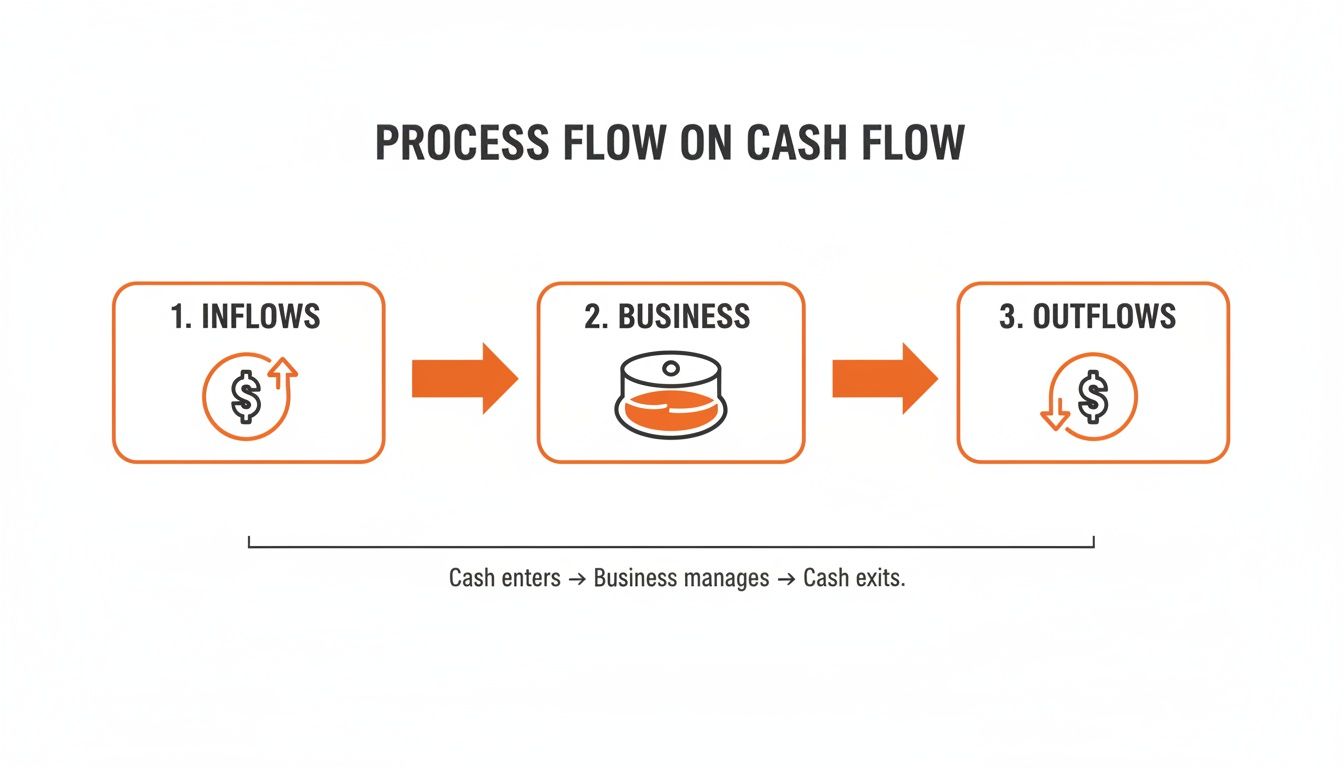
  • How to Get Startup Ideas That Actually Work

    How to Get Startup Ideas That Actually Work

    Forget those forced brainstorming sessions with a wall of sticky notes and lukewarm coffee. Let me tell you a secret: finding a great startup idea isn't about some flash of creative genius. It's much simpler.

    The best business concepts I've seen come from paying attention to the friction in your own life.

    Stop Brainstorming and Start Observing

    Man at desk with laptop, notebook, coffee, and 'OBSERVE PROBLEMS' sign, surrounded by crumpled papers.

    Let's kill a myth right now: you don't need to be a visionary to find a winning idea. You just need to become a professional problem-spotter. I've found that the best ideas aren't dreamed up; they're discovered hiding in plain sight in your daily routines, your job, and your hobbies.

    Think of yourself as a detective. Your mission is to spot the clumsy workarounds, the annoying processes, and those moments that make you mutter, "There has to be a better way."

    That feeling? That's your signal. That's the starting point for a business that solves a real problem for people just like you.

    The Power of the Frustration Audit

    I call this process the 'Frustration Audit.' It’s a simple but incredibly powerful way you can turn everyday annoyances into solid business concepts. Instead of hunting for a solution, you actively hunt for the problem first. This flips the whole creative process on its head.

    Your real expertise isn't in some abstract market you've never touched. It's in the things you already know inside and out.

    • At Your Job: What software do you absolutely dread using? Is there a manual task that eats up two hours of your week, every single week? Where does communication always seem to break down?
    • In Your Hobbies: Is there a tool for your favorite activity that’s poorly designed or way overpriced? Is there a community that's underserved or badly organized? What key information is scattered all over the place and a pain to find?
    • In Your Daily Life: What recurring chore is a constant headache? What service do you wish existed just to make your errands easier?

    These aren't just complaints. This is raw, unfiltered market research pointing you directly toward unmet needs.

    Key Takeaway: Stop trying to invent the next big thing from nothing. Instead, I want you to meticulously document the small, recurring frustrations you and the people around you face. The most valuable problems are often the ones you're so used to, you've stopped even noticing them.

    From Personal Pet Peeve to Viable Business

    So many successful founders didn't start with some grand vision. They just started by scratching their own itch. Think about Drew Houston, the founder of Dropbox. He was just tired of forgetting his USB drive. He didn’t set out to reinvent cloud storage; he just wanted to fix his own annoying problem. You'll see this common thread again and again.

    This approach gives you a massive hidden advantage. When you solve a problem you personally have, you become your own first customer. You have an immediate, gut-level understanding of the user's pain points, which gives you a huge head start in building something people actually want. You can't fake that kind of authenticity.

    This is especially true when you're just getting started. A whopping 78% of startups are self-funded, meaning founders like you often use their own savings to get off the ground. This stat, highlighted in Embroker's 2025 report, shows that the best ideas—especially here in Chicago and the Midwest—often come from your own life and expertise. You don't need a fancy VC pitch.

    Capturing Your Fleeting Insights

    Your brain will throw brilliant observations at you at the worst times—in the shower, on your commute, or right as you're falling asleep. The trick is having a dead-simple system to grab them before they disappear.

    Don't overcomplicate it. A dedicated notebook or a simple app like Apple Notes or Google Keep is all you need. Your goal is to create a 'frustration log.' Whenever you hit a snag or feel that moment of annoyance, jot it down.

    Don't judge the idea. Just capture the raw feeling and the context. Your log might look something like this: "Spent 45 minutes trying to reconcile receipts for my expense report again. The software is clunky, and I have to manually enter everything. What a total waste of time."

    That one sentence is worth more than a hundred ideas from a brainstorming session because it's real, specific, and rooted in genuine pain. Over time, this log will become your personal goldmine of startup ideas.

    Four Lenses for Finding Your Next Big Idea

    Once you start really looking at the world like a founder, you'll see problems absolutely everywhere. And that's a good thing. But a long list of things that annoy you isn't a business plan. You need a filter—a way to separate the minor headaches from the major opportunities.

    This is where I turn to what I call the "four lenses." Think of them as different pairs of glasses. Each one is built to bring a specific kind of business idea into sharp focus. These aren't just some textbook theories; they're my go-to, battle-tested ways of spotting gaps in the market that you are uniquely ready to fill.

    The Unsexy Problem Lens

    Let's be real: some industries are just boring. Logistics, construction, commercial cleaning… you get the idea. Most founders are too busy chasing the next shiny thing to even notice them, which is exactly why I see these sectors as goldmines.

    The "Unsexy Problem" lens is all about you finding industries that are massive and essential, but painfully stuck in the past. You're hunting for sectors where people are still leaning on clunky spreadsheets, endless phone calls, and maybe even fax machines to get important stuff done.

    Your goal here isn't to invent something from another planet. It's about bringing a simple, modern, easy-to-use solution to an industry that time forgot.

    Example: A buddy of mine here in Chicago saw that local plumbing companies were managing their crews with this chaotic mix of whiteboards and a storm of text messages. He built a dead-simple mobile app just for scheduling and dispatching. It wasn't glamorous, but it solved a real, expensive problem for a bunch of people completely ignored by big tech.

    The New Technology, Old Industry Lens

    This one is all about you playing matchmaker. You take a powerful new technology—like AI, computer vision, or automation—and plug it into a traditional, non-tech industry. It’s like dropping a brand-new Tesla engine into a classic, reliable pickup truck.

    The industry is already there. You don't have to create a new market from scratch. Your job is just to figure out how to use the new tech to make an existing process 10x faster, cheaper, or better.

    This approach is unbelievably powerful right now. A total game-changer: AI now dominates venture deals, snatching 56% of total VC value in Q1 2025. That's a huge leap from just 20% right after ChatGPT came out. This isn't just hype; it’s a giant neon sign pointing to where the smart money is going. Hot sectors like healthcare (which grabbed 16.5% of global VC in Q1 2025) and climate tech are practically begging for this kind of shake-up. You can dig into the data in WIPO's Global Innovation Index 2025 report.

    The Fragmented Market Lens

    Put this lens on, and you'll start seeing industries that look like a shattered mirror. They're packed with hundreds, maybe thousands, of small, local players, but not a single company has any real market share. Think local breweries, independent dog walkers, or all those neighborhood nail salons.

    That fragmentation is your opening.

    When there's no clear leader, there's often no standard for quality, pricing, or your customer experience. You can come in and win by building a trusted brand, creating a better operational playbook, or making a platform that rolls up all these small businesses to offer a consistent, high-quality service.

    • Ask Yourself: Is there a local service you use where the experience is a total crapshoot every single time?
    • Look For: Industries with super low brand loyalty and really high customer frustration.

    This is your chance to bring some order to the chaos and become the name everyone trusts in a space that desperately needs one.

    The Personal Passion Lens

    This last lens is different. It’s not about you spotting some inefficiency from 30,000 feet. It’s about you building something for a community you genuinely love and are a part of. Are you obsessed with competitive board games? Urban gardening? Do you spend your weekends restoring vintage motorcycles?

    That deep, authentic passion is your unfair advantage.

    You just get the culture, the language, and the unmet needs of your fellow enthusiasts in a way an outsider never could. You're not doing "customer research"; you're just chatting with your friends.

    Building for a community you love also gives you the fuel to push through the tough times, and trust me, there will be tough times. When your motivation is shot, your connection to the mission and the people you're serving will drag you across the finish line. A business built on your passion feels less like work and more like a calling.


    I’ve found that almost every great startup idea fits into one of these four categories. To make it easier for you to see which one resonates, I've broken them down into a simple table.

    Four Lenses of Idea Generation

    Lens Core Concept Key Question to Ask Yourself
    The Unsexy Problem Solve a boring, overlooked problem in a legacy industry with a simple, modern solution. Where are people still using spreadsheets and phone calls for critical work?
    New Tech, Old Industry Apply a powerful new technology (like AI) to make a traditional industry 10x better. How could AI or automation completely change the way my local [industry] works?
    The Fragmented Market Unify a market full of small, inconsistent players under one trusted brand or platform. What service do I use where the quality is a total gamble every single time?
    The Personal Passion Build a product for a niche community or hobby that you're already deeply a part of. What problem does my own community complain about that nobody has solved yet?

    Use these questions as a starting point. Let your curiosity run wild and see what you discover. The best ideas are often hiding in plain sight, just waiting for someone like you with the right pair of glasses to spot them.

    Validate Your Idea Without Wasting Time or Money

    Having an idea feels great. But that feeling is cheap, and it can be dangerously misleading. Knowing if your idea is actually good is the only thing that matters, and it’s a whole lot harder to figure out.

    I’m going to give you my simple, low-cost playbook to get a clear signal from the market before you waste a year of your life and thousands of dollars building something nobody wants. This process is your defense against the number one startup killer: making something nobody asked for.

    This decision tree gives you a visual for how to filter your observations through the four lenses we talked about, helping you see where your best ideas might be hiding.

    A startup idea decision tree flow chart for evaluating venture potential.

    Notice how every single path starts with observation. You have to spot a real-world problem first, then you can apply a strategic filter to it.

    The Five Conversations Method

    Your first instinct might be to build a survey or ask your friends, "Would you use this?" Stop right there. That's the worst thing you can do. People are polite. They will lie to you to avoid hurting your feelings.

    You need to become a detective, not a salesperson. I use a method I call the 'Five Conversations.' Your goal isn't to pitch your idea; it's to learn about your potential customer's life and problems. You talk to five people who you think are your target audience and follow a specific script designed to get the unfiltered truth.

    You don't even mention your solution. You only ask about their past behavior.

    • "Tell me about the last time you dealt with [the problem your idea solves]."
    • "What was the hardest part of that?"
    • "What have you tried to do to solve this?"
    • "If you had a magic wand, what would the perfect solution look like?"

    Listen more than you talk. You’re listening for emotion—frustration, anger, desperation. If they aren’t already trying to solve this problem, even with a clunky spreadsheet or a mix of different tools, it’s probably not a painful enough problem to build a business around.

    Create a Smoke Test

    After you've had those five conversations and you're hearing consistent pain points, it's time for the next step. A 'smoke test' is like sending a flare up into the sky to see who looks up. It's a simple, one-page website that clearly describes the value proposition of your idea.

    This isn't about tricking people. It’s a powerful tool I use to measure genuine intent.

    Your landing page needs just three things:

    1. A Killer Headline: Clearly state the problem you solve and for whom. Example: "The Easiest Way for Chicago Food Truck Owners to Manage Inventory."
    2. Three Bullet Points: Briefly explain the core benefits of your proposed solution.
    3. An Email Capture Form: A simple box that says, "Enter your email to get early access and a 50% discount at launch."

    Then, you spend a tiny amount of money—maybe $50 to $100—on targeted ads aimed at your ideal customer. Or you share it in relevant online communities where those people hang out. The metric you care about is the conversion rate. If 5-10% of the people who visit your page give you their email, you're onto something. If it's less than 1%, your message isn't landing.

    Key Takeaway: Your goal with a smoke test isn't to get thousands of sign-ups. It's to prove that a real, measurable group of strangers are interested enough in your promise to give you their contact information. That's a powerful, data-driven signal.

    The hard truth is that most ideas don't survive this process. And that’s a good thing! It's far better for you to find out your idea is a dud after a week of conversations and a $100 ad spend than after a year of building and a drained bank account.

    This validation phase is your ultimate filter. It protects you from your own biases and forces you to confront market reality. Buckle up: 90% of startups fail, with 29% from running out of cash and 19% from getting crushed by competition. Yet, you're not alone: a staggering 5.5 million new businesses were launched in the U.S. in 2023.

    Being bold enough to test your assumptions early is what separates successful founders from the ones who burn out. This process gives you the data you need to confidently pivot, refine, or even kill a bad idea. For an even deeper dive, you might be interested in our guide on how to validate a business idea before you launch. It's the kindest thing you can do for your future self.

    Find Your People to Refine Your Idea

    Trying to build a startup all by yourself is a trap. The silence gets crushing, fast. And honestly, your own echo chamber is the single most dangerous place for a new idea. It's a classic mistake I see founders make all the time—they clutch their brilliant concept so tightly that they suffocate it before it ever gets a chance to breathe.

    Let me be real with you: your idea, as it exists right now, is probably wrong.

    That might sound harsh, but it’s the truth. Your initial concept is just a starting point. It’s a fragile little hypothesis that needs to get roughed up by reality. A great idea almost never survives its first contact with the real world, and a trusted group of peers is your secret weapon for getting through that process.

    This isn’t about you going to another stale networking event to collect a pocketful of business cards. I'm talking about finding your real, honest-to-god support system.

    The Power of a Founder Community

    Picture this: you’ve got a half-baked idea for a new e-commerce brand, but you’re totally stuck on a manufacturing problem. Instead of burning weeks googling into the void, you bring it to a small, confidential group of 6-8 other hardworking founders.

    Instead of getting polite nods, you get real advice. One person just went through the same sourcing nightmare and connects you with their agent. Another points out a fatal flaw in your unit economics that you completely missed. That one conversation just saved you six months of painful, expensive mistakes.

    Your goal isn't to find people who will tell you your idea is brilliant. Your goal is to find people who care enough to tell you why it might fail—and then help you fix it.

    This is exactly what I believe an operator-led community is all about. It’s an environment built on trust, where you can share your war stories—the wins, the losses, and the embarrassing screw-ups—without any judgment. That kind of raw, unfiltered feedback will accelerate your idea faster than anything else.

    How to Find Your Inner Circle

    So, where are these people? You have to be intentional about finding them.

    • Look for Curation: The best groups are vetted. I've found they filter for people who are actually in the trenches building something, not just selling services or promoting themselves. This makes sure everyone in the room is an operator facing similar struggles.
    • Prioritize Confidentiality: You need a safe space to be brutally honest about your numbers, your fears, and your biggest challenges. Look for groups that have explicit confidentiality rules or a strong culture of trust.
    • Focus on Giving, Not Taking: The magic really happens when you show up to contribute. When you look for chances to help others, you’ll find that support comes back to you tenfold. Be the person you’d want to have in your corner.

    Building these relationships takes time, but it's the most valuable thing you can do in the early days. A single conversation with the right person can change the entire path of your business.

    If you're looking for this kind of support, you can learn more about how we structure mastermind groups for entrepreneurs right here in Chicago. The right community will sharpen your thinking faster than any book or online course ever could.

    Your Next Steps from Idea to Action

    A flat lay of a desk with a notebook, pen, smartphone, and an orange card stating 'NEXT STEPS' and 'MVP STEPS'.

    Alright, you've done the real work. You've stopped just "brainstorming" and started observing, you’ve put your raw ideas through the four lenses, and you’ve had those first awkward-but-essential conversations to make sure you’re chasing a real problem.

    So, now what?

    This is where the rubber meets the road. Your momentum is everything. An idea, no matter how clever, is just a thought rattling around in your head. To give it a real shot, you have to take the next tangible step. Your goal isn’t to launch a flawless, massive company overnight. It’s much simpler: turn your validated concept into a real, live project.

    Going from a solid idea to your first dollar in revenue feels like a chasm. It’s not. It’s just a series of small, concrete steps. Let’s walk through them.

    Nail Down Your Minimum Viable Product

    First things first: you need to define your Minimum Viable Product (MVP). Your MVP is the most stripped-down, bare-bones version of your product that still actually solves the core problem for a customer. It's not your grand vision with all the bells and whistles. It’s the core solution, and nothing more.

    Think of it this way. Your dream might be a self-driving electric car. But your MVP isn't a clunky version of that car. It's a skateboard. Both get you from point A to B, but you can build the skateboard and get it into someone's hands this week.

    Your MVP should make you a little uncomfortable. If you're not slightly embarrassed by your first version, you've probably launched too late. The point is to learn, not to be perfect.

    I’ve seen way too many founders burn a year and a mountain of cash building the “perfect” product, only to discover their main assumption was totally wrong. The MVP is your shield against this common, fatal mistake. It forces you to test your biggest assumption as fast and as cheaply as possible.

    Get Ruthless About Prioritizing Features

    The minute you start sketching out your MVP, the temptation to add "just one more little feature" is overwhelming. This is feature creep, and it’s a startup killer. You need a simple, brutal system for deciding what makes the cut.

    Here's a framework I use all the time. List out every single feature you can imagine. Then, for each one, ask yourself two simple questions:

    1. How much value does this give the user? (Scale of 1-10, how much pain does it solve?)
    2. How hard is this to actually build? (Scale of 1-10, with 1 being a breeze and 10 being a total nightmare)

    Plot these on a simple chart. The features that are high-value and low-difficulty? That’s your starting lineup. That’s your MVP. Everything else goes on the back burner. It’s not about you tossing out good ideas; it's about sequencing them smartly so you can learn the most with the least amount of work.

    Take on the First Ten Customers Challenge

    With a tight MVP defined, your next job is to get your first ten paying customers. I’m stressing the word paying. Getting people to try a free tool is one thing; getting them to pull out a credit card is the ultimate form of validation.

    Here’s the trick: you have to do it with zero marketing budget. This forces you to be scrappy and do things that don't scale.

    • Circle back to your initial conversations. Those five people you interviewed? They’re your warmest leads. Shoot them a note: "Hey, remember that problem you told me about? I built something to fix it. Would you be willing to be my very first customer?"
    • Do things by hand. Find your ideal customers on LinkedIn or hanging out in niche online communities. Send them personal, non-spammy messages.
    • Lean on your local scene. Never underestimate the power of your own city. Talk to folks in communities like Chicago Brandstarters. I've found one warm introduction is worth a thousand cold emails.

    This stage isn't about growth hacking or slick marketing funnels. It's about you building genuine relationships and getting raw, unfiltered feedback from the people actually paying for your product. Those first ten customers will teach you more than the next ten thousand ever will.

    Taking these concrete steps is part of a larger journey, and you can learn more about creating a complete roadmap for your new business to guide you.

    Got Questions? Let's Talk About Them.

    Even with a solid plan, I know getting started can feel like staring up at a mountain. A ton of "what ifs" start creeping in, and before you know it, you're stuck thinking instead of doing. My goal here is to tackle the most common questions I hear, giving you some straight talk to help you get moving.

    Let's clear the air on some of these persistent worries.

    What If Someone Steals My Startup Idea?

    This is the big one. Honestly, this fear paralyzes way too many would-be founders. Let me be blunt: your ideas are cheap. Your execution is everything.

    The real magic isn't in your initial concept; it's in your unique insight, your grit, and your relentless ability to build and adapt. Being overly secretive hurts you more than it helps. You absolutely need feedback to sharpen your idea, and you can't get that hiding in a vacuum. Your energy is far better spent trying to out-execute everyone else, not hiding in the shadows.

    Do I Need a Technical Co-Founder to Start?

    Not at all, especially right at the beginning. You live in a golden age of no-code tools. You can build a surprisingly functional prototype or MVP using platforms like Bubble, Webflow, or Adalo without writing a single line of code.

    Your first job isn’t to build flawless software. It’s to validate the problem you’re trying to solve.

    Key Takeaway: Focus on proving that people actually want what you're building. Once you have that proof—real users, maybe even a little revenue—it becomes infinitely easier for you to attract a great technical co-founder or hire the right developers.

    How Do I Know If My Idea Is Big Enough?

    Stop trying to build a "unicorn" from day one. That kind of pressure is a creativity killer. The most durable, successful companies I've seen often start by solving a small, specific problem for a very niche audience, and they do it incredibly well.

    Instead of asking, "Is this a billion-dollar idea?" I want you to ask a different question: "Can I solve a real, burning problem for 100 people who will absolutely love me for it?"

    If you can nail that, you can figure out how to find the next 1,000. So many massive businesses—from Amazon just selling books to Facebook connecting college kids—started in a tiny, focused niche. Your job is to create intense value for a small group first. The rest comes later.

    What If I Have Too Many Ideas?

    First off, this is a fantastic problem for you to have. It means you’ve successfully trained your brain to see opportunities everywhere, which is a founder's superpower. The trick is to avoid getting stuck in "analysis paralysis," where you endlessly debate the merits of each idea without ever starting one.

    Here’s your action plan:

    1. Quickly Sort Them: Run each idea through the Four Lenses framework we talked about earlier. Just a gut check is fine.
    2. Pick One: Choose the single idea you're most genuinely excited about, have a unique angle on, or that seems easiest to test quickly.
    3. Get it Out There: Immediately run a quick "smoke test" on your top choice. Get it out of your head and into the world.

    The goal is for you to move from thinking to doing. You can always circle back to your other ideas later. For now, just pick one and take that next small step.


    Finding a great startup idea is a skill, not a lightning strike. It’s about building a habit of curiosity, rigorously testing your assumptions, and finding a community to build alongside. If you're a kind, hardworking builder in Chicago who wants to find that community, we’d love to meet you.

    At Chicago Brandstarters, we connect founders in small, private groups to share real stories and solve tough problems together. Learn more about joining our free community at https://www.chicagobrandstarters.com.

  • How to Negotiate with Suppliers and Win Better Deals

    How to Negotiate with Suppliers and Win Better Deals

    Walking into a supplier negotiation unprepared is like showing up to an exam you didn't study for. You're basically guaranteeing you’ll leave money on the table.

    The secret to a great negotiation isn't what you say in the moment. It's the thorough preparation you do before you ever make contact. This means I dig deep into my costs, know exactly what I can and can't live without, and have a crystal-clear walk-away point. You need to do the same.

    Your Pre-Negotiation Playbook for Supplier Talks

    A desk with a laptop, calculator, notebook, and documents, with 'NEGOTIATION PLAYBOOK' text.

    You lock in the real win in any negotiation long before you send that first email. I learned this the hard way. Early on, I'd jump into conversations full of excitement, only to get backed into a corner on price or terms simply because I hadn't done my homework.

    Think of this prep work as building your financial North Star. It’s the data-driven guide that keeps you grounded, preventing you from making emotional decisions. Trust me, you're just guessing without it, and experienced suppliers can smell that a mile away.

    Know Your Numbers Inside and Out

    First things first: you absolutely have to create a detailed cost breakdown sheet. This isn't optional. It’s the foundation of your entire strategy.

    This exercise forces you to see beyond the sticker price and calculate your true landed cost—the final, all-in price you pay to get one single unit into your warehouse, ready to sell.

    Your breakdown sheet needs to account for every little expense:

    • Unit Cost: The base price per item from the supplier.
    • Shipping & Freight: The cost to get your goods from their factory to your door.
    • Customs & Duties: All the taxes and government fees you'll owe.
    • Inspection Fees: The cost for a third party to check your products for quality.
    • Payment Processing Fees: Any charges from your bank or payment platform.

    Once you add all this up, you have the real number that dictates your profitability—not just the flashy unit price a supplier quotes you.

    Define Your Target, Best, and Walk-Away Prices

    With your landed cost figured out, you can now set your negotiation boundaries. This isn't about pulling numbers out of thin air; it's a strategic process.

    1. Your Target Price: This is your realistic goal. It should be competitive based on your market research but still fair enough for the supplier to make a profit.
    2. Your Best Price: This is your dream scenario. You might not hit it, but it gives you a confident, ambitious place to start the conversation.
    3. Your Walk-Away Price: This is your absolute limit. If the final landed cost creeps above this number, the deal is no longer profitable, and you have to be ready to walk. No exceptions.

    Having a firm walk-away price is your ultimate source of power. It stops you from making emotional decisions under pressure and ensures you never get locked into a deal that kills your business.

    Pinpoint Your Non-Negotiables

    Price is a big deal, but it's rarely the only thing that matters. As a founder, your time, cash flow, and brand reputation are everything. You need to decide what else is make-or-break for you.

    Before you talk to a single supplier, rank your priorities. Would you pay a bit more for a manufacturer known for impeccable quality? Or is getting flexible payment terms your top priority to manage cash flow?

    Common non-negotiables might include:

    • Quality Standards: A maximum defect rate you simply won't accept.
    • Lead Times: A hard deadline for production and shipping to meet your launch date.
    • Payment Terms: A refusal to pay 100% upfront to protect your cash.
    • Communication: A need to work with a supplier who is responsive and transparent.

    Knowing these priorities gives you incredible leverage. You can trade a "nice-to-have" to secure a "must-have." This framework gives you the confidence and the data to walk into any conversation from a position of strength, not desperation.

    If you're still in the early stages of sourcing, our guide on how to find a manufacturer for your product can help you build a solid list of potential partners to start with.

    Nailing Your First Conversation with a Supplier

    That first call or email to a potential supplier? It’s a huge moment. It sets the tone for everything that comes after. This isn't just about blasting out a Request for Quotation (RFQ); it's your shot to go from being just another name in their inbox to a partner they actually want to see win.

    Forget the stiff, corporate act. You're building a relationship with a real person, not a purchase order.

    I used to think my first emails had to sound super formal to be taken seriously. The result? They treated me like a small-fry, transactional account. The game completely changed when I started leading with my story—showing them the person and the vision behind the brand.

    It's a Partnership, Not a Purchase Order

    Your first email is your brand’s first impression. You want to sound prepared, confident, and like you're building a business for the long haul. Suppliers get dozens, maybe hundreds, of generic "how much for 1,000 units?" emails a day. Yours has to be different.

    Instead of just dropping a list of specs, tell them who you are. Share a short, compelling version of your brand’s story. Why did you start this thing? What problem are you solving for your customers? When a supplier gets invested in your mission, they'll be way more willing to help you succeed.

    A supplier who believes in your vision is more likely to be flexible on terms, offer better service, and go the extra mile when you need it most. They become a partner in your growth, not just a vendor.

    You're not just buying a product; you're inviting them to be part of the journey.

    Your Opening Email (That Actually Gets a Reply)

    A solid first email mixes the professional and personal. It proves you've done your homework but also shows there's a human behind the brand.

    Here's a simple structure I’ve used that gets fantastic response rates:

    • Subject Line: Keep it clear and professional. Something like, "Partnership Inquiry from [Your Brand Name] – [Product Type]."
    • Introduction: Briefly introduce yourself and your brand. This is where you drop a sentence or two about your mission.
    • The Ask: Clearly state what you're looking for, including key specs. This shows you know what you're doing.
    • The Vision: Explain why you chose them. Did you see their work with another brand? Do you admire their commitment to sustainability? Get specific. This shows you're not just spamming every factory you can find.
    • Next Steps: Propose a clear call to action, like scheduling a brief call to discuss.

    This flips the script from a cold outreach to a warm introduction. You’re starting a strategic conversation, not just asking for a price list.

    Figure Out What Makes Them Tick

    Once you get them on a call, your main job is to listen. The 70/30 rule is golden here: spend 70% of your time listening and only 30% talking. Your mission is to figure out what really drives them. Every supplier has different priorities.

    Ask smart, open-ended questions that go beyond just price:

    • "From your side, what does a great client partnership look like?"
    • "What are some of the biggest headaches you run into with new clients?"
    • "Besides the final price, how do you measure success with a brand you work with?"

    Their answers are pure gold. They’ll tell you exactly what they value. Are they a massive factory that just wants consistent, high-volume orders? Or are they a smaller, specialized shop that values clear communication and on-time payments more than massive order sizes?

    I once worked with a supplier who seemed pricey at first glance. During our initial call, I learned their biggest frustration was clients who constantly changed designs and paid late. I made it crystal clear that my designs were locked and I always pay on time. Suddenly, they were willing to give me a better price and a lower MOQ. Why? Because I was offering them something more valuable than a huge order: peace of mind.

    This is your secret weapon. When you understand what your supplier truly values—be it predictability, easy communication, or creative collaboration—you can frame your negotiation around that. You're no longer just haggling over price; you're trading value for value. And that’s how you build a partnership that lasts.

    Tactics for Lowering Prices and MOQs

    Alright, this is where you turn preparation into profit. Getting a better price or a lower Minimum Order Quantity (MOQ) is part art, part science. Honestly, it’s the skill that separates struggling brands from thriving ones.

    This isn’t about being aggressive or trying to strong-arm anyone. It’s about creatively finding a win-win that actually works for your bottom line.

    Think of this part of the negotiation like a dance. You can’t just stomp your feet and demand a lower price. You have to lead with value, show them your vision, and make them want to be your partner for the long haul.

    Frame the Conversation Around Long-Term Value

    Suppliers hear "can you do better on price?" all day, every day. That question alone makes you sound like a one-time, transactional buyer they'll never see again. You have to change the conversation from a single purchase to a long-term partnership.

    One of the most effective ways I've done this is by bundling future orders. Instead of just asking for a quote on your first 1,000 units, present a bigger plan. Say something like this:

    "Our forecast shows we'll need 5,000 units over the next twelve months. Can you base our unit pricing on that total volume, starting with a first order of 1,000?"

    This instantly shifts their perspective. You’re not a small order anymore; you’re a 5,000-unit customer who’s just starting out. This gives them a real business reason to offer you a better price today. You're not asking for a favor; you're offering them predictable revenue.

    This decision tree shows the two main paths you can take in your initial supplier outreach. You can either focus on building a long-term partnership or go for a short-term price win.

    Flowchart outlining two supplier first contact strategies: partnership for long-term relationships or cost-focused short-term negotiation.

    As you can see, prioritizing partnership builds a foundation for more flexible and creative negotiations. A price-first approach often leads to a more rigid, transactional dynamic that limits your options.

    How to Tackle the Dreaded MOQ

    For new brands, the MOQ can feel like an impossible wall to climb. You need to test your product, but suppliers need to run their machines efficiently. This is where reframing becomes your superpower.

    Never just ask, "Can you lower your MOQ?" Instead, propose a solution. My favorite line is: "We'd like to place a paid, market-test order of 500 units before moving to your standard MOQ of 2,000."

    This simple change in language is powerful. It tells the supplier you respect their standard process but need to validate your product in the market first. You're not asking for a discount; you're proposing a logical first step in a long-term relationship.

    You can even offer a slightly higher per-unit cost for this initial, smaller run. The goal isn't to get the absolute rock-bottom price on your test order. The goal is to get your product made without taking on massive upfront inventory risk.

    Getting your pricing strategy right is crucial, and a smaller initial order gives you the flexibility to adjust. You can find more details on this in our guide on how to price a new product.

    Effective Tactics for Price and MOQ Reduction

    To make this even more practical, here's a quick-reference guide comparing different negotiation tactics and when to use them for the best results.

    Tactic Best For Lowering Price Best For Lowering MOQ Key Talking Point
    Volume Forecasting Yes, significantly. Sometimes, but less directly. "Our 12-month forecast is 5,000 units. Can you price this initial 1,000-unit order based on that larger annual volume?"
    Paid Test Order No, may slightly increase unit price. Yes, highly effective. "We'd like to place a paid, 500-unit market test order to validate the product before committing to your standard 2,000 MOQ."
    Component Flexibility Yes, if you choose lower-cost materials. Yes, if components are easier to source in small batches. "Are there alternative materials for the handle that could help us meet our target cost without compromising quality?"
    Citing Competitors Yes, if done respectfully. Not very effective. "We love your quality, but we have another quote that's 10% lower. Is there any flexibility on your end?"
    External Factors Yes, can create opportunities for risk-adjusted pricing. Can be used to justify smaller test runs. "With the current tariff uncertainty, a long-term contract with stable pricing would be very valuable for us."

    This table should help you pick the right tool for the job. Remember, the best negotiators have multiple approaches and know when to deploy each one.

    Leverage Competing Quotes with Respect

    Getting multiple quotes is standard business practice, and you absolutely should use that information. But how you use it matters. Don't treat it like a weapon.

    Instead of saying, "Your competitor offered me a better price," try a more collaborative approach. You could say something like this:

    "We’re really impressed with your quality, and you’re one of our top choices. We’re in the final stages of our review, and another quote came in about 10% lower. Is there any room for you to get closer to that number? We’d much rather work with you."

    This makes it a problem you can solve together, not an ultimatum. It maintains respect, keeps the door open, and gives them a chance to win your business on fair terms.

    Negotiating Terms Beyond the Price Tag

    A desk scene with a book titled 'Negotiate Terms', a pen on a document, and a calculator.

    A fantastic per-unit price with terrible payment terms can sink your business faster than you can say "out of cash." For a startup, cash flow isn't just important; it's the air you breathe. This makes negotiating the terms just as critical as haggling over the price tag itself.

    Think of your business as a car on a road trip. Your profit margin is the fuel efficiency, but your cash flow is the actual fuel in the tank. A great price (high MPG) doesn't help if a supplier demands all the fuel money upfront, leaving you stranded before you even get started.

    You have to protect your cash.

    Mastering the Art of Payment Terms

    Most suppliers will initially ask for 100% payment upfront, especially with new, unproven brands. Don't just accept this as the only option. Your goal is to negotiate your way to a more sustainable model as you build trust.

    The most common starting point for a new partnership is a 50/50 split: you pay 50% to begin production and the remaining 50% upon completion, right before the goods ship. This is a fair compromise that protects both sides. The supplier gets capital to buy raw materials, and you retain cash until the work is done.

    As you build a track record of successful orders and on-time payments, you can start pushing for even better terms. The next level is typically Net 30, which means you pay the full amount within 30 days after the goods have shipped. This is a game-changer for cash flow, since it lets you sell some of your inventory before the bill is even due.

    Don't be afraid to ask for better terms after your second or third successful order. You can frame it as a natural step in your growing partnership. Say something like, "Now that we've established a great working relationship, can we move to Net 30 terms for our next order to help us manage our growth?"

    Locking Down Lead Times and Schedules

    Vague production timelines are a silent business killer. A two-week delay can cause a stockout, derail a product launch, and damage your brand's reputation with customers. You must negotiate crystal-clear production schedules and get them in writing.

    Don't just agree on a final ship date. Break it down into key milestones:

    • Raw Material Sourcing: When will all materials be in the factory?
    • Production Start: The date the first unit is officially in production.
    • Mid-Production Inspection: A date for you or a third party to check for quality.
    • Production Completion: The date the last unit comes off the line.
    • Final Inspection & Packing: The window for final checks and boxing.

    This level of detail creates accountability. If a deadline is missed, you know immediately and can address it, rather than discovering a massive delay just days before your expected ship date.

    Your Non-Negotiable Quality Control Clauses

    This is the part you absolutely cannot skip. You must agree, before production begins, on what happens when quality standards aren't met. Getting this in writing is your single greatest protection against losing thousands of dollars.

    I know a founder who was so excited about a low price that he skipped this step. When his $20,000 shipment arrived, 40% of the units had a critical defect, making them unsellable. The supplier refused to take responsibility, and because nothing was in writing, the founder was stuck with the loss. It nearly bankrupted him.

    Here's a simple checklist of quality clauses to get in your agreement:

    1. Define the Acceptable Quality Limit (AQL): This is the maximum percentage of defective units you're willing to accept in a batch (e.g., 2.5%).
    2. Assign Financial Responsibility: Clearly state who covers the costs for rework, repairs, or replacements if the defect rate exceeds the AQL. It should be the supplier.
    3. Specify Rework Timelines: How quickly must the supplier fix or replace defective units?
    4. Confirm Inspection Access: Ensure your contract gives you or your third-party inspector the right to access the factory for mid-production and final inspections.

    Cost management continues to dominate supplier talks, with EY ranking value, performance, and resiliency as top procurement drivers for corporate leaders. This mindset isn't just for big corporations; one e-commerce builder I know recently cut factory prices by 12% by benchmarking AI insights against five different suppliers. For a deeper look at industry trends, you can explore more supply chain statistics.

    Finally, getting these terms right also means coordinating with your logistics partners. Check out our guide on choosing freight forwarders for Amazon FBA to ensure your shipping process is as solid as your supplier agreement.

    Building Long-Term Supplier Partnerships

    Your first successful deal isn't the finish line; it’s the starting block.

    Too many founders think negotiation ends when the first invoice is paid. Big mistake. The real win isn't just getting a good price on one order. It's building a durable partnership where your supplier basically operates like an extension of your own team.

    Getting this mindset right changes everything. When your supplier sees you as a true partner, not just another customer, you become a priority. Your orders get more attention, your problems get solved faster, and you suddenly get access to their best ideas and resources.

    Turn a Transaction into a Relationship

    After the ink is dry on that first purchase order, your real work begins. You have to intentionally manage the relationship, especially when your order volume is still small.

    Think of it like tending a garden. The negotiation plants the seed, but you need consistent effort—water and sunlight—for it to grow into something strong. This means proactive communication is your most important tool. You need to get into a rhythm that goes way beyond just placing new orders.

    • Share Your Wins: Did your product get a killer review? Send them the link. Did you hit a sales milestone? Let them know they were a part of that success. It shows them their work matters.
    • Give Real Feedback (Good and Bad): When a shipment is perfect, tell them. Seriously. Everyone loves hearing they did a good job. When there’s a minor issue, bring it up constructively and right away.
    • Look Ahead: Give them a heads-up about what's coming. A simple, "Hey, just so you know, we're planning a big holiday promotion in Q4," helps them plan their production schedule. No one likes surprises.

    This completely transforms your dynamic. You’re no longer just a customer placing an order; you're a collaborator working toward a shared goal. This consistent dialogue builds the trust you need to become a 'priority customer,' even if you're not their biggest one.

    What to Do When Things Go Wrong

    Even with the best suppliers, problems will pop up. A shipment will be late. A batch will have quality issues. It’s inevitable. How you handle these moments is what defines the strength of your partnership. Panicking, pointing fingers, and making threats just burns bridges.

    Instead, you need a simple, constructive way to escalate things.

    My approach is to always start by assuming positive intent. I reach out to my day-to-day contact with a clear, calm summary of the issue. I present the problem with evidence—like photos of a defect—and frame it as a shared challenge: "Here's what we're seeing. How can we work together to fix this?"

    If you can't get a resolution, the next step is to respectfully ask to speak with their manager. This isn't about getting your contact in trouble; it’s about getting another set of eyes on the problem. Keep the tone collaborative. This approach solves 95% of issues without torching the relationship.

    A crisis is a terrible thing to waste. Handling a problem with professionalism and grace can actually make your supplier partnership stronger. You're proving you can navigate challenges together.

    Knowing When It's Time to Walk Away

    But what about the other 5%? Sometimes, despite your best efforts, a partnership just turns sour. Recognizing the red flags that signal it's time to move on is one of the toughest—and most important—decisions you'll make.

    Here are the warning signs I watch for:

    • Consistent Quality Decline: One bad batch is a mistake. A few bad batches is a pattern.
    • Communication Blackouts: If your contact starts ghosting you or responses get consistently delayed for days, that's a massive red flag.
    • Unkept Promises: If they repeatedly miss deadlines or fail to implement fixes you both agreed on, the trust is gone.
    • The Blame Game: A partner who constantly blames others (shipping, raw materials, you) for their own mistakes is not a partner you can build a business on.

    Making the switch is a huge pain, I get it. But staying with an unreliable supplier is a far greater risk. It jeopardizes your inventory, your cash flow, and the trust you’ve worked so hard to build with your own customers. Knowing when to cut your losses protects your business in the long run.

    After years of coaching founders through the trenches of building a brand, I’ve seen the same anxieties pop up over and over again. Negotiating with suppliers, especially for the first time, can feel incredibly intimidating.

    Here are the questions I get asked most often, along with my straight-up, no-fluff answers based on years of doing this myself.

    What's the Biggest Mistake Founders Make When They Negotiate?

    Hands down, the single biggest mistake is not knowing your numbers. It's a classic case of wishful thinking killing a business before it even starts. So many founders get laser-focused on the per-unit price a supplier quotes them and completely ignore their actual landed cost.

    The landed cost—that's the all-in price including shipping, customs, tariffs, and any inspection fees—is the only number that matters. You don't run your business on the factory's FOB price; you run it on the cost to get that product sitting in your warehouse, ready to sell.

    A negotiation without a firm walk-away price is just a conversation, not a business deal. When you don't know the absolute maximum you can pay to stay profitable, you negotiate with emotion, not data, and that’s a dangerous game.

    The flip side of this mistake is walking into talks without a non-negotiable walk-away point. If you haven’t done the math to know your absolute limit, you might agree to a price that feels good in the moment but slowly bleeds your margins dry. Always, always build a detailed cost sheet before you even think about sending that first email.

    How Do I Negotiate a Lower MOQ with No Sales History?

    Ah, the classic startup chicken-and-egg problem. Suppliers need volume to justify firing up their machines, but you need to keep your initial order small to minimize risk. You can't just ask for a smaller number; you have to reframe the conversation.

    Stop asking for a favor and start making a business proposition. Propose a "paid trial order" or a "market testing run." This language completely changes the dynamic. You're not a nobody asking for a handout; you're a strategic partner proposing a logical first step in what you hope will be a long, profitable relationship for both of you. You can even sweeten the pot by offering a slightly higher per-unit price for this initial batch. It shows you're serious.

    Back it up with proof. Show them your brand deck. Walk them through your marketing plan and your realistic growth projections. You want to get them excited about your vision and where you're headed. One of the most clever tactics I've seen work is asking if they can tack your small run onto a larger client's order that uses the same raw materials. It's about creative, collaborative problem-solving.

    Should I Mention I'm Getting Quotes from Competitors?

    Yes, you absolutely should. But how you do it is everything.

    This isn't about threatening them or being sneaky; it's just smart business. Getting three to five quotes is standard operating procedure, and every good supplier knows it. The key is to bring it up with transparency, not as a weapon.

    Don't use it as a blunt instrument to beat them down on price. Instead, use it to open a collaborative dialogue.

    Try framing it something like this:

    • "We're really impressed with your quality, and your factory is one of our top choices."
    • "As we're finalizing our decision, we've received other quotes, and one came in at [X price]."
    • "We'd genuinely prefer to work with you. Is there any flexibility on your end to help us bridge that gap?"

    This approach turns what could be a confrontation into a shared problem. It signals that you've done your homework while also clearly and respectfully stating your business needs. You keep the relationship positive, which is exactly where you want it to be.


    If you're building a brand and value the spirit of kindness and hard work, consider joining Chicago Brandstarters. We're a free, vetted community for founders who believe in sharing honest war stories and helping each other win. Learn more and connect with us at www.chicagobrandstarters.com.

  • A Simple Guide to Building Business Credit

    A Simple Guide to Building Business Credit

    I'm going to be direct, because your business's future hinges on this. Stop using your personal credit card for business expenses. It's a messy habit that tangles your finances and slams the brakes on your growth. The absolute first step in building real business credit is drawing a clean line in the sand, legally and financially, between you and your company.

    Create a Separate Legal and Financial Identity

    Think of your business as a ship and your personal finances as your house on the shore. If that ship sails into a storm—like a lawsuit or a mountain of business debt—you don't want the waves crashing through your living room. Setting up a separate legal entity, like an LLC or S-Corporation, builds a solid seawall between them.

    This isn't just about paperwork. It's a fundamental shift that tells lenders, vendors, and the IRS that your business stands on its own. Without this separation, your personal assets are completely exposed. Your car, your savings, even your home could be on the line. More importantly, you can't build a credit history for something that doesn't officially exist.

    A desk with a laptop, documents on a clipboard, and orange signs saying "SEPARATE FINANCES".

    Get Your Business a Social Security Number

    Once you make your entity official, you need an Employer Identification Number (EIN) from the IRS. It's totally free, and you can apply online in minutes. Think of the EIN as a Social Security Number for your business.

    You'll need this nine-digit number for everything important:

    • Opening a business bank account.
    • Filing your company's taxes.
    • Applying for credit with vendors.

    This simple number makes your business a distinct, legitimate player. It's non-negotiable for everything we're about to cover. If you're just getting started, my guide on how to start a business with no money might give you some useful ideas.

    Why This Matters for Funding

    I’ve seen this play out so many times at Chicago Brandstarters dinners. Founders are swapping stories, and one theme keeps popping up. A shocking 82% of small businesses get rejected for traditional loans because their credit file is too thin.

    But here's the twist: founders who properly separate their finances and build business credit first? Their approval odds can jump by over 50%. This isn't just theory. Federal Reserve data shows creditworthy businesses get interest rates around 6.2%, while new businesses get stuck with rates closer to 11.8%. That's real money you're leaving on the table.

    This table breaks down your essential first moves.

    Key Steps to Separate Your Business & Personal Finances

    Action Why It Matters What It Unlocks
    Form a Legal Entity (LLC/S-Corp) It creates a legal "seawall," protecting your personal assets (home, car, savings) from business liabilities. You can open business accounts, sign contracts as the company, and start building a separate credit profile.
    Get an Employer Identification Number (EIN) This is the official government ID for your business, like a Social Security Number for your company. You'll need it to open a business bank account, file taxes, and apply for most credit and licenses.
    Open a Dedicated Business Bank Account This establishes a clear financial record, proving your business's cash flow and health to lenders. A clean paper trail for bookkeeping, easier tax filing, and a foundational relationship with a bank.

    Get a Business Phone Number & Address It makes your business look legitimate to credit bureaus and lenders; they look for these signs of a "real" operation. A professional appearance, listings in directories, and a key data point for D&B, Experian, and Equifax.

    Getting these pieces right from the start makes everything else—from getting your first vendor account to securing a big loan—so much easier.

    The moment you open a dedicated business bank account and run all your money through it, you create a clear, financial story. This story is what you'll use to prove your business's reliability to the world.

    Get Your Business on the Credit Bureaus' Radar

    Okay, you've built the seawall. Now it's time to get your company on the map. It’s like throwing a huge party but forgetting to send invitations—nobody shows up if they don't know you exist.

    The goal is simple: make sure the major business credit bureaus know you're open for business.
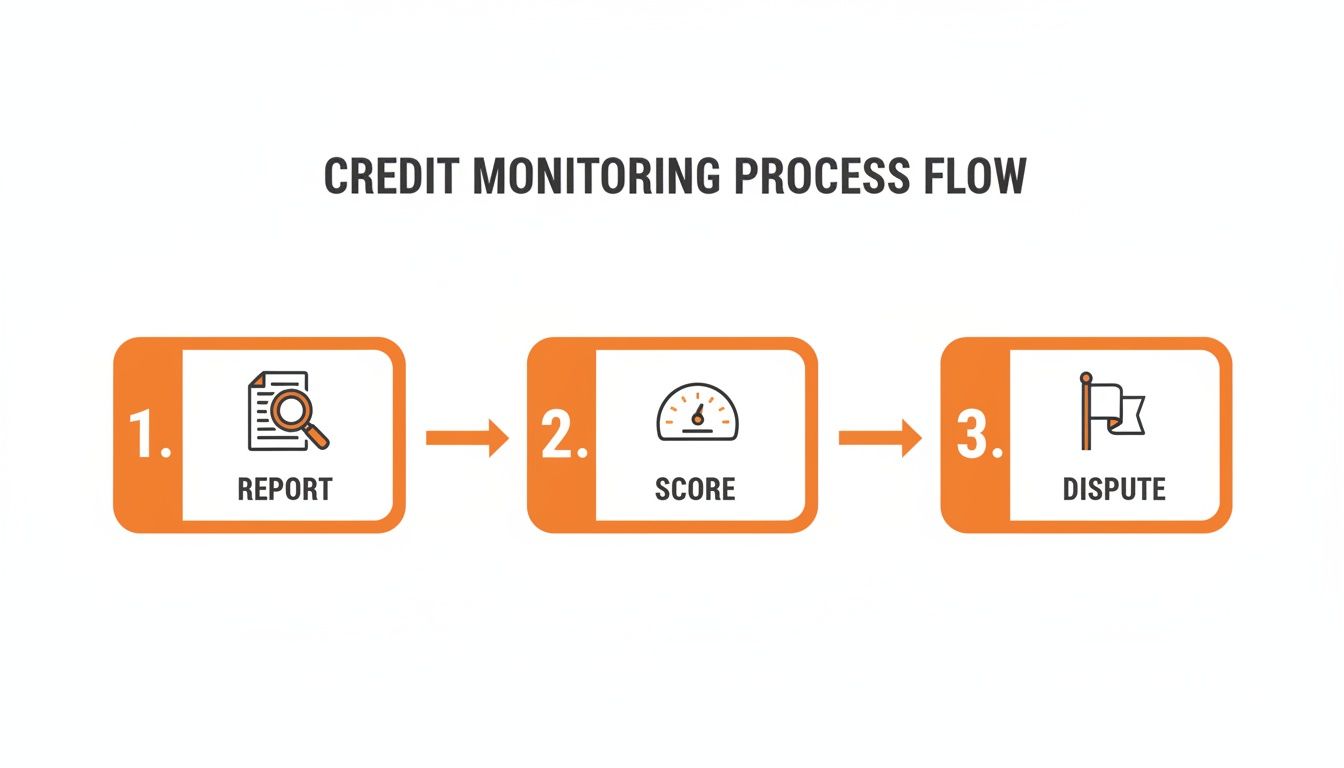
    A top-down view of a business desk with a smartphone displaying a profile and an orange 'Business Identity' card.

    This whole thing kicks off with Dun & Bradstreet (D&B). They're the gatekeepers of the D-U-N-S Number, a unique nine-digit ID for your business. Think of it as the master key that unlocks your business credit file. Without it, you’re a ghost to many lenders and suppliers.

    The good news? You can get your D-U-N-S Number for free. This is your non-negotiable first move.

    Once you have that number, D&B creates a credit file for you. But they aren't the only game in town. You also need to pop up on the radar of Experian Business and Equifax Business. Often, these bureaus will automatically create a file for you once you start getting tradelines, which we'll get into next.

    Creating a Professional Footprint

    Just registering isn't enough. You have to look like a legitimate, stable operation. Credit bureaus and lenders are absolutely judging a book by its cover here. They look at your company's digital and physical presence to see if you're credible. A flimsy profile screams high risk.

    Think of it like building a killer LinkedIn profile, but for your company's financial reputation. Every detail matters because it paints a picture of your trustworthiness. That first impression must be solid.

    A complete, professional business profile is more than window dressing. It's a signal to creditors that you are a serious, low-risk business worthy of their trust and capital.

    To build that strong first impression, you need a few key pieces. These aren't just "nice-to-haves"; they are the core data points bureaus use to verify and score your business.

    • A Professional Business Phone Number: Get a dedicated line. A VoIP service like Google Voice or RingCentral works perfectly.
    • A Physical Business Address: You need a real street address. A P.O. Box is a massive red flag and a fast track to getting denied.
    • A Simple Business Website: A clean, professional site with your business name, address, and phone number (matching everything else!) proves you're a real, active company.

    These details might seem tiny, but they're critical. They prove your company is a legit operation, not just a shell game. Keeping this info consistent helps the bureaus connect the dots and accurately track your financial activity.

    Establish Tradelines with Starter Vendors

    Alright, this is where the real work begins, and trust me, it’s much simpler than it sounds. You don't train for a marathon by running 26 miles on day one. You start with a jog around the block. We’re applying that same logic to building business credit.

    Your first move is opening tradelines with vendors who offer net-30 terms. This is just a fancy way of saying they give you 30 days to pay. The magic is that they report your payment history to the business credit bureaus, which is exactly what we want.

    Clipboard, pen, and colorful boxes on a table, with 'START TRADELINES' heading for business credit.

    It’s like this: buy supplies you need anyway, like boxes from Uline. Pay the bill early. That simple act kicks off a positive payment history and gets your business on the bureaus' radar almost immediately.

    Why Starter Vendors Are Your Secret Weapon

    Starter vendors are your ticket into the world of business credit because they're often willing to give terms to new businesses. They’re designed to be a first step.

    Your goal is to get three to five of these tradelines reporting positive payment history as quickly as possible. This layering strategy creates a strong foundation and shows the bureaus your business is reliable. It’s the fastest way to build momentum before you ever ask a bank for a loan.

    The single biggest factor in your business credit score is your payment history. Making small, consistent purchases on net-30 terms and paying them off early sends a powerful signal that your business is a low-risk, trustworthy partner.

    Finding the Right Vendors to Work With

    Not all vendors report to credit bureaus, so you have to be strategic. The key is to find companies known for helping new businesses establish credit. A simple purchase of $50 to $100 is often enough to get the account activated and reporting. You don't need a huge budget; you just need to show consistent, responsible payment behavior.

    Here are a few solid options that many founders in our community have used.

    Starter Vendor Accounts That Report to Credit Bureaus

    Here’s a quick list of popular starter vendors. They’re a great place to begin because they're known for reporting payment activity, which is exactly what you need.

    Vendor Name Products Offered Reports To Pro Tip
    Uline Shipping, packaging, and warehouse supplies D&B, Experian One of the easiest to get approved for. A classic first step.
    Grainger Industrial supplies, tools, safety equipment D&B Their product range is huge. Great for almost any business.
    Quill Office supplies, furniture, ink & toner D&B Owned by Staples. Often runs promotions for new business accounts.
    Crown Office Supplies Office supplies, tech, breakroom essentials Multiple bureaus Requires a small annual fee but reports widely.

    This isn't an exhaustive list, but it’s a powerful starting point. Getting two or three of these accounts active and paying them early will do wonders for your credit profile in just a few months.

    This isn't just about a score; it's about unlocking real financial power. As a hard-working Chicagoan in our Chicago Brandstarters community, you're likely dreaming of that seven-figure leap. Consider this: businesses with robust credit can negotiate supplier terms up to 60 days longer, improving cash flow by an average of 17%. That’s real money you can put back into your business. You can discover more insights about credit and capital from major financial players who study this stuff daily.

    Advance to Business Credit Cards and Credit Lines

    Alright, you've spent a few months paying off those starter vendor accounts early. You've officially graduated from the training wheels phase. You've proven your business knows how to handle its bills.

    Now, you level up. We're moving on to tools that give you more flexibility and carry more weight with lenders: business credit cards and lines of credit.

    Think of it this way: your vendor tradelines were like getting your driver's permit. You learned the rules of the road with restrictions. Getting a business credit card is like getting your full license—suddenly, you have the freedom to go anywhere. These revolving credit accounts are a much bigger deal to the bureaus, a true sign of your financial health.

    This is where your hard work starts paying off. You're turning that foundational credit history into real, versatile capital. No more just buying supplies on terms—now you have a flexible tool for a marketing push, stocking up on inventory, or handling a surprise expense. It's a huge milestone.

    Choosing the Right Business Credit Card

    You need to be careful here. Not all business credit cards are created equal, and many are useless for our mission.

    Your main goal—your only goal right now—is to find a card that reports your activity to the major business credit bureaus, like Experian Business and Equifax Business. It's shocking, but some "business" cards only report to your personal credit. This completely defeats the purpose and puts your personal assets at risk. Avoid them.

    Another key feature to hunt for is a card that doesn't require a personal guarantee (PG). Many starter cards will ask for one, and you might have to bite the bullet at first. But the long-term goal is to secure credit based solely on your business's merit. This is how you truly build that seawall.

    When you get a business credit card that reports to the business bureaus and doesn't require a personal guarantee, you've hit a major milestone. You are now borrowing on your company's reputation, not your own.

    Managing Your New Credit Responsibly

    Once you have the card, how you use it is everything. The most important rule is to keep your credit utilization ratio (CUR) as low as possible. This is just the percentage of available credit you're using.

    Lenders get nervous when they see a business maxing out its cards. It's a huge red flag.

    I always tell founders to keep their utilization below 30%. If you have a $10,000 credit limit, don't carry a balance over $3,000. Of course, paying your balance in full each month is the gold standard. It shows you have strong cash flow and keeps your utilization at a perfect 0%.

    This isn't just theory. Imagine you're a budding Chicago entrepreneur, just like the founders in Chicago Brandstarters, trying to make your vision real. Did you know businesses with established credit scores access loans at rates 42% lower than those without? That's the difference between paying an extra $15,000 in interest on a loan or keeping that cash to fuel your growth.

    You can learn more about the 2026 business leaders outlook from J.P. Morgan and see just how critical this financial edge is.

    Keep an Eye on Your Reports and Fix Any Mistakes

    Building business credit isn't a "set it and forget it" task. Think of it like steering a ship; you have to keep your eyes on the compass and make small adjustments to stay on course. It's an active, ongoing process.

    Your business credit profile needs the same attention. You have to check in regularly to make sure all your hard work—opening accounts, paying bills early—is getting reported correctly. You need to know the score of the game while you're still playing.

    Peeking Under the Hood of Your Credit Profile

    Services like Nav are fantastic for this. They give you a single dashboard to see what the big three bureaus—Dun & Bradstreet, Experian, and Equifax—are saying about you. This is your chance to see what lenders see before they see it. You're not just looking for a score; you're looking for the story your report tells.

    Here's what to focus on:

    • Your D&B PAYDEX Score: This is a big one. It's a simple 1-to-100 score showing how fast you pay your bills. Anything 80 or above is the gold standard. It tells the world you consistently pay on time, or even better, early.
    • Active Tradelines: Are the accounts you opened actually showing up? I've seen it happen—a founder opens five vendor accounts, but only three are reporting. If a vendor isn't reporting, that account isn't helping your credit.
    • Payment History: Scan for any blemishes. A single late payment can ding your score, so make sure your on-time payments are recorded properly.

    Think of your business credit report as your company's financial resume. If there's a typo on it—like an incorrect late payment—it can cost you that loan. Proactive monitoring is how you proofread that resume before anyone else sees it.

    Found an Error? Here’s What to Do.

    What if you spot something that looks off? First, don't panic. Errors happen more often than you'd think, but you have the right to dispute them. An incorrect late payment is like a stain on a white shirt—you need to get it out fast.

    Here’s your game plan:

    1. Gather Your Proof: Dig up the evidence. This could be a bank statement showing the payment clearing on time, a canceled check, or an email confirmation. Paper trails are your best friend.
    2. Contact the Bureau Directly: Each bureau has a formal dispute process. I recommend sending a formal dispute letter via certified mail. It feels old-school, but it creates an undeniable paper trail that they received your claim.
    3. Be Clear and Specific: Don't just write, "This is wrong." State exactly which account is incorrect, what the error is, why it's wrong, and what the correct information should be. Include the account number, date, and other details.

    For instance, your letter could say something sharp and to the point like:

    "My Dun & Bradstreet report incorrectly lists account #12345 with XYZ Supplies as 30 days late for the March 15, 2024 payment. As you can see from the attached bank statement, payment was made on March 1st, 14 days ahead of schedule. Please correct this record immediately to reflect an early payment."

    Proactively managing your credit profile is about protecting the asset you've worked so hard to build. Don't let someone else's mistake undermine your efforts.

    Putting It All Together: Your Path to a Financially Strong Brand

    Okay, let's tie this all together. Building business credit isn't just an administrative chore; it's a strategic move that separates the brands constantly scrambling for cash from the ones that scale with confidence. This journey is about more than numbers on a report. It's about building a resilient company that can jump on opportunities.

    We've walked through the entire roadmap: setting up your legal entity, getting on the bureaus' radar, using vendor accounts to your advantage, and graduating to business credit cards. You have the full playbook now. The real secret? Consistent, disciplined action.

    Think of it as a continuous loop. You have to protect your hard work by constantly monitoring your credit.

    Diagram illustrating a three-step credit monitoring process flow: report, score, and dispute.

    This cycle of pulling your reports, understanding your scores, and immediately disputing errors is what keeps your financial story accurate and powerful. It’s simple, really. Pay your bills early, keep an eye on your reports, and never stop building those relationships.

    This is how you create a brand with true financial strength—the kind that lasts.

    Frequently Asked Questions

    Founders ask me these same questions all the time, so I want to tackle them head-on. Building business credit can feel like a black box at first, but it’s really just a matter of following a clear, consistent process.

    Let's clear up a few common questions.

    How Long Does It Take to Build Good Business Credit?

    Think of it like getting in shape. You won't see a six-pack after one trip to the gym, but you'll notice a difference quickly if you stick with it.

    You can often see a measurable business credit score within 60-90 days after your first few vendor tradelines start reporting. Simple as that.

    To build a truly strong score—the kind that unlocks better financing—you should plan on 6 to 12 months of consistent, positive payment history. Patience is your best friend here. If you're looking for other funding options, my deep dive into Chicago's venture capital scene can offer some perspective.

    Can I Build Business Credit Without a Personal Guarantee?

    Absolutely, and that should be your ultimate goal.

    A personal guarantee is like having a co-signer on a loan; if your business can't pay, you're personally on the hook. The whole point of building business credit is to let your company stand on its own two financial feet.

    You start this process by opening starter vendor accounts (like Uline or Grainger) that don't require a personal guarantee. As you build a solid payment history, you can then apply for business credit cards from issuers that also don't require one. This fully separates your personal and business finances, creating that crucial "seawall" of protection.

    The PAYDEX score is a key business credit metric from Dun & Bradstreet, ranging from 1 to 100. It measures how promptly you pay your bills. A score of 80 or higher is the gold standard, showing you consistently pay on time or early—a massive green flag for lenders.

    This score is often the very first thing a lender or supplier checks. Keeping it high is one of the most impactful things you can do for your company's financial health. It’s a direct reflection of your reliability as a business.


    At Chicago Brandstarters, we believe in helping kind, bold founders build resilient brands. Join our free community to connect with fellow Chicagoans who are turning their ideas into reality.