I remember staring at a half-baked business idea in a coffee shop and thinking, “I either need real people around me, or this thing dies on my laptop.” That's the part nobody tells you about starting up in Chicago. The city has plenty of rooms, programs, and communities, but most founders waste months bouncing between the wrong ones.
So I made the guide I wish I had. If you're searching for future founders chicago resources, I'm going to tell you who each one is for, what you're really signing up for, and what to do next. If you need a practical starting point before you join anything, read this actionable advice for first-time founders.
1. Chicago Brandstarters
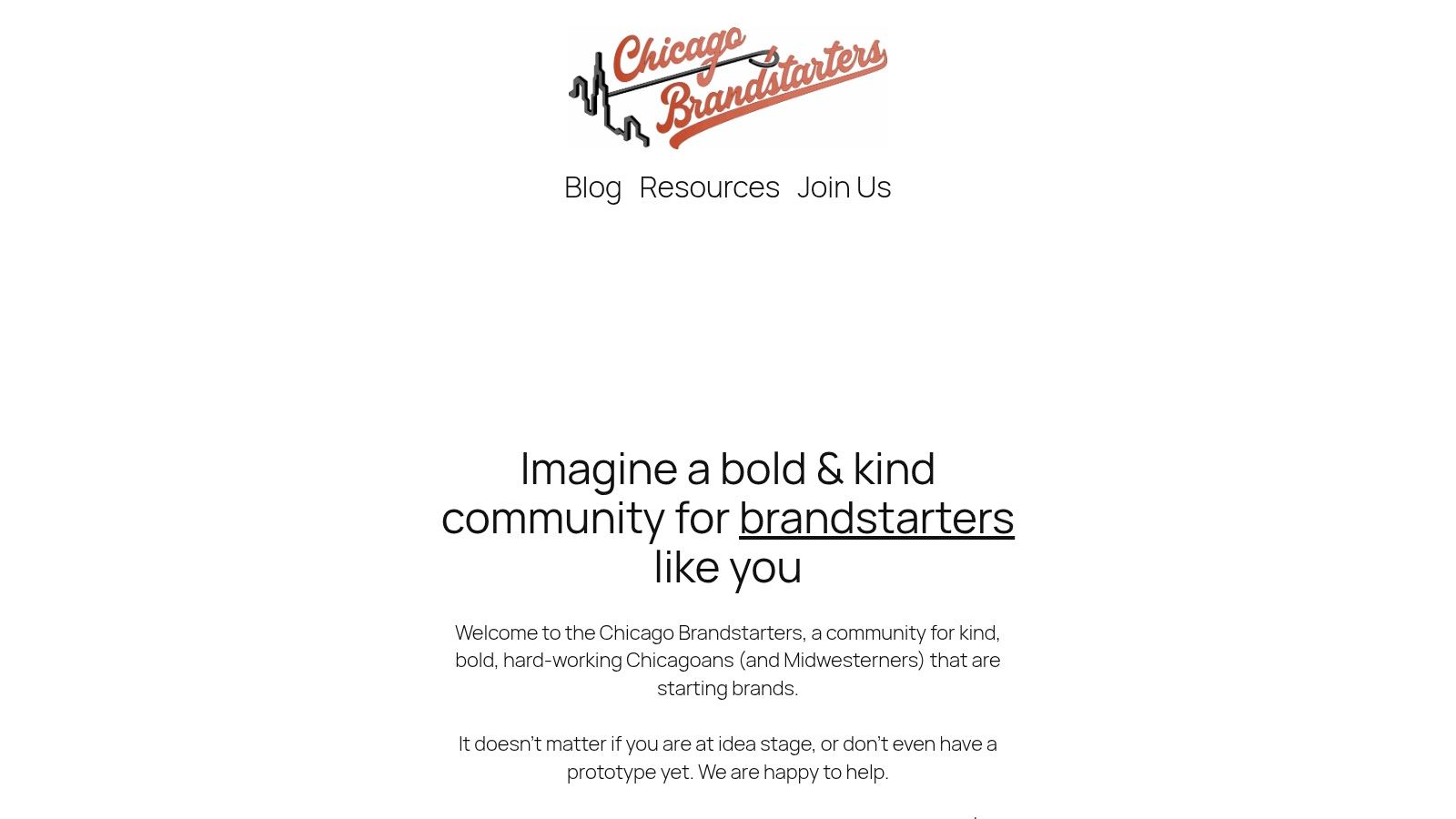
A founder dinner in Chicago can waste your night or save your quarter. I learned that fast. The loud rooms gave me plenty of small talk and zero traction. Smaller, vetted groups gave me answers I could use the next morning.
That is why I rate Chicago Brandstarters highly for early founders. If you want honest feedback, useful intros, and a room that does not feel like a sales convention, this is a strong first stop.
Who it is for
Join this if you are building a consumer brand, ecommerce company, or product business and you want direct access to other founders who will tell you what is broken. Brandstarters fits best from idea stage through real revenue. It is less useful if you only want broad startup education or a formal accelerator curriculum.
Kevin Tao runs it like someone who has built companies, not like an event host chasing attendance. That matters. The conversations stay practical because the room is built for operators.
My advice: If every event you attend ends with new LinkedIn connections and no real follow-up, switch to a vetted founder community.
The filter is part of the value. Identity and LinkedIn vetting keep out a lot of the usual noise. Confidential conversations also make founders more willing to talk about bad margins, stuck inventory, supplier problems, and burnout. That is the stuff that helps you make decisions.
If you are still trying to figure out whether an incubator or founder community is the better first move, read this breakdown of how to choose an incubator near you. It will save you time.
What it costs you
Participation is free. The actual commitment involves time, consistency, and honesty.
You need to show up. You need to ask better questions. You need to be open about what is not working. Founders who want access without candor usually get very little from communities like this.
There is also a practical upside I do not want you to miss. As your company grows, Brandstarters can help you identify the next room you should join instead of letting you drift through random founder events for six months.
Best parts
- Vetted membership: Better signal, less noise.
- Small private dinners: Easier to get specific feedback and real introductions.
- Operator-led community: The tone stays grounded and useful.
- Good early-stage fit: Strong option if you need people around you before you need a formal program.
Watch-outs
- Selective access: You may need to wait or apply before getting in.
- Chicago-centered network: Best for local founders or Midwest operators who can use the in-person community.
My recommendation is simple. Start here if you are early, want candid founder conversations, and need a practical first room before committing time or money to a bigger program.
2. Future Founders
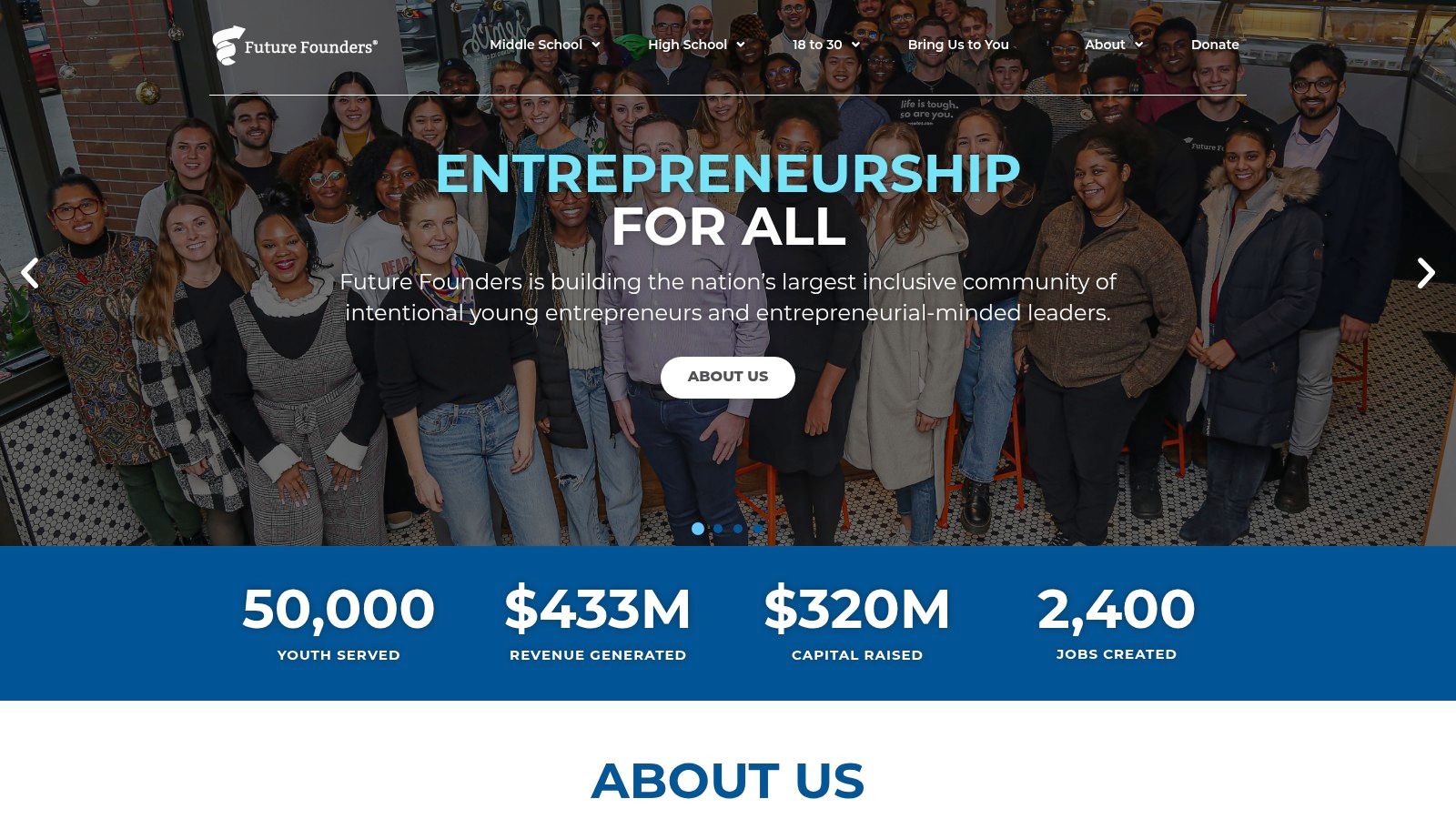
I've met a lot of young founders in Chicago who spend six months lurking at events, talking about ideas, and waiting for permission. Future Founders is one of the few places I'd tell them to stop wandering and apply.
If you're under 30 and serious about building, this is a real starting point. Future Founders is a Chicago nonprofit founded in 2011 and based in the Merchandise Mart. It has reached tens of thousands of young people through programs that run from early exposure to focused founder training, according to its GuideStar profile.
Where it fits
I'd point you here if you need structure more than status.
Startup Bootcamp fits idea-stage founders who need a push to stop overthinking and start testing. The Fellowship fits founders with some traction who want a year of accountability, mentorship, and a peer group that expects progress. That matters if you work better with deadlines, feedback, and other ambitious people around you.
The age filter is the primary qualifier. If you are 18 to 30, this is one of the cleaner entry points in Chicago. If you're outside that range, don't force it. Use a guide to choosing the right incubator near you and pick a room built for your stage instead.
Apply before you feel ready.
What it costs you
The cash cost is low because core programs are free. The actual cost is time, coachability, and follow-through.
You will need to show up, do the work, and let other people challenge your thinking. If you want a loose networking group with no expectations, this is the wrong pick. Future Founders works best for younger builders who want a path, not just access.
I also like that the organization can point to alumni who turned early support into actual company growth. That does not guarantee your outcome. It does tell me this is more than startup pep talks.
For direct program details and applications, go to Future Founders.
3. 1871
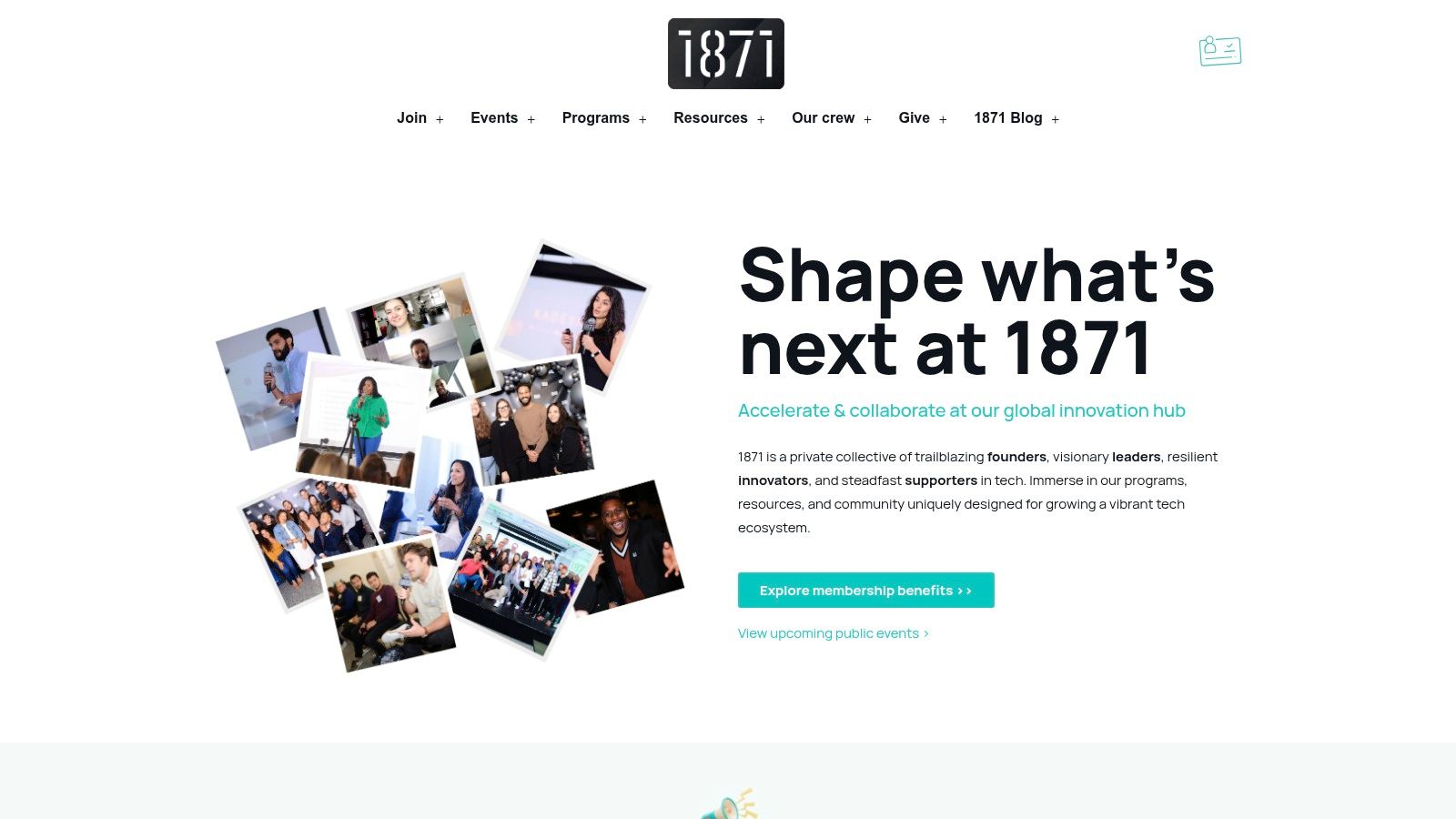
1871 is for founders who want density. More mentors, more events, more startup energy in one place. If Chicago Brandstarters feels like a dinner table, 1871 feels like a train station with smart people getting on and off all day.
That can be great if you're building a tech or digital startup and you need exposure to a wide network fast. It has programming, mentor office hours, pitch practice, and a physical base in the Merchandise Mart. If you want to be around founders all the time, that physical hub matters.
When I'd choose 1871
I'd send you to 1871 if your company is software-heavy, venture-shaped, or you want lots of surface area quickly. You can meet people across industries without having to hunt down ten separate communities.
That breadth is the strength and the weakness. Breadth gives you reach. It can also give you noise. You need enough focus to know what problem you're trying to solve before you walk in.
What I like
- Big network: Good for finding mentors and startup-adjacent people.
- Regular programming: There's usually something happening.
- Strong physical base: Easy to plug into downtown founder traffic.
What I'd question first
- Pricing clarity: Membership details aren't always obvious until you talk to them.
- Best for tech: If you run a neighborhood service business or a simple product brand, the fit may be weaker.
Before you commit to any incubator-style setup, read this breakdown of an incubator near me so you know what kind of support you need.
For the official program lineup, start with 1871.
4. mHUB
If you're building a physical product, mHUB is the obvious pick. Hardware founders need tools, machines, training, and people who understand manufacturing pain. A general founder group can help your thinking. It can't help you cut metal or test a prototype.
mHUB is where I'd point anyone building devices, robotics, connected products, energy tech, water tech, or any product that needs hands-on iteration. It has prototyping labs, a microfactory, training, classes, and multiple ways to enter depending on how early you are.
Why mHUB works
Software founders can change a button in an afternoon. Hardware founders can lose weeks over one part, one supplier, or one manufacturing mistake. mHUB gives you a place to shorten that loop.
I also like that it has more than one lane. You can start with general membership, move into a pre-accelerator, or push toward the accelerator if you're ready. That makes it useful whether you're still proving the concept or already trying to scale production.
Building hardware without shop access is like trying to learn cooking by reading menus.
The real tradeoff
The tradeoff is time. You don't walk in and magically use every machine. Safety training and onboarding are part of the deal.
That's fine. In hardware, discipline saves money.
Best fit
- Physical product teams: Strongest use case by far.
- Prototype-heavy founders: Good if you need to test fast.
- Manufacturing-curious builders: Useful if you don't yet know how to move from idea to production.
Weak fit
- Pure software startups: You'll get far less value than a hardware team.
Check current programs and membership details at mHUB.
5. Techstars Chicago Accelerator
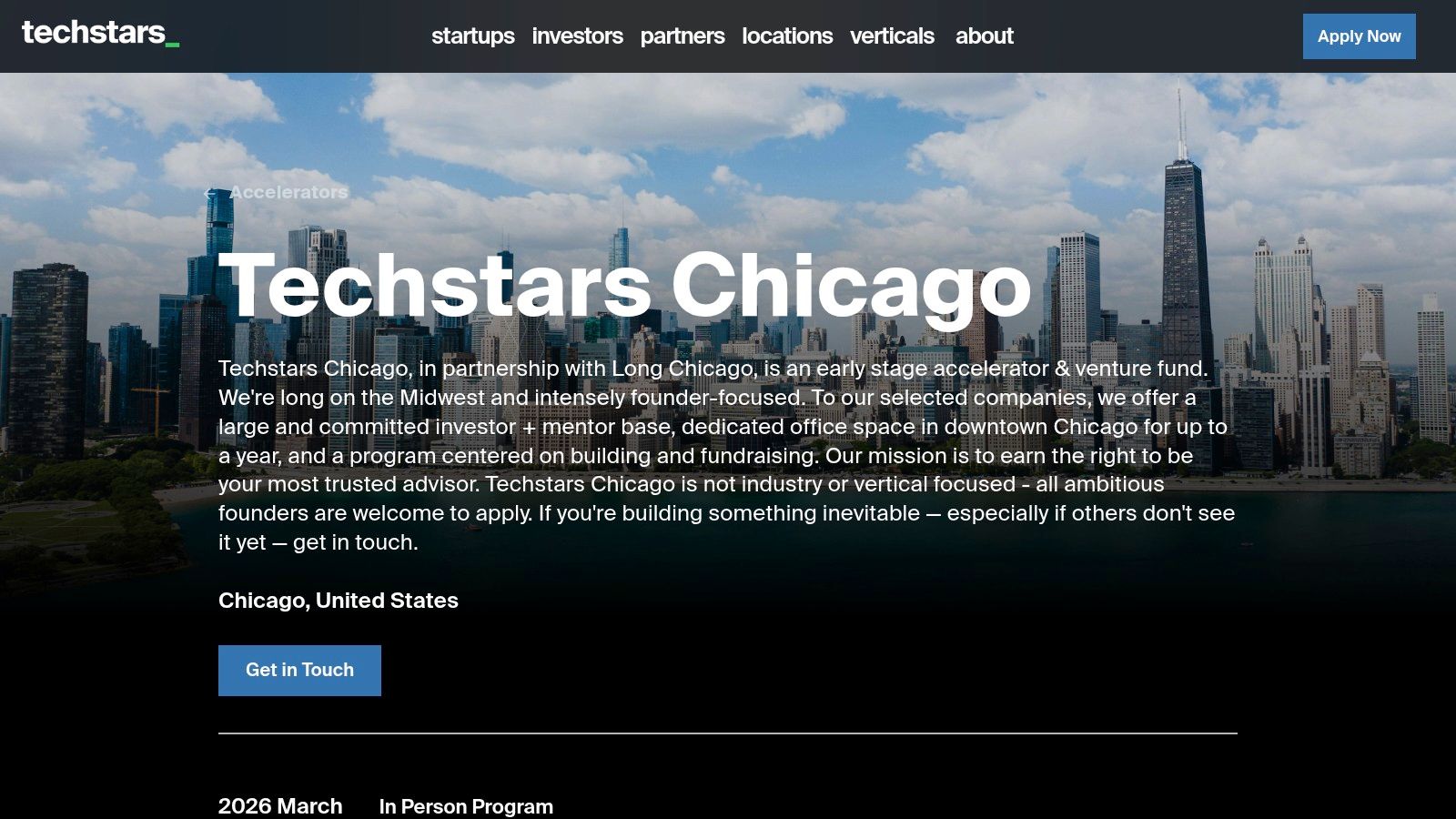
Techstars Chicago is for the founder who wants pressure, speed, and investor access. I would not send an unsure hobby founder here. I would send the team that already knows it wants a serious accelerator and is willing to give up equity for the shot.
The upside is obvious. You get a structured in-person program, a deep mentor bench, a downtown office setup during the program, and the kind of investor exposure that can change the next chapter of your company.
Who should apply
Apply if your startup is venture-backable and you're ready for hard feedback. Techstars works best when you already have enough momentum to absorb what the program throws at you.
The brand helps. So does the local network. But don't join just because the logo looks good on LinkedIn. Join because you want compressed learning and fundraising prep.
This is a race car, not driver's ed.
What it costs you
This one costs equity and focus. The selectivity is high, and the timing is fixed, so you need to plan ahead.
If you're still figuring out whether your company should even chase venture capital, read this plain-English look at venture capital in Chicago. Too many founders raise because they want validation, not because the business needs that fuel.
Strong reasons to choose it
- Investor access: Useful if fundraising is part of your path.
- Mentor depth: You'll meet founders, operators, and VCs.
- Program intensity: Good for fast-moving teams.
Reasons to wait
- Equity-based: Know what you're trading.
- Very selective: A lot of good companies won't get in.
For applications and details, visit Techstars Chicago Accelerator.
6. Founder Institute Chicago
Founder Institute Chicago is a good fit if you want structure more than scene. Some founders need a room full of people. Others need deadlines, deliverables, and someone forcing them to stop romanticizing their idea and build the thing.
That's what Founder Institute does well. It runs a structured pre-seed company-building program with weekly sprints, mentor feedback, and a broader alumni network. The format is mostly virtual, which helps if you live in Chicago but can't make constant in-person events work.
Why people join
First-time founders often drown in unmade decisions. Founder Institute reduces that. It gives you a path, then tells you what to do next.
I like it for founders who are coachable and disciplined enough to keep up. If you need accountability, this can do the job. If you hate homework and feedback loops, skip it.
Good reasons to choose it
- Predictable cadence: Weekly work keeps you moving.
- Virtual-first access: Easier for busy founders.
- Long-tail network: Alumni support can stay useful after the cohort ends.
Read the fine print
- Fee and equity model: Understand the terms before joining.
- Cohort quality varies: Your experience depends a lot on the mentors and your own effort.
This isn't the room I'd choose for raw emotional support. It is the room I'd choose if you need a program to push you from vague idea to fundable plan.
For current Chicago enrollment info, go to Founder Institute Chicago.
7. The Hatchery Chicago
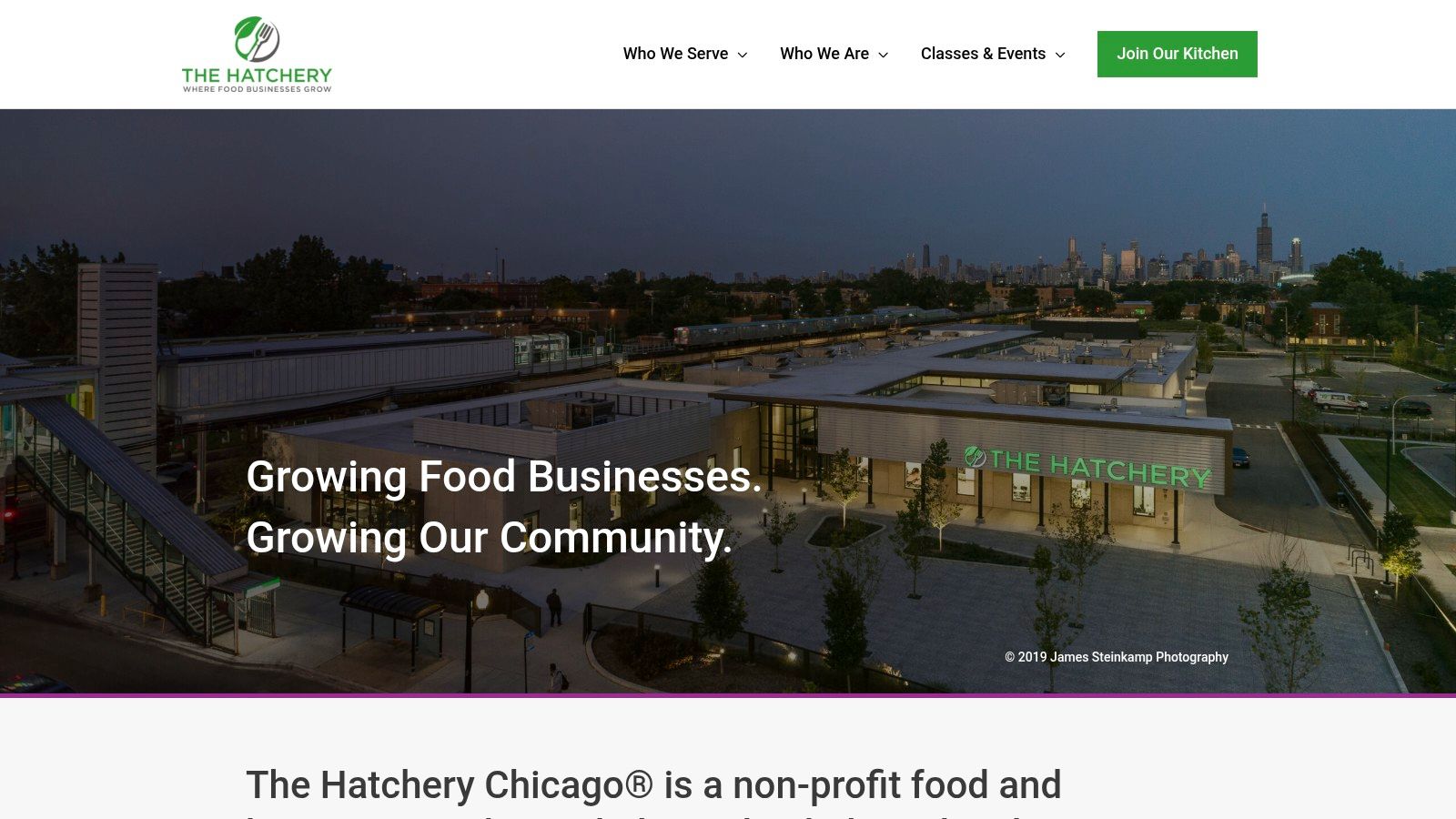
If you're building a food business, don't force yourself into a generic startup program. A food founder has different problems. Shelf life, kitchen access, co-packing, packaging, retail conversations, and production planning are their own maze.
That's why The Hatchery Chicago makes sense. It focuses on food, beverage, and modern manufacturing founders. You can get classes, business support, and help navigating production pathways that matter in practical applications.
Where it shines
I'd look at The Hatchery if you sell packaged food, run a culinary brand, or need commercial kitchen infrastructure. It's much easier to move when the people around you already understand food safety, margins, and operational headaches.
That sector focus cuts out a lot of wasted conversation. You don't need generic startup inspiration. You need somebody who can tell you what happens when your batch size changes or when retail asks for more than you can produce.
Why it's worth your time
- Sector-specific help: Better than broad startup advice for food brands.
- Production path support: Helpful if you need kitchen or co-packing direction.
- Business development angle: Useful when you're trying to reach retail readiness.
What to expect
- Acceptance may vary: You may need proof of concept or financials.
- Pricing isn't fully public: You'll likely need to ask.
For food founders, this is one of the better practical bets in Chicago. Start at The Hatchery Chicago.
Chicago Founder Programs: 7-Point Comparison
| Program | Implementation complexity 🔄 | Resource requirements ⚡ | Expected outcomes 📊 | Ideal use cases 💡 | Key advantages ⭐ |
|---|---|---|---|---|---|
| Chicago Brandstarters | Low–Moderate, curated vetting and biweekly dinners; selective onboarding | Low monetary cost ($0) but requires in‑person Chicago attendance and time | Peer problem‑solving, concrete wins (network intro, factory tours, advice) | Midwestern brand founders early→growth who want intimate peer support | Highly curated, confidential founder community with operator‑led mentorship |
| Future Founders | Low, bootcamps are turnkey; fellowship adds cohort commitment | Minimal cost (bootcamp free); time for sessions; age limit (18–30) | Skills, idea validation, clear pathway into fellowship and local networks | Young entrepreneurs (18–30) at idea stage seeking no‑cost entry | Inclusive youth pipeline with frequent bootcamps and structured fellowship |
| 1871 | Moderate, membership/onboarding plus frequent public programming | Membership fees/tiers (varies), time for events; access to physical hub | Broad mentor access, events, industry labs, visibility in tech community | Tech and digital startups seeking large mentor and event ecosystem | Large, diverse mentor network and downtown innovation hub with frequent programming |
| mHUB | High, safety training and lab onboarding required before full use | Significant (membership, materials, lab fees) and hands‑on time | Functional prototypes, manufacturing readiness, access to hardware accelerator | Hardware, hardtech, robotics, CPG devices needing prototyping/manufacturing | Extensive prototyping labs, transparent rates, accelerator pathways with investment |
| Techstars Chicago Accelerator | High, intensive cohort program with fixed schedule and selection | Equity stake common, full‑time commitment during program; travel/office time | Fundraising readiness, investor introductions, demo‑day exposure | Ambitious early‑stage startups seeking investor access and scaling | Strong brand signal, deep mentor/VC bench, demo‑day visibility |
| Founder Institute Chicago | Moderate, 10–12 week structured sprints with weekly deliverables | Entrance fee and equity collective model; regular time commitment | Fundable business plan, mentor feedback, lifetime alumni support | First‑time founders wanting predictable structure and accountability | Predictable curriculum, global mentor network, ongoing alumni resources |
| The Hatchery Chicago | Moderate, membership acceptance and scheduling for kitchen/co‑packing | Membership or rental costs, proof of concept often required; food‑specific compliance | Production capability, co‑packing pathways, retail introductions | Food & beverage and CPG founders needing commercial kitchens and manufacturing | Sector‑specific facilities, production pipelines, and industry‑focused programming |
Your Next Step Is the Most Important
I've seen founders lose a full quarter in Chicago by doing one thing over and over. They keep researching programs, comparing websites, and asking five more people where they should go. Meanwhile, someone less polished ships the MVP, talks to customers, and takes the meeting.
Don't do that.
Choose based on the problem that is blocking you right now. If you need candid peers and useful conversations, join Chicago Brandstarters. If you're a younger founder and need a free, structured place to start, pick Future Founders. If your company needs a broad tech network, go to 1871. If you build physical products, choose mHUB. If you want investor access through a selective accelerator, apply to Techstars. If you need a strict program with weekly accountability, choose Founder Institute. If you're building in food or beverage, go to The Hatchery.
That's the roadmap. Match the resource to the bottleneck, then commit.
The tradeoff is time. Every founder program costs some combination of hours, focus, money, and momentum. If you pick the wrong room, you don't just waste a few nights on your calendar. You delay customer calls, product work, hiring, and revenue.
One more hard truth. The best program is not the one with the biggest name. It's the one you will use. A top accelerator is useless if you're too early. A huge coworking hub is useless if you avoid asking direct questions. A founder community is useless if you only show up to pitch and never build real relationships.
As noted earlier, Future Founders has produced meaningful outcomes for younger builders. That matters. But your result will come from execution, not from collecting one more tab in your browser.
So pick one program this week. Apply, join, or book the intro call. Then get your positioning and traction tighter with these ideas on early-stage growth channels and messaging.
If you want a free, vetted founder community in Chicago that cuts the fake networking and gets you into real conversations, apply to Chicago Brandstarters. If you're kind, bold, and willing to work, you'll find your people there.
Leave a Reply