
That "incubator near me" search usually means something deeper than office space. It means you're stuck on a problem nobody around you understands. It's late, your landing page still looks wrong, your unit economics are fuzzy, or your prototype keeps breaking. You don't want another motivational post. You want a room with people who can help.
I know that search because I've lived it. When you're early, every decision feels heavier than it should. Pick the wrong advisor and you lose months. Join the wrong founder group and you get a pile of business cards, fake enthusiasm, and zero truth. That's brutal when you're trying to build something real.
Chicago gives you options. That's the good news. The bad news is most founders choose the wrong one because they shop by brand name instead of fit. That's like buying hiking boots based on color. You need to know what terrain you're walking into.
Startup incubators can be powerful. A broad industry review says incubated companies in the U.S. were 87% less likely to fail than non-incubated startups. That matters. But it doesn't mean every incubator is right for you, and it definitely doesn't mean the flashiest one will save you.
I've also learned that the formal program isn't always the best answer. A lot of founders at the idea stage don't need more slides. They need honesty, accountability, and people who'll tell them when they're lying to themselves. That's the gap most "incubator near me" roundups miss.
So I'm going to be blunt. Below are the Chicago programs and communities I'd consider, what each one is really for, who should join, and who should stay away. If you're looking for a place to belong and a place to grow, this will help you stop guessing.
1. Chicago Brandstarters
You're sitting on a business idea at 11 p.m., second-guessing your pricing, your offer, and whether anyone will buy. You do not need another loud networking event. You need a small room of founders who will tell you the truth.
That is why I put Chicago Brandstarters first.
Chicago Brandstarters works better as a founder advisory circle than a classic incubator. No polished lobby. No bloated programming calendar. You get vetted founders, private dinners every two weeks, an active group chat, and honest conversations about the parts of building a company people usually hide. Bad launches. Supplier problems. Margin mistakes. Co-founder friction. The stuff that can wreck a young business if you keep it to yourself.
I like that model because early-stage founders rarely need more theory. You need pattern recognition, fast feedback, and people who have already made the mistakes you're about to make. Chicago Brandstarters gives you that in a format that feels human instead of institutional.
Why I rate it so highly
I trust small founder rooms more than big startup scenes. Big rooms reward performance. Small rooms reward honesty.
Chicago Brandstarters is built around trust. Members are identity-verified and LinkedIn-vetted. Screenshots are disabled. Confidentiality is enforced. That changes how people talk. Founders stop pitching and start admitting what's broken.
Practical rule: If you cannot say, "I think I messed this up," the room is useless.
I also like that this community is operator-led. The advice comes from people who have built products, dealt with vendors, fought for margins, and made payroll. That is a different level of help. You get introductions, practical shortcuts, and direct feedback from people close enough to the work to spot bad assumptions fast.
If you're comparing different types of founder support, their guide to small business incubators in Chicago is a useful starting point.
Best for these founders
Chicago Brandstarters fits a specific founder profile well:
- Idea-stage founders: You need feedback before you waste money on branding, inventory, or a product nobody wants.
- Solo founders: You need people who can pressure-test your thinking because you do not have a co-founder in the trenches with you.
- Ecommerce and product-based businesses: You benefit from operator insight, supplier knowledge, and shared lessons from people selling real things.
- Founders who hate performative networking: You want candor, not another room full of half-listening people handing out LinkedIn QR codes.
The price matters too. It is free. Early on, that matters more than founders admit. You should spend your cash on testing demand, fixing the product, and buying time.
Where it falls short
Chicago Brandstarters will disappoint you if you want structure, branding, and a formal curriculum. It is not built for founders who want a big-name badge, a packed event calendar, or a lab-style environment with layers of programming.
It is also a Chicago-centered community. The in-person dinners matter. And because the groups are small and vetted, access is selective by design.
I think that trade-off is smart.
My blunt take is simple. If you're searching "incubator near me" because you're isolated, confused, and tired of getting polished advice from people with no skin in the game, Chicago Brandstarters is one of the better first moves in Chicago. It solves the founder loneliness problem faster than many formal programs, and for a lot of early founders, that is the problem that needs solving first.
Use the Chicago Brandstarters website if you want a founder room that is candid, useful, and built for real conversations.
2. 1871
You search "incubator near me" because you're tired of building in a vacuum. Then you walk into 1871 and get hit with the opposite problem. Too many people, too many events, too many ways to feel productive without actually moving the company forward.
That does not make 1871 overrated. It makes it specific.
1871 is one of the best-known startup hubs in Chicago for founders building software, digital services, marketplaces, and venture-scale ideas that benefit from exposure. The brand carries weight. The network is real. The programming can help. Chicago's startup scene has credited 1871 with helping turn the city into a more serious home for high-growth tech companies, and publications like the Financial Times have recognized it among leading startup hubs.
Here's my honest read. 1871 works best for founders who already have enough self-awareness to know why they're in the room.
What 1871 is really for
This place is built for volume. Volume of conversations, introductions, workshops, office hours, pitch practice, and founder collisions. If you use that well, 1871 can shorten your learning curve and widen your opportunity set fast.
I recommend it for founders who need:
- A bigger network on purpose: Investors, mentors, corporate contacts, and other founders are easier to reach here than in smaller programs.
- A tech-centered environment: SaaS, marketplaces, and digitally enabled startups make sense in this room.
- External pressure to show up: Regular programming helps founders who do better with deadlines, visibility, and a reason to leave the house.
If you're still sorting out what kind of program fits your business, this guide to different types of small business incubators in Chicago will help you choose with more discipline.
Where founders get this wrong
Founders join 1871 and confuse access with progress.
You can spend a full week there meeting smart people, attending polished sessions, and tweaking your pitch, then realize you still did not talk to enough customers, ship the feature, or fix the funnel. I have seen founders hide inside big startup ecosystems because it feels better than facing weak traction.
1871 rewards initiative. If you follow up, ask good questions, and show up with a clear ask, you'll get value. If you wait for the program to create momentum for you, you'll drift.
That is the trade-off.
My candid recommendation
Go to 1871 if you are ready to use a large platform like an adult. Show up with goals. Know what introductions you want. Decide in advance which events matter and which ones are just startup theater.
I would not send a fragile founder there first. I would send a founder who has some traction, some conviction, and enough discipline to separate signal from noise.
Use the 1871 website if you want broad reach, strong startup density, and a serious shot at plugging into Chicago's tech network.
3. mHUB
You spend six months polishing a hardware concept, then reality hits all at once. The prototype fails under stress. A supplier ghosts you. Your unit economics change the second you price real manufacturing. That is the point where a general startup hub stops being enough.
mHUB is built for founders dealing with physical products, not just ideas about physical products. If you are building in robotics, climate tech, medtech, manufacturing, hardtech, or connected devices, this is one of the few Chicago programs that matches the actual pain of the work.
Why mHUB matters
I like mHUB for one simple reason. It respects the fact that hardware is harder.
Software founders can get away with mockups, no-code tests, and a slick story for longer than they should. Hardware founders run into physics, components, compliance, testing, and production costs early. You need equipment, technical guidance, and people around you who understand how a prototype becomes something you can ship.
That is where mHUB earns its keep. It offers:
- Prototyping equipment and technical support: Useful if you need to build, test, revise, and repeat without hunting for outside shop access every week.
- Commercialization help: Better for founders stuck in the messy middle between "it works once" and "someone will buy this at scale."
- Flexible space: Coworking, private space, and micro-factory access give you options as the company gets more serious.
I also respect that mHUB is relatively clear about memberships and access. Founders already waste enough time decoding vague program pages. Clarity matters.
What founders should understand before joining
mHUB has a clear DNA. It is for builders who need physical infrastructure and technical proximity.
That focus is a strength. It is also the filter.
If your product needs to be fabricated, assembled, tested, certified, or prepared for production, specialized space can save you months of stupid mistakes. The International Business Innovation Association makes the broader point well in its overview of incubator models. Sector-specific incubators can offer facilities, equipment, and expert support that general programs do not provide. That is the core case for mHUB. You are not paying for startup vibes. You are paying to get closer to manufacturing reality. mHUB
If your startup is pure software, I would pass. A founder trying to fix activation, pricing, demand gen, or retention will get more from a community built around distribution and customer learning than from a hardware-centered space.
And yes, the deeper the access, the more it costs. Good. Serious hardware support is supposed to cost money. The mistake is joining before you have confirmed that your company needs that environment.
My candid recommendation
I would send a founder to mHUB if the product has parts, tolerances, testing requirements, or a real manufacturing path ahead. I would not send someone there just because it sounds impressive on LinkedIn.
This is not the best fit for every startup in Chicago. It is one of the best fits for a specific type of founder. If that is you, take it seriously. If it is not, do not force yourself into the wrong room. Chicago has plenty of programs. The smart move is matching the program's DNA to the business you are building, and to the kind of founder you are right now.
4. MATTER
You spend nine months talking to hospitals, three compliance calls later your pilot is still "under review," and the buyer who loved the demo has gone quiet. That is normal in healthcare. It is also why I tell founders not to pick a general incubator just because it is popular.
MATTER is built for startups dealing with healthcare reality. If you are in digital health, medtech, care delivery, payer tools, provider workflow, or the messy infrastructure around them, this is one of the few Chicago rooms where the advice is shaped by the actual market you are selling into.
Why MATTER earns a serious look
Healthcare founders need better judgment, not more startup theater.
MATTER's no-equity membership model is a real plus. You keep your cap table cleaner while getting access to healthcare-focused programming, expert clinics, executives-in-residence, and in-person connections at Merchandise Mart. I like that structure because early founders already get pushed to give up ownership far too fast for access that should have been earned through membership or community.
The bigger advantage is context. You need feedback from people who understand provider workflows, payer incentives, clinical adoption, procurement drag, and how slow a "fast" pilot can be. A general incubator can help with pitch polish. It will not save you from building something a health system cannot buy or a care team will never use.
That distinction matters a lot if you plan to raise money in this category. If you need a sharper read on the local funding environment, study the Chicago venture capital market for healthcare and B2B founders before you start taking every investor meeting you can get.
A separate analysis from the National Center for the Middle Market on industry-focused innovation ecosystems makes the broader point well. Specialized startup environments work because the right partners, customers, and operators are already in the room. In healthcare, that kind of concentration saves time and cuts bad learning.
Who should join
I would point you to MATTER if you need one or more of these:
- Provider or payer reality checks: You are testing whether the problem is painful enough, budgeted, and tied to an actual workflow.
- Industry-specific introductions: You need better access to operators, pilot partners, advisors, or investors who already know healthcare.
- Support without equity loss: You want guidance and community without handing away ownership for the privilege.
I also respect that MATTER gives founders different ways to participate. That is how it should be. You should not commit to the deepest version of any program until you know exactly what problem you need it to solve.
My blunt advice
Join MATTER if healthcare context is the business. Skip it if you are forcing a weak healthtech story onto a broad software product because the category sounds fundable.
I have seen founders waste a year on bad feedback from smart people who did not know the buyer. In healthcare, that mistake is expensive. The wrong mentor can push you toward features the care team will ignore, pilots the legal team will stall, or a sales motion that dies somewhere between innovation theater and procurement.
Use the MATTER website if your product needs healthcare buyers, healthcare mentors, and healthcare reality checks.
5. Polsky Exchange
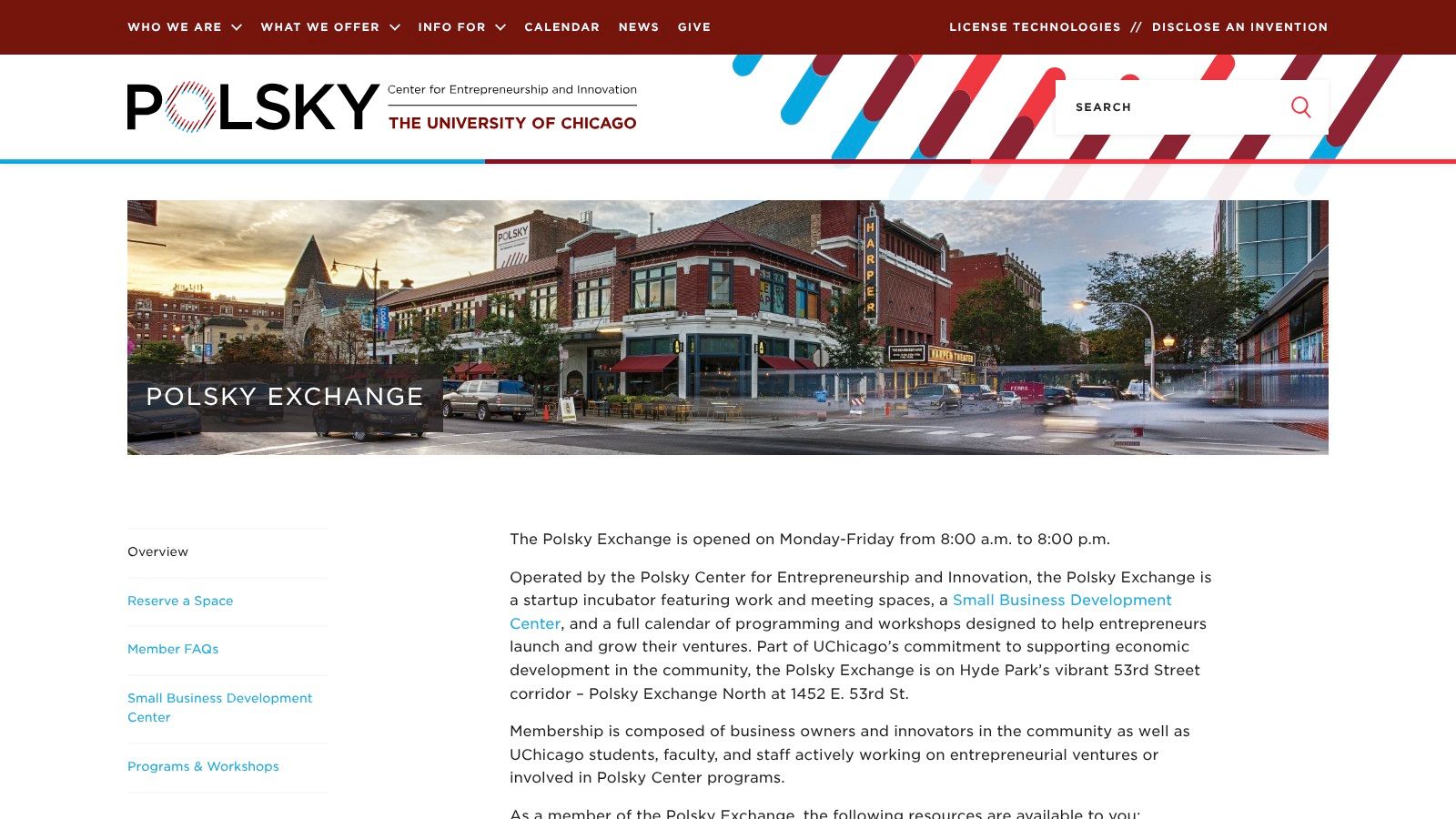
You are sitting on a real business idea, but you are not ready for startup theater. You need honest feedback, help sorting out the basics, and access to smart people who can save you from dumb early mistakes. That is where Polsky Exchange makes sense.
I respect Polsky because it serves founders who want a serious start, not a flashy one. The University of Chicago connection gives you a useful mix of advising, workshops, mentors, and talent access. If you are still working through customer model, operations, entity setup, or early go-to-market decisions, that matters a lot more than hanging around people talking about funding before they have earned it.
I would look hard at Polsky if you fit one of these profiles. You are based on the South Side. You want university-linked support without paying for overpriced consultants. You are a first-time founder who needs structure and sharp feedback before joining a more aggressive program.
That last point matters. I have seen founders join high-energy incubators too early, then confuse activity with progress. Polsky is better for builders who want to get their footing first. It also helps that academic startup centers often create a wider entry point for founders who do not already have warm intros or a polished founder persona. The University Business Incubator Index is a better reference point for that university-linked model than the generic incubator roundups people keep recycling.
Here is the catch. New memberships are closed until summer 2026, and there is a waitlist.
So I would not treat Polsky as your immediate answer if you need space, daily programming, or fast access right now. Put your name in if it fits, then keep building elsewhere instead of stalling. If capital is part of your plan, read this breakdown of venture capital firms and funding paths in Chicago so you know what this ecosystem rewards.
My advice is simple. Use Polsky if you want thoughtful support, university proximity, and a lower-ego environment. Skip it if you need instant access or if you are only chasing brand-name affiliation.
Use the Polsky Exchange website if advising and university access are more useful to you than startup hype.
6. ICNC Make City
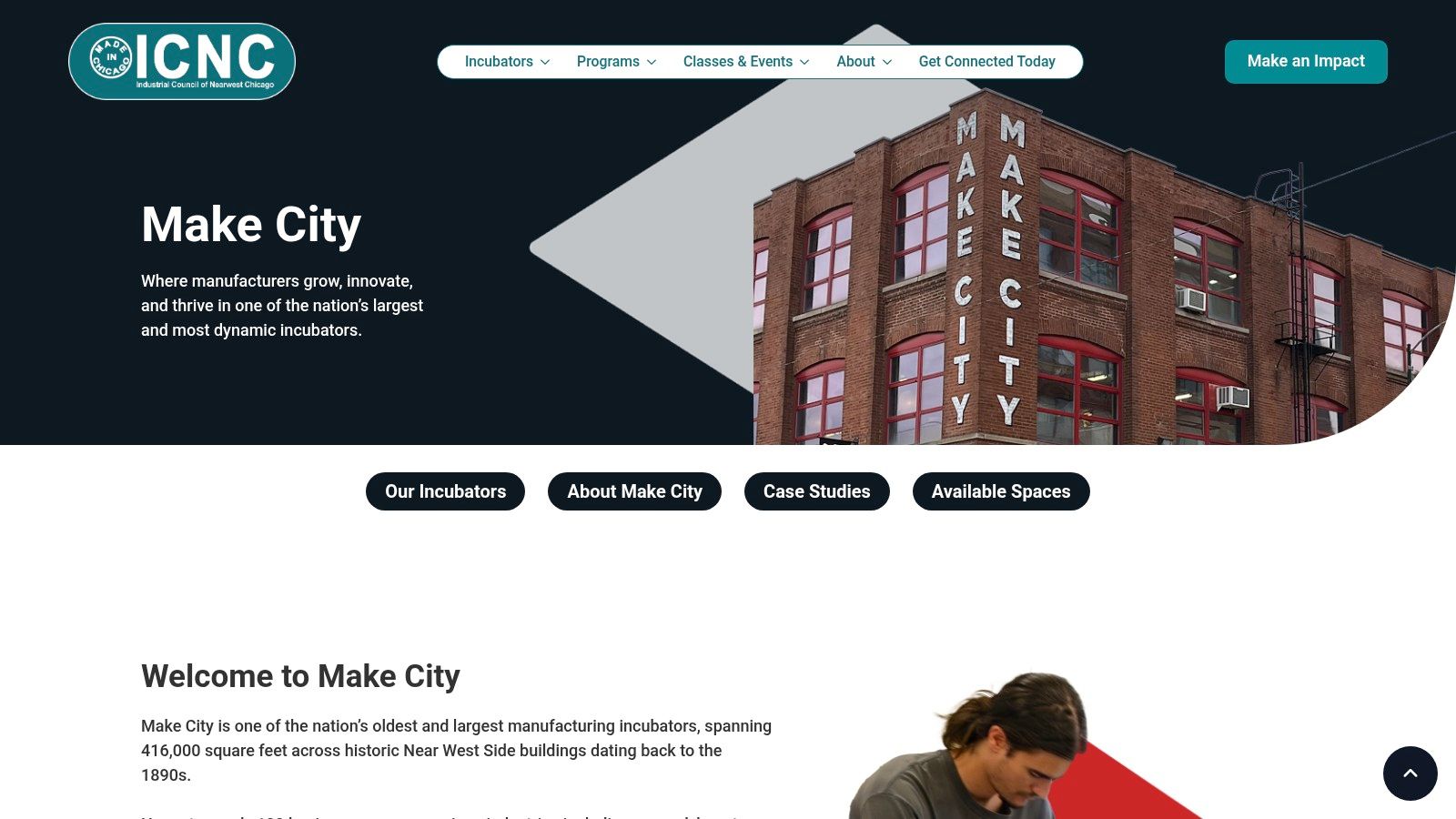
You sign a lease for a tiny studio, stack boxes to the ceiling, trip over inventory, and call it scrappy. I have watched founders do this for months. It slows production, wrecks morale, and hides the underlying issue. Your business outgrew coworking, and now you need industrial space, not another pitch deck workshop.
ICNC Make City exists for that moment.
If your company makes, packs, stores, or ships physical product, this is one of the few Chicago options I would tell you to look at seriously. It fits founders in apparel, beauty, CPG, light manufacturing, and other product categories where operations matter more than optics. You need room for equipment, raw materials, fulfillment tables, and people who are not working elbow to elbow in a fake office setup.
That difference matters more than founders admit.
I like ICNC Make City because it is grounded in the actual needs of physical businesses. You are not joining for startup status. You are getting access to light-industrial space, a tenant community, and support that makes more sense for operators than for software founders. The Urban Manufacturing Alliance is a useful reference if you want a broader view of why urban industrial space and manufacturing support matter for small businesses trying to stay and grow in cities.
Here is my read on the program's DNA. This is not the place for founders who want a polished curriculum to keep them motivated. This is for people who already know they need to produce, store, and move things efficiently. If that is you, the boring stuff becomes the important stuff. Loading access. Lease terms. Vendor referrals. Hiring help. Proximity to transit and customers. Those details decide whether your operation gets tighter or stays chaotic.
That is also why I see Make City differently from the usual incubator list.
A generic directory will lump this in with startup hubs built for laptop companies. I would not. ICNC Make City is much closer to operational infrastructure than founder theater. If your values lean toward practical community, steady execution, and building a company that can deliver product, it deserves a hard look. If you mainly want mentor matching, events, and founder branding, I would skip it and save yourself the mismatch.
There is a tradeoff. Tenancy-based space is less tidy than a plug-and-play coworking membership. Availability changes. Terms matter. You need to read the details and ask tougher questions than you would at a general incubator.
Do that work.
My advice is simple. Choose ICNC Make City if square footage, logistics, and a maker-heavy environment are your immediate constraints. Pass if you still need basic startup structure or if your business can run perfectly well from a laptop. And if you want a higher-trust founder community without the cost and formality of a traditional program, that is exactly why groups like Chicago Brandstarters appeal to so many early founders. Different tool. Different stage.
Use the ICNC Make City website if your startup needs industrial space and a maker-heavy peer environment.
7. The Hatchery Chicago
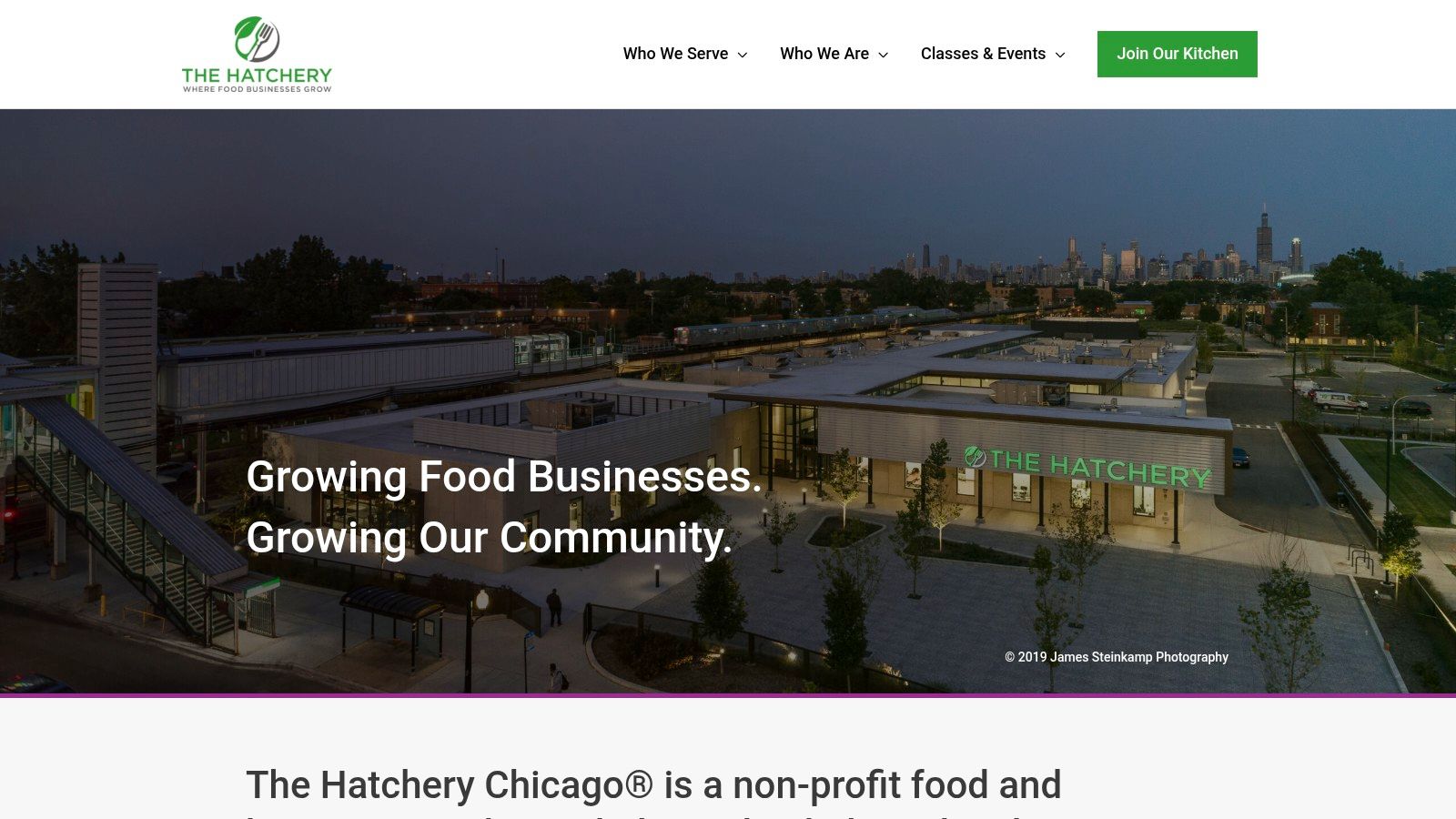
Food founders shouldn't join general incubators unless they enjoy wasting time.
Food and beverage is its own operating system. Health rules, kitchen access, packaging, shelf life, ingredient sourcing, production flow, and distribution all change the game. The Hatchery Chicago is built for that reality. If you're launching a food brand, beverage concept, bakery, catering company, or ghost-kitchen operation, this is the specialized setup you should look at first.
Why food founders need a dedicated home
A licensed kitchen is not optional. Neither is operational discipline.
The Hatchery gives founders shared commercial kitchens, private production suites, classes, workshops, coaching, and links into a broader West Side support network. That's exactly the kind of infrastructure early culinary founders need. Compliance alone can slow you to a crawl if you try to piece it together yourself.
I also like that it blends facilities with entrepreneurship education. A kitchen without guidance can still leave you stuck. Guidance without a kitchen is just talk.
What stands out to me
The best part isn't just the space. It's that the model fits the founder's actual constraints.
A resource overview on incubator programs described high-engagement cohort formats like Rock It! Lab, where six-month cohorts serve more than 30 entrepreneurs with one-on-one guidance. Different sector, same principle. Tight support works better when founders face operationally specific problems. Food startups definitely do.
The Hatchery also benefits from partner connections and ecosystem ties, which matter once you move beyond test batches and into repeatable production.
- Licensed kitchen access: You can produce legally and consistently.
- Coaching and classes: You get help with the business side, not just the cooking side.
- Food-specific environment: You're surrounded by people who understand margins, prep flow, and scale issues.
My recommendation
If you're a culinary founder, don't overcomplicate this. The Hatchery is one of the strongest "incubator near me" answers in Chicago because it's honest about what food founders need.
If you're not in food or beverage, skip it. Sector-specific programs are strongest when you don't try to bend them into something they aren't.
A food startup without compliant space is a hobby with ambition.
Use the The Hatchery Chicago website if you need kitchen infrastructure, food-business support, and a local ecosystem that understands culinary operations.
Top 7 Chicago Incubators: Side-by-Side Comparison
| Program | 🔄 Implementation complexity | ⚡ Resource requirements | ⭐📊 Expected outcomes | Ideal use cases | 💡 Key advantages |
|---|---|---|---|---|---|
| Chicago Brandstarters | Medium, selective vetting, regular biweekly dinners | Low cost ($0) but time‑intensive local attendance | ⭐⭐⭐⭐, faster brand growth, supplier introductions, practical tactics | Early-stage Chicago/Midwest consumer brands needing peer accountability | Free, high‑trust small groups; operator-led, outcome-focused advice |
| 1871 | Medium, application/inquiry; variable program fit | Moderate, workshops, mentorship, coworking (pricing via inquiry) | ⭐⭐⭐⭐, investor/corporate connections, fundraising readiness | Tech and digital startups seeking broad ecosystem and fundraising support | Deep Chicago network; consistent programming and pitch practice |
| mHUB | High, equipment onboarding, safety training, cohort expectations | High, extensive prototyping labs ($6M+), paid tiers, technical staff | ⭐⭐⭐⭐⭐, rapid hardware prototyping to commercialization; manufacturing links | IoT, medtech, robotics, advanced manufacturing and hardware founders | On‑site prototyping, micro‑factory, clear membership tiers and accelerator model |
| MATTER | Medium, tiered membership and healthcare onboarding | Moderate, mentorship, expert clinics, optional paid Select tier | ⭐⭐⭐⭐⭐, fast payer/provider feedback, pilot and investor pathways | Digital health, medtech, payer/provider solution startups | No‑equity model; healthcare‑specific mentors, pilots, and fundraising support |
| Polsky Exchange (UChicago) | Low–Medium, advising is straightforward but intake currently paused | Low, no‑cost SBDC advising and university resources (waitlist) | ⭐⭐⭐⭐, university talent access, community-focused advising and referrals | University founders and local small businesses seeking no‑cost guidance | Free 1:1 advising, strong pipeline to university talent and partner programs |
| ICNC "Make City" | Medium, tenancy/lease process; unit availability varies | High, large configurable industrial bays; below‑market leases | ⭐⭐⭐⭐, affordable in‑city production space and workforce connections | Early manufacturers, CPG, apparel, makers needing production space | Rare affordable industrial space in city; large peer tenant community |
| The Hatchery Chicago | Medium, application for suite access; scheduling required | Moderate, licensed shared kitchens, private suites, coaching | ⭐⭐⭐⭐, compliance acceleration and faster market launch for food CPG | Culinary founders: food/beverage CPG, caterers, bakers, ghost kitchens | Turnkey licensed facilities, entrepreneurship curriculum, ecosystem links |
Your Next Move Community or Curriculum
You type "incubator near me" at 11:40 p.m. because you feel stuck. Revenue is soft, your offer is fuzzy, and every founder room online sounds the same. I’ve been there. The right answer is rarely "join the biggest name you can find." The right answer is choosing the room built for your actual bottleneck.
If your problem is physical infrastructure, stop overthinking it. Go where the tools, space, and operators already exist. mHUB fits hardware. The Hatchery fits food founders who need licensed kitchen access and operational guidance. ICNC Make City fits companies that need real production space, not another coworking desk. MATTER fits healthcare founders who need buyers, clinicians, and sector-specific feedback. If your goal is broad exposure, events, and a large startup network, 1871 still makes sense.
Here’s my blunt take. A lot of early founders do not need more programming. They need better people around them.
I see the same pattern over and over. Founders say they need curriculum, but what they really need is someone to tell them the pitch is muddy, the pricing is weak, the customer research is too abstract, or the co-founder conflict is already hurting the business. A polished workshop will not fix that. Honest proximity will.
That’s why founder fit matters more than prestige. Analysts at the International Business Innovation Association describe incubators as long-term support organizations that help young companies through space, mentorship, and business assistance, which is useful context but still too broad to make your decision for you: InBIA on what incubators do.
The model itself has been around for decades. The National Business Incubation Association traces the first widely recognized business incubator to Batavia, New York, in 1959, which matters because it reminds you that an incubator is just a structure. Results come from the pressure, standards, and relationships inside it: history of business incubation.
Job creation numbers and startup survival stats get quoted constantly, and yes, incubation can work at scale. The U.S. Economic Development Administration has backed incubators and accelerators for years as part of regional economic growth efforts because they can help firms start, hire, and stay alive longer: EDA on incubators and accelerators. Useful signal. Still not enough to pick your room.
Funding stats get abused even more. I care less about whether a program can produce a flashy fundraising claim and more about whether it helps you get to the next honest milestone. The Kauffman Foundation has written extensively about how founder networks, peer learning, and local support systems shape startup outcomes over time: Kauffman Foundation research. That matches what I’ve seen firsthand.
Early on, community usually beats curriculum.
That is why I rate a trusted group like Chicago Brandstarters so highly. Not because every founder should avoid formal programs. Because plenty of Chicago founders first need a room where they can say what is going wrong, get a straight answer, and meet people who have solved similar problems without the posturing. That kind of group can save you months.
So choose based on your next constraint.
If you need equipment, compliance help, lab access, or industry-specific buyers, pick the specialist program. If you need clarity, accountability, sharper positioning, and people who will tell you the truth without trying to impress you, pick community first.
You can also do this in sequence. That is often the smart move. Start with a tight, trusted founder circle. Then add a formal incubator when your bottleneck becomes technical, regulatory, operational, or fundraising-related.
Do not spend another month browsing directories and comparing logos. Search is not progress. A real conversation, a visit, or an application is.
If you want the kind of founder room where people drop the act, share what works, and help each other build real businesses, apply to Chicago Brandstarters. It's free, vetted, Chicago-rooted, and built for kind, serious founders who want honest support from idea stage through growth.
Leave a Reply