Here’s a quick playbook for launching a physical product: spot genuine demand, craft a lean prototype, secure dependable suppliers, shape a memorable brand, choose high-margin channels, and set clear launch targets. Each phase builds on the last—early wins protect your budget and fuel momentum.
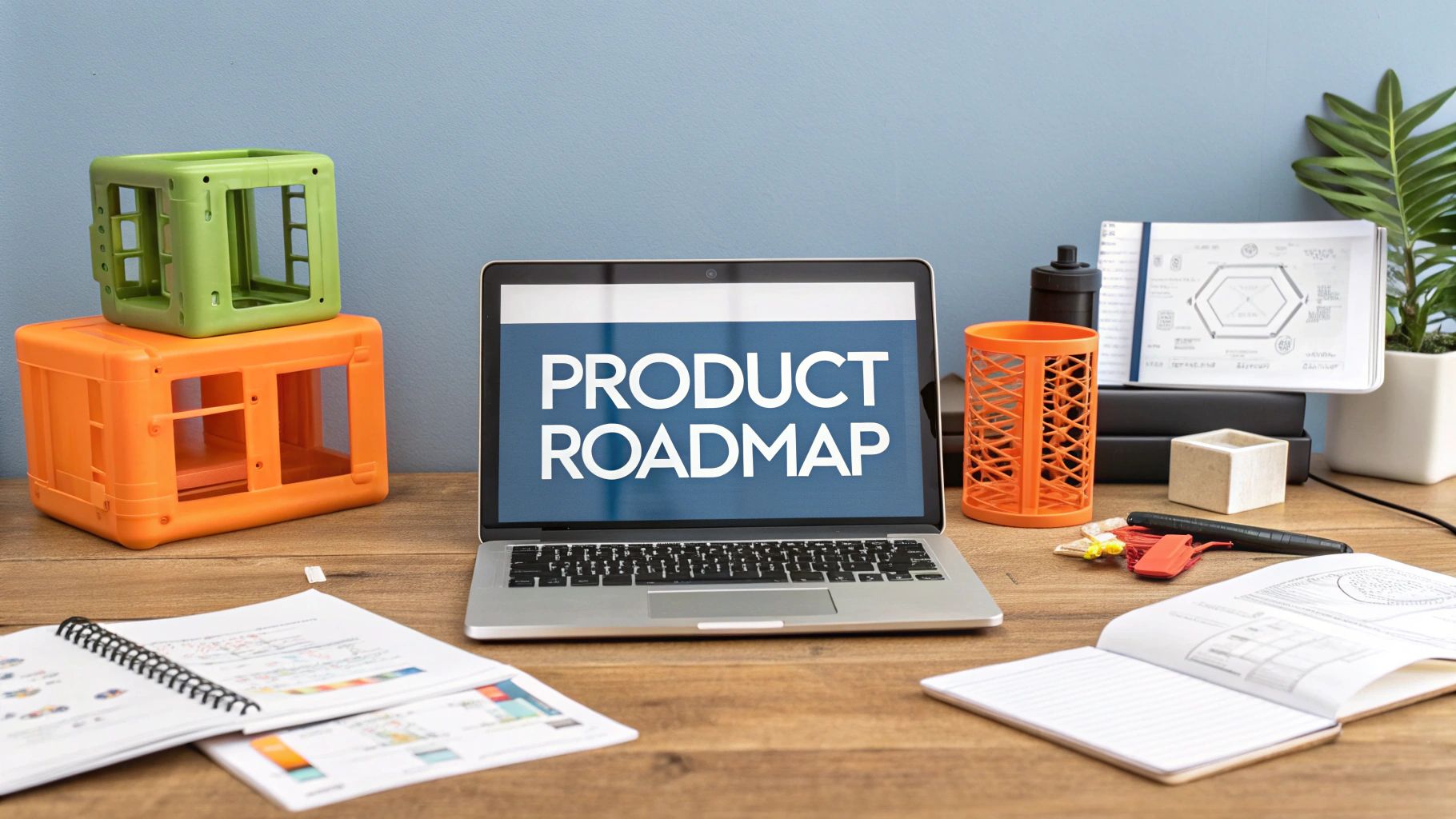
Roadmap To Start A Product Business
Think of this as your guiding map from first spark to that first purchase.
- Demand Validation: Test with simple landing pages or pre-order offers to confirm interest.
- MVP Development: Build a no-frills prototype to learn fast.
- Supplier Sourcing: Negotiate with manufacturers to balance quality and cost.
- Brand Positioning: Pin down your story, tone, and pricing so you stand out.
- Channel Selection: Weigh direct-to-consumer, retail, and marketplaces for reach vs. margin.
- Launch Planning: Define milestones for pre-orders, marketing pushes, and fulfillment.
Each phase has a goal and clear outcome, so you avoid blind alleys.
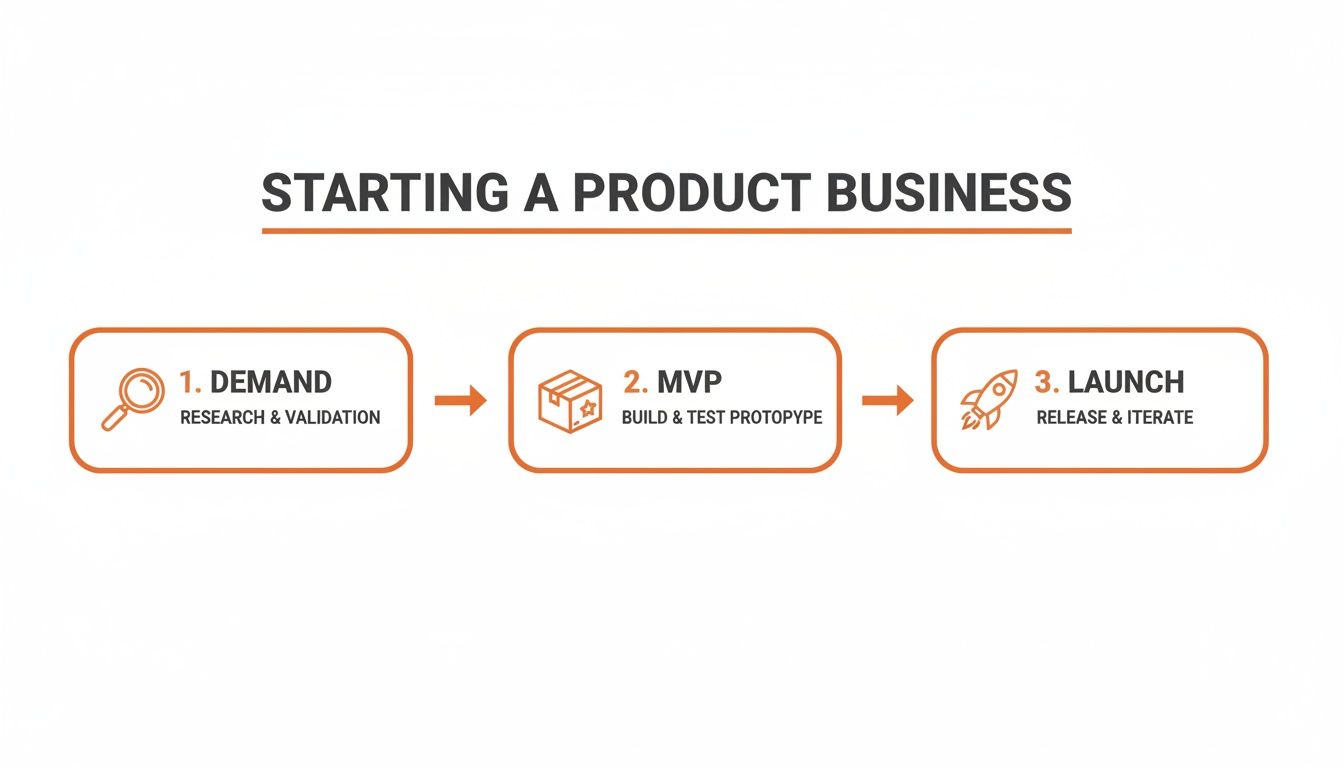
Key Steps To Start A Product Business
| Phase | Objective | Outcome |
|---|---|---|
| Demand | Confirm real customer interest | Validated product need |
| MVP | Gather honest user feedback | Data-driven feature roadmap |
| Suppliers | Secure production partners | Predictable supply flow |
| Brand | Define voice and pricing | Distinct market identity |
| Channels | Choose sales outlets | Efficient distribution plan |
| Launch | Execute go-to-market steps | First revenue and learnings |
Running lean? Check our zero-budget playbook on how to start a business with no money.
Small experiments early on saved one founder over $10,000 by spotting a mismatch before full-scale production.
Pro Tips To Stay On Track
- Run quick feedback loops at each stage to refine features and trim costs.
- Hold biweekly check-ins to pivot before small issues grow.
- Tap into local communities like Chicago Brandstarters for advice and connections.
Next Steps
Start with a basic demand test—no fancy site required. Listen closely, tweak your idea, then move on to prototyping.
Dive into Chicago Brandstarters for dinners, member chats, and a network that pushes you forward. Stay curious, keep iterating on real feedback, and you’ll gain traction faster than you think.
Validate Market Demand Early
Diving into production without confirming an audience is like building a bridge before testing the water below. Instead, run small experiments that surface real interest before you commit cash.

- Simple landing page tests: drive Facebook ads or emails to collect sign-ups and see which headline draws the most clicks—no inventory needed.
- Limited pre-order runs: offer a set number of units at a fixed price, gather candid design or packaging feedback, then tweak before bulk production.
- Paid pilot deals: charge a modest fee or subscription and track usage, refunds, and satisfaction—these are real revenue signals.
Landing Page Testing
Think of headlines like lures—tweak until fish bite. A clear headline and single CTA can reveal whether your idea resonates. I once ran two variants and saw a 6.2% conversion on my pre-launch waitlist.
Key Insight: Genuine orders carry more weight than clicks or likes.
- Identify your audience before spending a dollar on ads.
- Aim for a 5–10% sign-up rate as your benchmark.
- Rotate headlines and CTAs until you hit your engagement sweet spot.
Small Batch Pre-Orders
Pre-orders are like dipping a toe in the water before diving in. One founder sold ten custom notebooks at $25 apiece in 24 hours—proof the price and concept worked.
Stat Highlight: Lack of market need causes 42% of startups to fail, and running out of capital accounts for 29%—making customer validation and cash management top priorities. Learn more about these startup failure drivers here.
- Offer a small quantity that aligns with your budget.
- Survey buyers on their must-have features.
- Thank early customers with discounts or exclusive add-ons in exchange for feedback.
Paid Pilot Offers
Paid pilots prove billing works. Collect cash, monitor refund rates, and review usage patterns. It’s the fastest way to see if people will stake real money on your solution.
- Experiment with pricing tiers on a small cohort.
- Monitor daily trial-to-paid conversion rates.
- Analyze drop-off points to fix checkout friction.
Budget Cash Runway Wisely
Every experiment eats cash. Map your monthly burn (fixed + variable costs) against projected test revenue.
- Calculate your monthly burn rate.
- Project average revenue per conversion.
- Divide total runway by net burn to see how many tests you can fund.
Decide When To Pivot
If your pre-orders linger under 3% after several tweaks, it’s time to steer in a new direction. One founder paused at a 3% uptake rate, interviewed ten non-buyers, rewrote the pitch—and saved about $12,000.
- Conversion rates stuck under 3% after multiple A/B rounds.
- Ad costs exceed projected profit.
- Feedback shows a disconnect in perceived value.
Repeatable Validation Blueprint
Loop these tactics: landing pages → pre-orders → paid pilots. Log your conversion rate, average order value, and test ROI. After five mini-cycles, winners scale and losers get culled.
Main Takeaway: Real-world feedback early on saves capital and sanity.
Build Prototypes And MVP

A working model is like a 3D sketch—fast and cheap. It proves form and function before you invest in tooling. Mix and match these paths based on budget and goals:
- 3D Printing: Functional parts, quick iterations, $10–$100 per print.
- Foam-Core Models: Rough size and ergonomics checks for under $20.
- Low-Code Digital Mockups: Click-through UI/UX demos at $0–$50/mo.
Cost Effective Prototyping Methods
| Method | Cost Range | Best Use Case |
|---|---|---|
| 3D Printing | $10–$100 | Detailed part fit validation |
| Foam-Core | $15–$25 | Rough form, grip, ergonomics |
| Digital Mockup | $0–$50/mo | UX/UI flow and interaction testing |
"Practical prototyping teaches more in a week than months of guessing." – Founder Jenny Lee
Real World Prototyping Example
A Chicago entrepreneur ran five housings through a desktop printer for $40 total. One tweak fixed a vent alignment and boosted airflow by 15%, saving about $4,200 in later tool-and-die costs.
Structuring Customer Interviews
Hand a foam-core model to five target users. Ask open questions on comfort, control, and first impressions. Track:
- Time to Insight: Seconds until they identify the product’s purpose.
- Task Success Rate: Percentage completing an action unprompted.
- Feature Impact Score: Rating on a 1–5 scale.
When It’s Time For A Pilot Run
Plan a pilot of ~50 units once your prototype hits 80% of target metrics. This exposes assembly bottlenecks, supply-chain hiccups, and quality quirks.
Proceed when:
- The prototype passes at least 3 core usability checks.
- Supplier quotes fit your per-unit budget.
- Early testers give a net promoter score above 7/10.
Budget And Timeline Checklist
- Budget Cap: Add a 10% buffer over estimated prototyping costs.
- Timeline Milestones: Set dates for concept, build, test, and review.
- Data Logs: Record metrics each round.
- Reserve 2–4 weeks per build-test iteration.
- Assign responsibilities for design tweaks and interview analysis.
Next Steps
With prototypes validated, shift into supplier sourcing and manufacturing planning. In the next section, you’ll learn how to find reliable partners and launch cost-effectively.
Plan Manufacturing And Sourcing
Moving from prototype to production is like assembling a relay team—everyone must sync. Here’s how to zero in on manufacturers whether you search online, attend trade shows, or tap referrals.
Supplier Discovery Methods
- Alibaba: Filter by verified suppliers, ratings, and capacity.
- ThomasNet: Find North American manufacturers with certifications.
- Global Sources: Ideal for electronics and specialty parts.
- Local Chambers: Connect with regional vendors for lower MOQs and faster shipping.
Review Supplier Responses
Send a concise email with specs, expected volume, and deadlines. Ask for:
- Sample quotes
- Factory certifications
- Lead times
Here’s how one Alibaba listing lays out ratings, MOQs, and delivery estimates.
Comparing Quotes And Negotiation
| Supplier Type | Price per Unit | MOQ | Lead Time |
|---|---|---|---|
| Overseas | $2.50 | 500 | 6–8 weeks |
| Local | $4.20 | 100 | 2–3 weeks |
Ask:
- Can you lower the MOQ on the first order?
- What payment terms do you offer new brands?
- How do you handle quality issues and reworks?
Build in extra days for shipping hiccups and customs holds. For deeper guidance, check out our product sourcing guide from Chicago Brandstarters.
Managing Lead Times And Quality
A realistic timeline is worth its weight in gold:
- Sample production: 3–5 weeks.
- Small pilot run: up to 8 weeks if tooling is complex.
Pad each phase by 15–20% for customs delays and minor fixes. Quality checks at milestones catch defects before they snowball.
Spotting Red Flags In Audits
Watch for:
- Vague or inconsistent tooling photos
- Certificates without verifiable details
- Suppliers who dodge live video tours
Verify ISO or CE certificates, request high-res images of assembly lines, and talk to other small brands they’ve supplied.
Early audits cut defect rates by up to 25% in my experience.
Drafting Your Purchase Order
Your purchase order is your safety net. Include:
- Item Codes with revision numbers to prevent mix-ups
- Unit Prices and currency terms matching your quotes
- Delivery Schedule with buffer days and penalties for delays
- A quality clause capping acceptable defect rates
Don’t overlook Incoterms like FOB or CIF—they clarify who handles shipping, insurance, and duties.
Position Your Brand And Select Sales Channels
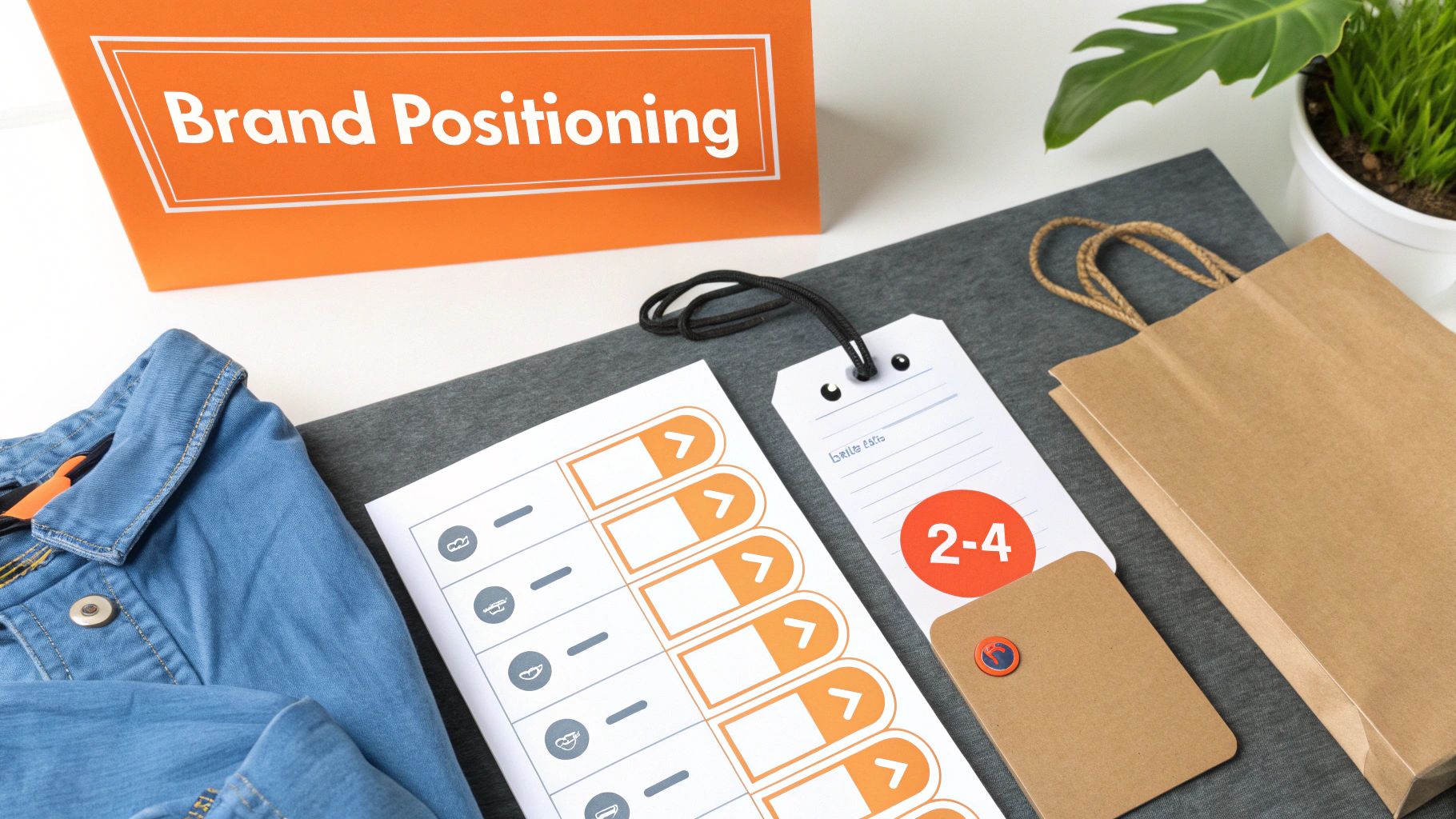
Your value proposition is a beacon that draws in the right customers. Packaging becomes your promise of quality, and pricing balances appeal with profit.
- Pinpoint the unique feature or benefit that sets you apart.
- Source packaging that matches your brand’s story.
- Set a price that covers costs and feels fair to buyers.
Craft Your Value Proposition
Listen to feedback from validation tests. One founder highlighted durability as non-negotiable and built messaging around a lifetime guarantee.
- Jot down quotes from interviews to spot themes.
- Test headline variations on landing pages.
- Tweak copy until click-throughs or signups jump.
Design Packaging That Resonates
First impressions matter. Think texture, color, and small surprises.
- Use materials that echo your story—recycled stock for eco-minded lines.
- Keep labels concise and benefits-driven.
- Add a personal touch like a handwritten note or sticker.
Set Profitable Pricing Strategies
Balance cost, perceived value, and market norms:
- Cost-Plus: Add a 30–50% margin over production costs.
- Value-Based: Ask customers what feels fair.
- Tiered Pricing: Offer bundles or volume discounts.
Comparison Of Sales Channels
| Channel | Pros | Cons | Best For |
|---|---|---|---|
| Direct To Consumer | Full control and 100% of customer data | Requires upfront marketing investment | Building direct relationships |
| Retail Partnerships | Instant credibility and foot traffic | Margins shrink by 30% and contracts can be strict | Broad consumer appeal |
| Online Marketplaces | Access to 73% of online shoppers instantly | Referral fees stack up and competition is intense | Niche products that stand out visually |
Learn more on how to start an ecommerce business.
Blend Channel Strategies
Think of channels as a relay team—each handoff must be smooth:
- Launch exclusively on your own site to capture full data.
- Test local appetite with pop-up shops.
- Rotate promo codes on Amazon and Etsy to see which audience converts best.
Use Worksheets For Alignment
- Match customer pain points to channel features.
- Score channels on cost, control, and conversion.
- Review and update monthly to keep tactics fresh.
Plan Your Launch And Drive Early Growth
A launch unfolds like a well-paced relay: sneak peeks, live demos, swift follow-ups—curious folks turn into customers.
Craft A Launch Calendar
Lay out every outreach, event, and post:
- Press pitches start 6 weeks before go-live.
- Influencer seeding begins 8 weeks out.
- Local pop-up events drop 3 weeks prior.
- Social countdown starts 10 days ahead.
Set Metrics And Goals
Numbers keep momentum measurable:
- 100 pre-orders in week one.
- 500 email sign-ups before launch.
- 10% average engagement on social.
“Momentum is a measurement, not a feeling,” says Kevin Tao of Chicago Brandstarters.
Engage Community And Partners
Chicago Brandstarters dinners and chat sessions offer mentors and peers who share live feedback.
- Private dinners every two weeks for strategy feedback.
- Active chat for Q&A and quick tips.
- Mentor-led intros to press and retailers.
“A mentor’s feedback shaved $5,000 off our ad budget,” recalls Annie, a Brandstarters alum.
| Tactic | Cost | Impact |
|---|---|---|
| Dinner Events | Low | Direct feedback and bonds |
| Chat Group | Free | Real-time Q&A |
| Local Pop-Up | Low | Immediate sales and learnings |
At a Chicago Maker Fair, one demo generated 30 sign-ups and retailer leads in a weekend. Yet, roughly 21.5% of startups fail in year one and two-thirds fold by year ten. Learn more about ecosystem trends here.
Early Growth Tactics
Turn launch buzz into growth with small, scalable experiments:
- Launch a referral program with 10% discounts.
- Test social ads in $50 increments to find top audiences.
- Tour local shops with pop-ups for shopper feedback.
- Create a content series showcasing user stories and hacks.
Track cost per acquisition and cut tactics that don’t deliver. Engage early adopters:
- Offer launch discounts to Brandstarters members.
- Retarget visitors with dynamic ads.
“Our post-launch tweak cut CPL by 20%,” says Kevin Tao.
FAQ
Picking Your Legal Structure
Choosing an entity is like picking a toolbox—use the one that fits your needs.
- LLC: Shields assets with minimal paperwork.
- S Corporation: Cuts self-employment taxes once profitable.
- C Corporation: Investor-friendly but double-taxed.
Planning Your Cash Runway
Aim for 12–18 months of runway to cover tweaks, marketing tests, and surprises.
- Calculate monthly burn (fixed + variable).
- Forecast early-stage revenue from pre-orders and pilots.
- Multiply burn rate by 12–18 to set your target runway.
Safeguarding Your IP On A Budget
Protect your ideas without a big law firm.
| IP Tool | Cost Range | Protection Level |
|---|---|---|
| NDA | $0–$50 | Confidentiality (1 year) |
| Provisional Patent | $70–$200 (filing) | One-year priority date |
| Trademark | $225–$400 per class | Brand-identity rights |
Key Insight: NDAs cost under $50, yet they’re crucial for keeping prototypes and secrets under wraps.
Tapping Peer Communities
Real-world feedback beats solo work. In Chicago, Brandstarters runs small dinners and active group chats:
- Intimate dinners every two weeks for honest feedback.
- A members-only chat to swap war stories and quick tips.
Plug into Chicago Brandstarters for peer support and real-time guidance.
Leave a Reply