
In a crowded market, a great product isn't enough. You could have a killer solution, but if it gets lost in the noise, you lose. This is where brand positioning comes in. Think of it as your brand's unique fingerprint in your ideal customer's mind. It’s the specific, deliberate space you claim that separates you from everyone else. It's the answer to the question: "Why should I choose you?"
Getting this right is the difference between being a memorable, go-to choice and just another option on the shelf. Strong positioning is your North Star. It guides every decision you make, from product development and marketing copy to your customer service and pricing. It ensures you’re not just shouting into the void but speaking directly to the people who need you most, in a language they understand.
This isn't some theoretical lecture. I’m going to break down real-world brand positioning examples from companies you know, like Apple, Patagonia, and Stripe. We'll go beyond the surface and dissect the strategic thinking behind their success. For each one, you’ll get:
- A clear breakdown of their positioning strategy.
- An analysis of why it works so well.
- Actionable takeaways you can adapt for your own venture.
My goal is to give you a practical playbook, not just inspiration. You’ll learn how to stop guessing and start building a brand that stands for something clear, powerful, and unforgettable. Let's get started.
1. Apple: Premium Design & Innovation Leadership
When you think of premium technology, what’s the first name that pops into your head? For most of us, it's Apple. They've masterfully positioned themselves as the leader in beautifully designed, innovative technology that just works. Instead of getting bogged down in a specs war over gigabytes and megapixels, Apple’s positioning focuses on the user experience, the emotional connection, and the seamless integration of their ecosystem.

This is one of the most powerful brand positioning examples because it elevates the product beyond its function. An iPhone isn't just a phone; it's a key to a world of creativity and connection. A MacBook isn't just a laptop; it's a tool for creators. By focusing on the why behind their design and the feeling of using their products, Apple has built a fiercely loyal customer base willing to pay a premium.
Strategic Breakdown
- Positioning Statement: For creative people who want the best tools, Apple is the premium technology brand that delivers a superior user experience through elegant design and an integrated ecosystem.
- Target Audience: Consumers who value design, simplicity, and ease-of-use over raw specs. They are often willing to pay more for quality and a seamless experience.
- Why It Works: Apple sidesteps direct feature-to-feature comparisons. Their positioning creates a distinct category where they are the leader, focusing on intangible benefits like creativity, status, and simplicity. This strategy is a masterclass in using product differentiation to build an unshakeable brand.
Actionable Takeaways for Your Brand
You don't need Apple's budget to apply their principles. Focus on what makes your product uniquely valuable to your specific customer.
- Obsess Over the Details: Invest in your product quality and design. Whether it’s your packaging, your app's UI, or your customer service, every touchpoint should reflect a commitment to excellence.
- Build an Ecosystem: How can your products or services work together to create more value than they do alone? Creating an interconnected experience increases customer loyalty and makes it harder for them to switch.
- Tell Your Design Story: Don't just show me your product; explain the "why" behind your design choices. Help me understand how your thoughtful craftsmanship improves my life.
2. TOMS Shoes: Purpose-Driven Social Impact
How do you turn a simple shoe into a statement of global good? TOMS built its entire brand on the answer. They pioneered the "One for One" model, positioning themselves not just as a shoe company, but as a vehicle for social change. Instead of competing on price or trendiness alone, TOMS’s strategy is built on a powerful, simple promise: you buy a pair, we give a pair.
This is one of the most compelling brand positioning examples because it transforms a purchase into a contribution. A pair of TOMS isn't just footwear; it's a vote for a kinder world. This purpose-driven identity allowed them to expand their model to eyewear for vision care and even coffee to provide clean water. By embedding their social mission directly into their business, TOMS created a brand I feel proud to support.
Strategic Breakdown
- Positioning Statement: For socially conscious consumers who want their purchases to make a difference, TOMS is the lifestyle brand that integrates a powerful social mission into its products, making it easy to do good.
- Target Audience: Consumers motivated by altruism and a desire to support ethical companies. They want to feel good about their purchases and believe businesses have a responsibility to create positive change.
- Why It Works: TOMS's positioning creates a unique value that goes beyond the physical product. It gives you a tangible, emotional reason to choose them over competitors. The "One for One" concept is simple, memorable, and turns every customer into an advocate for the brand’s mission.
Actionable Takeaways for Your Brand
You don’t need a global supply chain to build a purpose-driven brand. Start with what you can authentically impact.
- Integrate Purpose into Your Core: Don't treat social good like a marketing campaign. Build it into the very fabric of your business so that every sale directly fuels your mission.
- Be Transparent with Your Impact: Show me exactly what my support is accomplishing. This builds trust and reinforces my decision to choose you.
- Empower Your Team as Ambassadors: Your employees are your best storytellers. Train them to communicate your brand’s purpose authentically, turning every interaction into a chance to share your mission.
3. Dollar Shave Club: Challenger Brand Disruption & Authenticity
How do you take on a market dominated by giants like Gillette? You don’t play their game. Dollar Shave Club (DSC) burst onto the scene by positioning itself as the smart, irreverent, and authentic alternative. Instead of focusing on space-age tech and five-blade systems, DSC’s strategy focused on a simple value proposition, cutting through the corporate jargon with humor.
This is one of the most brilliant brand positioning examples because it weaponized personality. Their legendary launch video didn't just sell razors; it sold an identity. Joining Dollar Shave Club meant you were in on the joke, too smart to overpay for shave tech you didn't need. They built a club for people who value transparency and a good laugh over a corporate image.
Strategic Breakdown
- Positioning Statement: For the modern man who is tired of overpaying for brand-name razors, Dollar Shave Club is the subscription service that delivers high-quality blades for a few bucks a month, with a dose of authentic humor.
- Target Audience: Price-conscious, digitally-native men who are skeptical of traditional corporate marketing and appreciate brands with a transparent, funny, and relatable personality.
- Why It Works: DSC created a new conversation. Instead of trying to out-feature the competition, they attacked the industry's pricing and stuffiness. Their founder-led, authentic communication established an immediate bond of trust and made customers feel like insiders, a key aspect of powerful integrated marketing communication examples.
Actionable Takeaways for Your Brand
You don't need a viral video to disrupt your market. You just need to be more authentic than your competitors.
- Let Your Founder Shine: If you’re a founder, you are the most authentic voice your brand has. Let your personality show in your communications, whether it's on social media, in emails, or even on your packaging.
- Position Against an "Enemy": Define what you stand against. Is it high prices, corporate stuffiness, poor customer service, or complexity? Building your brand against a clear problem makes your value instantly understandable.
- Use Humor to Connect: Don't be afraid to be funny and irreverent if it fits your brand. Humor breaks down barriers, makes your marketing more memorable, and creates content people actually want to share.
4. Patagonia: Environmental Stewardship & Long-Term Values
In a world of fast fashion and disposable goods, how do you build a brand that encourages people to buy less? Patagonia did just that. They positioned themselves as the outdoor brand for environmentally conscious adventurers who see their purchases as long-term investments. They don't just sell jackets; they sell a philosophy of durability, repair, and a fierce commitment to protecting the planet.

This values-driven approach is one of the most authentic brand positioning examples you'll find. Instead of treating sustainability as a marketing angle, Patagonia wove it into the fabric of its business, from its "1% for the Planet" initiative to its famous "Don't Buy This Jacket" ad. Their activism and radical transparency have cultivated a loyal community that shares their values, proving that a business can thrive by putting purpose before profit.
Strategic Breakdown
- Positioning Statement: For conscious consumers and outdoor enthusiasts who believe in protecting our planet, Patagonia is the apparel brand that delivers exceptional, long-lasting products by putting environmental stewardship at the core of its business.
- Target Audience: Environmentally and socially conscious people who love the outdoors. They prioritize product durability, ethical manufacturing, and corporate responsibility over low prices or fleeting trends.
- Why It Works: Patagonia's positioning is powerful because it's authentic and consistent. They aren't just talking the talk; their actions, like suing the government to protect public lands or giving the company away to fight climate change, prove their commitment. This builds immense trust and turns customers into advocates.
Actionable Takeaways for Your Brand
You don't need to give your company away to build a purpose-driven brand. You can start by integrating your values into your operations.
- Make Values Your Foundation: Don't tack your values on as a marketing afterthought. Build your business model, your product development, and your hiring practices around what you stand for.
- Show, Don't Just Tell: Demonstrate your commitment through tangible actions. Whether you donate a percentage of sales, volunteer as a team, or source materials ethically, your actions will always speak louder than your words.
- Embrace Radical Transparency: Be honest about your successes and failures. If you're struggling with an aspect of your supply chain, share that journey with your customers. This vulnerability builds trust and humanizes your brand.
5. Warby Parker: Accessibility & Demystification
For decades, buying prescription glasses was expensive and confusing. Warby Parker shattered that model by positioning themselves as the transparent, stylish, and accessible alternative. They demystified the eyewear industry by cutting out the middlemen, selling directly to consumers online, and making the whole process feel effortless and even fun.
This is one of the most effective brand positioning examples because it identified and solved a universal customer pain point: overpaying for a necessity. By offering stylish, quality frames at a fraction of the traditional price and introducing their game-changing "Home Try-On" program, Warby Parker didn't just sell glasses; they sold confidence and convenience. They proved you don't have to choose between affordability and style.
Strategic Breakdown
- Positioning Statement: For design-conscious, value-seeking consumers frustrated with the traditional eyewear industry, Warby Parker is the direct-to-consumer brand that makes buying glasses affordable, easy, and socially conscious.
- Target Audience: Millennial and Gen Z consumers who are digitally native, value transparency, appreciate good design, and are motivated by both price and social impact (via their "Buy a Pair, Give a Pair" program).
- Why It Works: Warby Parker’s positioning directly attacks the industry's opacity and inflated costs. They built trust through transparent pricing and reduced the biggest barrier to buying online—fit—with their Home Try-On kit. This created a new category where they became the default choice for smart, modern eyewear shoppers.
Actionable Takeaways for Your Brand
You can apply Warby Parker’s disruptive model to almost any industry plagued by middlemen and high markups.
- Eliminate Friction: Identify the biggest hassle in your customer's buying journey and innovate a solution. Warby Parker's Home Try-On program is a masterclass in removing purchase anxiety.
- Embrace Transparency: Be radically honest about your costs and pricing. This builds immense trust and can be a powerful differentiator in a crowded market. Developing a clear pricing strategy for new products is a critical first step.
- Compete on Value, Not Just Price: Don't just be the cheapest option; be the smartest option. Combine fair pricing with excellent design, a compelling brand story, and a superior customer experience to create unbeatable value.
6. Basecamp: Tools for Deep Work & Sustainable Growth
In a world of project management tools that promise everything, Basecamp stands out by promising to do less. They built an incredible brand by positioning themselves as the calm, sane alternative for teams overwhelmed by complexity. Instead of chasing enterprise features and endless integrations, Basecamp’s strategy is rooted in a philosophy of simplicity, deep work, and sustainable growth.
This is one of the boldest brand positioning examples because it’s an active rebellion against industry norms. While competitors add more buttons and notifications, Basecamp removes them. This philosophy isn't just about software; it’s a way of working. They don’t sell you a tool; they sell you a better, more focused way to run your business.
Strategic Breakdown
- Positioning Statement: For small teams and entrepreneurs who are tired of chaos and complexity, Basecamp is the project management tool that provides just what you need and nothing you don't, so you can focus on the work that matters.
- Target Audience: Small businesses, agencies, and teams that prioritize clear communication and deep work over exhaustive features. They are philosophically aligned with sustainability and reject the "growth-at-all-costs" mindset.
- Why It Works: Basecamp’s positioning is a powerful act of exclusion. By proudly stating what they are not (a complex, all-in-one enterprise tool), they attract a fiercely loyal tribe of customers who feel seen and understood. Their transparency and opinionated stance build immense trust and differentiate them in a crowded market.
Actionable Takeaways for Your Brand
You can adopt Basecamp’s focused approach by building your brand around a core philosophy.
- Define Your Enemy: Clearly identify what you stand against. Is it complexity, inefficiency, or an outdated industry practice? Positioning yourself as the antidote makes your value crystal clear.
- Build in Public: Share your business philosophy openly. Founders Jason Fried and David Hansson do this through books like Rework and blog posts. This transparency builds credibility and attracts customers who share your values.
- Embrace 'Good Enough': Focus on solving one core problem exceptionally well rather than trying to solve every problem for everyone. Sacrifice a larger market for deeper loyalty with a specific niche.
7. Allbirds: Sustainability as Core Positioning
What if your shoes could be comfortable, stylish, and good for the planet? Allbirds built its entire brand on this question. They masterfully positioned themselves as the go-to sustainable footwear brand for environmentally conscious consumers who refuse to compromise. Instead of treating eco-friendly materials as a footnote, Allbirds makes sustainability the core benefit and the primary reason to believe in their product.
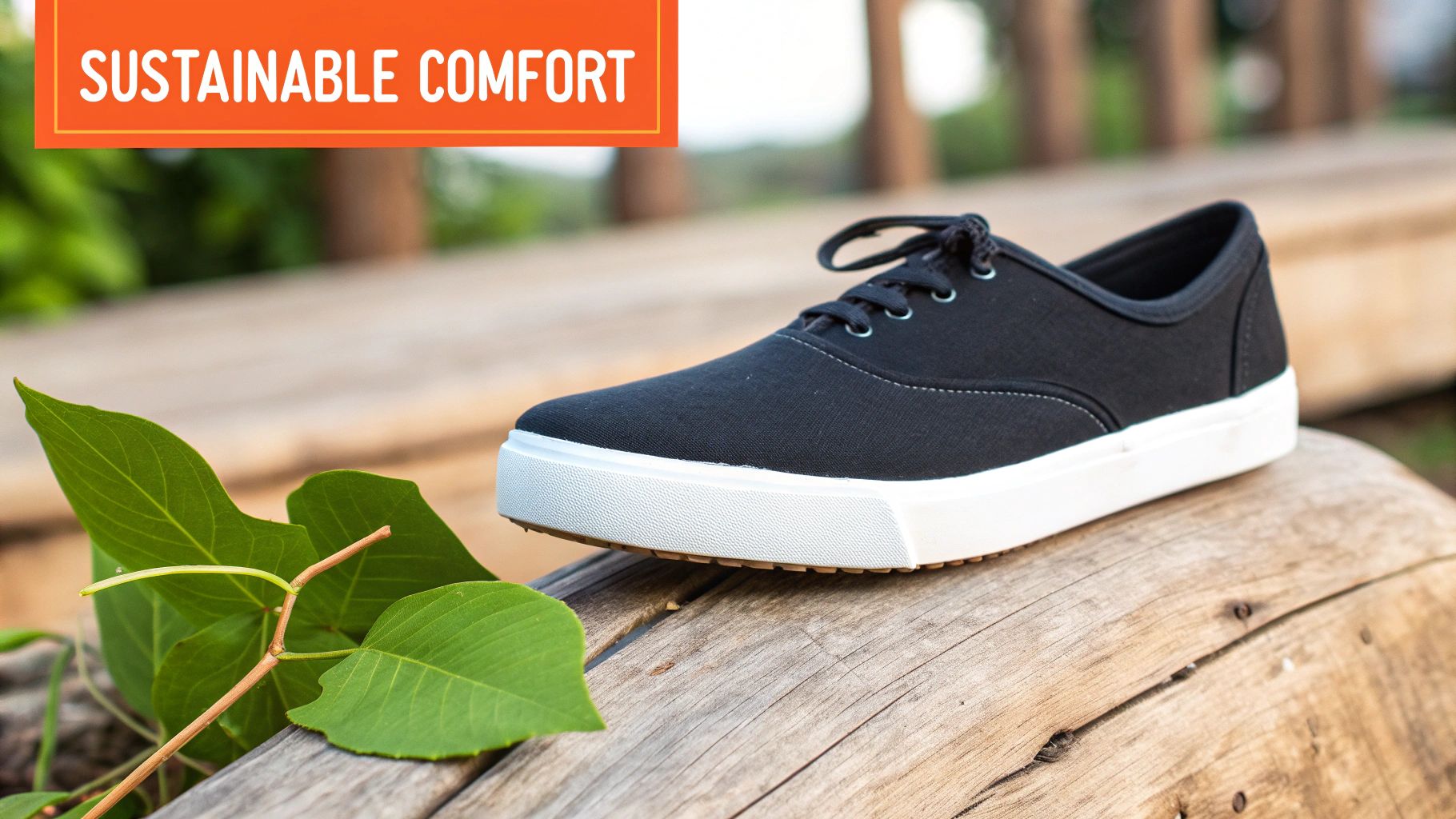
This is one of the most effective brand positioning examples because it turns a value proposition into a movement. An Allbirds shoe isn't just footwear; it’s a statement of your personal values. By using innovative materials like wool, sugarcane, and tree fiber, and transparently labeling the carbon footprint of each product, Allbirds invites you to be part of the solution. They've proven that you can build a wildly successful brand by leading with your principles.
Strategic Breakdown
- Positioning Statement: For the eco-conscious consumer who values comfort and style, Allbirds is the sustainable footwear brand that delivers innovative, high-quality products without compromising the planet.
- Target Audience: Millennials and Gen Z consumers who are environmentally aware, seek transparency from brands, and are willing to invest in products that align with their personal values. They prioritize comfort and minimalist design.
- Why It Works: Allbirds doesn't just claim to be sustainable; they prove it with every decision. From material sourcing to carbon footprint labeling, their commitment is tangible. This builds immense trust and differentiates them in a crowded market where "sustainability" is often just a buzzword.
Actionable Takeaways for Your Brand
You can make your mission your primary selling point, just like Allbirds. It’s about embedding your "why" into your product.
- Make Your Mission Your Product: Don't just tack on a social cause as an afterthought. Weave your core values directly into the design, materials, and production of what you sell.
- Embrace Radical Transparency: Measure and publicly report your key metrics. Whether it's your environmental impact or supply chain ethics, be honest about your progress and your limitations. This builds trust.
- Educate, Don't Just Sell: Help your customers understand why your approach is different and why it matters. Explain the benefits of your sustainable choices and what their purchase supports.
8. Mailchimp: Empowering Small Business & Self-Service
Before Mailchimp, powerful marketing automation felt like a fortress, accessible only to large enterprises with huge budgets. Mailchimp changed the game by positioning itself as the friendly, accessible marketing partner for the underdog: the small business, the freelancer, and the solo entrepreneur. They built their brand not on complex enterprise features, but on empowerment and simplicity.
This is one of the most effective brand positioning examples because it championed an underserved market. Instead of chasing corporate clients, Mailchimp focused on making sophisticated tools intuitive and self-service. Their friendly mascot, Freddie, and their approachable brand voice made marketing feel less intimidating, turning a complex B2B service into a tool you actually enjoy using.
Strategic Breakdown
- Positioning Statement: For small businesses and entrepreneurs who need to grow without a big marketing team, Mailchimp is the all-in-one marketing platform that makes it easy to build your audience and send beautiful, effective campaigns all by yourself.
- Target Audience: Solopreneurs, small business owners, and creators who need powerful marketing tools but lack the technical expertise or budget for enterprise-level solutions. They value ease-of-use and self-service.
- Why It Works: Mailchimp carved out a massive niche by deliberately not serving the enterprise market. This focus allowed them to build a product and a brand that perfectly matched the needs of small businesses. Their freemium model was a genius move, letting you grow with the platform and fostering incredible word-of-mouth marketing.
Actionable Takeaways for Your Brand
You can win big by focusing on a specific, underserved audience, even if it seems smaller at first.
- Build for the Underdog: Identify a customer segment that bigger competitors ignore. Design your product, pricing, and messaging specifically for their unique needs.
- Educate to Empower: Don't just sell me a tool; teach me how to succeed with it. Create extensive guides, tutorials, and case studies that help me achieve my goals, positioning you as a trusted partner.
- Celebrate Your Community: Feature your customers in your marketing. Campaigns like "Dear Mailchimp" showcase real success stories, which builds social proof and makes your brand more relatable and authentic.
9. Ben & Jerry's: Activism as Brand Core
When you buy a pint of ice cream, are you just buying a dessert or making a statement? With Ben & Jerry's, it's often both. They have brilliantly positioned their brand not just around delicious, chunky ice cream but around a deep commitment to social and environmental justice. This isn't a marketing afterthought; it's baked into their DNA.
This approach is one of the boldest brand positioning examples because it makes activism a core product feature. From flavors like "Pecan Resist" to their vocal support for climate action and racial justice, Ben & Jerry's connects with consumers on a values level. You're not just choosing a snack; you're supporting a company that uses its platform to fight for a better world, creating a powerful emotional bond that transcends the product itself.
Strategic Breakdown
- Positioning Statement: For conscious consumers who want to enjoy indulgent ice cream, Ben & Jerry's is the dessert brand that actively fights for social and environmental justice, making every purchase a statement of values.
- Target Audience: Consumers who are progressive, socially aware, and prioritize buying from companies that align with their personal values. They are willing to pay a premium for products from ethical and mission-driven brands.
- Why It Works: Ben & Jerry's positioning creates a tribe of fiercely loyal customers. They aren't afraid to be polarizing because they know their core audience will love them even more for the stands they take. This values-based differentiation makes them nearly immune to competition based purely on price or flavor.
Actionable Takeaways for Your Brand
You don't need a global footprint to build a mission-driven brand. In fact, starting with your local community can be even more powerful.
- Embed Your Mission: Don't just slap a mission statement on your website. Integrate your values into your business operations, from how you source materials to how you treat your employees.
- Be Authentic and Unapologetic: Choose causes you genuinely believe in, not just ones that are trending. Be prepared that taking a stand might alienate some people, but it will solidify your relationship with those who share your vision.
- Show, Don't Just Tell: Back up your activism with real action. This could be through Fair Trade certifications, donating a percentage of profits, or using your platform to advocate for specific policy changes.
10. Stripe: Power & Simplicity for Developers
In the complex world of online payments, Stripe carved out its kingdom by focusing not on the merchant, but on the developer building the checkout experience. They masterfully positioned themselves as the ultimate toolkit for developers, emphasizing elegant, well-documented APIs and a user-first design philosophy. While competitors focused on merchants, Stripe spoke directly to the builders.
This is one of the most effective B2B brand positioning examples because it turned a potential commodity into a premium, beloved platform. A payment processor isn't just a utility; Stripe made it a powerful, elegant, and even enjoyable part of the development process. By catering to the people who actually implement the technology, they built a moat of deep loyalty and high switching costs, winning over the startups that would become the next generation of tech giants.
Strategic Breakdown
- Positioning Statement: For developers and businesses who want to build sophisticated financial products, Stripe is the payments infrastructure that provides powerful, flexible, and easy-to-use APIs, removing the complexity of global commerce.
- Target Audience: Developers, technical founders, and product teams who prioritize speed of implementation, powerful features, and excellent documentation over the lowest possible processing fee.
- Why It Works: Stripe’s strategy brilliantly sidestepped the race-to-the-bottom on pricing. They understood that for a developer, time is the most valuable resource. Saving a week of development pain is worth far more than a fraction of a percentage on transaction fees. This developer-first approach created influential evangelists within organizations who championed Stripe from the ground up.
Actionable Takeaways for Your Brand
You don't need to be a fintech giant to adopt a developer-centric mindset. If your product has a technical user, these lessons are for you.
- Obsess Over Documentation: Your documentation is a core part of your product. Invest in making it clear, comprehensive, and easy to navigate. Treat it as a key marketing tool.
- Build an Ecosystem, Not Just a Tool: How can you integrate with other tools your audience already loves? Stripe's extensive library of integrations makes it the easy, default choice for developers building a modern tech stack.
- Invest in Community: Create spaces for your users to learn and connect. Stripe hosts developer conferences, maintains active forums, and produces high-quality educational content that empowers their community and reinforces their brand.
Top 10 Brand Positioning Comparison
| Brand / Positioning | Implementation Complexity 🔄 | Resource Requirements ⚡ | Expected Outcomes 📊 | Ideal Use Cases 💡 | Key Advantages ⭐ |
|---|---|---|---|---|---|
| Apple — Premium Design & Innovation Leadership | High 🔄 — vertical HW/SW integration and sustained R&D | Very high ⚡ — design, manufacturing, ecosystem investment | Premium margins, strong brand loyalty 📊⭐ | Premium product lines; builders prioritizing craftsmanship | Differentiation by design; ecosystem lock‑in ⭐ |
| TOMS — Purpose‑Driven Social Impact | Medium 🔄 — embed giving model into operations | Medium ⚡ — partnerships, impact measurement, supply chain | Emotional loyalty and earned PR; values alignment 📊 | Brands integrating social mission into core product | Authentic social impact; meaningful differentiation ⭐ |
| Dollar Shave Club — Challenger Disruption & Authenticity | Low–Medium 🔄 — focused DTC model + bold comms | Low–Medium ⚡ — viral content, fulfillment | Rapid awareness and organic growth; lower CAC 📊⚡ | Challenger brands breaking category norms with personality | Authentic voice and shareable content; fast traction ⭐ |
| Patagonia — Environmental Stewardship & Long‑Term Values | High 🔄 — values-driven tradeoffs across business | High ⚡ — sustainable sourcing, activism funding | Deep loyalty, earned media, defensible premium positioning 📊 | Mission-first brands willing to sacrifice short‑term growth | Credibility through action; long‑term defensibility ⭐ |
| Warby Parker — Accessibility & Demystification | Medium 🔄 — DTC + optical logistics, CX innovations | Medium–High ⚡ — tech platform, inventory, fulfillment | Scalable growth and trust; reduced purchase friction 📊 | Making aspirational categories accessible and transparent | Low friction buying (Home Try‑On); transparent pricing ⭐ |
| Basecamp — Tools for Deep Work & Sustainable Growth | Low 🔄 — intentionally small feature set and discipline | Low–Medium ⚡ — focused engineering and comms | Loyal niche customers; sustainable, predictable revenue 📊 | Simple productivity tools for small teams/solopreneurs | Clarity of product; high retention and credibility ⭐ |
| Allbirds — Sustainability as Core Positioning | Medium–High 🔄 — product redesign around renewable materials | High ⚡ — sustainable raw materials and supply chain | Premium positioning among eco‑consumers; PR lift 📊 | Apparel/footwear where sustainability is primary benefit | Product‑led sustainability; transparent impact reporting ⭐ |
| Mailchimp — Empowering Small Business & Self‑Service | Low–Medium 🔄 — freemium + self‑service growth model | Medium ⚡ — product UX, content, community support | Viral adoption from freemium; strong LTV as customers scale 📊 | Tools that democratize professional capabilities for SMBs | Freemium virality; education and community focus ⭐ |
| Ben & Jerry's — Activism as Brand Core | High 🔄 — activism embedded in sourcing and comms | High ⚡ — advocacy, grants, ethical sourcing | Strong emotional loyalty; polarizing but high engagement 📊 | Brands that fuse product with active social advocacy | Activism‑driven loyalty and media resonance ⭐ |
| Stripe — Power & Simplicity for Developers | High 🔄 — robust APIs, reliability, global infra | Very high ⚡ — engineering, compliance, docs | High-value customers, network effects, low churn 📊 | Developer‑first infrastructure and B2B platforms | Exceptional developer experience; defensible switching costs ⭐ |
Your Turn: How to Build Your Own Unforgettable Brand Position
We've just journeyed through ten powerful brand positioning examples, from Apple's innovation fortress to Patagonia's unwavering environmental stand. We’ve seen how disruptors like Dollar Shave Club used humor to redefine a stale market and how purpose-driven brands like TOMS built empires on giving back. Each story, each strategy, offers a unique blueprint for carving out a meaningful space in a crowded world.
But looking at finished masterpieces can feel intimidating. It’s like staring at a skyscraper and wondering how you're supposed to lay the first brick for your own shop. The key is to remember that every one of these iconic brands started with a simple, core decision. They didn't begin with a global presence; they began with a point of view.
Distilling the Lessons: From Examples to Action
What’s the common thread weaving through these success stories? It’s not about having the biggest marketing budget or the most revolutionary product. It's about uncompromising clarity.
Each brand we examined knew exactly:
- WHO they were for (and, just as importantly, who they were not for).
- WHAT unique value they delivered that no one else could.
- WHY it mattered on an emotional or philosophical level.
Think about it. Stripe didn't just build payment processing; they built a tool that gave developers their time back. Basecamp didn't just create project management software; they championed a calmer, more sustainable way to work. Their positioning wasn't a tagline added at the end. It was the central organizing principle for every decision they made.
Your First Steps to Defining Your Position
So, how do you translate these big-picture brand positioning examples into your own strategy? Don't try to build the whole skyscraper at once. Just focus on laying a solid foundation. Start by asking yourself three brutally honest questions:
-
The "Only" Question: What can you realistically claim to be the "only" brand that does X for Y audience? Are you the only coffee shop in your neighborhood that sources beans directly from a single family farm in Colombia? Are you the only project management tool designed for solo creatives who hate admin tasks? Find your "only."
-
The "Enemy" Question: Who or what are you fighting against? Your enemy doesn't have to be a direct competitor. For Patagonia, the enemy is throwaway consumer culture. For Dollar Shave Club, it was the inflated razor establishment. Defining your enemy gives your brand a clear purpose and a compelling narrative.
-
The "Evidence" Question: How will you prove your position in everything you do? If your position is "unmatched simplicity," your website checkout better be a single click. If it's "radical transparency," you should publish your manufacturing costs. Your operations must be a living testament to your positioning statement.
Building a brand is an act of courage. It's about planting a flag and declaring, "This is what we believe, this is who we serve, and this is the change we want to see." The examples in this article prove that a well-defined position is more than a marketing exercise; it's your most powerful competitive advantage. It’s the compass that guides you, the filter for every hard decision, and the magnet that pulls your perfect customers toward you. Now, it's your turn to plant your flag.
Feeling inspired by these brand positioning examples but need a community to help you build your own? Chicago Brandstarters is a peer support group for kind, ambitious founders just like you, dedicated to helping you translate big ideas into a powerful brand. Join us to find the clarity and support you need to build something unforgettable. Chicago Brandstarters