Let's get straight to it. As a founder, the first number you must master is your gross margin percentage. This isn't just accounting jargon; it's the raw pulse of your business.
The formula is dead simple: (Revenue – Cost of Goods Sold) / Revenue.
This calculation reveals your core profitability before you pay for rent, marketing, or your own salary. It’s the truth-teller.
The First Number That Actually Matters
Before you build complex financial models, understand this: your gross margin percentage is the realest metric you have. It shows if you're actually making money on your products, long before other costs muddy the waters.
Imagine you're running a classic Chicago-style hot dog stand. Your business is a simple machine.
You sell each hot dog for $5. That’s your Revenue.
The ingredients for one hot dog—the sausage, bun, mustard, relish—cost you $2. That’s your Cost of Goods Sold (COGS).
Simple, right? The money left is what you use to cover everything else.
Your gross margin is the cash left on the table from each sale. It pays for the cart rental, your time, marketing flyers, and—hopefully—profit. It’s the bedrock number that determines if your business can survive, let alone grow.
To make this crystal clear, here’s a breakdown of the terms every founder should know.
Gross Margin Key Terms for Founders
| Term | What It Really Means | Example (Hot Dog Stand) |
|---|---|---|
| Revenue | The total cash you bring in from sales. The top-line number before any costs are taken out. | The $5 a customer pays for one fully-loaded Chicago dog. |
| Cost of Goods Sold (COGS) | The direct costs to produce or acquire what you sold. If you sold nothing, this cost would be zero. | The $2 for the sausage, bun, and all the classic toppings. |
| Gross Profit | The money left after subtracting COGS from Revenue. It’s a dollar amount, not a percentage. | $5 (Revenue) – $2 (COGS) = $3 Gross Profit per hot dog. |
| Gross Margin % | Gross Profit as a percentage of Revenue. This is the magic number for comparing profitability. | ($3 Gross Profit / $5 Revenue) x 100 = 60% Gross Margin |
See? Not so scary. That 60% tells a powerful story. For every dollar in sales, you have 60 cents left to run the rest of your business.
Why This Isn't Just for Accountants
Grasping this isn't busywork; it's a strategic weapon. It helps you answer tough early-stage questions instantly:
- Is my pricing strategy working? A razor-thin margin suggests you might be undercharging.
- Are my suppliers bleeding me dry? A low margin can be a red flag that your input costs are too high.
- Can this business realistically scale? A healthy margin fuels growth. Without it, selling more just means losing money faster.

Mastering this calculation is a non-negotiable part of building a solid financial foundation. It's a core concept in any decent startup business plan template. It gives you the power to make smarter calls, whether you're selling software or sausages.
Breaking Down the Gross Margin Formula
Alright, let's get our hands dirty. The gross margin calculation isn't complex algebra. It’s simple, but the trick—where founders often get tripped up—is knowing exactly what numbers to plug in.
Here’s the formula we’re using:
Gross Margin % = (Revenue – COGS) / Revenue x 100
Think of it as a recipe. You need the right ingredients. Your two key ingredients are Revenue and Cost of Goods Sold (COGS).
Revenue is easy. It's the total cash from sales over a period, like a month. It’s what customers paid you before you paid anyone else.
Cost of Goods Sold (COGS) is where it gets fuzzy. This number should only include direct costs tied to making the product or delivering the service you sold.
For a physical product, this is tangible:
- Direct Materials: Raw materials like green coffee beans for a roaster or cotton for a t-shirt.
- Direct Labor: Wages for the person roasting those beans or sewing that shirt.
- Direct Production Costs: Things like the coffee bag, the label, or the shipping box.
Crucially, COGS doesn't include things like your marketing spend, office rent, or bookkeeper's fee. Those are operating expenses, paid from your gross profit. Get this wrong, and your numbers are worthless.
A Real-World Example: A Coffee Roaster
Imagine you run a small-batch coffee roaster. In one month, you sell $10,000 worth of coffee. That's your Revenue.
To make that coffee, you spent money on:
- Green Coffee Beans: $2,500
- Roaster's Labor: $1,000
- Bags and Labels: $500
Your total COGS is $4,000. Now, let's plug these into our formula.
First, find the gross profit in dollars:
$10,000 (Revenue) – $4,000 (COGS) = $6,000 (Gross Profit)
Now, calculate the percentage:
($6,000 / $10,000) x 100 = 60% Gross Margin
This means for every dollar of coffee sold, you have 60 cents left to pay for everything else—rent, marketing, your salary—and hopefully have profit left over.
How This Looks for a Software Business
The logic is identical for a service or software business, but the COGS items differ.
Say a small SaaS company brings in $20,000 in monthly subscriptions.
Their direct costs to run the software and support customers are:
- Server Hosting & Infrastructure (like AWS): $1,500
- Salaries for the Customer Support Team: $2,000
- Fees for Third-Party APIs they rely on: $500
Their total COGS is $4,000. Let’s run the numbers.
Gross Profit: $20,000 – $4,000 = $16,000
Gross Margin %: ($16,000 / $20,000) x 100 = 80% Gross Margin
Whether you sell coffee beans or code, the formula tells the same story: how profitable your core business is before overhead kicks in. It's one of the most honest numbers in your business.
What a Good Gross Margin Percentage Looks Like
So you’ve crunched the numbers. Now what? The big question isn't just about the math; it's about context. Is your number any good?
The honest answer: it depends entirely on your industry. A “good” margin isn’t a universal target. Think of it like a race—a sprinter’s pace differs wildly from a marathoner’s, but both can be elite. The same logic applies here.
This infographic breaks down the simple flow from revenue to your final margin percentage.
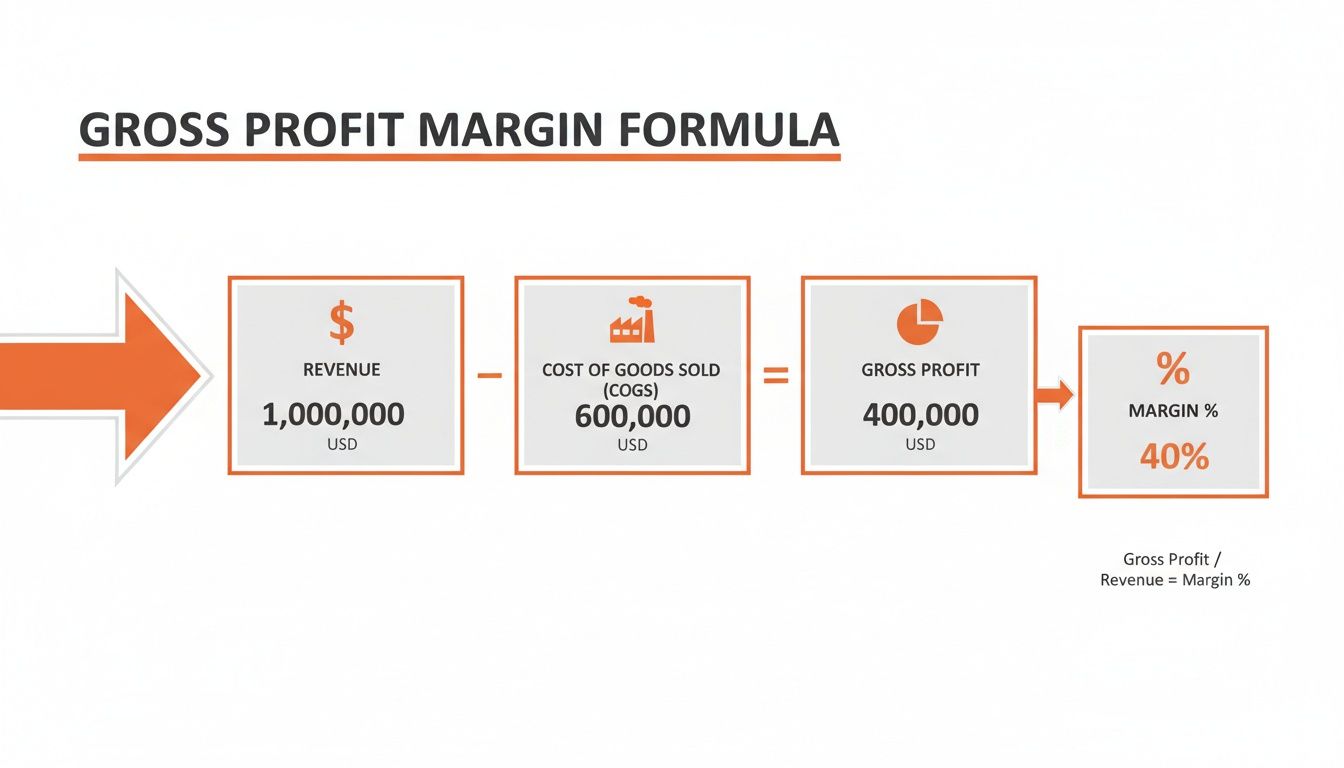
It’s a great visual reminder that your margin is what’s left after paying for the direct costs of what you sell.
Benchmarks Set the Stage
Comparing your business to the right industry benchmark is critical. Without it, you’re flying blind. You won't know if your pricing is on point, if your material costs are killing you, or if your business model is built to last.
The range across industries is staggering. Financial institutions can pull in near 100% gross margins, dwarfing the all-industry average of around 36.56%. Then you have sectors like Auto & Truck manufacturing, scraping by at 12.45%.
For a Chicago founder, these numbers are a roadmap. A software brand’s average of 71.52% is a great target, while a founder selling a physical product would look at completely different benchmarks. It’s worth digging into profit margins by industry to see where you might fit.
Knowing your industry's average isn't about feeling good or bad. It's a strategic tool. A low margin tells you to dig into your costs or pricing. A high one confirms your business model has strong legs.
What to Aim for as a Founder
So, where do you start? Don't stress about matching industry giants overnight. Your first goal is building a healthy foundation.
Here are some realistic targets:
- Software & SaaS: A strong target is 70% to 85%. Anything above 75% signals an efficient, scalable model that investors love.
- Physical Products & E-commerce: This varies. A healthy margin could land anywhere from 40% to 60%. The key is having enough gross profit to cover marketing, shipping, and operations.
- Service-Based Businesses: Margins here are about labor costs. A good target is often above 50%, showing you're paid well for your expertise.
Remember, your gross margin percentage is a living number. Track it constantly, understand what makes it move, and use it to steer your decisions.
Common Pitfalls When You Calculate Gross Margin
Getting your gross margin percentage wrong, even slightly, can send you off course. It’s like a GPS with a tiny error—it feels okay at first, but soon you're miles from your destination. Nailing this calculation is about building financial discipline from day one.
Many founders learn these lessons the hard way. You don't have to. The most common mistakes are simple oversights with a massive ripple effect.
Misclassifying Your Expenses
The biggest trap is mixing up Cost of Goods Sold (COGS) with general operating expenses. When you're juggling a dozen tasks, it’s an easy mistake.
Remember: COGS are the direct costs of your product. If you sold nothing, these costs would be zero. Things like marketing, rent, and software subscriptions are operating expenses—they happen whether you sell anything or not.
Putting Facebook ad spend into COGS will artificially crush your gross margin, making your product look unprofitable. On the flip side, leaving direct costs out will inflate your margin, giving you a false sense of security that leads to bad decisions.
Overlooking the Small Direct Costs
It’s always the little things. Founders often forget small but direct costs in their COGS, which quietly eats away at accuracy.
Here are a few culprits that fly under the radar:
- Payment Processing Fees: That 2.9% + $0.30 from Stripe or Shopify on every transaction? That’s a direct cost of the sale. It belongs in COGS.
- Shipping Supplies: The box, the tape, the packing peanuts—all are direct costs tied to getting your product to the customer.
- Inbound Freight: The cost to get raw materials shipped from your supplier to your workshop is a direct cost of acquiring inventory. Messing this up can also throw off other key metrics; for more, check our guide on the inventory turnover formula.
These details add up fast. Including them ensures your gross margin percentage is a true, honest reflection of your business's core profitability. This isn't just accounting—it's having a real conversation with your numbers.
Alright, you’ve figured out your gross margin. That's the starting line, not the finish. Building a lasting business is about improving that number.
This isn't about a massive overhaul. The real wins come from small, consistent tweaks that stack up. You have two levers to pull: increase revenue or trim your Cost of Goods Sold (COGS). That’s it.

Think of it like tuning an engine. A tiny adjustment to the fuel mix (your COGS) or a little more pressure on the gas pedal (your pricing) makes the whole machine run smoother and faster.
The First Lever: Dialing Up Your Revenue
One of the most direct ways to boost your margin is to make more gross profit from each sale. This doesn't just mean jacking up prices. Be smarter.
- Tweak Pricing Strategically: Instead of a blanket price hike, look at your "star" products—the popular ones with decent margins. Test a small price increase there. A 5% bump on bestsellers can have a huge impact. Our guide on how to price a new product gives you a solid framework.
- Bundle Your Products: Got a high-margin hero product? Pair it with a slower-moving item and sell them as a package. This increases average order value and clears out inventory, turning a potential loss into a profit.
- Create Tiers: Roll out "good, better, best" versions of your product. This psychological trick frames the customer's idea of value and nudges them toward the middle or top tier, which should have the best margins.
The Second Lever: Trimming Your Cost of Goods Sold
Now for the other side of the coin: your COGS. Every dollar you save here goes straight to your bottom line. It’s pure profit without an extra sale.
For perspective, S&P 500 data shows an average gross profit margin around 43%. But it varies wildly. Tech companies are at 57.1%, while consumer staples are closer to 39.6%. Knowing your industry's position reveals how much room there might be to improve.
The most profitable founders I know are obsessed with their COGS. They treat cost management like a sport, constantly looking for small wins that add up to a championship-level margin.
Here are a few tactics I’ve seen work:
- Get Tough with Suppliers: Don't be shy about negotiating. Ask for better terms. Can you get a discount for paying early? What about buying in larger quantities? A tiny 2-3% reduction in material costs can seriously pump up your margin.
- Optimize Your Production: A local Chicago brand I work with boosted its margin by 7% just by switching from an overseas supplier to one nearby. That move crushed their inbound freight costs—a sneaky COGS component many founders forget.
- Cut Down on Waste: Be ruthless. Track every bit of waste, whether it's spoiled inventory or production scraps. Every bit of that is literally throwing gross profit in the garbage. Find the leak and plug it.
A Few Common Questions on Gross Margin
Once you've run the numbers, a few practical questions almost always come up. Let's run through a quick-fire round to clear up any confusion so you can use this metric with confidence.
These are the most common sticking points for founders.
Is Gross Margin the Same as Profit?
No, and this is the most important distinction.
Gross margin is profit before paying for overhead like marketing, rent, or salaries. It’s the cash left purely from selling your product. Net profit is the final number after every single expense has been paid.
Think of it this way: Gross margin tells you if your core product is profitable. Net profit tells you if your entire business is profitable. You can have a fantastic gross margin but still lose money every month if your operating costs are out of control.
A healthy gross margin is your business's first line of defense. It's the fuel that pays for everything else. Without it, you can't build a sustainable company, no matter how much you sell.
Why Do SaaS Companies Have Such High Gross Margins?
You'll often see Software-as-a-Service (SaaS) companies with eye-popping gross margins, sometimes 70% to 85%. It’s not magic. Their Cost of Goods Sold (COGS) is a different beast.
Instead of buying raw materials, their direct costs are things like server hosting, API fees, and customer support salaries.
Once the software is built, the cost to add one more customer is tiny. This is what investors mean by "scalability," and it's why those business models are so attractive.
Can My Gross Margin Be Negative?
Absolutely, and if it is, you have a five-alarm fire.
A negative gross margin means you lose money on every sale. You're paying people to take your product, even before you've spent a dime on marketing or rent.
This is an unsustainable situation. It's a flashing red light telling you to immediately fix two things:
- Your Pricing: You are almost certainly charging too little.
- Your COGS: Your direct costs are too high for what people are willing to pay.
Are you a founder in the Midwest looking for real support, not just another networking event? At Chicago Brandstarters, we connect kind, hard-working builders in a vetted community focused on honest conversations and genuine friendships. Learn more about joining our free dinner events and private chats at https://www.chicagobrandstarters.com.