Tag: founder resources

  • Your Web Site Project Plan: A Founder’s Guide to Launching on Time

    Your Web Site Project Plan: A Founder’s Guide to Launching on Time

    A good web site project plan is your best defense against chaos. Think of it as your blueprint. It tells you what you're building, who's building it, and when it needs to get done. It's the one thing that keeps your budget, your team, and your sanity from spiraling out of control.

    It’s not some stuffy corporate document. It's your compass for the entire journey.

    Why Most Website Projects Fail (And How Yours Won't)

    A man focuses intently on a project plan document at his desk with a laptop and coffee. A 'Plan First' sign is visible in the background.

    Let's get real for a minute. I've watched passionate founders see their dream website projects devolve into a total mess of missed deadlines and bloated budgets. Pure frustration. The problem is almost never a bad idea or a lack of vision.

    The real killer, nearly every time, is not having a solid plan from day one.

    I know it's tempting to jump straight into design and code. It feels productive, and hey, it's exciting! But doing that is like trying to build a house without a blueprint. You might end up with something standing, but it’ll be rickety, way over budget, and definitely not the house you imagined.

    The Trap of "Moving Fast"

    I get the urge to skip planning. You want to see progress, show something to investors, or just get your idea out there. But this feeling is a trap. Skipping the upfront work feels fast, but it's the slowest, most expensive way to launch.

    This isn't just my take; the stats are grim. An estimated 66% of IT projects fail in some way. The top culprits? Poor communication and weak planning—both symptoms of not having a real project framework. If you're curious, you can dig into more of these project management statistics yourself.

    So, how do you make sure your project is one of the winners? You commit to a real plan.

    A web site project plan isn’t about adding bureaucracy or slowing you down. It’s a tool for turning chaos into clarity. It ensures the digital front door to your business is something you’re actually proud of.

    Common Potholes That Wreck Website Builds

    When you're flying blind without a plan, you're bound to hit turbulence. I've seen these same issues sink promising projects time and again:

    • Scope Creep: This is the silent project killer. It starts with an innocent, "Can we just add one more small feature?" and ends with a project that's double the budget and six months late.
    • Vague Goals: If you don't define what "done" looks like, how does anyone know when you've reached the finish line? This leads to endless revisions and a team guessing what you want.
    • Communication Breakdown: Who approves the designs? Who writes the copy for the about page? When you don't define roles, tasks fall through the cracks and nobody takes ownership.
    • Wildly Optimistic Timelines: Your enthusiasm is great, but it often leads to deadlines that aren't based in reality. A proper plan forces you to think through every step and build in a cushion for the inevitable surprises.

    This guide gives you the framework to sidestep all these pitfalls. It’s not about complicated software or corporate buzzwords. It’s a practical, straightforward approach to help you build the right thing, on time and on budget.

    Defining Your Scope Before You Write Any Code

    An open spiral notebook on a wooden desk with 'Define Scope' written, symbolizing project planning.

    Before you fall in love with a gorgeous design or write a line of code, you and I need to draw a very clear box around your project. This box is your scope, and it’s your best defense against the chaos of "scope creep" we just talked about.

    It's like packing for a trip. You start with the essentials—passport, wallet, keys. You pack those first because you aren't going anywhere without them. Only after they're secure do you think about the "nice-to-haves," like an extra pair of shoes.

    Your web site project plan treats features the exact same way. You must separate the must-haves from the extras. This isn't about limiting your ambition; it's about focusing it so you can actually launch.

    Must-Haves vs. Nice-to-Haves

    Your first job is to sort all your feature ideas into two piles. I call them "Day One" and "Day 100."

    • Day One (Must-Haves): These are the core functions your website absolutely needs to achieve its main goal on launch day. If you're selling products, a working checkout process is a must-have. A blog might be nice, but it isn't essential for making that first sale.

    • Day 100 (Nice-to-Haves): These are the features you dream about but can live without at first. Things like a customer loyalty program or a fancy "build your own bundle" tool can wait. Launching with a solid, working foundation is so much better than delaying for a feature only 10% of your users might even notice.

    This exercise forces you to be brutally honest about what matters most right now. It's the foundational work that keeps your project from getting stuck in a perpetual "coming soon" loop.

    A well-defined scope is your project's constitution. It gives you the rules everyone agrees to follow, which stops arguments before they start. When someone asks, "Hey, can we add this?" you can just point back to the scope and ask, "Does this serve our Day One goal?"

    From Ideas to Actionable User Stories

    Once you have your list of must-haves, you need to translate them into something your team can actually build. This is where user stories come in. They’re just simple sentences that frame a feature from the perspective of the person who'll use it.

    The format is simple: "As a [type of user], I want to [do something], so that I can [achieve a goal]."

    Let’s look at a real-world example for an e-commerce site.

    • Bad Feature Definition: "Add shopping cart."
    • Good User Story: "As a new customer, I want to add a product to my cart from the product page, so that I can purchase it later."

    See the difference? The user story gives you context. It tells your developer and designer who this is for, what they need to do, and why it's important. It sparks better questions and leads to a more thoughtful product. Mapping out these core business goals is a crucial first step, and you can get more guidance on this in our article about crafting a startup business plan template.

    Creating Your Scope Document

    Now, you just need to put all of this in one place. Your scope document doesn't need to be a 50-page novel. It just needs to be crystal clear.

    Here's what I recommend you include in your initial draft:

    1. Project Goal: A single, clear sentence defining success. (e.g., "Launch a minimalist e-commerce store to validate our flagship product and get 50 sales in the first month.")
    2. Key Features (Must-Haves): A bulleted list of the core functions for launch, written as user stories.
    3. Future Features (Nice-to-Haves): A list of features you'll think about after launch. This shows your team you've thought ahead but protects the current timeline.
    4. What's Out of Scope: Be explicit about what you are not building. For instance, "This project will not include a mobile app," or "Customer accounts will not be part of the initial launch."

    Putting this in writing transforms vague ideas into a concrete plan. It gets everyone—you, your designer, your developer—on the same page and becomes the single source of truth for your entire web site project plan.

    Assembling Your Project Team

    A brilliant plan is just paper without the right people to bring it to life. Now that you've got the scope locked down, it's time to figure out who's actually going to do the work. Your web site project plan needs a cast of characters, and everyone needs to know their lines.

    Think of it like casting a movie. You wouldn't hire a sound engineer to be your lead actor. It's the same here. You have to put the right people in the right seats—the designer, the developer, and the project manager (which, let's be honest, is probably you).

    This isn't about building a huge corporate hierarchy. It's about creating a smooth workflow so your team can focus on what they do best: solving problems. When people are busy wondering who to ask for feedback, they aren't building your website.

    Who Does What: The Core Team

    For most new website projects, you don't need a massive team. You just need a few key players. If you're just starting to think about hiring, our guide on how to hire your first employee is a great place to begin.

    Here are the essential roles you'll need to fill:

    • Project Manager: This is you, the conductor of the orchestra. You keep the timeline on track, clear roadblocks, and make sure everyone is talking to each other.
    • UI/UX Designer: This person cares about how the site looks (UI) and how it feels to use (UX). They create the wireframes and visual designs the developer will build from.
    • Developer: The builder. This person takes those beautiful designs and turns them into a functional, live website by writing the code.
    • Content Creator: Someone has to write the words and find the images. This could be you or a copywriter. Whatever you do, don't underestimate how long this takes!

    These roles might be freelancers, an agency, or you juggling multiple jobs. The title matters less than the responsibility.

    Your goal isn't just to assign tasks; it's to create accountability. When everyone knows exactly what they are responsible for, things get done faster and with way less friction.

    The RACI Chart: A Simple Tool for Clarity

    Okay, "RACI chart" sounds like dry corporate jargon, but stick with me. It’s a simple and powerful tool for avoiding confusion, and it’s a cornerstone of a good web site project plan. All it does is answer the question, "Who is doing what for this task?"

    RACI stands for:

    • Responsible: The person who does the work.
    • Accountable: The person who owns the work. They have the final say. There should only be one "A" per task.
    • Consulted: The people you get input from. Their opinions are valuable, but they don't have veto power.
    • Informed: People who just need to be kept in the loop. They don't need to be in every meeting, just updated on progress.

    Let's say the task is "Approve Final Homepage Design." A RACI chart for that might look like this:

    Role Responsibility
    Founder (You) Accountable
    UI/UX Designer Responsible
    Developer Consulted
    Marketing Lead Informed

    Making a simple chart like this for your major milestones takes maybe 30 minutes, but it can save you dozens of hours of confusion down the road. Everyone knows their lane. The developer doesn't guess if their feedback is a suggestion or a demand. And you, the founder, know the final approval rests on your shoulders. It's a game-changer for clear communication.

    Building a Realistic Timeline and Budget

    This is where the rubber meets the road. Your vision is exciting, but a timeline and a budget make it real.

    Think of it this way: a timeline is the step-by-step story of how your website comes to life. A budget is the fuel that gets you there. Nailing these two is probably the most critical part of any web site project plan.

    Get them wrong, and you’re signing up for stress and missed expectations. Get them right, and you've created a clear path to a successful launch. It’s like planning a road trip—you'd map the route, estimate the drive time, and budget for gas. That’s exactly what we’re doing here.

    Deconstructing Your Timeline into Milestones

    A vague goal like "build the website in 3 months" is useless. It’s intimidating and gives your team no real direction. The trick is to break that massive undertaking into smaller, digestible chunks I call milestones.

    Milestones are the major checkpoints in your project. They represent the completion of a big phase of work—not tiny tasks like "change button color," but big achievements like "All Homepage Content Loaded."

    Here are the key milestones I use on every project:

    • Discovery & Strategy Complete: All initial research, scope, and planning are finalized.
    • Wireframes & UX Approved: The site's skeleton and user flow are mapped out.
    • Visual Design (UI) Complete: The look and feel are locked in.
    • Development & Build Finished: The website is coded and working on a staging server.
    • Content Loaded & SEO Implemented: All copy, images, and on-page SEO basics are in place.
    • QA & Testing Finalized: The site has been thoroughly tested for bugs.
    • Go-Live: The big day. The site launches to the public.

    By focusing on one milestone at a time, you make progress feel real and keep your team from getting overwhelmed.

    Sample Website Project Timelines

    So, how long does this all take? The honest answer is: it depends. A simple five-page brochure site is a completely different beast than a custom e-commerce platform.

    Here’s a realistic look at project durations, from kickoff to launch. Use these as a starting point.

    Project Phase Small Site (e.g., Brochureware) Medium Site (e.g., E-commerce) Large Site (e.g., Custom App)
    Discovery & Strategy 1 Week 2 Weeks 3-4 Weeks
    Wireframes & UX 1 Week 2 Weeks 3-4 Weeks
    Visual Design (UI) 1-2 Weeks 3 Weeks 5-6 Weeks
    Development & Build 2-3 Weeks 5-8 Weeks 10-16 Weeks
    Content & SEO 1 Week 2 Weeks 3-4 Weeks
    QA & Testing 1 Week 1-2 Weeks 2-3 Weeks
    Total Estimated Time 7-9 Weeks 15-21 Weeks 26-37 Weeks

    As you can see, complexity extends the timeline fast. Every new feature doesn't just add time to development; it adds time to every single phase, from discovery to testing.

    Budgeting Without Guessing

    Now for the part that makes everyone nervous: money. How do you figure out what this will cost without just picking a number from thin air? Your budget has to be grounded in the reality of your timeline and resources.

    Start by estimating the hours needed for each role (designer, developer, content writer) for each phase. Then, multiply those hours by their rates.

    My Pro Tip: Whatever number you land on, add a 15-20% contingency buffer. Trust me. Something will come up. A feature will be trickier than you thought, or you'll need a software license you didn't account for. This buffer is your safety net. It turns a potential crisis into a manageable bump in the road.

    When you build your team, you don't need everyone on day one. It's a staged process. You bring people in as their part of the project kicks off.

    Timeline illustrating the assembly of a project team: Project Manager (Week 1), Designer (Week 3), Developer (Week 5).

    This shows how you can onboard team members sequentially. The project manager anchors the plan from the start, but the designer and developer join once their phases are ready to begin, which is a much more efficient way to manage your budget.

    Your Pre-Launch Go-Live Checklist

    A person holds a tablet displaying a project checklist, with a laptop and "GO-LIVE READY" text in the background.

    You can feel it—the finish line is so close. But don't pop the champagne yet. This final stretch is where launches are made or broken. Seriously, the last 10% of the work determines 90% of your launch-day success. This is where you stop thinking like a developer and start thinking like a customer.

    It's like a pilot's pre-flight check. You wouldn't just cross your fingers and hope the plane takes off. You'd methodically check every single system. For your website launch, this means hunting down bugs and making sure the site actually makes sense to a real human.

    Quality Assurance: The Bug Hunt

    First up is Quality Assurance (QA). This is the technical side of testing. You and your team become detectives, combing through every pixel and line of code, looking for anything that’s broken.

    Your mission is simple: find the bugs before your customers do. Click every link. Test every form. Try to break things on purpose. What happens if someone enters an invalid zip code? Does the homepage look like a Picasso painting on an old iPhone?

    • Browser Compatibility: Test everything on Chrome, Firefox, Safari, and Edge. What looks perfect on one browser can be a disaster on another.
    • Device Responsiveness: Pull out your phone, a friend's phone, a tablet, and your laptop. Check how the site works across different screen sizes.
    • Functionality Testing: Fill out every form, click every button, and walk through the entire purchase process from start to finish.
    • Link Checking: Manually click around to make sure there are zero dead links sending users to a 404 error page.

    I know this process can feel like a grind. But trust me, every bug you squash now is a customer service headache you prevent later. A solid web site project plan always carves out dedicated time for this—it always takes longer than you think.

    User Acceptance Testing: The Human Factor

    Once you've eliminated the obvious technical glitches, it’s time for User Acceptance Testing (UAT). This is a completely different beast. UAT isn't about finding broken code; it’s about finding broken experiences.

    The goal here is to get real people—who have never seen the site before—to use it. Give them simple tasks, like "Find the return policy" or "Buy a blue t-shirt," and then just watch them. Do they get confused? Do they get stuck anywhere?

    This is where your beautiful assumptions go to die. You might think your navigation is a work of genius, but watching a real user struggle for five minutes to find the contact page is a humbling—and invaluable—lesson.

    This is also where those acceptance criteria you defined earlier come back. For each feature, you should have a simple checklist that defines what "done" means from a user's point of view. For a contact form, it might be: "When I submit the form, I see a success message and receive a confirmation email." If both of those things happen, the feature is accepted.

    Your Go-Live Checklist

    You’ve tested, and the site is solid. Now it's time for the final pre-flight check. This is your last chance to catch small but critical details before you flip the switch. For a more detailed breakdown, you might find our guide on creating a product launch checklist template helpful.

    Here’s a quick summary of what you absolutely must have on your list:

    • Final Content Proofread: Read every single word one last time. Typos are the fastest way to kill credibility.
    • SEO Basics: Does every page have a unique title tag and meta description? Is an XML sitemap ready for Google?
    • Analytics Setup: Is your Google Analytics or other tracking tool installed and firing correctly? You can't measure success if you're not collecting data.
    • Favicon and Social Images: Make sure your tiny browser icon (the favicon) and social sharing images are in place. These little details make you look professional.
    • Backup Plan: Perform a full backup of the entire site right before you go live. Just in case.

    Juggling these final steps in a mess of spreadsheets and emails is a recipe for disaster. The reality is that only 23% of organizations use dedicated project management software. Yet the results speak for themselves—77% of high-performing projects rely on it, and it can boost team communication by a whopping 52%.

    After the Launch: Maintenance and Measurement

    Alright, you've done it. The site is live. High-fives all around.

    But don't get too comfortable. Launching a website isn't the finish line; it’s the starting gun for the real race. Your project plan isn't complete until it covers what happens after you push that big, scary "go live" button.

    It's like buying a new car. You wouldn't drive it off the lot and assume it'll run perfectly forever. You've got oil changes and tire rotations. The post-launch phase is about that same kind of maintenance and performance tuning. It's how you turn a one-time project into an asset that keeps getting better.

    The Handoff: Who Holds the Keys?

    First things first: the handoff must be crystal clear. Who's on the hook for security updates? Who's running backups? What about simple content tweaks? You need to nail this down immediately, or you'll be dealing with frantic "the site is down!" calls at 2 a.m.

    Next, you absolutely must get some documentation from your developer. I'm not talking about a 50-page novel. Just ask for a simple guide that covers the essentials: how to update key sections, where the hosting info lives, and the emergency protocol if something breaks. This simple document is your insurance policy.

    Ditching Vanity Metrics for Real Results

    Now for the fun part: tracking your success. It's tempting to fixate on numbers that make you feel good but don't actually move your business forward. I'm talking about vanity metrics—things like page views or social media followers. They're nice, I guess, but they don't pay the bills.

    Instead, you must zero in on the Key Performance Indicators (KPIs) that connect directly to your business goals.

    • Got an e-commerce store? Your north star is conversion rate. How many visitors are actually buying something? From there, you can dig into average order value and cart abandonment.
    • Running a lead-gen site? It's all about cost per lead. How much money are you burning to get one qualified person to submit your contact form? You'll also want to watch your number of marketing-qualified leads (MQLs) like a hawk.

    Measuring what matters is all about connecting data points to dollar signs. If a metric doesn't help you understand whether you're making or losing money, you should probably ignore it.

    This shift to data-driven thinking is a game-changer. The old way of managing projects is dying; executives now expect real-time performance data. It’s shocking, but right now, only about 35% of projects are actually considered successful. The rest are just burning cash, partly because they're stuck in the past.

    By focusing on real, hard data from day one, you're setting yourself up to be on the right side of that statistic. If you want to dive deeper, you can find more on how data is reshaping the field by checking out these project management insights. When you track the right KPIs, your website stops being a static brochure and starts becoming a powerful tool for growth.

    Common Questions I Hear from Founders

    When I talk with founders about building a new website, the same questions always pop up. A project plan might seem like a beast, but it’s really just about getting these things figured out before you dive in. Here are my quick answers to help you get moving.

    What’s the Most Common Mistake You See in a Web Project Plan?

    Hands down, it's scope creep. I've seen it sink more projects than anything else. It’s like a tiny leak that slowly, almost invisibly, floods the whole operation.

    It always starts with an innocent request: "Hey, can we just add one more small feature?" Then another. Soon, those "tiny" additions have torpedoed your timeline and budget. Your best defense is that rock-solid scope document you created. Treat it like your bible. Refer back to it constantly and have a process for handling any new requests.

    How Much Detail Is Too Much in a Project Plan?

    Your plan needs to bring clarity, not become a straitjacket. You want it detailed enough to guide the team, but flexible enough to adapt when things (inevitably) don't go as planned.

    My rule of thumb is to get super detailed on the 'what' and the 'why,' but give your team freedom on the 'how.' For example, your plan must state, "We need a dead-simple, one-page checkout process." It doesn't need to specify the exact code the developer uses to build it. Focus on the goals, not on micromanaging every task.

    Can I Actually Manage a Website Project Myself?

    Absolutely, especially for smaller projects. As a founder, you’re already the default project manager for just about everything.

    The secret is discipline and using the right tools—nothing fancy. Something simple like Trello or Asana is perfect for tracking your milestones. Block out time for a weekly check-in that you never skip, and be ruthless about protecting the project’s scope from those "just one more thing" requests. The whole point of this guide is to give you the principles to do exactly that.


    Building a brand is tough, but you don't have to do it alone. Chicago Brandstarters is a free, vetted community for kind, hard-working founders in Chicago and the Midwest who are building something meaningful. If you value real support over transactional networking, learn more about joining us at Chicago Brandstarters.


  • 12 Fresh Ideas for Product Innovation That Actually Work in 2026

    12 Fresh Ideas for Product Innovation That Actually Work in 2026

    Let's be real. Coming up with groundbreaking ideas for product innovation can feel like trying to catch smoke. I see whispers of something great, but the concept disappears the moment I try to grab it. It's often a lonely, frustrating process. I've been there myself, staring at a blank whiteboard, feeling like every good idea has already been taken.

    But true innovation isn't about waiting for a magical lightning strike. It's a muscle you build, a skill you practice. Think of it like learning to play the guitar; at first, it’s just noise and sore fingers, but once you learn the right scales and chords, you start making music. The right frameworks are your chords.

    This list is my playbook for you. I'm not here to give you vague advice like "think outside the box." Instead, I'm handing you 12 specific, actionable ideas for product innovation that you can apply directly to your venture. These are the concrete concepts that help you find real customer pain points, experiment with new business models, and validate your next big move without betting the farm.

    Each item includes a tangible example, a quick validation tactic you can use this week, and a clear next step to get you moving. We'll explore everything from building community-driven validation platforms to launching a regional supply chain bootcamp. My goal is to get you unstuck and back to doing what you do best: building something amazing. Let’s get started.

    1. Community-Driven Product Validation Platform

    Before you sink thousands of dollars and countless hours into development, imagine getting targeted, honest feedback from people who genuinely want you to succeed. That's the core of a community-driven product validation platform. This is one of the most powerful ideas for product innovation because it uses collective intelligence to de-risk your venture from day one. Instead of guessing what users want, you build a curated group of peers, potential customers, and industry experts to pressure-test your concepts in a structured, private environment.

    Diverse colleagues collaborate on a laptop in a modern office with 'VALIDATE IDEAS' sign.

    This approach creates a powerful feedback loop. You submit your idea, and the community provides insights based on clear guidelines, preventing the vague "that's cool" feedback that doesn't help you build. Platforms like Indie Hackers and early-stage Product Hunt communities pioneered this model, proving that collaborative validation leads to stronger products.

    How to Implement This Idea

    To build your own validation engine, you don't need complex software. You can start with a private Slack or Discord channel.

    • Establish Clear Rules: Create confidentiality agreements and a code of conduct. You want honest, kind feedback, not brutal takedowns.
    • Structure the Feedback: Develop a simple rubric or a set of questions for reviewers. Ask them to rate the problem's severity, the solution's clarity, and their willingness to pay.
    • Create a Cadence: Institute "Feedback Fridays" or monthly "Validation Cycles" to keep the momentum going and ensure everyone gets a turn.

    This method is perfect for you if you're an early-stage founder seeking to confirm market demand before committing significant resources. To dive deeper into the nuts and bolts of this process, you can explore detailed guides on how to validate a business idea.

    2. Founder Accountability Partnership Matching

    Imagine having a dedicated co-pilot on your entrepreneurial journey, someone who isn't on your payroll but is equally invested in your success. That’s the power of a founder accountability partnership. This isn't just another networking group; it's a structured system that matches you with a peer based on complementary skills, business stage, and core values. This is one of the most effective ideas for product innovation because it creates a focused, one-on-one environment for radical honesty and shared growth. Instead of navigating challenges alone, you commit to weekly check-ins, report progress on key milestones, and receive candid feedback from someone who truly gets it.

    This model is a force multiplier for motivation and execution. When you know you have to report your progress to a trusted peer, you are far more likely to follow through on difficult tasks. This concept has been proven effective in high-stakes environments like Vistage CEO groups and accelerator cohorts, where peer accountability is a cornerstone of success. You’re not just sharing wins; you’re dissecting failures and brainstorming solutions in a safe, confidential space.

    How to Implement This Idea

    You don't need a complex platform to start. You can build a powerful accountability system with intentionality and simple tools.

    • Create a Matching Survey: Before pairing people, use a detailed survey to understand their work styles, top three goals for the quarter, communication preferences, and biggest challenges.
    • Provide a Structure: Give partners a template for their weekly check-ins. This should include sections for last week's wins, current roadblocks, and commitments for the upcoming week.
    • Establish an "Easy Out": Not every match is perfect. Create a graceful, no-questions-asked process for partners to reset and find a new match after a trial period, preventing awkwardness and ensuring everyone gets value.

    This approach is perfect for you if you're a solo founder or leading a small team and need an external source of motivation and unbiased feedback to stay on track.

    3. Midwest Founder Playbook Library

    Imagine having access to a private video library where successful founders pull back the curtain on exactly how they solved their toughest problems. That’s the concept behind a Midwest Founder Playbook Library. This is one of the most practical ideas for product innovation because it focuses on community-sourced wisdom over generic advice. Instead of you sifting through abstract theories, this repository offers searchable, real-world case studies from peers who have already navigated the challenges you're facing, from securing manufacturing to launching a marketing campaign.

    Laptop on a wooden desk displaying an image gallery, alongside a stack of books and a vibrant green plant.

    This idea democratizes the kind of insider knowledge typically reserved for elite accelerator programs. Think of Y Combinator's Startup School video archives or First Round Review's deep-dive articles, but tailored specifically to the regional challenges and opportunities you face. It’s an invaluable resource built by and for the community it serves.

    How to Implement This Idea

    You don't need a high-end production studio to start building your library. Focus on capturing authentic stories with clear audio and video.

    • Pilot the Process: Start with 3-5 founders willing to share a specific "war story." Guide them to detail the problem, their solution, and what they would do differently.
    • Structure the Content: Organize the videos into categories that match the founder journey, like "Pre-Launch," "First Revenue," and "Scaling." This makes the library easy to navigate.
    • Keep Production Lean: Your focus should be on high-quality content, not Hollywood-level cinematography. Good lighting and a clear microphone are your most important tools.

    This approach is perfect for you if you're a community builder or a founder who believes in the power of shared knowledge. It helps everyone in your ecosystem avoid reinventing the wheel and accelerate their growth based on proven, localized tactics from founders who have actually done it.

    4. Vetted Supplier and Service Provider Network

    Finding a reliable manufacturer, designer, or fulfillment partner can feel like searching for a needle in a haystack. A vetted supplier and service provider network eliminates the guesswork by creating a curated marketplace built on trust and shared experience. This is one of the most practical ideas for product innovation because it directly addresses a massive operational bottleneck for founders, allowing you to focus on building your product instead of endlessly vetting vendors. You get access to a pre-approved list of partners who have already delivered for people just like you.

    A person's hand reaches for an orange box, with a tablet displaying a business interface and 'TRUSTED SUPPLIERS' text.

    This model shifts the power back to you. Instead of relying on a vendor's sales pitch, you can see real testimonials and performance data from your peers. Major platforms like Shopify's partner network and Alibaba's verified supplier program demonstrate how effective this is at a large scale, but it's even more powerful within a tight-knit community. It builds a protective moat around members, ensuring quality and accountability.

    How to Implement This Idea

    You don't need a custom-built platform to get started. A simple, well-organized database or even a shared spreadsheet can be incredibly effective.

    • Establish Vetting Criteria: Require at least two positive experiences from existing community members before you list a new provider. Create clear standards for quality and communication.
    • Create Simple Feedback Loops: Develop a straightforward form for members to fill out after using a recommended supplier. This keeps your data fresh and relevant.
    • Start Small and Focused: Begin with just 2-3 critical categories like local manufacturing, fulfillment, and packaging design. You can expand as the network grows and proves its value.

    This approach is ideal if you are building a physical product and need to establish a reliable supply chain without the risk and cost of trial and error. To learn more about building these trusted relationships, consider exploring resources on effective supplier management strategies.

    5. Founder Financial Dashboard and Planning Tool

    Most founders aren't accountants, but financial literacy is non-negotiable for survival. Imagine a dashboard that cuts through the noise of complex spreadsheets and gives you just the vitals: cash runway, unit economics, and key growth metrics. This is one of the most practical ideas for product innovation because it directly addresses a major pain point for nearly every early-stage entrepreneur. Instead of wrestling with confusing software, you get a simplified, visual tool tailored to your specific business model, whether it's SaaS, ecommerce, or a physical product.

    This approach democratizes financial planning. It’s like giving a pilot a clean, simple cockpit display showing only altitude, speed, and fuel, rather than overwhelming them with every single engine metric. Companies like Wave and Stripe have built successful products by simplifying complex financial tasks, proving there is a huge market for user-friendly financial tools that empower founders to make smarter decisions, faster.

    How to Implement This Idea

    You don't need to build a full-fledged accounting suite. Start with a focused tool that solves the most immediate problems for founders.

    • Create Industry-Specific Templates: Design pre-configured dashboards for common business models. An ecommerce founder needs to see COGS and customer acquisition cost, while a SaaS founder focuses on MRR and churn.
    • Focus on Key Metrics: Prioritize clarity over complexity. Your dashboard should instantly answer three questions: How much cash do we have left? Are we profitable on each sale? And are we growing?
    • Build in Scenarios: Include simple calculators for common decisions, like modeling the impact of a price increase or a new hire on your cash runway.

    This tool is perfect if you want to help founders move from financial anxiety to confident, data-driven leadership. For a deeper understanding of a core metric, you can learn more about the calculation of gross margin percentage and see how it impacts profitability.

    6. Skill-Share Workshop Series

    Imagine tapping into the specialized knowledge of your most advanced community members to level up everyone's skills. That's the power of a skill-share workshop series. This is one of the most impactful ideas for product innovation because it transforms your user base from passive consumers into active contributors, creating an ecosystem of mutual growth. Instead of you creating all the content, you empower experts within your community to teach practical skills like design thinking, copywriting, or fundraising.

    This model builds deep, authentic connections and establishes your community as a hub for real-world expertise. It's not about self-promotion; it’s about a genuine desire to share what works. Accelerators like Techstars and educational platforms like General Assembly have proven that when experienced founders teach, the lessons are practical, relevant, and immediately applicable. This creates a powerful cycle of learning and contribution that strengthens your entire network.

    How to Implement This Idea

    You don't need a formal campus to start. You can launch a powerful workshop series with simple planning and a focus on quality over quantity.

    • Survey Your Members: Before scheduling anything, ask your community what they want to learn. Use a simple poll to identify the most in-demand topics, ensuring every session is relevant.
    • Recruit and Support Instructors: Identify members with proven expertise and a passion for teaching. Offer them a stipend, public recognition, or a "teaching mentor" to help them structure their content for maximum impact.
    • Start with a Quarterly Cadence: Plan for four high-quality workshops per year. This makes planning manageable and builds anticipation for each event. Record and professionally edit the sessions to create a valuable archive for all members.

    This approach is perfect for you if you lead a community-focused business and want to deliver immense value beyond your core product. It's a low-cost, high-impact way to foster loyalty and turn your members into evangelists.

    7. Pre-Seed/Seed Investor Introduction Program

    Getting your idea in front of the right investor can feel like searching for a needle in a haystack. An investor introduction program changes that by creating a curated, warm pathway to capital. This is one of the most impactful ideas for product innovation because it focuses on building genuine relationships rather than making cold pitches. Instead of scrambling for transactional pitch events, you join a structured program that connects founders who meet specific readiness criteria with angels, micro-VCs, and early-stage investors.

    This model prioritizes authentic connection over sheer volume. Think less "Shark Tank" and more of a series of well-matched conversations over coffee or dinner. Programs like Y Combinator's Demo Day and Techstars' investor access have proven that curated introductions lead to better founder-investor fits. In Chicago, organizations like the Polsky Center and 1871 also champion this relationship-first approach, recognizing that great companies are built on trust.

    How to Implement This Idea

    You don't need a massive network to start; you just need to be strategic. You can build a small, high-quality introduction engine to connect with capital partners.

    • Establish Readiness Criteria: Be clear about what makes a founder "ready." This could be hitting a minimum monthly revenue, achieving specific customer acquisition cost benchmarks, or having a validated prototype.
    • Start Small and Build Trust: Begin with 5-10 trusted investor relationships. Focus on delivering high-quality, well-vetted founders, and your network will grow organically.
    • Host Intimate Events: Organize relationship-building dinners or investor education sessions. These create a relaxed atmosphere where investors can offer value and meet founders authentically.
    • Offer Pre-Meeting Coaching: Provide founders with pitch coaching and feedback from experienced entrepreneurs before they meet investors. This ensures they put their best foot forward.

    This approach is ideal for you if you've achieved initial traction and are ready to seek pre-seed or seed funding but want to avoid the transactional nature of traditional fundraising.

    8. Brand Positioning and Storytelling Workshop Series

    Your product can be revolutionary, but if its story doesn't connect, it will get lost in the noise. A brand positioning and storytelling workshop series offers one of the most crucial ideas for product innovation by focusing not on the product itself, but on its narrative. This is about transforming your features and benefits into a compelling story that resonates deeply with your ideal customer, making them feel understood and connected to your mission. Instead of just selling a product, you're building a brand that people want to be a part of.

    This approach creates a powerful framework for all your marketing and sales efforts. You learn to articulate your unique value proposition with clarity and confidence. Models like the StoryBrand framework by Donald Miller or the value proposition canvas by Strategyzer have proven that a clear, customer-centric narrative dramatically increases engagement and conversion, making your brand memorable in a crowded market.

    How to Implement This Idea

    You can create this focused environment to sharpen your brand's message without hiring an expensive agency. The goal is collaborative, structured storytelling.

    • Partner with a Pro: Collaborate with a brand strategist or a seasoned copywriter to facilitate the workshops, providing expert guidance and structure.
    • Use Real-World Case Studies: Showcase tangible results by using real founder examples from your community. This makes the concepts less abstract and more achievable.
    • Develop Reusable Templates: Create simple, actionable templates for value propositions, brand messaging, and elevator pitches that founders can use independently after the sessions.
    • Focus on Authenticity: Emphasize weaving your authentic founder story and values into the brand narrative. This is what builds genuine trust and loyalty.

    This method is perfect for you if your product is ready but you struggle to communicate its value effectively. To see how powerful this can be, you can find inspiration from these detailed examples of effective brand positioning.

    9. Founder Mental Health and Resilience Program

    The relentless pressure of building a company often comes at a steep, unspoken cost: your mental health. A confidential, peer-led support program directly addresses this, treating founder resilience not as a luxury but as a critical business asset. This is one of the most vital ideas for product innovation because it focuses on the single most important component of any startup, you, the founder. Instead of a "grind at all costs" mentality, you create a safe, structured space for sharing struggles, managing stress, and preventing burnout.

    This approach builds a powerful support system. You’re not just getting advice; you’re connecting with others who understand the unique isolation and stress of the founder journey. Organizations like the Founder Institute and retreats like Lighthouse have pioneered this model, proving that prioritizing founder wellness leads to more sustainable and successful ventures. It acknowledges that a healthy founder is the foundation of a healthy company.

    How to Implement This Idea

    You can build the foundation of this program without a massive investment. The key is creating trust and psychological safety.

    • Establish Confidential Circles: Start with monthly, confidential peer support circles led by a trained facilitator. Enforce a strict "what's said here, stays here" rule.
    • Curate Professional Resources: Partner with a few therapists who specialize in the stressors faced by entrepreneurs. Offer subsidized access or a curated referral list.
    • Normalize the Conversation: Host events featuring founders who openly share their mental health journeys. This simple act reduces stigma and encourages others to seek help.

    This model is perfect for you if you recognize that your well-being is directly tied to your company's success. It’s for founders who want to build a resilient company by first building a resilient self.

    10. Regional Supply Chain and Manufacturing Bootcamp

    Navigating the world of physical products can feel like trying to solve a puzzle in the dark. A regional supply chain and manufacturing bootcamp is one of the most practical ideas for product innovation because it illuminates the path from prototype to production. This isn't a theoretical business class; it's an immersive, hands-on program led by founders who have successfully scaled their own manufacturing and supply chains, often with a focus on nearshoring and domestic sourcing.

    Instead of learning from abstract case studies, you get direct access to the people, processes, and even the factories that make it all happen. This model, championed by organizations like Made in Chicago and platforms such as Sourcify, demystifies the complex trade-offs between cost, speed, quality, and ethics, giving you the confidence to build a resilient production system.

    How to Implement This Idea

    You can create a powerful learning experience by connecting founders with real-world manufacturing expertise.

    • Partner with Experienced Founders: Recruit 2-3 product entrepreneurs who have navigated scaling. Their war stories and practical advice are more valuable than any textbook.
    • Organize Experiential Learning: Make factory tours the centerpiece of the program. Seeing the process firsthand provides an unparalleled understanding of production realities.
    • Provide Practical Tools: Create templates for vendor comparison, negotiation, and quality control checklists. Give attendees actionable tools they can use immediately.
    • Build a Pre-Vetted Network: Connect each founder with at least one trusted referral manufacturer, reducing the friction and risk of finding reliable partners.

    This bootcamp approach is ideal for you if you're an early-stage founder with a physical product and need to build a robust, ethical, and efficient supply chain from the ground up.

    11. Founder Exit and Transition Planning Service

    You pour your life into building a company, but what's the endgame? A confidential advisory service focused on founder exits is a powerful product idea because it addresses the often-neglected final chapter of the entrepreneurial journey. This isn't just about selling; it's about helping founders plan for acquisitions, CEO transitions, or even just stepping back from daily operations while ensuring their personal well-being is prioritized alongside financial outcomes.

    This service is one of the most human-centric ideas for product innovation, moving beyond balance sheets to tackle the emotional and identity shifts that come with letting go. You’re not just an M&A advisor; you're a strategic partner for the founder's next chapter. Resources like John Warrillow's "Built to Sell" and services from specialized exit advisors prove there's a deep need for guidance that respects the founder's journey from start to finish.

    How to Implement This Idea

    You can build this service by focusing on education first, then personalized advisory. Think of it as creating a roadmap for a founder's biggest professional transition.

    • Start with Education: Host workshops or webinars on different exit scenarios (acquisition, management buyout, passing it on). This builds trust before any one-on-one engagement.
    • Build a Partner Network: You can't be an expert in everything. Partner with vetted M&A lawyers and financial advisors to provide comprehensive support.
    • Focus on the Human Element: Create resources that address the emotional side of exiting. Use anonymized case studies to show different successful transition paths and what life looks like after the company.

    This approach is perfect for you if you have experience in finance, operations, or coaching and want to provide a holistic service that supports founders through one of their most critical and personal business decisions.

    12. Midwest Founder Podcast and Media Platform

    Instead of shouting into the void with ads, imagine building a dedicated audience that trusts your brand before they ever see your product. This is the power of creating a niche media platform, like a podcast or blog focused on a specific community. For founders, this is one of the most effective ideas for product innovation because it flips the traditional marketing model. You provide immense value first, build genuine connections, and establish yourself as a central hub for your target audience.

    This strategy involves creating content that features authentic stories, practical tactics, and the real challenges faced by a specific group, such as founders in the Midwest. By amplifying the voices of your community, you not only attract more like-minded individuals but also build a powerful asset that generates organic leads and deepens customer loyalty. Successful examples like the Shopify Masters Podcast and Indie Hackers prove that becoming the go-to resource for a niche audience is a sustainable way to grow.

    How to Implement This Idea

    Launching a media platform doesn't require a Hollywood budget. You can start small and scale as your audience grows.

    • Define Your Niche: Focus on a specific pain point or community. Instead of "business stories," narrow it down to "first-year challenges for Chicago e-commerce founders."
    • Start with a Sustainable Cadence: Commit to two episodes or articles per month. Consistency is more important than frequency, and this pace prevents burnout.
    • Invest in Quality Basics: Get a decent microphone and use simple editing software. Clear audio is non-negotiable for podcasts.
    • Promote Strategically: Share your content on channels where your audience already gathers, like LinkedIn groups, local Slack communities, or industry forums.

    This approach is perfect for you if you're a community-builder looking to establish long-term authority and create a durable marketing engine. You can learn more about building a brand that resonates by exploring resources on how to build a memorable brand.

    12 Product Innovation Ideas Comparison

    Program / Service Implementation Complexity 🔄 Resource Requirements ⚡ Expected Outcomes ⭐📊 Ideal Use Cases 💡 Key Advantages 📊
    Community-Driven Product Validation Platform Medium — platform + moderation and curation Moderate — product dev, community managers, active reviewers Rapid idea validation; reduced wasted dev spend; early advocates Early-stage founders testing concepts pre-build Structured peer feedback; iteration tracking; leverages existing community
    Founder Accountability Partnership Matching Low–Medium — matching algorithm and oversight Low–Moderate — surveys, dashboards, coordinator time Increased follow-through; reduced isolation; more consistent progress Founders needing peer accountability and weekly check-ins Deeper relationships than events; surfaces mentorship and skill-sharing
    Midwest Founder Playbook Library Medium — content capture, curation, quality control Moderate — video production, hosting, contributor time Preserved institutional knowledge; fewer repeated mistakes Founders seeking tactical, documented solutions by stage/problem Reusable searchable content; credibility building; practical templates
    Vetted Supplier and Service Provider Network Medium–High — vetting, relationship management, policies High — supplier outreach, legal, ongoing QA Faster supplier selection; lower vendor risk; potential discounts Product founders needing reliable manufacturers and partners Trusted referrals with member reviews; negotiation guidance; volume benefits
    Founder Financial Dashboard and Planning Tool Medium — tool build, integrations, benchmarking Moderate — product dev, CPA partnerships, templates Clearer runway and unit economics; better financial decisions Non-finance founders tracking cash, pricing, and growth scenarios Simplifies finance; regional benchmarks; accounting integrations
    Skill-Share Workshop Series Low–Medium — programming and instructor coordination Low–Moderate — volunteer instructors, event ops, recordings Faster skill development; practical takeaways; leader cultivation Founders wanting hands-on skills (design, copy, ops, hiring) Peer-led practical learning; repeatable frameworks; community visibility
    Pre-Seed/Seed Investor Introduction Program High — investor sourcing, curation, readiness gating High — investor relationships, coaching, event coordination Improved access to capital for vetted founders; stronger investor ties Fundraising-ready founders seeking Midwest angel/micro-VCs Curated relationship-building; reduced cold-pitch friction; investor education
    Brand Positioning and Storytelling Workshop Series Low–Medium — curriculum and facilitated sessions Moderate — skilled facilitators, templates, copy clinics Clearer brand narratives; improved conversion and messaging clarity Founders refining positioning before scaling marketing spend Differentiation-focused; practical copy and voice work; peer feedback
    Founder Mental Health and Resilience Program Medium — confidentiality protocols and trained facilitators Moderate — therapist partnerships, facilitator training, funding Improved resilience; reduced burnout; better decision-making Founders experiencing stress, isolation, or burnout risk Confidential peer support; subsidized therapy access; destigmatization
    Regional Supply Chain and Manufacturing Bootcamp High — technical curriculum, factory access, expert instructors High — instructor pay, facility tours, one-on-one consulting Fewer manufacturing errors; stronger vendor relationships; scaling readiness Physical product founders scaling production and QA Hands-on factory tours; Midwest nearshoring expertise; vendor templates
    Founder Exit and Transition Planning Service High — advisory network, confidentiality, personalized planning High — M&A/legal/accounting advisors, curated case studies Better-prepared exits; potentially higher deal value; smoother transitions Founders planning acquisition, sale, succession, or step-back Holistic exit strategy; advisor connections; emotional and financial planning
    Midwest Founder Podcast and Media Platform Medium — content production cadence and editing Moderate — recording, editing, promotion, guest coordination Increased brand awareness; member visibility; community growth Storytelling, recruiting members, and showcasing tactical wins Scalable content asset; thought leadership; amplifies member voices

    Your Next Move Is the Only One That Matters

    I've just walked you through a dozen distinct blueprints for innovation. You’ve seen how to build a community-driven validation platform, a founder accountability system, and even a program dedicated to mental resilience. The list is extensive, covering everything from nailing your brand story to navigating the complexities of regional manufacturing. It’s easy to look at a list like this and feel overwhelmed, like a chef staring at an entire pantry when you only need to make one dish.

    But here’s the secret: you don't need to master all these ideas for product innovation at once. True progress isn't about doing everything; it's about doing the right thing next. Think of it like learning a new instrument. You don’t try to play a complex symphony on day one. You start with a single chord. You practice it, fumble through it, and practice it again until the sound is clean and your fingers know where to go without thinking. Only then do you add the next chord.

    Distilling Action from Information

    Your task now is to identify your single most pressing challenge. Read back through the ideas I've explored and ask yourself one simple question: "Which of these solves the problem that's keeping me up at night?"

    • Feeling isolated and losing motivation? The Founder Accountability Partnership Matching idea is your first chord. Find that partner.
    • Struggling with unclear financials? The Founder Financial Dashboard and Planning Tool is your starting point. Build that simple spreadsheet.
    • Burning through cash on features nobody wants? The Community-Driven Product Validation Platform is your immediate priority. Set up that survey or private group.

    The goal isn't perfection; it’s momentum. Each small, focused action builds on the last, creating a powerful compounding effect that turns a simple idea into a thriving business. You are a builder, and your greatest asset is your ability to take one brick and lay it perfectly, then another, and then another.

    The Midwest Advantage: Building Together

    For those of you building in Chicago or the broader Midwest, remember that you are part of a unique and powerful ecosystem. The grit, honesty, and collaborative spirit here are your unfair advantages. You don't have to build in a vacuum, fending off the sharks and fighting for scraps. You can build among peers who genuinely want to see you succeed.

    "Innovation is rarely a solo act. The most transformative ideas for product innovation emerge when passionate builders share their struggles, insights, and victories."

    I've covered a wide spectrum of strategies, from tactical business model pivots to deeply personal programs for founder well-being. The underlying message is that holistic innovation matters. A brilliant product can still fail if you burn out or your supply chain collapses. By focusing on the entire system of your business, you're not just creating a product; you're building a resilient, sustainable engine for growth.

    Your journey is unique, but the path is well-worn by others who have faced the same dragons. The ultimate takeaway is this: pick one idea from this list. Just one. Commit to it. Make it your mission for the next week or the next month. Test it, learn from it, and let that small win propel you forward. That next move is the only one that matters, because it's the one that gets you closer to building something truly remarkable.


    If you’re a kind, ambitious founder in Chicago looking for a community that values collaboration over competition, we built Chicago Brandstarters for you. We connect builders in small, private mastermind groups to share real-world tactics and find the support needed to turn great ideas for product innovation into reality. Learn more and see if our community is the right fit for your journey at Chicago Brandstarters.

  • 7 Places to Find the Best Seller Business Books in 2026

    7 Places to Find the Best Seller Business Books in 2026

    You're building a brand from scratch. Time is your most precious asset. I know you can't afford to waste it on generic "must-read" lists that lead nowhere. You need real wisdom for today's problems, not abstract theories. I've been in your shoes, drowning in a sea of best seller business books, trying to figure out which ones actually hold the keys.

    Think of this guide as your shortcut. Instead of just giving you a list of books, I'm showing you exactly where to find them and which place fits where you are right now. I'll walk you through the 7 best spots that successful founders—especially those I know in our Chicago and Midwest communities—use to find their next game-changing read.

    This isn't fluff. It's a map. It's built to help you find insights you can use immediately, whether you're sketching an idea on a napkin, scaling an online store, or growing a side hustle. Every recommendation has a direct link and a simple reason why it's worth your time. Let's cut through the noise and get straight to the tools that will help you build something that lasts.

    1. Amazon

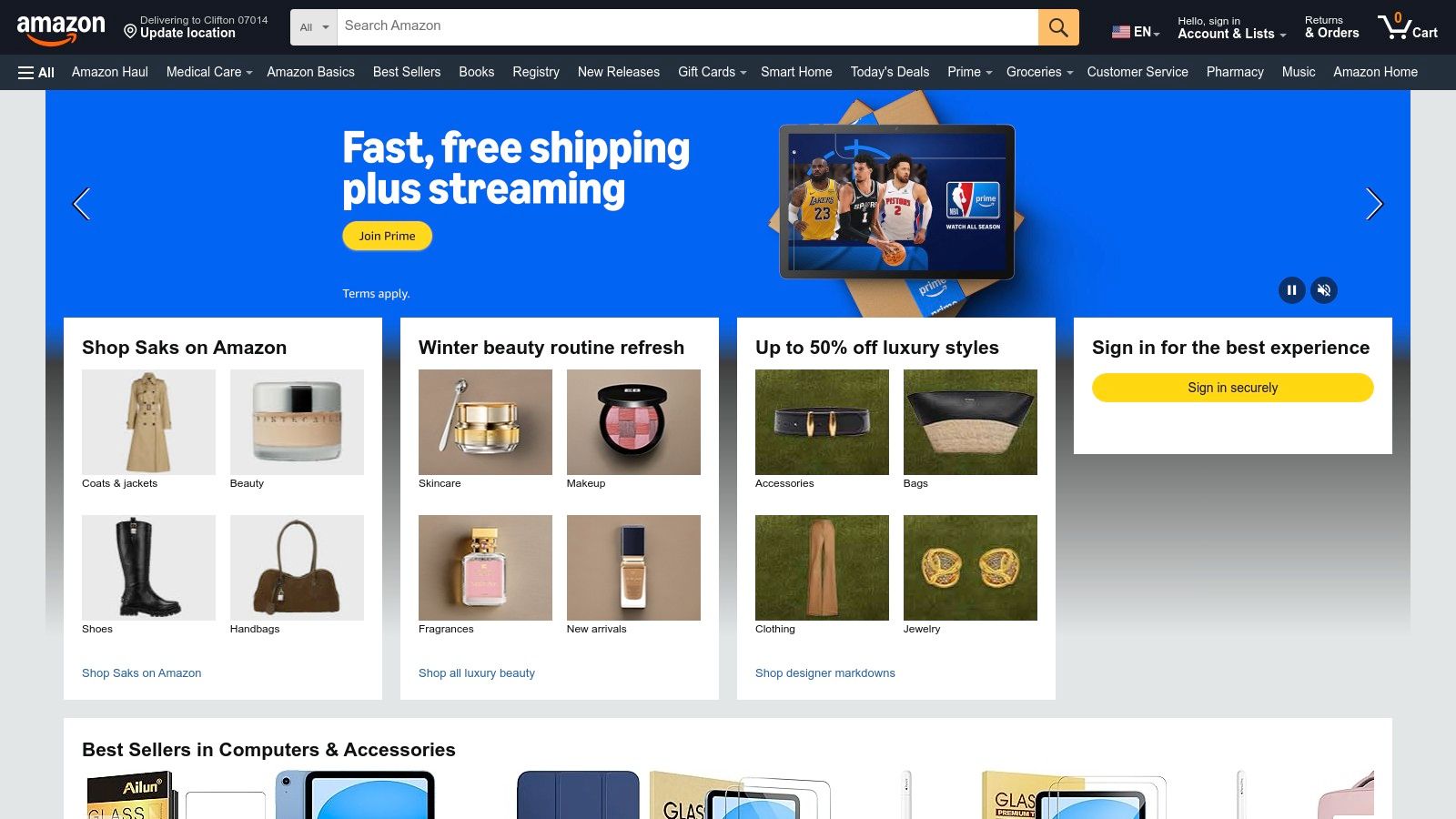
    As the biggest bookseller out there, Amazon is the obvious first stop. You can find almost any business book ever written. Whether you have a title in mind or you're just browsing the best seller business books, its huge catalog and sharp search tools make it easy. From classics to brand-new releases, you can get it in any format you want.

    A screenshot of the Amazon homepage, a prominent source for best seller business books.

    The platform nails it when it comes to choice. You can grab a hardcover for your desk, download a Kindle eBook for your commute, or listen to an audiobook on Audible while you're at the gym. It’s like a Swiss Army knife for readers. Throw in fast Prime delivery, and you’ve got unbeatable convenience.

    Key Features for Founders

    Amazon's whole system is designed to help you decide fast. The "Look Inside" feature is like flipping through a book in a store; you can read the first few pages and get a feel for the author’s voice before you buy. Then you have the customer reviews, which are a goldmine of real-world feedback on what works and what doesn't.

    Here's a pro-tip I use: keep an eye on the live Kindle Store Bestseller Ranks in the "Business & Investing" category. It’s like having a direct line to what other founders are reading right now. This helps you stay on top of the ideas shaping your industry.

    Pros and Cons

    Pros Cons
    Widest selection of formats and titles Crowded marketplace with varying seller quality
    Fast and reliable delivery with Prime Pricing and stock can fluctuate unexpectedly
    Robust customer reviews and previews Can be overwhelming without a specific title in mind

    Why It Makes the List

    Amazon’s massive scale, format options, and pricing make it a must-have for any founder building a business library. Its discovery tools and customer reviews mean you can find the exact knowledge you need, right when you need it. Since many of us also sell on Amazon, it's vital to know the rules. I've covered how to deal with problems in my guide on handling Amazon account suspensions.

    Website: https://www.amazon.com

    2. Barnes & Noble

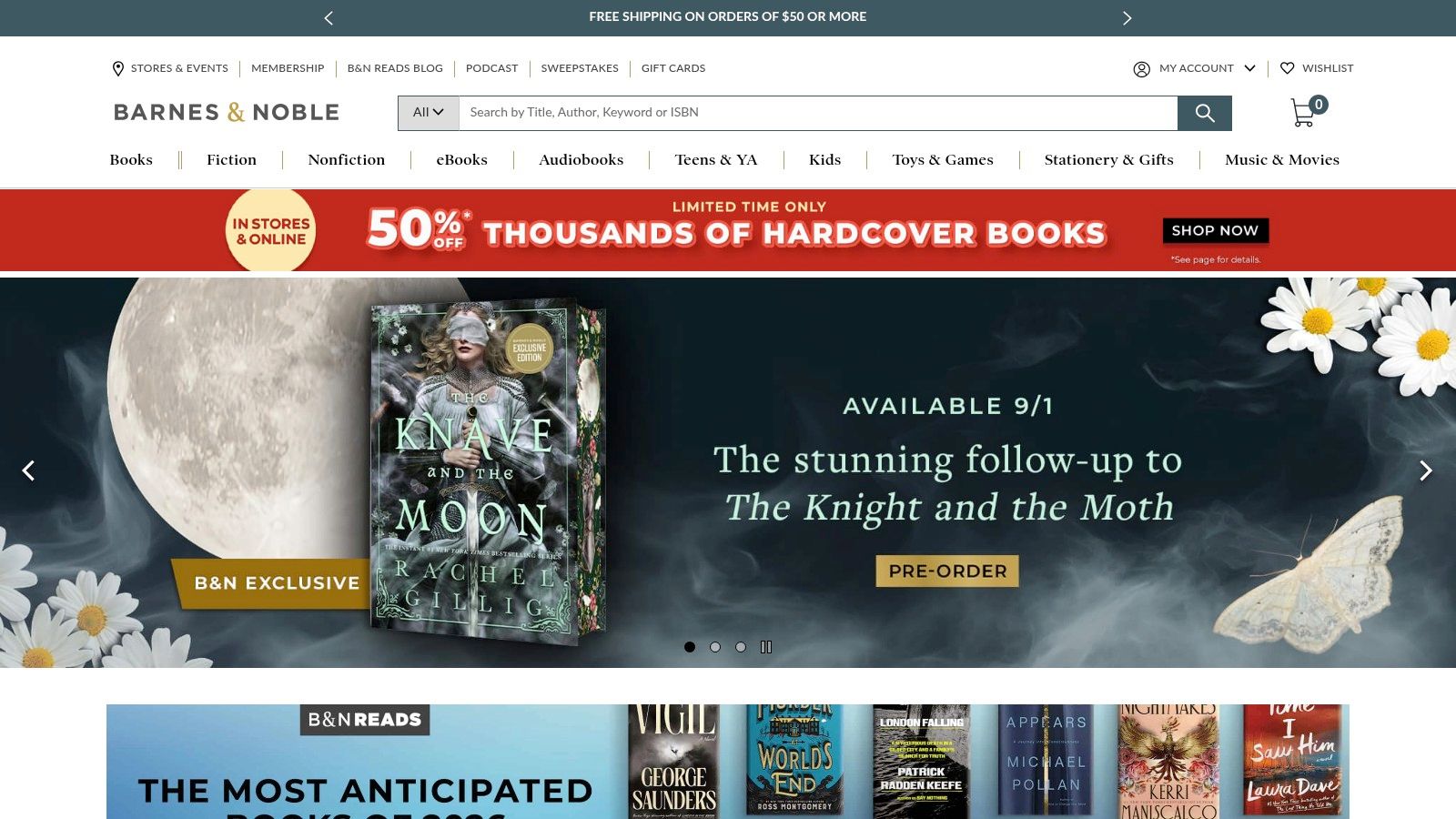
    As a bookstore veteran, Barnes & Noble gives you a more curated, classic way to find best seller business books. It's the perfect middle ground between the chaos of a huge online marketplace and the focused feel of a real bookstore. You can easily browse its well-organized business section, which highlights new releases, staff picks, and top sellers.

    This platform gives you the best of both worlds. You can order a hardcover online and have it shipped to your door, or you can use in-store pickup to grab it today. If you're a digital reader, the NOOK eBook format lets you dive into a new strategy guide instantly.

    Key Features for Founders

    The "Business" category hub is where Barnes & Noble really shines. Unlike sprawling sites, it's neatly organized into practical subgenres like "Management," "Finance," and "Small Business & Entrepreneurship." This helps you find what you need much faster. It's like having a librarian who's already sorted the shelves for you.

    Here's a tip I recommend: check out the "Staff Picks" in the business section. This is where I often find hidden gems that haven't hit the mainstream bestseller lists yet. Think of it as getting a personal recommendation from someone who reads for a living, which can introduce you to ideas you wouldn't find otherwise.

    Pros and Cons

    Pros Cons
    Clean category navigation for focused browsing eBook ecosystem is smaller than Amazon/Google
    In-store pickup option combines online and physical shopping Some pages require JavaScript, which may lag on older browsers
    Clear shipping perks for members and non-members Selection, while large, is not as exhaustive as Amazon's

    Why It Makes the List

    Barnes & Noble earns its spot by offering a more intentional shopping experience. If you get overwhelmed by endless choices, its curated approach is a breath of fresh air. The mix of a solid online store and reliable physical locations gives you the flexibility to get the business insights you need, how you need them.

    Website: https://www.barnesandnoble.com/b/books/business/_/N-29Z8q8Zt82

    3. Bookshop.org

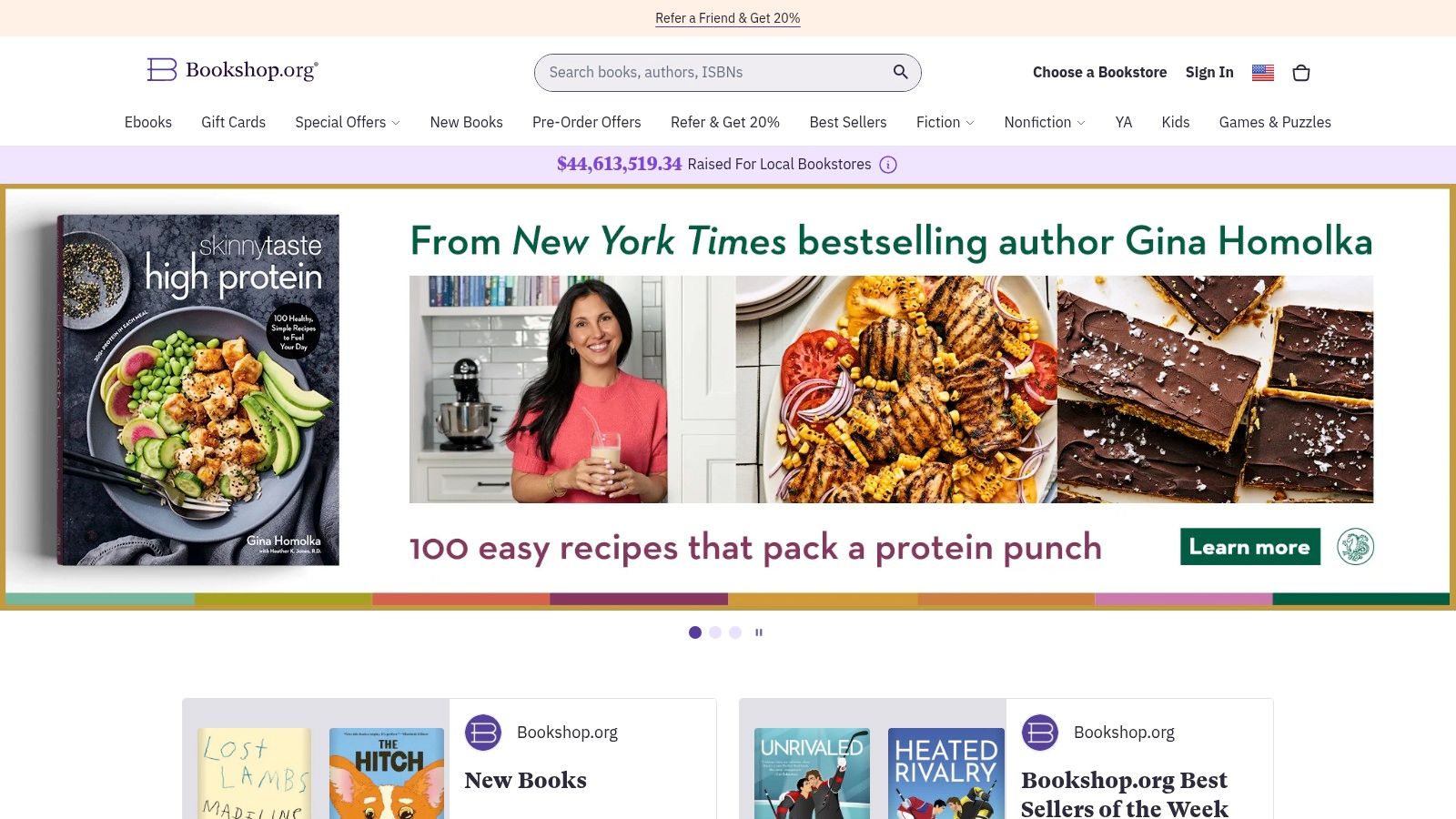
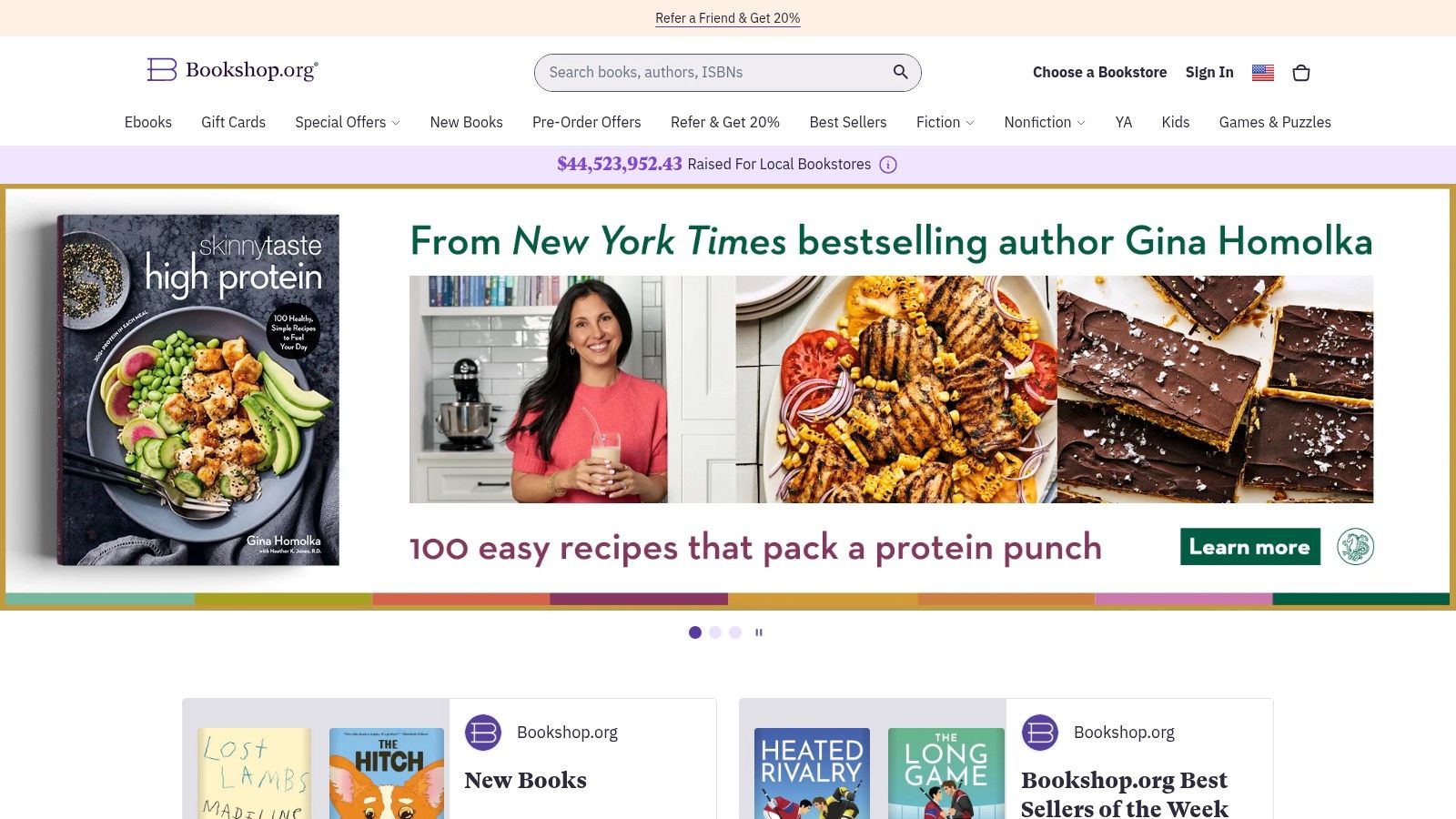
    If you like shopping online but want your money to support local businesses, Bookshop.org is for you. This platform is an online marketplace built to help independent bookstores thrive. When you buy a book, a big slice of the profit goes into a pool that's split among participating indie shops. It’s a way to find the best seller business books that feels good.

    Bookshop.org

    The site is clean and simple, making it easy to discover both print and digital books. While it's not as massive as Amazon, you'll find almost every major business title. You can even choose a specific local bookstore to support with your purchase. You’re not just buying a book; you’re investing in other small business owners like you.

    Key Features for Founders

    Bookshop.org is all about curation. It feels more like a boutique than a big-box store. You can browse lists created by specific bookstores, authors, and publications, which often unearth amazing books you'd otherwise miss. These collections in the "Business & Economics" category can lead you to niche topics that are incredibly relevant.

    Since they've added eBooks, you can learn on the go with their app. Here's a tip: look for affiliate pages from your favorite business podcasts or thinkers. Many create curated lists on Bookshop.org, so you can see what they recommend while supporting them and local stores at the same time.

    Pros and Cons

    Pros Cons
    Purchases directly support independent bookstores Print shipping is currently limited to the US
    Clean, curated browsing experience Bookshop eBooks do not support Kindle devices
    Simple 30-day return policy for print books In-app eBook purchasing can be limited by app store rules

    Why It Makes the List

    Bookshop.org makes the list because it’s a powerful, mission-driven choice for founders who care about community. You can build your business library while directly investing in the small business ecosystem. If you believe how you spend your money matters, this platform aligns your purchases with your values, without giving up convenience.

    Website: https://bookshop.org

    4. Porchlight Book Company

    When you need more than just one book, you need a specialist. That's Porchlight Book Company (you might remember them as 800-CEO-READ). This isn't your typical bookstore. It's a service for bulk orders and corporate gifts. If you're planning a team-wide read for your startup or sending a thank-you to investors, this is your place to find best seller business books with a professional touch.

    Their entire business is built to serve teams, not just individuals. This means they offer customization you won't find anywhere else. Think of Porchlight less like a store and more like a partner who helps you spread knowledge across your entire company.

    Key Features for Founders

    Porchlight makes big orders simple. Their bulk fulfillment service gives you custom quotes, handles all the logistics, and makes sure every book gets where it needs to go. You can even add custom stickers or signed bookplates to turn a book into a memorable gift.

    A great way to find your next team read is to check out their editorial picks and the annual Porchlight Business Book Awards. These lists cut through the noise and highlight innovative books you might have missed. Their customer service is run by actual people, which is a huge help when you need to track down a specific edition.

    Pros and Cons

    Pros Cons
    Streamlined process for bulk and corporate orders Limited selection of eBooks and audiobooks
    Unique customization options (e.g., signed bookplates) Shipping costs and timelines vary by project
    Expert editorial curation helps with discovery Some bulk discounts may be non-returnable

    Why It Makes the List

    Porchlight makes the list because it's laser-focused on what organizations need. When you have to get the same knowledge into the hands of your whole team, their service is unbeatable. They’re the bridge between an author’s ideas and your entire company, making it easy to share the best business insights at scale.

    Website: https://www.porchlightbooks.com

    5. Harvard Business Review (HBR) Store

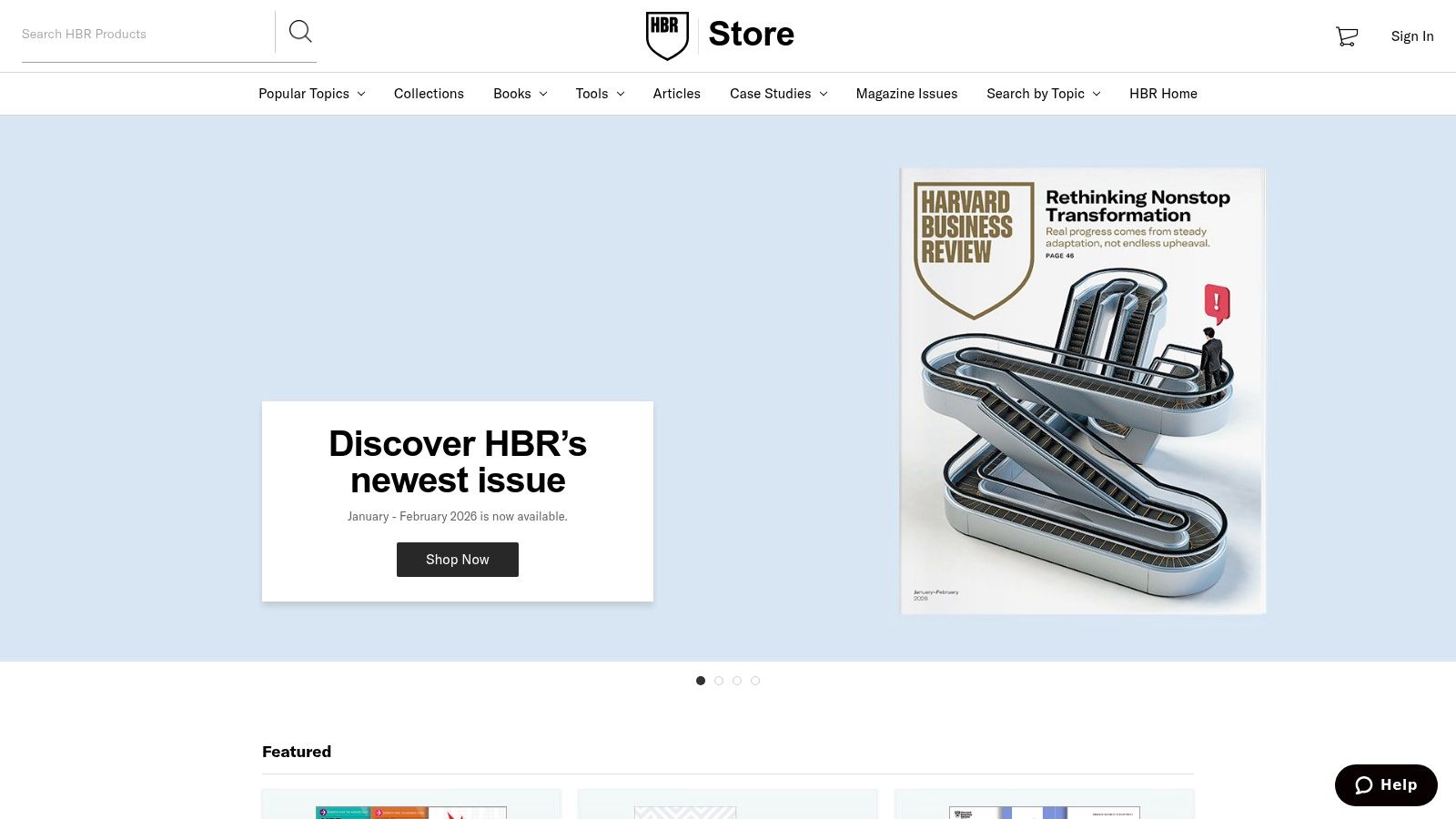
    If you're after serious, research-backed business knowledge, the Harvard Business Review (HBR) Store is your destination. This isn't a massive marketplace. It's a direct line to some of the most respected thinking in the business world. Here, you'll find HBR Press books, individual articles, and deep-dive case studies to sharpen your strategic mind.

    A screenshot of the Harvard Business Review (HBR) Store, a source for best seller business books.

    The platform is great at packaging wisdom. Collections like HBR's 10 Must Reads bundle the most powerful articles on topics from leadership to strategy. It's like getting a masterclass in a box. Buying straight from the publisher ensures you're getting the real deal, perfect for building a professional library for you or your team.

    Key Features for Founders

    The HBR Store’s power is in its focused catalog. Instead of just browsing titles, you can filter by critical topics like innovation or marketing to find targeted solutions. Being able to buy single articles or case studies is a game-changer. It lets you get powerful ideas for a specific problem without having to read an entire book.

    Here's a tip I give to founders: use their curated collections to get your leadership team on the same page. Buying a set of books on management, for example, means everyone is working from the same playbook. Aligning your team on core ideas is a key part of the small business growth strategies I recommend.

    Pros and Cons

    Pros Cons
    Direct publisher access guarantees authenticity Shipping isn't typically free and has set tiers
    Curated collections simplify learning on key topics Digital items are usually non-returnable
    Offers individual articles and case studies Selection is limited to HBR-published materials

    Why It Makes the List

    The HBR Store earns its spot by providing access to authoritative, research-backed business insights you can't get just anywhere. It’s the perfect place for founders who want to build their business on proven principles, not just trends. For creating a team reading list or diving deep into a strategic challenge, HBR delivers depth and credibility.

    Website: https://store.hbr.org

    6. Audible

    For busy founders, I know sitting down to read can feel like a luxury you don't have. Audible fixes that. It turns your commute, workout, or chores into learning time. As the top audiobook platform, it has a massive library of best seller business books, often narrated by the authors themselves and available on launch day.

    A person listening to audiobooks, a great way to consume best seller business books.

    The platform runs on a membership. The premium plan gives you monthly credits to buy any title you want, which you then own forever. This is great for those core books you'll listen to again and again. A cheaper plan gives you unlimited listening to a huge, rotating catalog of audiobooks and podcasts. It’s like a Netflix for your ears.

    Key Features for Founders

    Audible's biggest win is accessibility. The power to absorb dense business ideas while you do other things is a game-changer for me. When the author narrates, you often get an extra layer of meaning and emphasis that helps the lessons stick.

    A tip I use all the time is the clipping feature. You can save key moments or advice and revisit them later without having to search through hours of audio. Also, keep an eye out for member-only sales. You can often grab top-tier business books for a steep discount, making your learning budget go further.

    Pros and Cons

    Pros Cons
    Huge catalog with day-one availability for new releases Top bestsellers often require a paid credit
    Audio format is ideal for multitasking and busy schedules The Plus Catalog selection can be hit-or-miss
    Keep your purchased audiobooks forever with a credit Navigating different membership tiers can be confusing

    Why It Makes the List

    Audible makes professional growth possible, no matter how jammed your schedule is. It turns downtime into growth time, letting you absorb the latest strategies without needing to block off hours to read. For founders building a knowledge base, I've curated a list of essential business strategy books on our blog, and they're all on Audible.

    Website: https://www.audible.com

    7. Google Play Books

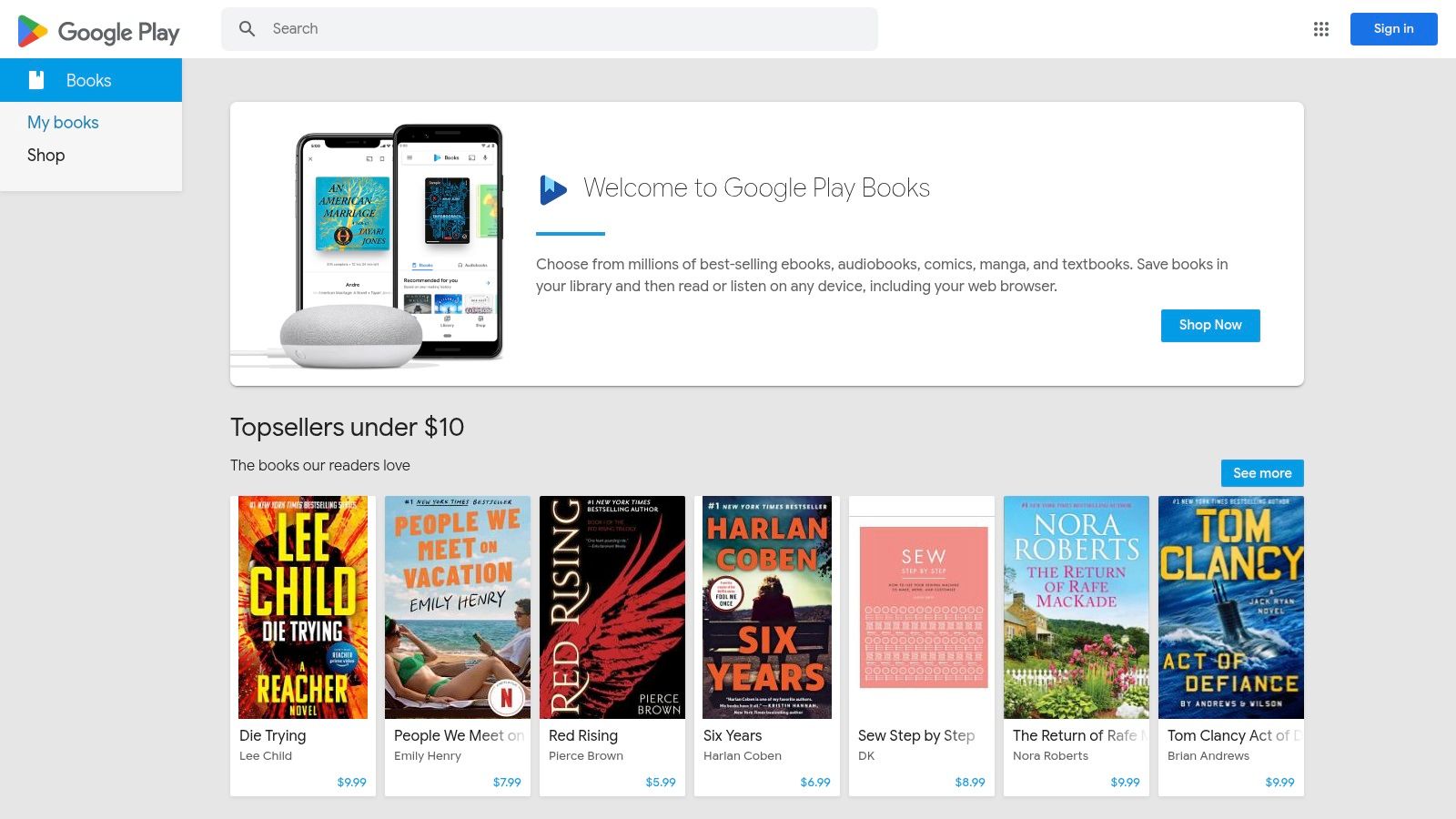
    If you're plugged into the Android and Google world like I am, Google Play Books is a seamless alternative to Kindle. It offers a huge catalog of digital books, making it a great spot to find the best seller business books without ever leaving Google's familiar space. You can access your library from anywhere—your web browser, Android phone, or even an iPhone.

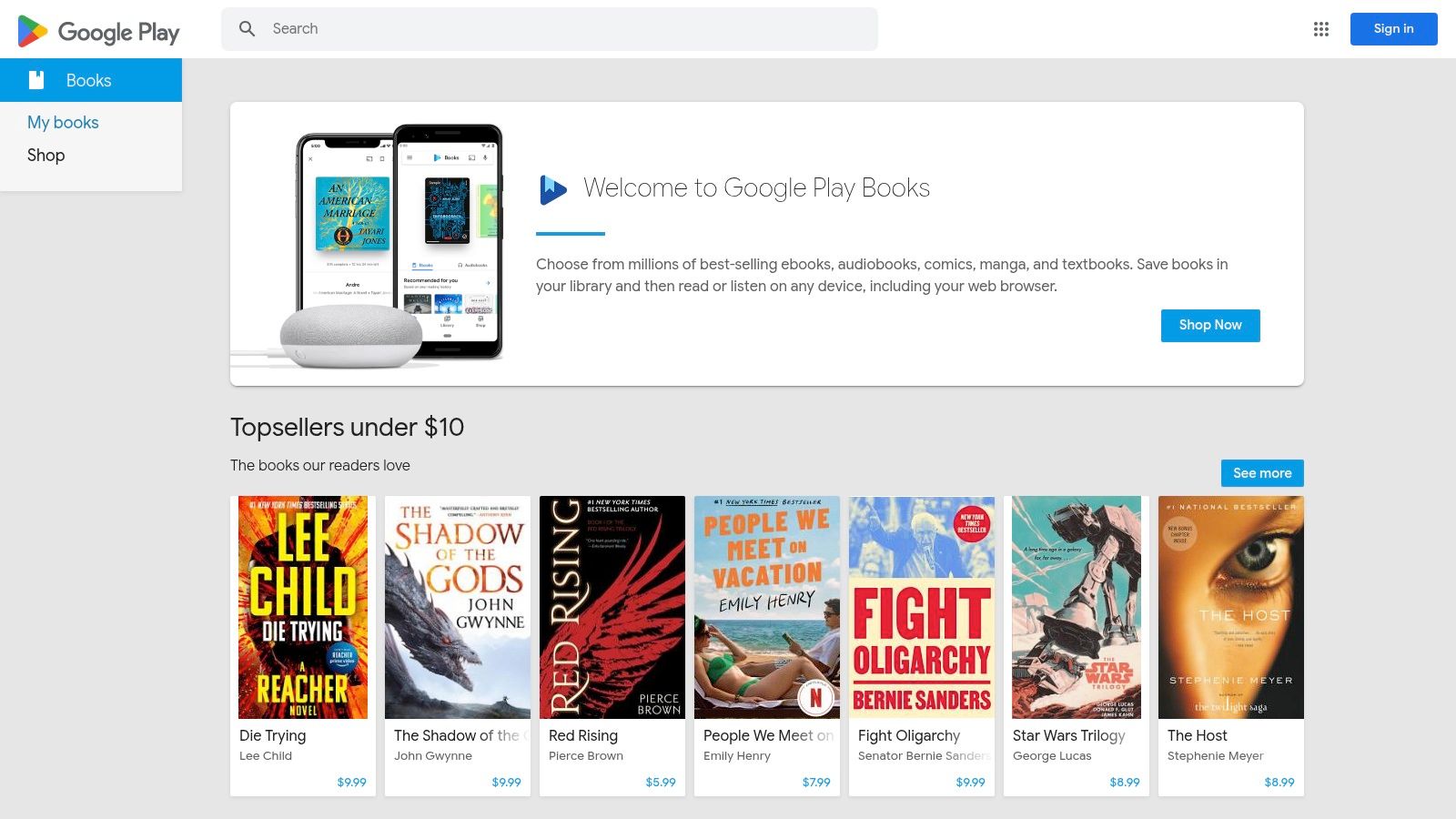
    A screenshot of the Google Play Books interface showcasing best seller business books.

    The platform focuses on ebooks and audiobooks with a clean, easy-to-use experience. What I love most is how it syncs across my devices. I can read a chapter on my laptop, then pick up right where I left off on my phone during my commute. It just works.

    Key Features for Founders

    Google Play Books is all about convenience. A key feature for me is the ability to download some books as DRM-managed EPUB or PDF files for offline reading on different e-readers. This is a big plus if you don't use a Kindle. The platform also runs frequent sales, so you can often grab popular business titles for less.

    A huge benefit for founders is the clear, 7-day refund policy on most ebooks. If you buy a book and it's not what you hoped for, you can get your money back easily. This removes the risk of spending money on a book that doesn't help your business, making it easier for you to explore new ideas.

    Pros and Cons

    Pros Cons
    Excellent for readers outside the Kindle ecosystem Kindle-exclusive titles will not be available
    Strong cross-device compatibility with cloud sync Some publishers enforce strict DRM on downloads
    Clear and user-friendly 7-day refund policy Audiobooks and certain titles have stricter refund rules

    Why It Makes the List

    Google Play Books makes the list because it's a strong, user-friendly digital option, especially for those of us using Android and Google. Its simple interface, frequent deals, and straightforward refund policy make building your digital business library both cheap and risk-free. It’s a solid choice for getting the knowledge you need on any device.

    Website: https://play.google.com/books

    Best-Seller Business Books: 7-Store Comparison

    Retailer Implementation complexity 🔄 Resources & Formats ⚡ Expected outcomes 📊 Ideal use cases ⭐ Key advantages / tips 💡
    Amazon 🔄 Low — streamlined checkout, multiple sellers and account features ⚡ Broad: hardcover, paperback, Kindle, Audible; Prime fast delivery 📊 High discoverability and dynamic pricing; quality varies by seller ⭐ Finding bestsellers quickly, price/promotions, fast delivery 💡 Use Kindle previews, bestseller rankings and watch seller listings
    Barnes & Noble 🔄 Medium — online + in-store flows; some JS-dependent pages ⚡ Print + NOOK eBooks; in-store pickup and member shipping perks 📊 Curated business navigation with predictable shipping terms ⭐ Buyers who want brick-and-mortar support and curated lists 💡 Leverage member shipping thresholds and staff picks for discovery
    Bookshop.org 🔄 Low — simple checkout focused on independent stores ⚡ Print shipping (US); eBooks via iOS/Android/web (no Kindle) 📊 Supports indie bookstores; curated lists but limited device reach ⭐ Ethical buying to support independent bookstores 💡 Choose to fund local stores; confirm eBook device compatibility
    Porchlight Book Company 🔄 High — custom quotes, bulk workflows, human-managed logistics ⚡ Print-focused with customization (signed plates, bundles, inserts) 📊 Tailored corporate orders and event-ready fulfillment ⭐ Bulk corporate orders, custom gifting, team reads 💡 Best for customization and bulk discounts; expect variable shipping terms
    Harvard Business Review Store 🔄 Medium — publisher-direct purchase with curated collections ⚡ Books, articles, case studies in print and digital; team sets 📊 Reliable access to HBR titles and professional collections ⭐ Building professional reading sets or purchasing case studies 💡 Buy direct for HBR content; check shipping fees and final-sale digital rules
    Audible 🔄 Low — subscription/credit model via app and web ⚡ Audiobooks with day-one releases; Premium Plus credits and Plus Catalog 📊 Excellent audio access and retention for busy listeners ⭐ Commuting, multitasking, consuming business books by audio 💡 Use credits for major releases and watch member-only sales/trials
    Google Play Books 🔄 Low–Medium — cross-platform purchase and sync ⚡ eBooks and audiobooks on web, Android, iOS; cloud sync; some DRM 📊 Good cross-device compatibility outside Kindle ecosystem ⭐ Readers who want non-Kindle ecosystem and cross-device access 💡 Use cloud sync and 7-day refunds; check DRM and lending limits

    Your Next Move: Turn Reading into Doing

    You've just walked through my guide to the best places for finding best seller business books. You now have a map to the world's most powerful business knowledge, from Amazon's giant marketplace to Bookshop.org's community-focused shelves. We've seen how each tool—from HBR's academic rigor to Audible's convenience—serves you at different stages of your journey.

    Here's the real lesson: knowledge isn't a trophy for your shelf. It’s a tool. And like any tool, it’s only valuable when you use it. Reading "The Lean Startup" is one thing; actually building and testing a Minimum Viable Product is another. The gap between knowing and doing is where most of us get stuck.

    From Passive Learner to Active Builder

    So how do you cross that gap? The answer isn't to read more. It's to act on what you read. You have to test the theories and, most importantly, connect with other people on the same path. I’ve found the best insights don't come from the page, but from the conversation you have about it with another founder.

    Think of it like learning to cook. You can read every cookbook ever written, but you won't be a chef until you get in the kitchen and risk burning a few things. Each book is a recipe. Your business is the kitchen. It’s time to start cooking.

    Choosing Your First Action Step

    To beat analysis paralysis, don't try to do everything at once. Pick one key idea from one book and commit to applying it this week.

    Here’s a simple way to choose:

    • If you're at the idea stage: Use Amazon's reviews to find a book on validation, like The Mom Test. Your action step: conduct five customer interviews using the book's techniques.
    • If you're building a product: Head to the HBR Store for an article on product-market fit. Your action step: create a one-page strategy doc based on a framework you find.
    • If you're scaling: Grab a book on Audible about systems, like Traction. Your action step: implement one meeting rhythm or accountability tool with your team.

    The goal is momentum. One small action builds confidence and gives you real-world data, which is worth more than a dozen unread books. You're not just reading about the best seller business books; you're turning their wisdom into your success.


    A book is just paper until you put its ideas to work with people who can help you. At Chicago Brandstarters, I connect kind, hard-working founders to talk about what's actually working, turning book smarts into street smarts. If you're ready to move from reading to doing with a community you can trust, apply to join our next founder dinner at Chicago Brandstarters.

  • 7 Essential Places to Find the Best Business Strategies Books in 2026

    7 Essential Places to Find the Best Business Strategies Books in 2026

    I get it. You're a founder, which means you're building a plane while flying it. You don't have time for a book that doesn't deliver a direct hit of actionable wisdom. But the right business strategies books aren't just reading; they're cheat codes. I see them as a direct line to someone who already solved the exact problem keeping you up at night.

    Think of it like this: every book is a mentor you can hire for about $20. Your real challenge isn't deciding if you should read. It's figuring out what to read and where to find it without wasting time or money. You need proven sources that get you the right insights, fast, so you can apply them today, not next quarter.

    This isn't just another generic list. It's your map to the best places for grabbing the game-changing books that will actually move the needle for your business. I've personally used every one of these sources to build my own strategic library. I want to help you skip the fluff and get straight to the impactful lessons.

    Forget endless scrolling. I built this guide to help you quickly find the best place for your next book, whether you need a physical copy for notes, an audiobook for your commute, or a budget-friendly used edition. Each option includes a direct link so you can get what you need and get back to building. Let's find your next big idea.

    1. Amazon (Books + Kindle)

    When you need a specific book on business strategy, you'll probably look at Amazon first. It’s like the world's largest library and bookstore rolled into one. Its massive catalog makes finding even the most niche business strategies books a simple task. Because it's so dominant, you can compare formats, prices, and delivery options all in one place, saving you precious time.

    The platform's true power is its complete ecosystem. From a single product page, you can order a hardcover for your office, send a paperback to a co-founder, download the Kindle version for your commute, and grab the Audible audiobook for your workout. I find this one-stop-shop convenience hard to beat.

    Why It Stands Out

    Amazon’s main advantage is its sheer scale and integrated services. If you're a Prime member, you get incredibly fast, often free, shipping—a game-changer when you're eager to dive into a new concept. For entrepreneurs on a budget, I recommend the Amazon Marketplace. It's a treasure trove of used copies from third-party sellers, though you'll need to watch seller ratings and shipping times.

    I love the "Look Inside" feature and Kindle sample downloads. They're invaluable for previewing a book before you commit. It’s like flipping through a book in a physical store, but from your desk. You can get a feel for the author's tone and see if it fits your current challenges.

    Maximizing Your Amazon Experience

    Here are a few tips I use to get the most out of Amazon for business books:

    • Create a "Strategy" Wishlist: I keep a running list of books I want to read. This helps me track titles and watch for price drops.
    • Compare All Formats: Don't just look at the hardcover price. The Kindle version is often cheaper and instantly accessible, while a used paperback from the Marketplace could be your most cost-effective option.
    • Read the 1-Star and 3-Star Reviews: While 5-star reviews are great, I find that the critical and moderate reviews often give a more balanced view of a book's drawbacks or specific audience fit.

    Key Insight: I use Amazon's powerful search not just to find books, but to discover them. Search for your core business challenge (e.g., "customer retention for ecommerce") and see what comes up. Then, dive into the "Customers also bought" section to find related gems.

    By being strategic, you can turn Amazon from a simple bookstore into a powerful research tool for your business's growth. The vast selection supports everything from foundational principles to advanced tactics, helping you build a library that directly fuels your success. For more insights on how to apply these readings, you can explore various small business growth strategies and see how others are implementing them.

    Visit Website: https://www.amazon.com/books

    2. Barnes & Noble (Retail + Nook)

    For those of us who love browsing a physical bookstore, Barnes & Noble offers a great bridge between the digital and physical worlds. It's a trusted bookseller with a deep business section, both online and in its welcoming stores. You can easily find foundational and popular business strategies books on its shelves, giving you a tangible connection to the knowledge you're seeking.

    Barnes & Noble (Retail + Nook)

    The platform’s strength is its hybrid model. You can research a book online, check its in-store availability, and then drive over to pick it up the same day. I find this immediacy invaluable when an idea strikes and I want to start learning right away. It also integrates its NOOK eBook ecosystem, letting you maintain both a physical and digital library through a single, familiar brand.

    Why It Stands Out

    Barnes & Noble excels at creating a curated, community-focused book-buying experience. Unlike the endless digital scroll, walking into a B&N lets you physically handle books, discover titles you weren't looking for, and even attend author events. This environment fosters discovery in a way that algorithms can't always replicate.

    For frequent buyers like me, the loyalty programs offer real value. The paid Premium Membership gives you discounts and free shipping, while the free B&N Rewards program earns you store credit. While its online prices may not always be the absolute lowest, the mix of reliable shipping, easy returns, and in-person service makes it a dependable choice.

    Maximizing Your Barnes & Noble Experience

    Here are a few tips I use for getting the most out of B&N:

    • Use "Pick Me Up" for Speed: If you need a book today, check its availability at your local store online. You can buy it for in-store pickup and have it in your hands within hours.
    • Look for Signed Editions: I've found that Barnes & Noble is a great source for exclusive signed editions from major business authors. These make a great addition to your office library or a gift for a mentor.
    • Combine Rewards and Memberships: If you buy business books regularly, I recommend stacking the free Rewards program with the paid Premium Membership to maximize your savings on every purchase.

    Key Insight: I treat Barnes & Noble as more than just a store; I use it as a validation tool. Seeing which business books are prominently displayed or recommended by staff gives you a pulse on current trends. It's like getting real-world feedback on what concepts are gaining traction—a key part of learning how to validate a business idea before you invest too heavily.

    By blending online convenience with in-person browsing, Barnes & Noble provides a well-rounded and reliable resource. It supports your journey from idea to scaling your business with a carefully selected inventory and a welcoming atmosphere.

    Visit Website: https://www.barnesandnoble.com

    3. Bookshop.org

    If you want your purchase of business strategies books to build more than just your knowledge, Bookshop.org is your platform. It's an online bookstore with a mission: to financially support local, independent bookstores. Think of it this way: instead of your money going to a corporate giant, it directly benefits the small shops that are the heart of local communities. You get to invest in your business and someone else's at the same time.

    Bookshop.org

    The platform combines the ease of online shopping with the impact of buying local. You can choose a specific indie bookstore near you to get the full profit from your order, or you can let your purchase contribute to an earnings pool that's evenly distributed among all independent bookstores on the platform. I love this model because it gives me a vital alternative as a conscious consumer.

    Why It Stands Out

    Bookshop.org’s main advantage is its ethical commerce model. Every purchase you make has a direct, positive impact. Beyond its mission, I find the site is a fantastic place for discovery. It features curated lists from real booksellers, offering a human touch that algorithms often lack. You'll find unique collections of business strategies books put together by people who are passionate about reading.

    While you might not find the deep discounts of mass-market retailers, the prices are competitive. They also offer a non-Amazon digital option with their eBook platform, which still shares profits with indie stores. Just note that these eBooks are not compatible with Kindle devices.

    Maximizing Your Bookshop.org Experience

    Here are a few tips I use on Bookshop.org:

    • Find and Favorite Your Local Store: I use the map feature to find an independent bookstore in my area. By selecting it, that store will receive the full profit from all my future purchases.
    • Explore Curated Lists: Dive into the "Browse" section to find reading lists from bookstore staff across the country. This is how I discover under-the-radar titles and new perspectives.
    • Embrace eBooks for a Cause: If you prefer digital, consider their eBook options. You support indie shops while enjoying the convenience of an e-reader—a win-win for founders on the go.

    Key Insight: I use Bookshop.org not just to buy books I already know, but to discover what passionate booksellers are recommending. Their curated approach can expose you to diverse voices and niche strategies you might miss in a purely algorithm-driven environment.

    Choosing Bookshop.org is a strategic decision in itself. You're building your business library while actively contributing to the small business ecosystem. For anyone starting out, this aligns perfectly with community-focused growth, a key concept when you're thinking about how to start an ecommerce business.

    Visit Website: https://bookshop.org

    4. Porchlight Book Company (formerly 800-CEO-READ)

    When your goal is to get a powerful business book into the hands of your entire team or event attendees, Porchlight Book Company is your partner. While big retailers handle single orders well, Porchlight specializes in bulk orders. They're less like a store and more like a service. They act as a bridge between authors and businesses, making it easy for you to share essential business strategies books at scale.

    Porchlight Book Company (formerly 800-CEO-READ)

    This focus makes them the go-to for leaders who see books as a tool for company-wide learning. Instead of you spending hours coordinating shipping to 50 different addresses, Porchlight's team manages the whole process. It’s like a white-glove service for intellectual capital.

    Why It Stands Out

    Porchlight’s main advantage is its expertise in customized, bulk orders. They aren't just selling books; they are facilitating shared reading experiences. You can work with them to arrange for signed copies, custom inserts like a letter from you as the CEO, or even branded bookmarks. This turns a simple book into a meaningful gift or a core part of your company's culture.

    Their human-centric customer service is a huge differentiator. When you have a complex order, you get to talk to a real person who specializes in these exact scenarios. While you can certainly buy a single copy from them, their real power is unlocked when you’re thinking bigger.

    Maximizing Your Porchlight Experience

    Here are a few ways I suggest you leverage Porchlight for your business:

    • Plan Your Team's Reading: If you're launching a quarterly book club for your leadership team, contact Porchlight to get a bulk quote. They can handle all the fulfillment, even to remote employees.
    • Enhance Your Next Event: Hosting a workshop or conference? Work with Porchlight to provide attendees with a relevant book, perhaps even one signed by your keynote speaker.
    • Use Books for Client Gifting: Instead of another generic gift basket, send your top clients a curated business book with a personalized note from you. Porchlight can add custom inserts to make it special.

    Key Insight: Think of Porchlight Book Company as your outsourced logistics department for knowledge sharing. Before you start a book-related initiative for more than a handful of people, get a quote from them. Their service will likely save you more time and headaches than the small premium you might pay over a DIY approach.

    By partnering with Porchlight, you can scale the impact of a great business book, turning a solo reading activity into a powerful, shared team experience.

    Visit Website: https://www.porchlightbooks.com

    5. Audible

    As a founder, I know your calendar is full. Finding time to sit down and read can feel impossible. This is where Audible shines. It transforms your commutes, workouts, and even chores into learning opportunities. It gives you access to a massive catalog of business strategies books in audiobook format, making it the perfect tool for an entrepreneur on the move. You can absorb groundbreaking ideas while you're driving, on a run, or just giving your eyes a rest.

    Audible

    Audible's platform is designed for listening. Its apps let you download titles for offline use, so you're never without your next lesson. The ability to adjust playback speed means you can consume content faster when you're short on time or slow it down to really digest complex concepts.

    Why It Stands Out

    Audible’s core strength is its focus on the audio experience. While other platforms offer audiobooks as an add-on, Audible has perfected it. The selection of business titles is vast, often narrated by the authors themselves. Hearing them tell their own story adds a layer of authenticity you don't get from text.

    The subscription models offer flexibility. The Audible Plus plan gives you unlimited access to a rotating catalog of thousands of titles, which is great for discovery. The Premium Plus plan adds a monthly credit you can use for any premium title. I find this credit system is often the most cost-effective way to get newly released books.

    Maximizing Your Audible Experience

    Here are a few tips to make Audible an indispensable part of your business education:

    • Use the "Clips" Feature: When you hear a powerful idea, I use the clip feature to save and annotate the snippet. This creates a library of key takeaways I can revisit without scrubbing through the whole book.
    • Listen to Samples: Before using a credit, always listen to the 5-minute sample. A narrator's voice can make or break an audiobook, so I make sure it's a good fit for me.
    • Watch for Member Sales: Audible frequently runs 2-for-1 credit sales. I keep an eye on these to build my library for a fraction of the cost.

    Key Insight: Think of Audible not just as a book source, but as a time-multiplier. It’s like adding extra hours to your day. By integrating learning into activities that don't require your full visual attention, you can dramatically increase your knowledge intake without adding more "work" to your schedule.

    By using its features, you can turn otherwise unproductive time into a strategic advantage. It allows you to consistently absorb new ideas, keeping your mind sharp and your strategies current.

    Visit Website: https://www.audible.com

    6. Google Play Books

    If you live in the Google ecosystem or just want a device-agnostic way to build your digital library, Google Play Books is a great choice. It's a massive digital bookstore that syncs effortlessly across your phone, tablet, or web browser. This means you can start reading business strategies books on your laptop and pick up where you left off on your phone without being tied to a specific hardware brand.

    Google Play Books

    The platform offers millions of eBooks and audiobooks, so you can find everything from timeless classics to modern guides. It's a clean, straightforward alternative if you aren't invested in Amazon's Kindle hardware but still want a robust library.

    Why It Stands Out

    Google Play Books' main advantage is its universal accessibility and a killer feature: you can upload your own files. You can add your own PDFs and EPUB files to your library, consolidating all your reading material in one place. I find this perfect for organizing strategy whitepapers, industry reports, and ebooks from other sources alongside my official purchases.

    The cross-device sync for notes and highlights is seamless. Any insight you highlight on one device is instantly available on all others, making it easy to compile takeaways for your next team meeting. The platform also frequently offers discounts, letting you build your business knowledge without breaking the bank.

    Maximizing Your Google Play Books Experience

    Here are a few tips I have for getting the most out of the platform:

    • Consolidate Your Library: I use the upload feature to add external business reports, case studies, and PDFs to my library. It transforms the app from a store into my personal business knowledge management system.
    • Sample Before You Buy: Just like Kindle, Google Play Books offers free samples. I always read a chapter or two to ensure the author's style is a good fit for my current challenges.
    • Use the Search Within a Book: When you're trying to recall a specific concept from a book you've read, the in-book search function is incredibly powerful and much faster than flipping through a physical copy.

    Key Insight: Think of Google Play Books as your personal, cloud-based business library. Its strength isn't just in what you can buy, but in its ability to organize and sync all the knowledge you collect—from bestsellers to niche industry PDFs.

    By using its open and flexible ecosystem, you can create a comprehensive collection of business strategies books and documents that travels with you everywhere. This makes it easier than ever to turn idle moments into productive learning sessions.

    Visit Website: https://play.google.com/books

    7. ThriftBooks

    If you want to build a world-class business library without a VC-sized budget, ThriftBooks should be your secret weapon. It’s a huge online seller of used books, making it a goldmine for acquiring timeless business strategies books at a fraction of their cost. For you, the bootstrapped founder, this means you can stock up on foundational classics without financial strain.

    The platform is designed for savvy readers like you. You can often find hardcover editions of legendary strategy books for less than the price of a coffee. It's like a stock market for books where you can buy low on proven assets. This accessibility democratizes knowledge, ensuring the best business wisdom isn't locked behind a high price tag.

    Why It Stands Out

    ThriftBooks' main advantage is its unbeatable value, combining low prices with a great rewards program. The ReadingRewards program lets you earn points on every purchase, which quickly turn into free books. If you're an avid reader building a strategy library like me, this is an incredible perk that compounds your savings over time.

    One of its most underrated features is access to out-of-print or older editions of classic business texts. Sometimes, the original version of a book contains insights that were edited out of later reprints. ThriftBooks gives you a direct line to these hard-to-find gems. Their condition grading system also helps you know exactly what you're getting.

    Maximizing Your ThriftBooks Experience

    Here are a few tips I use to turn ThriftBooks into my go-to resource:

    • Build a "Core Strategy" Wishlist: I use the wishlist feature to track evergreen titles like Good to Great or The Lean Startup. The platform notifies me when a copy becomes available.
    • Bundle to Get Free Shipping: With free U.S. shipping on orders over just $15, it's smart to bundle a few books together to maximize value.
    • Check Different Formats and Conditions: A "Good" condition hardcover might be cheaper than a "Like New" paperback. I stay flexible with the condition to get the absolute best price.

    Key Insight: I think of ThriftBooks as an asset acquisition tool for my business. For every core function—marketing, sales, operations—you can acquire the top three foundational books for less than $20 total. This builds your intellectual capital at an incredibly low cost.

    By leveraging its low prices and rewards, you can assemble a powerful library of business strategies books that will pay dividends for years to come. It’s the smartest way to learn from the best without breaking the bank.

    Visit Website: https://www.thriftbooks.com

    Top 7 Platforms for Business Strategy Books — Comparison

    Platform 🔄 Implementation complexity 💡 Resource requirements ⭐📊 Expected outcomes 📍 Ideal use cases ⚡ Key advantages
    Amazon (Books + Kindle) 🔄 Low — straightforward search & checkout 💡 Low — consumer account; Prime optional ⭐⭐⭐⭐ — widest selection; 📊 high availability across formats Quick purchases, format comparison, fast delivery ⚡ Massive catalog, fast shipping, frequent discounts
    Barnes & Noble (Retail + Nook) 🔄 Low — online or in‑store workflows 💡 Medium — Premium membership for best value ⭐⭐⭐ — reliable inventory; 📊 strong in‑store experience In‑store pickup, signed copies, browse/events ⚡ Dependable returns, loyalty perks, physical stores
    Bookshop.org 🔄 Low — simple online checkout; shop selection 💡 Low — standard purchase; supports indies ⭐⭐ — supports local shops; 📊 curated discovery Support independent bookstores; curated lists ⚡ Profits to indie shops; editorial curation
    Porchlight Book Company (formerly 800‑CEO‑READ) 🔄 Medium — custom/bulk order coordination 💡 High — budget for bulk/customization; lead time ⭐⭐⭐⭐ — high impact for groups/events; 📊 strong curated service Bulk orders, team book clubs, event gifting ⚡ White‑glove bulk service, customization, logistics
    Audible 🔄 Low — app/subscription or a‑la‑carte 💡 Medium — subscription or credit purchases ⭐⭐⭐ — excellent audiobook access; 📊 high listening engagement Commuting founders, multitask listening, audio learners ⚡ Large audio catalog, offline playback, speed controls
    Google Play Books 🔄 Low — buy and read across devices 💡 Low — Google account; app access ⭐⭐⭐ — device‑agnostic access; 📊 good notes/highlights Non‑Kindle eBook users; cross‑device reading ⚡ Cross‑device sync, personal file uploads
    ThriftBooks 🔄 Low — marketplace ordering 💡 Low — budget‑focused; may wait for shipping ⭐⭐⭐ — low cost for classics; 📊 variable availability/condition Building a budget library; finding backlist/out‑of‑print ⚡ Very low prices, large used/backlist inventory

    Turn Reading into Action, Together

    We've explored a powerful arsenal of tools for accessing the world's best business strategies books. From the instant delivery of an Audible audiobook to the sustainable joy of finding a gem on ThriftBooks, your path to knowledge has never been clearer. You now have a map to find timeless wisdom from authors who have walked this path before you.

    But let's be honest. A bookshelf full of unread books doesn't build a business. An idea from a book is like a single lego brick; it has potential, but its real power is unlocked only when you connect it with other pieces to build something real. Your goal isn't just to gather information. It's to transform that information into decisive, needle-moving action.

    From Passive Reader to Active Builder

    Your next step is to create a system that bridges the gap between reading and doing. Without a plan, even the most profound insights from books like Blue Ocean Strategy or The Lean Startup can fade away. Your challenge is to build a personal operating system for applying what you learn.

    Here's a simple framework to get you started:

    • Choose Your Platform Wisely: Think about your daily rhythm. Do you have a long commute? Audible might be your best friend. Do you love physical books and want to support local shops? Bookshop.org is your go-to. Aligning the tool with your lifestyle is the first win.
    • Implement an "Insight Catcher": Don't just highlight passages. I create a dedicated space, like a notebook or a digital tool, for every book I read. For each key takeaway, I write down three things: the core concept, why it matters to my business, and one action I can take this week to apply it.
    • Find Your "Strategy Squad": This is the most important piece. Reading alone is a slow path. The real magic happens when you bring these ideas to a trusted group of peers. An insight is a hypothesis; discussing it with other founders turns it into a battle-tested strategy.

    The Power of a Shared Library of Experience

    It’s one thing to read about customer acquisition funnels. It’s entirely different to sit down with six other e-commerce founders and hear how one of them is applying that exact chapter to their Shopify store, what pitfalls they hit, and what specific ad copy is working for them today.

    That's how theory becomes revenue. Our community is a living library of experiences, where lessons from the best business strategies books are debated, tested, and applied to real Chicago and Midwest businesses every day. The knowledge you gain isn't abstract; it's grounded in the shared reality of building something from scratch, right here where we live.

    You've done the hard work of seeking out knowledge. Now, it's time to put it to work with people who will hold you accountable, cheer for your wins, and help you navigate the challenges. Stop guessing and start building with the support of people who genuinely get it. You don't have to build your dream alone.


    Ready to join a community of kind, ambitious founders who turn great books into great businesses? Find your people and start applying these lessons with us at Chicago Brandstarters. We're the "Strategy Squad" you've been looking for. Learn more and connect with us today.