Tag: brand positioning

  • Your Marketing Positioning Statement Template That Actually Works

    Your Marketing Positioning Statement Template That Actually Works

    Let's be real. If you can't describe who you help and why you're different in one clear sentence, your marketing is just expensive noise.

    This is the exact problem a solid positioning statement solves. I've found that using a marketing positioning statement template is the fastest way to get that clarity. You can think of it as the North Star for every single decision you make.

    Why Most Marketing Feels Invisible Without Positioning

    A man with a megaphone shouts "INVISIBLE MARKETING" on a city street at sunset.

    Do you ever feel like you're shouting into a void? You pour your heart, time, and precious cash into social media, ads, and emails, only to get crickets. This isn't just bad luck—it's a symptom of a much deeper issue. Without sharp positioning, I've seen brands become almost invisible.

    I like to think of it like this: imagine you're a musician in a packed subway station. Everyone's playing something, creating a chaotic wall of sound. If you're just another guitarist strumming a generic tune, you blend right in. But if you’re the one playing a haunting melody on a glass harmonica, people stop. You stop them. They listen. You’ve just claimed your own unique space.

    That’s what a positioning statement does for you. It carves out your unique spot in a very crowded market.

    The Real Cost of Being Vague

    When your positioning is fuzzy, you don't just fail to attract customers—you actively light money on fire. Every dollar you spend on a Facebook ad that targets "everyone interested in fitness" is a dollar down the drain. Every blog post you write for a generic audience is time you’ll never get back.

    I've seen it happen time and time again. The costs of poor positioning are steep and painful:

    • Wasted Ad Spend: You target broad audiences because you don't truly know who your ideal customer is. This leads to miserable conversion rates and a sky-high cost to get a single customer.
    • Confusing Messaging: Your website, emails, and social posts all say slightly different things because there's no central truth guiding them. You create a mess.
    • Attracting the Wrong Customers: You end up with clients who haggle on price, don't see your value, and suck up all your energy. Why? Your message wasn't specific enough to repel them and attract the right ones.

    A brand without positioning is like a ship without a rudder. You might have a powerful engine (your product) and a full tank of gas (your budget), but you'll just drift aimlessly, hoping to land somewhere valuable.

    This isn't just my hunch; it's a documented business reality. Data from places like Wayra shows that companies with tight positioning see measurable gains in brand awareness and top-of-mind recognition. Without it, your marketing gets scattered, sending mixed signals that just confuse people and dilute your brand—a costly mistake for any founder.

    The Blueprint for a Resonant Brand

    Your marketing positioning statement is the foundational blueprint for your entire brand. It's not some fluffy jargon you create once and then bury in a Google Drive folder. I believe it's the single most powerful tool in your entire marketing arsenal, and it dictates everything that comes next.

    This one sentence informs:

    • Your Product Development: What features should you build? Your positioning tells you what your core customer actually needs.
    • Your Pricing Strategy: Are you a premium, white-glove service or a budget-friendly leader? Your positioning defines your place in the market.
    • Your Content Marketing: What blog posts should you write? Your positioning clarifies exactly what your audience is dying to learn.

    Once you nail this statement, the rest of your marketing strategy just clicks into place. It’s a key piece of the brand-building puzzle and a perfect partner to creating a tight, focused strategy document.

    We’ve found a strong positioning statement is the absolute heart of any effective one-page marketing plan. It makes every decision after it simpler and more effective. It’s time for you to stop building randomly and start building with purpose.

    The Fill-in-the-Blank Marketing Positioning Statement Template

    A laptop displaying a 'POSITIONING TEMPLATE' document on a wooden desk with a coffee mug and notebook.

    Alright, enough theory. Let's get our hands dirty and actually build something. I'm giving you the exact, battle-tested framework I've used with dozens of founders to drag their brand vision out of the clouds and into sharp focus.

    This isn’t just some textbook exercise. It's a practical tool that forces you to make the tough calls that separate the brands that stick from the ones that just fade away.

    Think of this fill-in-the-blank template as a recipe. I give you the core ingredients, but it’s on you to choose the quality of your flour, the richness of your chocolate, and the freshness of your eggs. The final result lives or dies by the specific, thoughtful choices you make for each piece.

    Here it is:

    For [Your Target Customer] who [Customer’s Core Need], [Your Brand] is the [Market Category] that provides [Key Benefit]. Unlike [Your Main Competitor], we [Your Unique Differentiator].

    It looks deceptively simple, and that’s intentional. The magic isn’t in the structure—it’s in the brutal honesty required for you to fill in each blank.

    Deconstructing The Positioning Statement Template

    Every single part of this statement has a job to do. If you get lazy and generalize on any of them, the whole thing just falls apart. It’s like leaving baking soda out of your cake batter.

    Let's break down what each component forces you to decide.

    | Deconstructing the Positioning Statement Template |
    | :— | :— | :— |
    | Template Component | What It Means | Your Turn to Answer |
    | For [Target Customer] | Who is the one person you serve better than anyone else? Get hyper-specific. | Who, specifically, is your ideal buyer? Give them a name and a story. |
    | who [Customer’s Core Need] | What's the real problem or desire that keeps them up at night? Dig deep. | What is the burning, unsolved problem you are here to fix? |
    | [Your Brand] is the | This is your brand's name. The easy part! | What is your brand called? |
    | [Market Category] | What "aisle" in the mental store does your customer shop in? You get to define your competitive set. | In what category do you actually compete? (e.g., "healthy snacks," not "food") |
    | that provides [Key Benefit] | What's the #1 positive outcome you deliver? Focus on the single most important thing. | What's the main promise you make and keep? |
    | Unlike [Main Competitor] | Who is your biggest, most obvious alternative? Be brave and name them. | In your customer's mind, who is your #1 rival? |
    | we [Unique Differentiator] | What’s the one killer thing you do that your competitor can't (or won't) do? | What is your undeniable "only we do this" superpower? |

    I'll be honest—this isn't a five-minute task you knock out over coffee. Filling this out is an act of strategic commitment. It’s you planting a flag in the ground.

    A Coffee Brand Example

    Let’s make this real. Imagine you're launching a coffee brand for people working from home. Here's how that might look using my template.

    • For remote workers struggling to find focus in their chaotic home office
    • who need a clear ritual to start their workday and stay productive,
    • Momentum Coffee is the direct-to-consumer coffee brand
    • that provides a simple, high-quality brewing experience designed to signal the start of "deep work."
    • Unlike grabbing a cup from Starbucks,
    • we offer curated brewing kits and guides that create a productive home-office ritual, not just a quick caffeine fix.

    See the difference? It’s not just "coffee." It's a productivity ritual in a cup. That single sentence becomes your north star for everything—your packaging, your website copy, the content you create. This isn’t a rigid formula you have to follow perfectly, but it's a powerful tool you can start using today.

    A Practical Guide to Crafting Each Component

    Hands arranging green and orange sticky notes with words TARGET, NEED, and DIFFERENTIATOR, below 'DEFINE YOUR NICHE'.

    Having a positioning statement template is one thing. Filling it with words that actually land and set you apart is where the real work begins. The blanks themselves are simple, but I see the magic happen when you uncover the right words.

    Think of yourself as a chef. The recipe gives you the basic ingredients: flour, sugar, eggs. But it’s your choice of Belgian chocolate over generic store-brand chips that makes a cookie truly unforgettable. I want to help you find those high-impact ingredients for every part of your statement.

    Defining Your Target Customer With Painful Specificity

    Let’s start with the first part of the template: "For [Your Target Customer]". This is the most common place where founders get lazy. "Millennials" isn't a target customer. "Small businesses" is a black hole. You need to get so specific it almost feels like you’re excluding people. Good. That’s the entire point.

    Imagine you're trying to get a friend's attention in a crowded stadium. Shouting "Hey, you!" is useless. But if you yell, "Hey, Sarah from accounting, you dropped your keys!" you get an instant reaction. That’s the level of focus we're aiming for here.

    To get there, you have to move beyond basic demographics and dig into their psychographics—the beliefs, pains, and feelings that actually drive their decisions.

    • Instead of: "Freelancers"

    • Try: "Overwhelmed freelance creatives who secretly crave structure but feel suffocated by traditional productivity tools."

    • Instead of: "New moms"

    • Try: "First-time moms in their 30s who are tired of performative parenting on Instagram and just want honest, practical advice."

    Your goal is to describe your customer so well they feel like you've been reading their private journal. When you hit that mark, your marketing stops feeling like an interruption and starts feeling like a solution.

    Uncovering The Real, Emotional Need

    Next up is the "who [Customer's Core Need]" part. This isn’t about the surface-level problem. It's about the deep-seated emotional pain or desire hiding right underneath. No one needs another project management app. What you need is to feel in control of your chaotic workday so you can finally log off at 5 p.m. without that nagging guilt.

    Your customer’s real need is rarely the first thing they tell you. You have to be a detective.

    I use a great trick where I ask "why" five times.

    1. Why do they want a new CRM? To organize customer data.
    2. Why organize customer data? So they don't miss follow-ups.
    3. Why does missing follow-ups matter? Because it costs them sales.
    4. Why does losing sales matter? Because their income is unstable.
    5. Why is unstable income a problem? Because they feel a constant, low-grade anxiety about their family's financial security.

    Boom. That's the real need. Your product doesn't just "organize data"; it "reduces financial anxiety for solo entrepreneurs." See the difference? It's powerful.

    Owning Your Market Category

    Now we get to "[Market Category]". This is a strategic choice, not a given. You don’t have to accept the category the world shoves you into. You can define your own sandbox where you're the undisputed king.

    Early on, Dropbox didn't call itself "cloud storage." They called themselves a "file-syncing service." This was a genius move. They created a new, much smaller category they could instantly own instead of trying to fight giants in a broad, established one.

    Don't be a tiny fish in a massive ocean like "software." Be the biggest fish in a pond you create yourself, like "inventory management software for Etsy vintage sellers." Getting the details right on how to brand a product is critical here, and our guide dives deeper into creating that unique identity.

    Zeroing In On Your Unique Differentiator

    This is the final, killer blow: "Unlike [Your Main Competitor], we [Your Unique Differentiator]". "Unlike" is one of the most powerful words in positioning. It forces a direct comparison and makes what's special about you impossible to ignore.

    Your differentiator isn’t a laundry list of features. It's the one thing you do that your main competitor can’t, won’t, or just doesn't do.

    It could be:

    • Your Process: Maybe you use a proprietary method that guarantees results.
    • Your Origin Story: Perhaps your product was born from a personal struggle your competitor can't authentically replicate.
    • Your Service: You might offer white-glove support from real experts, while they hide behind chatbots.
    • Your Ethics: You might use sustainable materials while they use cheaper, less responsible ones.

    This part requires brutal honesty. What can you truly claim as your own?

    The best positioning statements absolutely master this precision. Look at Amazon’s famous 2001 positioning: ‘For World Wide Web users who enjoy books, Amazon.com is a retail bookseller that provides instant access to over 1.1 million books. Unlike traditional book retailers, Amazon.com provides a combination of extraordinary convenience, low prices, and comprehensive selection.’ It nails the target, category, benefit, and a rock-solid differentiator. You can find more insights on building powerful statements like this from academic sources like Cornell University.

    Crafting each piece of your positioning statement isn't about finding clever words. It’s about making clear, strategic choices that give your brand a real reason to exist in a very crowded world.

    Positioning Statement Examples From Real-World Founders

    Flat lay of an office desk with pens, a plant, an open notebook, and cards, one reading 'Real Examples'.

    Theory is one thing, but watching a marketing positioning statement template come alive is where I see the magic really happen. Let’s walk through three totally different examples for businesses you could start tomorrow. This isn't just about plugging words into a formula; it's about seeing the strategic thinking behind every single choice.

    I want you to imagine we're building these brands from the ground up. I’ll give you the founder's backstory, and then we'll put the statement together, piece by piece, and break down why it works.

    Example 1: The Sustainable Pet Food Brand

    First, meet Maya. She’s a veterinarian who became absolutely heartbroken seeing the amount of low-quality, filler-packed pet food out there. She saw dogs come in with chronic skin problems and zero energy, only to see them transform with better nutrition. Her "why" is simple: give pets the healthy, vibrant lives they deserve with food that's also kind to the planet.

    Her business idea? "Pawsitive Earth," a small-batch dog food made from insect protein.

    Let's plug this into my template:

    For environmentally-conscious millennial dog owners in urban areas who feel guilty about the carbon footprint of traditional meat-based pet food, Pawsitive Earth is the sustainable pet wellness brand that provides nutrient-dense, insect-protein food that’s better for their pet and the planet. Unlike mass-market brands like Purina, we use a 100% traceable supply chain and offer a subscription model that eliminates food waste.

    Why I Think This Is So Good
    This statement is laser-focused. The target isn’t just "dog owners"—it’s environmentally-conscious millennials in cities who feel a very specific emotion: guilt. The category isn't just "pet food," it's a "sustainable pet wellness brand," which immediately elevates it. And the differentiator—a traceable supply chain and a zero-waste subscription—is a direct, powerful hit against a faceless giant like Purina.

    Example 2: The Local Tech Support Service

    Now, let's talk about David. After years in corporate IT, he got burnt out. He found genuine joy helping his own aging parents figure out their new iPads and smartphones. He realized they weren't incapable; they were just intimidated and constantly talked down to by tech-savvy youngsters.

    He wants to start "Generations Tech," a local business providing patient, in-home tech support for seniors.

    Here’s his statement:

    For seniors aged 70+ in the Oak Park community who feel frustrated and left behind by modern technology, Generations Tech is the in-home tech coaching service that provides patient, jargon-free help with their devices. Unlike the Geek Squad or asking a busy grandchild for help, we build lasting relationships and empower our clients with the confidence to connect with their families online.

    Why I Think This Is So Good
    The focus is both hyperlocal ("Oak Park community") and deeply emotional ("frustrated and left behind"). Notice David doesn’t call his business "tech support." It’s an "in-home tech coaching service," which implies teaching and empowerment, not just fixing a problem.

    His differentiator is pure genius. He isn't just positioning against another company; he's positioning against a painful family dynamic. He’s not selling you Wi-Fi setup; he’s selling you confidence.

    Building a brand is a bit like sculpting. You start with a big, shapeless block of an idea. Your positioning statement is the chisel you use to chip away everything that isn't your core story, revealing the powerful form underneath.

    Example 3: The Niche E-commerce Store

    Finally, there's Chloe. She's a lifelong fantasy nerd and a ridiculously talented painter of tabletop miniatures. She's sick of buying paints from generic hobby stores that have no soul and no sense of community. She knows there are thousands of painters just like her who geek out over specific color-mixing techniques and lore-accurate palettes.

    She decides to launch "Crit & Hue," an online store for high-end miniature paints.

    Let’s build her positioning:

    For dedicated tabletop miniature painters who view their craft as fine art, Crit & Hue is the boutique artist-grade paint store that provides hyper-pigmented, ethically-made acrylics designed for advanced techniques like wet blending and glazing. Unlike big-box brands like Citadel, we develop our color palettes in collaboration with award-winning miniature artists and foster a community dedicated to mastering the craft.

    Why I Think This Is So Good
    Chloe's target audience isn't defined by their hobby, but by their mindset ("view their craft as fine art"). This instantly weeds out the casual painters. Calling it a "boutique artist-grade paint store" screams premium quality.

    The differentiator is a killer one-two punch: product co-creation with influencers her audience already admires, plus community building. She isn't just selling paint; she's selling you a ticket to an elite club.

    These examples show how a sharp positioning statement truly breathes life into a brand. If you want to go even deeper and see how other companies have carved out their space, you'll probably get a lot out of these additional positioning and brand examples.

    The Common Traps: Where Most Founders Go Wrong with Positioning

    I’ve seen hundreds of founders trip over the same hurdles when they try to nail their positioning. It’s a painful learning curve, but the good news is you can skip most of the agony. Seeing where others go wrong is like getting a map of all the landmines on the battlefield.

    This isn’t about me pointing fingers at bad marketing. It’s about sharing the war stories so you can sidestep these traps and get to a powerful statement faster. Let's dig into the most common pitfalls I see and learn how you can flip them into strengths.

    The "For Everyone" Trap

    The most seductive lie in early-stage marketing is believing your product is for everyone. It feels safe, like you’re casting a wide net. But in reality, it makes you completely invisible. When you try to be for everyone, you end up being special to no one. Your message gets so diluted it just becomes background noise.

    Think of it this way: a diner with a 20-page menu serving everything from sushi to tacos to pasta is usually mediocre at all of them. But a restaurant that only serves five perfect, handmade pasta dishes? That becomes a destination. You have to choose your pasta.

    • Before (The Trap): "We sell eco-friendly soap for everyone who wants to be cleaner."
    • After (The Fix): "We sell eco-friendly soap for new parents who are worried about harsh chemicals on their baby’s sensitive skin."

    The "after" version doesn't just sell soap; it sells peace of mind. It connects with a specific, emotionally-driven group. That’s how you build a brand.

    The "Empty Promise" Blunder

    "We offer the best quality." "We provide superior service." These phrases sound nice, but they mean absolutely nothing to your customer because every single one of your competitors is saying the exact same thing. They are empty calories—they fill up space on your website but provide zero nutritional value for your brand.

    A study from Hinge Marketing found that claiming "quality" is one of the least effective ways to stand out because buyers just assume it’s there. It's not a differentiator; it's the price of admission. Instead of making a vague claim, you have to show concrete proof of what "best" actually looks like.

    • Before (The Trap): "Our project management tool has the highest quality features."
    • After (The Fix): "Our project management tool is built specifically for architecture firms, integrating directly with AutoCAD to link blueprints to tasks."

    See the difference? The second statement doesn't just claim quality; it demonstrates it with a specific, undeniable feature that the target audience cares deeply about.

    The "Feature List" Fallacy

    This is an easy one to fall into, especially if you’re proud of your product. You get excited about all the cool things it can do—all the bells and whistles you spent months building. So, you list them all out, thinking more features equal more value. This is almost always wrong.

    Your customers don't buy features; they buy a better version of themselves. They're buying an outcome, a feeling of relief, or a new capability they didn't have before. Your job is to translate your geeky features into your customer's emotional benefits.

    Don’t sell me the mattress; sell me a good night’s sleep. Don't sell me the drill; sell me the hole in the wall that will hold the picture of my family.

    Here's how I turn that feature list into a benefit-driven promise:

    The Feature The Benefit (What I get)
    "Our app has 256-bit encryption" "Your private data stays completely secure from prying eyes."
    "Our shoes have memory foam insoles" "You can stand all day without your feet aching."
    "Our software offers automated reports" "You get your Saturday mornings back instead of manually building spreadsheets."

    That simple shift from what it is to what it does for me is the absolute core of effective marketing.

    The "Ego-Driven" Statement

    Finally, there's the pitfall of writing the statement for your own ego, not for your customer. This happens when you get obsessed with sounding impressive, using fancy industry jargon, or posturing against a competitor you desperately want to beat (but who your customer has never even heard of).

    Your positioning statement isn't for your LinkedIn profile or your pitch deck to investors. It's a tool to connect with a real human being. It needs to use their language, address their problems, and fit into their world. If your statement is packed with buzzwords that your target customer would never, ever say out loud, you’ve written it for the wrong audience—yourself. I always tell my clients to bring it back to the customer's reality, not your own ambition.

    Frequently Asked Questions About Positioning

    You’ve got questions. After coaching countless founders, believe me, I've heard them all. This is where I'll give you the direct, no-fluff answers to the most common sticking points. My goal is to clear things up so you can nail down your positioning with total confidence.

    How Often Should I Revisit My Positioning Statement?

    Your positioning statement isn't a "set it and forget it" kind of thing. It's a living, breathing tool that needs to evolve with you.

    When you're just starting out—from the back-of-a-napkin idea to your first real dollar of revenue—I tell my founders to look at it every quarter. As you talk to more people and your product changes, your understanding will sharpen. The statement has to feel 100% true for where your business is right now.

    Once you hit solid product-market fit, you can breathe a little. At that point, checking in annually is fine. You should also revisit it anytime you're making a big move, like chasing a new market or launching a completely different product. The core question you must ask never changes: does this still capture our magic?

    What If My Product Has Multiple Target Audiences?

    This is a classic founder trap. It’s a fast track to making your brand so generic it becomes invisible. When you try to be for everyone, you end up being for no one. You absolutely have to pick one primary audience to start.

    I call this your "beachhead market"—that first group of customers you can totally win over. Your entire positioning statement needs to be laser-focused on them and their problems.

    When Slack first launched, they knew their tool could be used by giant corporations. But they didn't start there. Their initial positioning was aimed squarely at small, scrappy tech teams. They won that group first, built a fanatical following, and then expanded. You can always craft new messaging for a second audience later on, but you must never, ever try to mash them both into one statement.

    Trying to please two audiences with one positioning statement is like trying to whisper a secret to two people standing on opposite sides of a room. It won't work. Pick one person and speak directly to them.

    Can I Have More Than One Differentiator?

    You can, and you definitely should, have a bunch of things that make you special. But your positioning statement only has room for one headliner. You have to pick the single most compelling reason a customer chooses you over the other guys.

    I think of it like a movie poster. The poster puts the main star front and center, not the entire cast. Why? Because that's what sells the tickets. All your other differentiators—your "supporting cast"—are still super important. You'll use them as key talking points in your sales pitches, on your website, and in your blog posts.

    But for the positioning statement itself? You need that single, sharp point. It's the tip of the spear. Ask yourself: if I could only tell my ideal customer one thing that makes us different, what would it be? That's your hero.


    If you're a founder in the Midwest who values kindness and hard work, I built Chicago Brandstarters for you. It’s a free, private community where we skip the superficial networking and get real about building brands. Learn more and join our next dinner at https://www.chicagobrandstarters.com.

  • 8 Powerful Examples of Prestige Pricing You Can Steal in 2026

    8 Powerful Examples of Prestige Pricing You Can Steal in 2026

    I get it. You've poured your heart into creating something amazing, and you know it’s worth more. But how do you convince your customers to see that same value? It’s not about just slapping a high price tag on your product; it's about making people want to pay it.

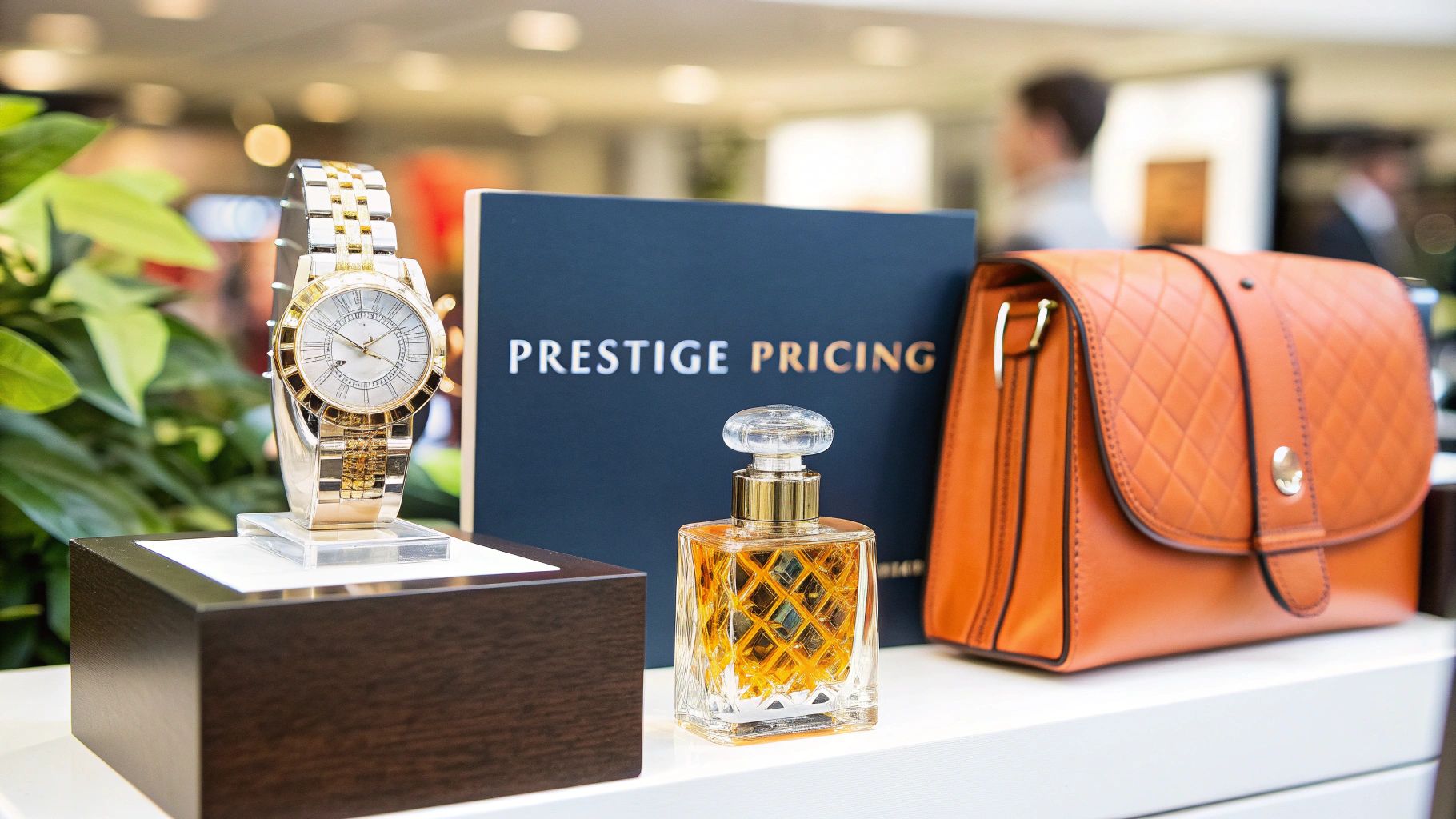
    Think of it like a Michelin-star restaurant. You aren't just paying for the food. You're paying for the story, the chef's expertise, the ambiance, and the feeling of being somewhere special. That is the core of prestige pricing. It's the art of building a brand so desirable that the price becomes a feature, not a bug, signaling quality and exclusivity. The high cost is part of the appeal.

    In this breakdown, I'm going to walk you through real-world examples of prestige pricing from brands that have mastered this strategy. I'll dissect exactly how companies like Apple, Hermès, and even specialized coffee brands command premium prices. We'll look at the psychology behind their tactics and pull out actionable lessons you can apply to your own business, even if you're just starting out. You will learn not just what they did, but how you can do it, too.

    1. Apple Premium Product Ecosystem

    Apple offers one of the most compelling examples of prestige pricing by turning technology into a status symbol. Instead of just selling you a phone or a computer, Apple sells you an identity built on design, innovation, and perceived quality. They command prices often 2-3x higher than competitors with similar specs, yet they maintain an iron grip on market share and your loyalty.

    A flat lay of various tech devices including smartwatches, a smartphone, and a laptop with text 'PREMIUM ECOSYSTEM'.

    Their strategy hinges on an interconnected ecosystem where each product works seamlessly with the others. This creates high switching costs; leaving their "walled garden" means giving up the convenience of iMessage, AirDrop, and iCloud syncing. It’s a brilliant way to justify a premium.

    Strategic Breakdown

    • Price Point: The iPhone 15 Pro Max starts at $1,199, while comparable Android flagships often sit in the $700-$900 range. Similarly, the MacBook Air starts around $1,199, a price where you could get a Windows laptop with more powerful internal hardware.
    • Positioning Cues: Apple uses minimalist design, premium materials (like titanium), an exclusive retail experience, and aspirational marketing to signal superior value. Unboxing an Apple product is an event in itself.
    • Why It Works: Apple taps into our desire for status and simplicity. Owning Apple products signals that you value design and are willing to pay for a premium, hassle-free experience. The ecosystem lock-in makes each purchase a deeper investment into their world.

    Key Insight: Prestige pricing isn't just about the product; it's about the entire experience and the brand story you buy into. Apple's brand is so powerful that it justifies the price tag in your mind, regardless of specs.

    Actionable Takeaways for Founders

    1. Build Your Walled Garden: Create products or services that work better together. This increases the value for your customers who own multiple items and makes it harder for them to leave.
    2. Invest in Visible Differentiators: Focus on design, user experience, and packaging. These are tangible cues that immediately communicate quality and justify a higher price.
    3. Master Your Brand Story: Don't just sell features. Sell a vision, a lifestyle, or a commitment to craftsmanship. This emotional connection is what truly supports premium pricing.

    If you are developing your own approach, understanding your product's unique value is crucial for setting the right price from the start. You can explore more on this by reviewing a detailed guide on the pricing strategy for new products to build a solid foundation.

    2. Luxury Fashion Brands (LVMH, Hermès, Gucci)

    Luxury fashion houses give us classic examples of prestige pricing, mastering the art of selling a story, not just a product. When you buy a Gucci handbag or an Hermès scarf, you aren't just paying for leather and silk. You are buying into decades of heritage, perceived exclusivity, and a powerful status symbol. These brands price their goods at 5-10x multiples of mass-market alternatives, successfully disconnecting price from production cost.

    A beige leather handbag and olive fabric on a white display stand at an exhibition with a 'HERITAGE CRAFT' sign.

    The strategy relies on creating artificial scarcity and immense desire. By limiting production, instituting multi-year waitlists, and cultivating an aura of unattainability, these brands make their products Veblen goods: demand actually increases as the price goes up.

    Strategic Breakdown

    • Price Point: An Hermès Birkin bag can range from $10,000 to over $300,000, with a production cost I've seen estimated around $800. A Gucci handbag costs $2,000, while a functionally similar unbranded leather bag might cost you just $300.
    • Positioning Cues: These brands use heritage storytelling, iconic designers, opulent flagship stores, and highly selective influencer marketing. The experience of shopping in their boutiques is as much a part of the product as the item itself.
    • Why It Works: Luxury fashion taps directly into our psychological need for status, belonging, and self-expression. Owning one of these items signals success and taste to the world, making the high price a key feature, not a bug.

    Key Insight: For luxury brands, the price is the marketing. A high price reinforces the perception of exclusivity and superior quality, creating a virtuous cycle where the cost itself drives desire.

    Actionable Takeaways for Founders

    1. Manufacture Scarcity: Even if you can produce more, consider using limited edition "drops," waitlists, or exclusive collections. This transforms a purchase from a simple transaction into a rewarding achievement.
    2. Invest in the Experience: Create a signature unboxing ritual, offer exceptional customer service, and design a retail environment (physical or digital) that makes your customers feel special. The purchase journey should reinforce the premium price.
    3. Build Your Legend: Consistently tell your brand's story of craftsmanship, origin, or unique mission. This narrative is what separates a premium product from a commodity. Exploring successful brand positioning examples can give you a clearer roadmap for building your own legacy.

    3. Premium Coffee and Specialty Beverage Brands (Starbucks Reserve, Blue Bottle)

    Premium coffee brands provide stellar examples of prestige pricing by elevating a daily commodity into an artisanal experience. Instead of just selling caffeine, brands like Starbucks Reserve and Blue Bottle sell you a story of origin, craftsmanship, and a sophisticated taste profile. They successfully command prices 3-5x higher than standard coffee by transforming the act of drinking coffee into a sensory ritual.

    A barista pours coffee from a gooseneck kettle into a pour-over dripper next to a 'Specialty Coffee' bag.

    The strategy is rooted in creating perceived value far beyond the raw ingredients. It’s about the meticulous pour-over technique, the single-origin beans from a specific micro-lot in Ethiopia, and the minimalist, almost lab-like cafes that signal this isn't just your regular cup of joe. You are paying for the expertise, the story, and the elevated environment.

    Strategic Breakdown

    • Price Point: A pour-over at a Starbucks Reserve Roastery can cost you $7-$12, while a standard Pike Place roast is under $3. Blue Bottle charges a similar $7-$8 for a single-origin pour-over, a stark contrast to a $2 Dunkin' coffee.
    • Positioning Cues: These brands use origin storytelling, sustainable sourcing narratives, highly trained baristas, and architecturally distinct retail spaces. The brewing process itself becomes a form of theater, reinforcing the product's special status.
    • Why It Works: It taps into your desire for authenticity and affordable luxury. For a few extra dollars, you get to participate in a culture of connoisseurship. The experience feels exclusive, educational, and far more memorable than a quick grab-and-go cup.

    Key Insight: Prestige pricing can turn a commodity into a luxury by wrapping it in a compelling narrative and an elevated experience. The price becomes a reflection of the craftsmanship and story, not just the product.

    Actionable Takeaways for Founders

    1. Tell Authentic Origin Stories: Connect your product to its source. Whether it's coffee beans or handcrafted leather, transparently sharing the "how" and "where" builds a narrative that justifies a premium.
    2. Turn Process into Performance: Showcase the skill and craftsmanship behind your product. This could be a live demonstration, an open-kitchen concept, or detailed content about your manufacturing process, making the invisible value visible.
    3. Design a Premium Environment: Your physical or digital storefront should reflect your price point. Invest in design, atmosphere, and customer service to create an experience that feels as premium as the product you're selling.

    4. High-End Hospitality and Boutique Hotels (Four Seasons, Rosewood)

    High-end hospitality gives us one of the clearest examples of prestige pricing, where the product isn't a physical good but an intangible experience. Brands like Four Seasons and Rosewood don't just sell you a room; they sell you an escape into a world of flawless service, exclusivity, and personalized comfort. They justify nightly rates 3-5x higher than standard hotels by making you feel like a VIP.

    The strategy relies on creating an emotional connection through impeccable service. From remembering your favorite drink to anticipating your needs before you ask, these brands build a reputation that transcends the physical amenities. You’re not just paying for a bed; you’re paying for the feeling of being completely cared for.

    Strategic Breakdown

    • Price Point: A standard room at the Four Seasons might cost you $1,500 per night, while a room at a standard chain hotel in the same city could be $250. This premium is justified entirely by the service and brand promise, not just the location or room size.
    • Positioning Cues: These brands use prime real estate, stunning architecture, world-class spas, Michelin-starred dining, and, most importantly, intensively trained staff who deliver unparalleled personal service. The brand itself becomes a signal of your own status and discerning taste.
    • Why It Works: Luxury hospitality taps into the desire for recognition, comfort, and hassle-free indulgence. The price acts as a filter, ensuring an exclusive environment. You are paying for the guarantee that your experience will be perfect, removing the stress and uncertainty that can come with travel.

    Key Insight: When you're selling an experience, prestige is built on consistency and personalization. The premium price is a promise of perfection, and every touchpoint, from the doorman to the concierge, must reinforce that promise.

    Actionable Takeaways for Founders

    1. Operationalize Empathy: Invest heavily in training your team to not just follow scripts but to anticipate your customer's needs and personalize interactions. A guest history system that tracks preferences is a powerful tool for scaling this.
    2. Create Signature Moments: Develop unique, memorable experiences that customers can't get anywhere else. This could be a private tour, a unique welcome amenity, or a signature scent in your establishment that becomes synonymous with your brand.
    3. Design for the Senses: Go beyond function and focus on aesthetics, ambiance, and comfort. Your physical space is a powerful marketing tool that signals quality and justifies your premium before a customer even interacts with your staff.

    5. Premium Fitness and Wellness (Peloton, Equinox)

    The fitness industry gives us some of the clearest examples of prestige pricing, where brands like Equinox and Peloton sell you transformation and identity, not just a workout. Instead of offering simple gym access, they cultivate an aspirational lifestyle built on community, expert guidance, and exclusivity. They charge prices 5-10x higher than mass-market gyms because they aren't selling you a treadmill; they're selling you membership into an elite club of high-performers.

    This strategy works by turning a commodity (exercise) into a luxury experience. The high price becomes a feature, acting as a barrier to entry that preserves the brand's exclusivity and reinforces its value to you. You're not just paying for a gym; you're investing in a version of yourself that aligns with the brand's affluent, disciplined image.

    Strategic Breakdown

    • Price Point: An Equinox "All-Access" membership can cost you over $300 per month, compared to a Planet Fitness membership at around $10. Similarly, a Peloton Bike+ package starts at over $2,495 plus a $44 monthly subscription, while you can find free workout videos on YouTube.
    • Positioning Cues: These brands use immaculate, beautifully designed facilities, celebrity-like instructors, high-end amenities (like Kiehl's products in Equinox locker rooms), and powerful community-building technology to signal superior status. The message is clear: "It's not a gym. It's a lifestyle."
    • Why It Works: Premium fitness taps into our fundamental desire for self-improvement and belonging. The high cost creates a strong psychological commitment, making you more likely to show up. The community and social proof from being part of an exclusive group provide powerful motivation that a basic gym membership simply cannot replicate.

    Key Insight: When you sell an outcome or an identity instead of a service, you escape commoditization. I've found people will pay a significant premium for a brand that helps them become the person they want to be.

    Actionable Takeaways for Founders

    1. Build Your Gurus: Elevate your experts (instructors, coaches, trainers) into personalities. Create a platform for them to build a following, as this creates a "tribe" of loyal customers who are connected to a person, not just your brand.
    2. Manufacture Exclusivity: Use your pricing and membership structure to create a sense of an "in-group." Offer member-only events, exclusive content, and premium tiers to reinforce the value of being part of the community.
    3. Sell the Transformation, Not the Tool: Frame your marketing around the end result your customer desires. Whether it's confidence, status, or health, focus on the emotional and psychological benefits, not just the physical features of your product or service.

    6. Luxury Automotive Brands (Tesla, Porsche, Lamborghini)

    Luxury car makers give us textbook examples of prestige pricing, selling not just transportation but an identity defined by performance, heritage, and exclusivity. Brands like Porsche and Lamborghini justify enormous price tags through decades of engineering excellence and aspirational branding. More recently, Tesla disrupted this space by blending technological innovation with a similar prestige model, proving that heritage isn't the only path to a premium.

    This strategy allows these companies to command gross margins of 30-40%, double that of mass-market automakers. They achieve this by turning a vehicle into a statement piece, where the price itself is a key feature that signals your success and taste.

    Strategic Breakdown

    • Price Point: A Porsche 911 starts over $114,000, while a Chevrolet Corvette with comparable performance begins around $68,000. A Tesla Model S Plaid can reach $90,000, significantly higher than other electric sedans. The Lamborghini Revuelto sits in an ultra-luxury tier above $600,000.
    • Positioning Cues: These brands use powerful engines, iconic designs, premium materials, and exclusive owner communities to signal superiority. Tesla built its prestige on a narrative of technological disruption and a direct-to-consumer sales model that feels more modern and exclusive to you.
    • Why It Works: Driving a Porsche or Lamborghini is a public display of achievement. Tesla ownership signals your commitment to innovation and sustainability. You are buying into a powerful story and a community, whether it's one of racing heritage or forward-thinking technology.

    Key Insight: Prestige pricing in the auto world is about selling an experience far beyond the drive itself. It leverages emotional triggers like status, performance, and belonging to make the high price feel not just justified, but desirable to you.

    Actionable Takeaways for Founders

    1. Build a Founder Mythos: Associate your brand with a visionary leader or a powerful origin story. Elon Musk's narrative is central to Tesla's brand, much like Ferdinand Porsche's engineering legacy is to his.
    2. Create an Exclusive Community: Offer ownership experiences that money can't buy, like private track days, factory tours, or members-only events. This transforms your customers into loyal brand ambassadors.
    3. Use Scarcity to Your Advantage: Develop limited-edition models or offer extensive customization options. This creates a sense of rarity and allows customers to express their individuality, justifying a higher price tag.

    7. Premium Skincare and Beauty (Estée Lauder, La Mer, SK-II)

    The luxury beauty industry offers some of the clearest examples of prestige pricing, where perceived value and brand story are far more influential than raw ingredients. Brands like La Mer sell moisturizers for over $300 an ounce by crafting an aura of exclusivity, scientific breakthrough, and aspirational results that transcend simple hydration. You aren't just buying a cream; you're buying hope in a jar.

    This strategy relies on turning a commodity into an experience. Through meticulous branding, opulent packaging, and an air of scientific authority, these companies create a psychological justification for prices that are often 10x higher than mass-market products with functionally similar ingredient lists.

    Strategic Breakdown

    • Price Point: La Mer's Crème de la Mer sells for $200 for 1 oz, while a highly-rated drugstore moisturizer from Cetaphil costs you about $15 for 16 oz. SK-II's Facial Treatment Essence is priced around $190, whereas comparable essences are available for $20-30.
    • Positioning Cues: These brands use heritage storytelling (La Mer's "Miracle Broth"), clinical-sounding language, selective retail partnerships (Saks Fifth Avenue, Neiman Marcus), and luxurious, heavy packaging to signal superior efficacy and status.
    • Why It Works: It taps into your psychology and desire for self-care and transformation. The high price itself becomes a feature, implying potency and creating a placebo effect. Using an expensive product feels like a ritual, reinforcing your belief that it must be working.

    Key Insight: In prestige beauty, the story is the active ingredient. The brand narrative, packaging, and retail experience are just as critical as the formula itself in justifying the premium price to you.

    Actionable Takeaways for Founders

    1. Craft Your Founder Narrative: Develop an authentic, compelling story behind your brand or product's discovery. Emotional resonance can be a powerful justification for a premium price point.
    2. Invest in Aspirational Aesthetics: Your packaging and branding must communicate luxury at first glance. Make the unboxing experience worthy of being shared on social media to build organic buzz.
    3. Use Science-Forward Marketing: Frame your product's benefits using language that sounds authoritative and exclusive. You don't need to mislead, but you do need to build a perception of advanced, high-performance formulation.

    8. Premium Direct-to-Consumer Brands (Warby Parker, Glossier, Everlane)

    The rise of direct-to-consumer (DTC) brands gives us a modern twist on examples of prestige pricing by cutting out the middleman to offer "affordable luxury." Brands like Warby Parker, Glossier, and Everlane built their empires by directly managing their brand story, customer experience, and supply chain. They command a premium over mass-market goods while undercutting traditional luxury, creating a powerful value proposition for you if you want quality and transparency without the outrageous markup.

    This strategy hinges on creating a direct, authentic relationship with you, the customer. By controlling the narrative from manufacturing to your front door, these brands build a cult-like following that justifies a price point well above generic alternatives, proving that prestige can be accessible.

    Strategic Breakdown

    • Price Point: Warby Parker's frames typically cost you $95-$155, a fraction of the $300-$600 you might pay at a traditional optometrist but more than a budget online retailer. Similarly, an Everlane cashmere sweater at $150 feels like a steal compared to a $400 department store equivalent, yet it’s far from fast-fashion pricing.
    • Positioning Cues: These brands lean heavily on minimalist aesthetics, transparent pricing models ("Radical Transparency"), and a strong founder-led narrative. They use social media and user-generated content to build a community, making you feel like part of an exclusive, in-the-know club.
    • Why It Works: DTC prestige taps into your desire for authenticity, value, and a direct connection to the brands you support. By making you feel smart for finding a high-quality product at a fair price, they build fierce loyalty and turn you into an advocate.

    Key Insight: Prestige isn't just about being the most expensive option; it's about delivering the highest perceived value. DTC brands win by reframing luxury as a combination of quality, transparency, and a direct-to-you story.

    Actionable Takeaways for Founders

    1. Own Your Narrative: Control your brand story from day one. Use your "About Us" page, social media, and packaging to communicate your mission, values, and what makes your product special. I believe a strong story is a core pillar of your brand.
    2. Build a Community, Not Just a Customer List: Engage directly with your audience through social media, exclusive product drops, and feedback channels. Making your customers feel heard and valued is a powerful way to justify a premium price.
    3. Use Transparency as a Weapon: Break down your costs, explain your sourcing, or show behind-the-scenes content. This honesty builds trust and helps you and your customers understand the true value of what you're buying. This is just one of many examples of product differentiation you can leverage.

    Prestige Pricing: 8-Brand Comparison

    Example 🔄 Implementation Complexity ⚡ Resource Requirements 📊 Expected Outcomes 💡 Ideal Use Cases ⭐ Key Advantages
    Apple Premium Product Ecosystem High — integrated HW/SW, annual refresh cadence Very high — R&D, manufacturing, retail, elite talent Strong market share + high margins (35%+); repeat upgrades Consumer electronics seeking lock‑in and cohesive UX Design excellence, ecosystem lock‑in, pricing power
    Luxury Fashion Brands (LVMH, Hermès, Gucci) Very high — craftsmanship, heritage curation, limited runs Very high — artisans, flagship stores, long brand build Extremely high margins (60–80%); brand value appreciation Heritage goods, status-driven luxury categories Scarcity, resale value, powerful status signaling
    Premium Coffee & Specialty Beverage (Starbucks Reserve, Blue Bottle) Moderate — sourcing, barista expertise, retail design Moderate — supplier partnerships, retail fit‑outs, skilled staff Higher per-unit margins (50–70%); recurring daily purchases Food & beverage with high-frequency consumption Storytelling, recurring revenue, experiential retail
    High‑End Hospitality & Boutique Hotels (Four Seasons, Rosewood) Very high — property build, service systems, personalization Extremely high — real estate, intensive staff training High ADR and margins (40–60%); strong guest LTV Luxury travel, events, experience-driven stays Personalized service, premium ancillary revenue, prestige
    Premium Fitness & Wellness (Peloton, Equinox, Barry's) High — instructor talent, tech integration, community ops High — facilities, instructor pay, platform development High recurring revenue and retention; strong upsell potential Membership/subscription fitness and lifestyle brands Habit formation, community effects, ancillary sales
    Luxury Automotive (Tesla, Porsche, Lamborghini) Very high — advanced engineering, long development cycles Extremely high — R&D, manufacturing, complex supply chains High gross margins (30–40%); strong resale values Performance vehicles, tech‑led mobility, prestige cars Performance narrative, customization, brand mythology
    Premium Skincare & Beauty (Estée Lauder, La Mer, SK‑II) Moderate — formulation, selective distribution, branding High — marketing, packaging, influencer partnerships Very high margins (70–85%); strong emotional attachment Aspirational personal care with social visibility Packaging/unboxing, aspirational branding, expandability
    Premium Direct‑to‑Consumer (Warby Parker, Glossier, Everlane) Moderate — digital ops, CX, supply transparency Moderate — marketing, fulfillment, customer support Good margins (40–60%); fast iteration and loyalty Digital-first brands targeting value-conscious affluent buyers Transparent pricing, direct feedback loops, scalability

    Your Turn: Price With Confidence, Not Arrogance

    We've journeyed through a landscape of premium brands, from the sleek ecosystems of Apple to the handcrafted legacy of Hermès. You've seen how Starbucks Reserve turns a simple cup of coffee into an event and how La Mer bottles exclusivity into a tiny, expensive jar. Each of these diverse examples of prestige pricing tells me the same core story: a high price is not the cause of luxury, but the result of it.

    This strategy is built on a foundation of value, perception, and unwavering commitment. It's a strategic conversation with your customer, one where price becomes a powerful signal of quality, status, and the experience you promise to deliver. It’s not just about slapping a high number on your product; it’s about earning the right to do so.

    Recapping the Core Principles

    Let's distill the lessons from these titans of industry into actionable truths for your own venture:

    • Value is a Trinity: The price you command is a reflection of three things working in harmony: the functional value (it solves a problem well), the emotional value (it makes you feel a certain way), and the symbolic value (it signals something about you to the world). Neglect any one of these, and your pricing strategy will feel hollow.
    • Experience is the Product: For Peloton, the bike is just the entry ticket; the real product is the community and the feeling of accomplishment. For the Four Seasons, a room is just a place to sleep; the true offering is flawless, anticipatory service. You are not just selling a thing; you are selling an experience wrapped around that thing.
    • Scarcity Creates Desire: Whether it’s a limited-edition Porsche, a seasonal Starbucks brew, or an appointment-only boutique, creating controlled scarcity is the fastest way to amplify desire. What you hold back is often as powerful as what you offer. This is a fundamental lesson I see in nearly all successful examples of prestige pricing.

    Building Your Pricing Foundation

    So, what's your next move? It's not about picking a number out of thin air. It's about building a brand that can justify the price you want to charge. Start by asking yourself the tough questions. What unique story are you telling? How are you obsessing over the details that your competitors ignore? What community are you building around your work?

    Your price is a direct reflection of the confidence you have in your own creation. It’s a testament to your hard work, your vision, and the value you bring to your customers. Don't fall into the trap of pricing based on fear or what everyone else is doing. You should price based on the brand you are building and the promise you are making. Honor your work with a price that reflects its true worth.


    If you're a founder in Chicago wrestling with these exact questions, you don't have to do it alone. At Chicago Brandstarters, we bring together kind, hardworking builders to share these challenges and help each other build brands that can command the price they deserve. Join a community that understands the journey: Chicago Brandstarters.

  • 10 Powerful Positioning Brand Examples to Inspire You in 2025

    10 Powerful Positioning Brand Examples to Inspire You in 2025

    Brand positioning can feel fuzzy until you see it work. Think of it as your brand's unique role in a crowded story—the one part no one else can play. It’s not just a logo. It's the core reason a specific group of people chooses you over everyone else, every single time. Get this right, and marketing feels less like shouting and more like a quiet conversation that pulls people in. Get it wrong, and you're just more noise.

    This article cuts through the theory. We’re breaking down 10 real-world positioning brand examples to show you how great brands carve out their own space. You won’t find generic success stories here. Instead, you'll get a clear look at the specific choices that separate iconic brands from forgotten ones.

    We’ll explore everything from community-based models to positioning based on hometown pride. You'll see how each brand clearly defines who it's for, what makes it different, and what it promises. Most importantly, you'll walk away with simple templates and clear ideas to define your own brand’s unforgettable role. Let's begin.

    1. Premium Community-Based Positioning

    This strategy flips the "open to all" model on its head. Instead of chasing scale, it focuses on building a high-value, exclusive community. Think of it less like a public park and more like a private club where membership is earned, not just bought. It uses careful vetting to create a trusted space, positioning the brand as a curated circle rather than a transactional marketplace. This attracts members who value belonging and shared standards over mass access.

    Group of people enjoying a private meal at a long wooden table with an 'Invitation Only' sign.

    Why This Positioning Brand Example Works

    This strategy builds powerful brand equity through scarcity and trust. By being selective, the value of being "in" goes way up. Members feel a sense of pride and safety, leading to deeper engagement. Brands like Soho House, Y Combinator's network, and Chicago Brandstarters use this to create a powerful flywheel. High-quality members attract more high-quality members, reinforcing the brand’s premium status.

    How to Apply This Strategy

    • Set Clear Vetting Rules: Define your membership qualifications. Is it a specific job, a shared mindset, or a "give-first" attitude? Be transparent.
    • Create Community Rituals: Host recurring events like member-only dinners or private chats to strengthen bonds.
    • Share Member Stories: Use testimonials to show the community's value and justify its selective nature.
    • Balance Exclusivity and Fairness: Make sure your vetting process doesn't accidentally shut out great people from diverse backgrounds.

    2. Values-Aligned Positioning

    This approach builds a brand around a core set of beliefs, not just product features. You're selling why you do what you do. Think of it as planting a flag; it attracts people who believe what you believe, creating an audience filtered by a shared worldview. This moves beyond simple transactions to build deep, emotional loyalty.

    Three diverse professionals smiling, a man and woman shaking hands, with a "SHARED VALUES" logo.

    Why This Positioning Brand Example Works

    This strategy unites customers under a shared mission. It fosters a resilient community that sticks with the brand through thick and thin because their loyalty is tied to their identity, not just a product's function. Brands like Patagonia (environmentalism) and TOMS Shoes (social impact) use their values as their main differentiator. This makes competing on price almost irrelevant.

    How to Apply This Strategy

    • Define Your Values Simply: Don't just say "integrity." Say, "We do the right thing, even when no one is watching."
    • Live Your Values: Weave your principles into everything, from hiring and marketing to customer service.
    • Tell Your Story: Share personal stories that show why these values matter to you. Authenticity is everything.
    • Be Clear About What You're Not: Kindly state the mindsets that don’t fit your community. This reinforces the safety of your space.

    3. Anti-Transactional Networking Positioning

    This strategy directly opposes the shallow, "what can you do for me" vibe of typical business events. Instead of optimizing for LinkedIn connections, it builds a brand around depth and real relationships. It’s the difference between collecting business cards at a chaotic mixer and sharing honest struggles in a confidential peer group. This attracts leaders who are tired of fake networking and crave authentic human connection.

    Why This Positioning Brand Example Works

    This strategy thrives by solving a deep pain for many entrepreneurs: loneliness. By creating a safe space for vulnerability, brands like Chicago Brandstarters and Vistage build intense loyalty. The value isn't a quick transaction but long-term support from trusted relationships. This model filters for members who are serious about growth, not just short-term gains.

    How to Apply This Strategy

    • State What You're Not: Market your brand by saying "no pitch sessions" or "no business card swapping." This attracts the right people.
    • Make Confidentiality Your Bedrock: Trust is your core product. Use strict confidentiality rules to create a "safe space."
    • Tell Vulnerable Stories: Share authentic "war stories" in your marketing. This shows that your community values honesty over posturing.
    • Ask for Commitment: Require a real time commitment to filter for members who are truly invested in building relationships. This is key when learning how to find business partners.

    4. Geographic/Cultural Pride Positioning

    This approach anchors a brand in a specific place and its values. Instead of being a generic company, the brand becomes a champion for a local identity. It's the difference between a faceless corporation and the neighborhood shop that knows your name. This strategy creates an "us against the world" feeling, appealing to people who are proud of where they come from.

    Why This Positioning Brand Example Works

    This approach builds a deeply loyal tribe by tapping into existing pride. It gives people a reason to choose you that goes beyond product features; they're supporting their community. A brand like Chicago Brandstarters uses the "Midwest kindness" ethos to stand out from cutthroat coastal startup scenes. This positioning attracts people who share those values and fosters a culture of genuine support.

    How to Apply This Strategy

    • Define Your Regional DNA: What cultural traits do you embody? Is it Chicago's grit, Austin's weirdness, or Portland's indie spirit?
    • Tell Local Stories: Feature founders from your area who exemplify the values you're promoting.
    • Use Local Language: Weave regional references and landmarks into your messaging to create an authentic sense of place.
    • Champion Local First: Actively support and collaborate with other local businesses. This is a key step when building a business from the ground up.

    5. Stage-Specific Positioning

    This strategy tailors a brand’s offer to customers at a specific point in their journey. Instead of a one-size-fits-all solution, it creates a focused experience for a certain segment, like an idea-stage founder or a business scaling past $1M. It’s like a specialized training program; you wouldn't give a marathon runner the same advice as someone just starting a couch-to-5k plan. This ensures your advice and resources are perfectly aligned with their needs.

    Why This Positioning Brand Example Works

    This approach works because it solves urgent, specific problems. When a brand speaks directly to a founder’s current challenges, it builds immediate trust. This focus makes marketing more efficient and the product more effective. Brands like Y Combinator (early-stage) and Chicago Brandstarters (idea-to-seven-figures) use this to make members feel understood, which dramatically increases loyalty.

    How to Apply This Strategy

    • Define Clear Stages: Map out the customer journey. What revenue, team size, or milestone marks a transition?
    • Create Stage-Specific Content: Develop resources and workshops that address the unique pain points of each stage. Avoid generic advice.
    • Build Relevant Peer Groups: Connect users with others at the exact same stage. A founder struggling with their first hire gets more value from peers facing the same challenge.
    • Celebrate Progress: Acknowledge when members move from one stage to the next. This reinforces the value of your pathway.

    6. Operator/Practitioner Credibility Positioning

    This strategy builds trust by proving you’re still "in the trenches," not just teaching theory. It’s based on the idea that the best advice comes from those who are actively doing the work. Instead of academic theories, this approach uses real-world experience, failures, and current market involvement as its currency. It positions the brand as a guide who knows the terrain because they walk it daily.

    Why This Positioning Brand Example Works

    This approach cuts through the noise of business gurus. It builds huge credibility because the advice is proven, not just plausible. Founders are drawn to leaders who share fresh "war stories" and specific tactics, not recycled frameworks from a textbook. Brands like Chicago Brandstarters, where the founder is an active operator, or individuals like Alex Hormozi build devoted followings because their expertise is validated by their own ventures.

    How to Apply This Strategy

    • Share Your Work: Regularly document your own business challenges and wins on social media to prove you're active.
    • Use Specific Language: Instead of saying "improve your marketing," share the exact ad copy or email sequence you used.
    • Reference Current Projects: Frame your advice around what you are doing right now. This makes your guidance feel urgent.
    • Admit What You Don't Know: This reinforces your credibility in the areas where you do have deep, hands-on expertise.

    7. Vulnerability-First Positioning

    This strategy flips the script on the "always crushing it" narrative. Instead of showcasing only wins, it creates a space for honest struggle, failure, and open conversations about challenges. It positions the brand as a refuge from fake corporate culture, attracting an audience that craves real connection. This approach builds deep trust by making it safe to be human.

    Three women in a cozy room, two engaged in a conversation, with 'Vulnerability First' overlay.

    Why This Positioning Brand Example Works

    This strategy creates powerful psychological safety—the secret ingredient for deep connection. When people feel safe enough to share setbacks without judgment, they form strong bonds with the brand. It’s a huge differentiator in a world obsessed with perfection. Brands like Brené Brown's Dare to Lead program prove that vulnerability is a strength. It attracts a dedicated audience tired of superficial interactions.

    How to Apply This Strategy

    • Lead with Vulnerability: As a founder, openly share your own struggles and mistakes. This sets the tone for the community.
    • Establish Group Norms: Create explicit rules around confidentiality and non-judgment. Make it clear that "what's shared here, stays here."
    • Use Skilled Facilitators: Ensure moderators are trained to maintain psychological safety and guide conversations with kindness.
    • Create Vulnerability Rituals: Start meetings with prompts that encourage sharing, like "What was a challenge this week?" instead of just "What was a win?"

    8. Peer Mentorship vs. Expert-Led Positioning

    This positioning strategy challenges the traditional “guru” model. Instead, it positions the collective wisdom of the group as the main asset. Think of it less like a lecture hall with one professor and more like a workshop where everyone is both a teacher and a student. This approach positions the brand as a facilitator of peer connection, not a single source of truth.

    Why This Positioning Brand Example Works

    This model builds trust by delivering advice that is grounded in shared, recent experience. Members get practical insights from peers who are facing similar challenges right now. This creates a highly supportive environment. Brands like Chicago Brandstarters and Vistage use this to foster deep bonds and a sense of mutual ownership over the group's success.

    How to Apply This Strategy

    • Be a Facilitator, Not a Guru: Your job is to create the space for valuable peer interactions to happen.
    • Structure Peer Teaching: Use formats like member-led workshops, "hot seats," or accountability pods.
    • Connect Peers Strategically: Actively introduce members who have complementary expertise or face similar challenges.
    • Highlight Peer-to-Peer Wins: Share stories of members helping each other. This reinforces the idea that "the group is the guru."

    9. Kindness-Filtered Selection Positioning

    This strategy makes "being a good person" a non-negotiable entry requirement. Instead of screening for status, it filters for character—specifically kindness and a "give-first" mentality. Think of it like building a team for a long journey; you don't just want skilled people, you want the ones who will pass you their water bottle. This approach intentionally rejects transactional self-promoters and builds a culture of mutual support.

    Why This Positioning Brand Example Works

    This strategy builds a powerful, self-policing culture of trust. By explicitly filtering for kindness, the brand attracts people tired of ego-driven, competitive environments. This creates a virtuous cycle where supportive members attract more supportive members. Brands like Chicago Brandstarters use this to create an alternative to cutthroat networking. It proves that being kind isn't just nice; it's a competitive advantage.

    How to Apply This Strategy

    • Define Kindness Clearly: State what "kindness" looks like in your community. Is it mentoring others? Making helpful introductions with no strings attached?
    • Ask Revealing Questions: In applications, ask things like, "Tell me about a time you helped a colleague when you got no credit for it."
    • Check References for Collaboration: Ask references specifically about the applicant's reputation as a teammate.
    • Enforce Your Norms: Create clear community guidelines around kind behavior and have a process for addressing actions that violate them.

    10. Free Model with Progression Positioning

    This strategy offers a valuable product or community for free, positioning the brand as an accessible entry point. Instead of a hard paywall, it builds a clear path for members to "graduate" into paid, next-stage programs. Think of it as offering free T-ball to everyone, then guiding the best players to a paid, advanced baseball academy. This builds trust at scale while creating a qualified funnel for higher-value offers.

    Why This Positioning Brand Example Works

    This strategy excels at building a large, engaged audience without the friction of a price tag. It establishes the brand as a supportive guide, generating immense loyalty. As members succeed through the free offerings, they naturally look to the brand for their next step. Brands like Y Combinator and Product Hunt use this to create powerful ecosystems. They provide value upfront, making the transition to paid programs feel natural.

    How to Apply This Strategy

    • Define the Pathway: Clearly map out what "graduation" looks like. What skills or milestones must a member achieve to be ready for your paid offering?
    • Build Strategic Partnerships: Collaborate with next-stage programs to create a formal progression pipeline for your members.
    • Be Transparent: Honestly communicate how the free offering is sustained. This builds trust.
    • Show the Value: Just because it's free doesn't mean it's not valuable. This helps when understanding how to price a new product for your paid tiers.

    10-Point Brand Positioning Comparison

    Positioning 🔄 Implementation Complexity ⚡ Resource Requirements 📊 Expected Outcomes 💡 Ideal Use Cases ⭐ Key Advantages
    Premium Community-Based Positioning High — intensive vetting, curated rituals High — staff for vetting, venues, legal NDAs Deep trust & loyalty but slower, limited scale Exclusive local founder networks; high-trust cohorts Strong brand loyalty, reduced free-riders
    Values-Aligned Positioning Medium — define/enforce clear values across touchpoints Moderate — content, enforcement, culture programs High member alignment, lower internal friction Mission-driven communities; differentiation strategy Authentic relationships and strong market differentiation
    Anti-Transactional Networking Positioning Medium — messaging pivot + small-format facilitation Moderate — facilitators, verification, intimate events Durable relationships; niche growth via word-of-mouth Founders fatigued by performative networking Clear differentiation; deeper, more honest connections
    Geographic/Cultural Pride Positioning Low–Medium — integrate regional cues and stories Low — local events, storytelling, regional partnerships Strong local identity and network effects; limited national appeal Regional ecosystems seeking identity (e.g., Midwest founders) Defensible local differentiation and community pride
    Stage-Specific Positioning Medium — multiple stage programs and graduation rules Moderate — curricula, stage-matching, partner integrations High relevance and retention; natural progression funnel Programs targeting idea-stage → revenue-stage founders Tight peer alignment; better problem-fit and retention
    Operator/Practitioner Credibility Positioning Low–Medium — founder must demonstrate active operator status Low — founder time, case studies, real war stories High practical trust; attracts experience-seeking founders Entrepreneurs wanting tactical, real-world guidance Immediate credibility and actionable, current advice
    Vulnerability-First Positioning Medium–High — establish norms, moderators, legal protections Moderate — skilled moderators, confidentiality processes Deep psychological safety and honest learning; uneven comfort levels Founders needing emotional support and real problem sharing Strong trust, reduced isolation, richer knowledge transfer
    Peer Mentorship vs. Expert-Led Positioning Medium — design facilitation and peer structures Low–Moderate — matching systems, community managers Scalable collective wisdom; variable advice quality Communities aiming for sustainable, member-driven value Scalable, resilient community; mutual value creation
    Kindness-Filtered Selection Positioning Medium — operationalize kindness criteria and checks Moderate — vetting, reference checks, enforcement Collaborative, low-toxicity culture; subjective exclusions possible Communities prioritizing collaboration over competition Highly supportive, non-zero-sum member culture
    Free Model with Progression Positioning Medium — design free offering + paid progression pathways High — subsidy/sponsorship, partner coordination Large accessible funnel; conversion-dependent monetization Early-stage founders; programs building partner funnels Low barrier entry; strong top-of-funnel growth and goodwill

    From Example to Action: Your Turn to Position Your Brand

    We've explored a powerful lineup of positioning brand examples, each showing a simple truth: great positioning isn’t about casting a wide net. It’s about planting a flag. It’s a brave choice to claim a specific hill in a crowded market and declare who you serve and why you're the only one for them.

    Think of your brand positioning as a lighthouse. It doesn't light up the whole ocean. Instead, it sends a clear, powerful beam toward one channel, guiding the right ships to shore. The brands we looked at all built their own lighthouses. They didn't just sell products; they offered a point of view and a sense of belonging.

    Key Insights to Guide Your Next Steps

    The common thread in these strategies is clarity through focus. By embracing limits—like focusing on a specific audience, a core value, or a unique method—these brands created immense value. They chose a narrow path and became the leader on it.

    Your most important takeaways should be:

    • Positioning is about what you say no to. The real work is deciding what you’re willing to give up. Who are you not for? Answering this is where your identity emerges.
    • Emotion beats features. Every powerful positioning example connects on a human level. They don't just solve a functional problem; they address a deeper need for community, status, or connection.
    • Your story is your advantage. Anyone can copy a product, but no one can copy your story, your values, or your community. This is your most defensible asset.

    Your Action Plan: Define Your Position

    Seeing these positioning brand examples is the first step. Now it's time to build your own. Don't just read this and move on. Take action.

    Start by answering these three questions with complete honesty:

    1. Who is my hyper-specific audience? Go beyond demographics. What are their secret hopes and biggest frustrations?
    2. What is the one unique promise I can make them? What singular problem do you solve better than anyone else?
    3. What is my undeniable proof? How do you prove your promise? Is it through your background, your process, or your community?

    Your answers are the raw materials for your positioning. Let your authentic voice and bold vision be the foundation. Your brand’s power lies not in being perfect for everyone, but in being irreplaceable for the right someone.


    If you’re a founder in Chicago or the Midwest building a brand and crave a community that puts these principles into practice, consider joining us. Chicago Brandstarters is a peer community where kind, ambitious builders share real-world playbooks, skip the common pitfalls, and grow together, using the very positioning strategies we've discussed. Learn more and apply to join at Chicago Brandstarters.