You leave another Chicago networking event with two new LinkedIn connections, one vague coffee promise, and zero useful advice for the problem that's keeping you up at night. If you're building a company, that gets old fast.
That frustration is why people search for a private members club near me. You want a room that sharpens your thinking, improves who you meet, and gives you a real base in the city. Founders need more than a pretty bar and a membership card.
I look at Chicago clubs with one question in mind. What job will this place do for you? Some clubs are strong for client dinners and polished introductions. Some give you history, privacy, and a certain kind of status. A few give you access to creative energy. If you need honest founder feedback, practical introductions, and a circle that talks about hiring mistakes, pricing problems, and ugly middle stages, the old private-club model often misses.
That's the key distinction in this guide. I'm not only comparing paid legacy clubs like Soho House Chicago, the Union League Club, and the University Club. I'm also comparing them against a free, modern founder community in Chicago Brandstarters, which is built around small vetted gatherings and ongoing peer connection. If you want that format, their small business networking events for founders in Chicago are worth a look.
I also think founders should pay attention to the bigger shift toward intentional in-person communities and creating physical spaces for wellness brands. People want places that shape identity, conversation, and trust. The right club can do that. The wrong one just gives you another expensive room.
My advice is simple. Choose based on function, not prestige. Status is nice. Useful is better.
1. Chicago Brandstarters
You search "private members club near me," then realize what you need is one good table of founders who will tell you the truth. If you're building a company in Chicago, I'd start with Chicago Brandstarters before I spent a dollar on a traditional club.
Here's why. Early on, status has very little value. Candor, pattern recognition, and fast access to the right people have a lot of value. Chicago Brandstarters is built around that reality. It's a free, vetted founder community with small private dinners every two weeks, usually six to eight people, plus an active group chat where members share hiring lessons, intros, pricing questions, agency warnings, and the ugly middle nobody posts on LinkedIn.
That format works.
A lot of paid clubs give you a polished room and a weak signal. You meet plenty of people, but very few know what it feels like to make payroll, question your positioning, or wrestle with whether to quit the day job. Chicago Brandstarters is narrower by design, and that makes it more useful.
My rule: Pick the room where you can tell the truth fastest.
The screening matters too. Identity checks and LinkedIn review keep the group focused on actual builders instead of random opportunists. Screenshots are disabled in the chat, which tells you exactly what kind of culture this is. Private conversations stay private.
If you want to see the format for yourself, start with these small business networking events in Chicago. I wouldn't even call them networking events in the usual sense. They're closer to founder work sessions over dinner, with better conversation and less posturing.
Why founders should choose this first
Private clubs can help later, especially if you need client dinners, legacy prestige, or a polished place to host. Most founders are not there yet. At the beginning, you need peers who will pressure-test your thinking, share what failed, and make introductions that actually fit your stage.
Chicago Brandstarters does that better than a traditional membership model because the community is built around company-building, not social signaling. It also solves a real access problem. If you don't come from old networks, family money, or the right school circles, you can still get into the room and start building real relationships.
Best for
- Founders in the messy middle: You have traction, questions, and no patience for performative networking.
- New builders without legacy access: You want a serious circle without expensive dues or gatekeeping rituals.
- Operators who value honesty over optics: You'd rather get one blunt, useful answer than collect ten business cards.
I also like the progression. As members grow, they can branch into more specialized circles and resources instead of pretending one membership should solve every problem forever. That's a smarter path than joining a fancy club too early and hoping the room somehow becomes useful.
If your real goal is better founder conversations, not just a nicer address, this is the strongest option on the list. It also fits the broader shift toward creating physical spaces for wellness brands, where people choose places that shape behavior, trust, and identity. And if you later decide you want a paid club for creative energy and social range, read this founder-focused take on Soho House Chicago before you apply.
2. Soho House Chicago
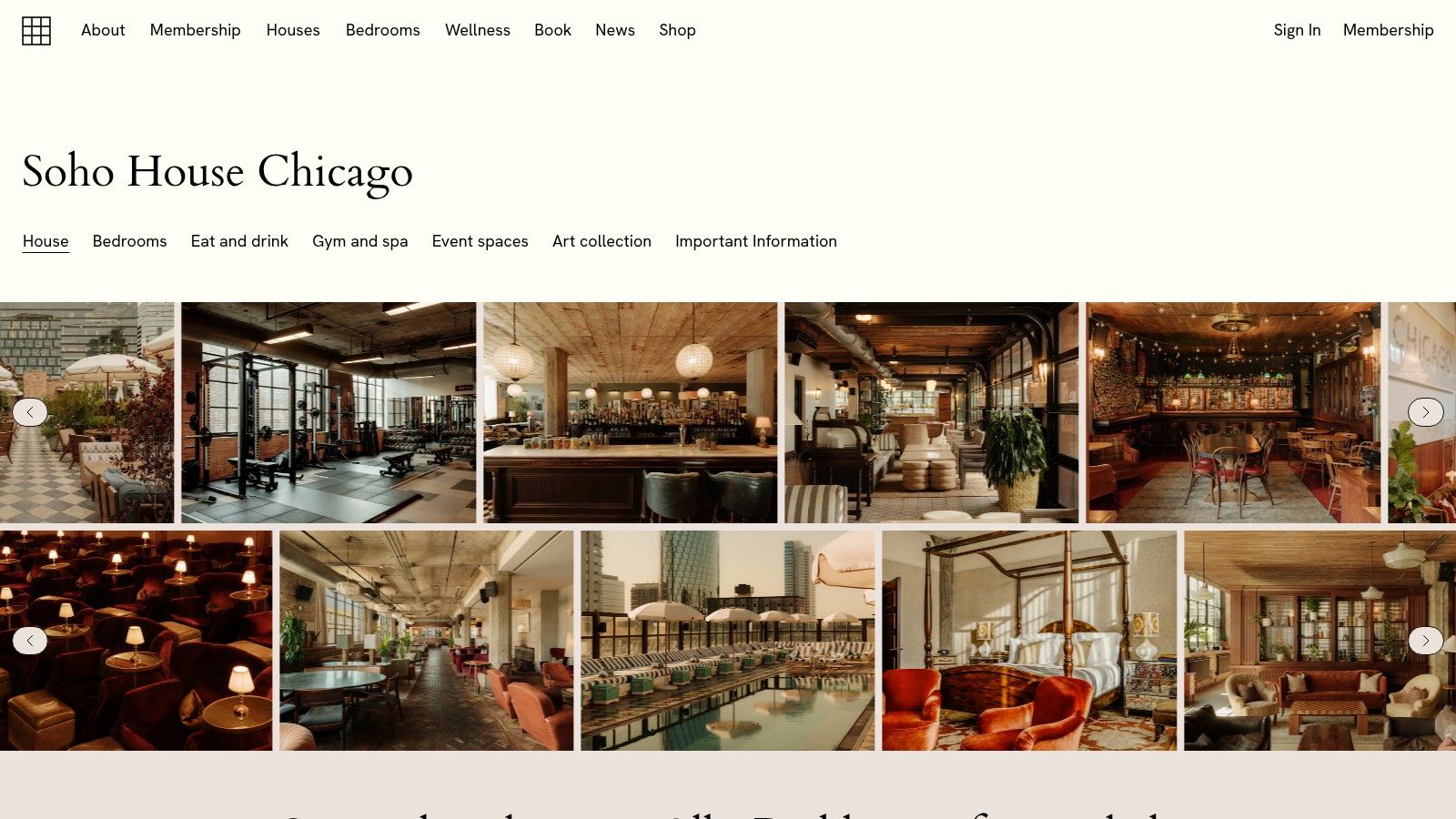
You finish a founder meeting downtown, need a place for dinner, want a strong room for a client conversation, and would not mind running into someone from media, fashion, design, or brand on the way out. That is the Soho House Chicago use case. It works well for founders who sell through taste, culture, and relationships.
I would join Soho House for atmosphere, convenience, and creative proximity. I would not join it expecting a tight founder bench that pushes your company forward every week. That is the key distinction.
Where it fits
Soho House gives you a polished setting with plenty of ways to use it. You can work from the lounge, host a meeting, stay for drinks, book a room, and plug into a calendar that attracts creative professionals. If your business lives near agencies, consumer brands, content, hospitality, or partnerships, that matters.
The membership process also feels more straightforward than the old Chicago institutions. You can see the paths, apply online, and decide if the brand fits how you want to move through the city.
If you want a founder-specific read before you pay dues, start with this breakdown of Soho House in Chicago. Then compare it with these Chicago networking groups for entrepreneurs so you do not confuse a stylish social club with a builder-first community.
That mistake is common.
My take
Soho House is strong if you want:
- Creative deal flow: Better for founders in brand-heavy, media-adjacent, and consumer-facing businesses.
- An all-in-one setting: Meetings, meals, events, and short stays can happen in one place.
- A recognizable club brand: Helpful if you travel and like familiar environments.
Skip it if you need people who will challenge your pricing, hiring plan, or distribution strategy with real context. Soho House is better for access than accountability.
My advice is simple. Join if your company grows through culture, visibility, partnerships, and being in the room. Pass if you need a serious founder circle and direct operating advice. In that case, start with the free founder-focused option first, then add a paid club later if you still want the social layer.
3. Union League Club of Chicago
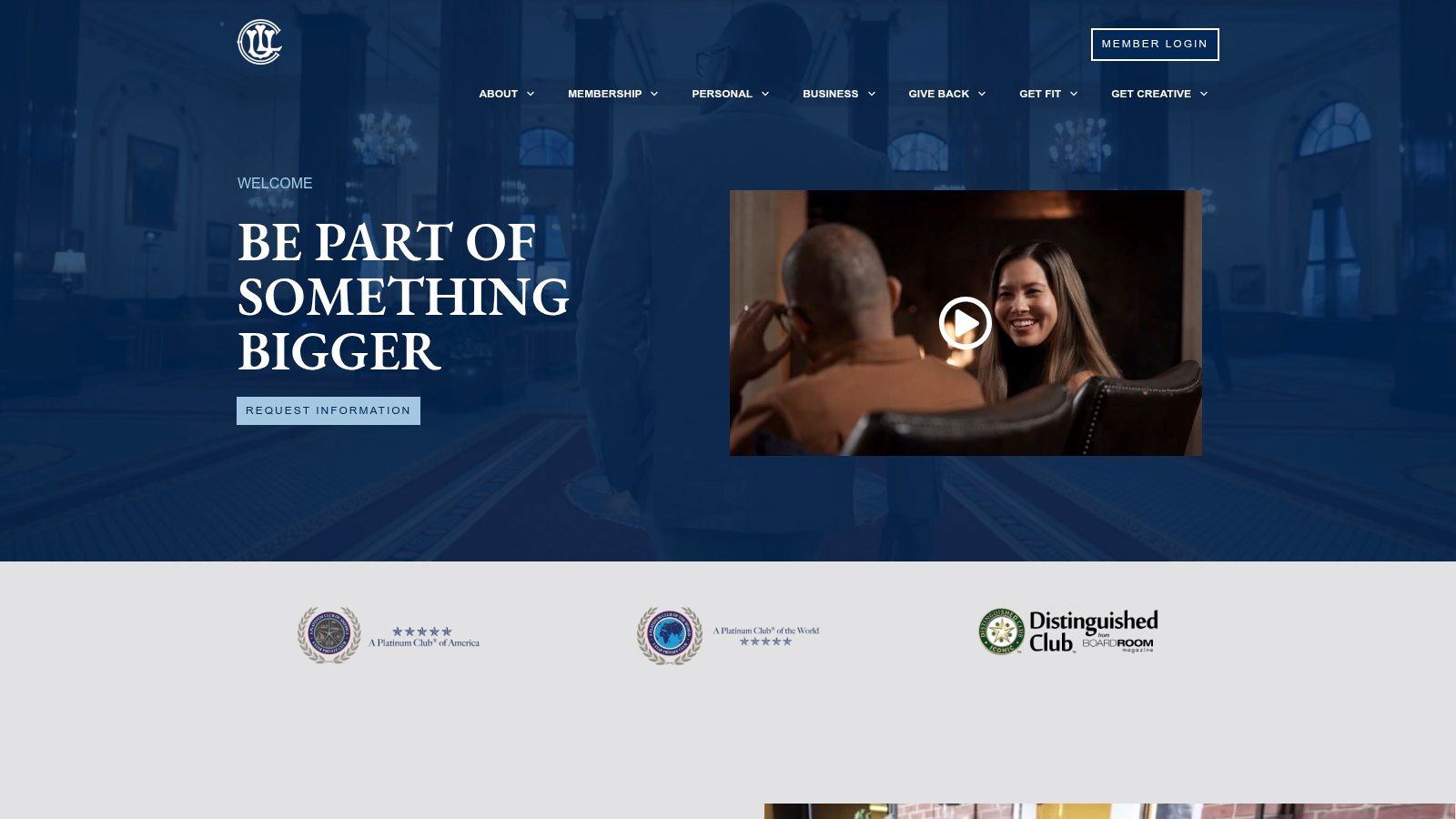
You have a client breakfast at 8, a donor lunch at noon, a board-style meeting in the afternoon, and an out-of-town guest who needs a room by evening. Union League Club of Chicago works well for that kind of day. If you want one place that supports business, hosting, dining, fitness, and civic involvement, ULCC is one of the more practical choices in the city.
I would not join this club for status signaling alone. I'd join it if my company depended on credibility with established Chicago players. That includes institutional buyers, civic leaders, professional firms, and donors. ULCC is useful because it gives you a serious setting and a member base that often values continuity, public service, and local influence.
Where it fits
This club makes sense for founders who sell into older systems. Healthcare, law, finance, education, government-adjacent work, nonprofit partnerships, and B2B relationships with long sales cycles all fit better here than a hype-driven startup pitch.
The primary advantage is operational. You can host meetings, grab meals, attend events, train, and put up a guest without bouncing across downtown. That saves time and reduces friction in weeks when every hour matters.
It also gives you access to a type of network that many founders misunderstand. This is not the same thing as a founder peer group. It is an institution-first environment. If you want a direct comparison, read these networking groups for entrepreneurs in Chicago. Chicago Brandstarters is the better starting point if you need candid founder conversations, accessible peer support, and momentum without dues or sponsor politics.
My blunt advice
Choose ULCC if you want:
- A credible downtown base: The setting helps when your business runs on trust, formality, and in-person relationships.
- Civic and philanthropic access: Useful if your work overlaps with city leadership, boards, or community institutions.
- An all-in-one operating hub: Meetings, meals, lodging, events, and fitness in one place.
Skip it if you are still trying to find your footing as an early founder. A traditional club can sharpen your presentation, but it will not replace the honest feedback, referrals, and builder energy you get from a modern founder community.
A classic club can make you look established. It cannot do the work of helping you become established.
4. University Club of Chicago
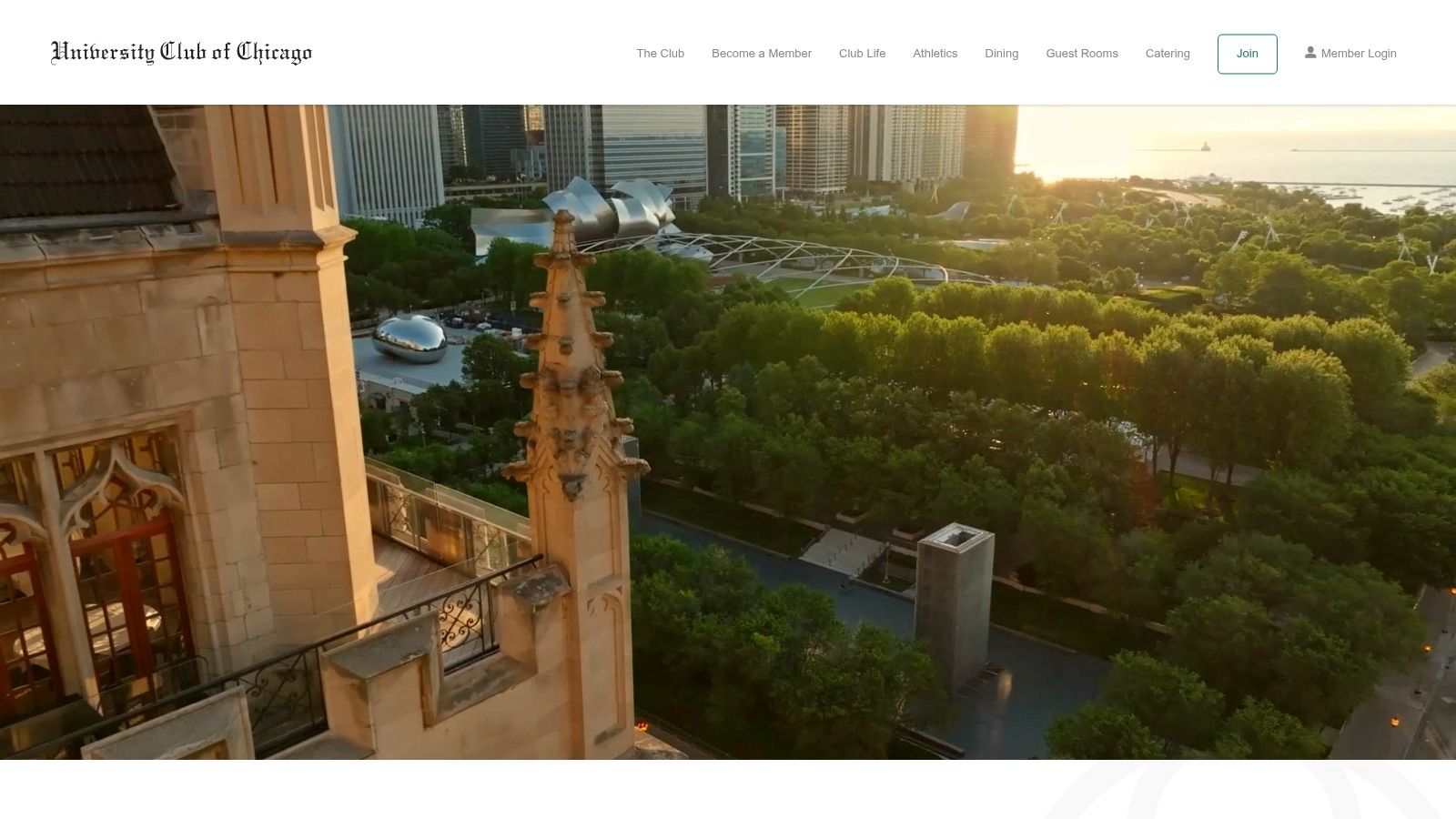
The University Club of Chicago has a very specific feel. Gothic building. Michigan Avenue address. Fine dining. athletic facilities. lodging. event spaces that look like they belong in an old film about serious people making serious decisions.
That's the appeal. If you want a club with visible tradition, this is one of the strongest options in Chicago.
Who should join
I'd put this in the “credentialed downtown anchor” category. If your world overlaps with law, finance, academia, medicine, or multigenerational professional circles, the environment may fit naturally. You're buying into a setting and a social code as much as a member benefit stack.
The downside is simple. If you're a scrappy founder without sponsors, and especially if you dislike formal gatekeeping, this may feel like trying to join a country you don't yet have papers for.
That isn't a knock. It's just the truth. Some clubs are built for continuity. Some are built for momentum. Founders need to know which game they're walking into.
What I like and what I don't
- I like the setting: Few places match the sense of occasion.
- I like the convenience: Dining, lodging, athletics, and event use in one building.
- I don't love the friction: Sponsorship and degree-based expectations narrow the funnel.
- I don't love the opacity: Fees aren't posted publicly.
If your search for a private members club near me means, “I want a formal place that helps me step into a more established professional identity,” this is a solid choice. If it means, “I need people who understand pre-product anxiety and cash-flow stress,” I'd point you elsewhere.
5. The Chicago Club
The Chicago Club is the option for people who value privacy almost more than amenities. It's old, discreet, and intentionally low on public detail. That scarcity is part of the product.
I'd describe it like this: if Soho House is a busy restaurant with a known reservation system, The Chicago Club is the small dining room behind a closed door.
Why some founders love it
Some businesses run better in quiet rooms. If you deal with high-stakes conversations, private entertaining, or relationship-heavy sales where discretion matters, this club has obvious appeal. Its downtown location near the Art Institute and Millennium Park helps too.
There's also a type of founder who hates spectacle. They don't want a scene. They want a place where nobody bothers them and nobody performs. This club fits that personality better than the louder alternatives.
Why I wouldn't send every founder here
The same privacy that makes it attractive also makes it hard to evaluate. Public information is limited. Pricing isn't public. Membership usually runs through invitation or sponsorship channels.
That means it's a bad first stop for most early entrepreneurs. If you're still trying to find your footing, total opacity is friction you don't need.
Quiet rooms can sharpen a relationship. They don't automatically widen your circle.
I'd treat The Chicago Club as a later-stage choice. Join when your business already has momentum and you want a private place to host, think, and build deeper ties with a narrower set of people.
6. The Metropolitan
The Metropolitan sits in Willis Tower, and that fact alone tells you what kind of membership this is. Modern. Corporate-friendly. Built for meetings, lunches, skyline views, and the kind of business hospitality that makes a clean impression fast.
If I needed a club mainly to host clients, I'd put this near the top.
Best use case
This is the club equivalent of wearing a sharp navy suit. It doesn't need to be quirky. It needs to work. You walk in, the city is under you, and your guest immediately understands that you came prepared.
That's useful. Founders often underestimate how much environment shapes a conversation, especially when money or partnerships are involved.
The broader club network is another plus. The Metropolitan is part of Invited's City Club Collection, so members who travel for business may get real use from sister-club access in other cities.
My founder filter
Pick The Metropolitan if you want:
- Client-ready polish: It's built for business-facing use.
- A modern downtown vibe: Cleaner and less tradition-bound than legacy clubs.
- Network utility beyond Chicago: Sister-club access can matter if you travel.
Pass if you're looking for emotional closeness or a subculture. This isn't the place I'd go to talk openly about founder burnout or admit I have no idea how to hire my first operator. I would head here to close a deal, host a dinner, or reset between meetings with a great view.
There's nothing wrong with that. Just don't confuse a strong backdrop with a strong community.
7. The Cliff Dwellers
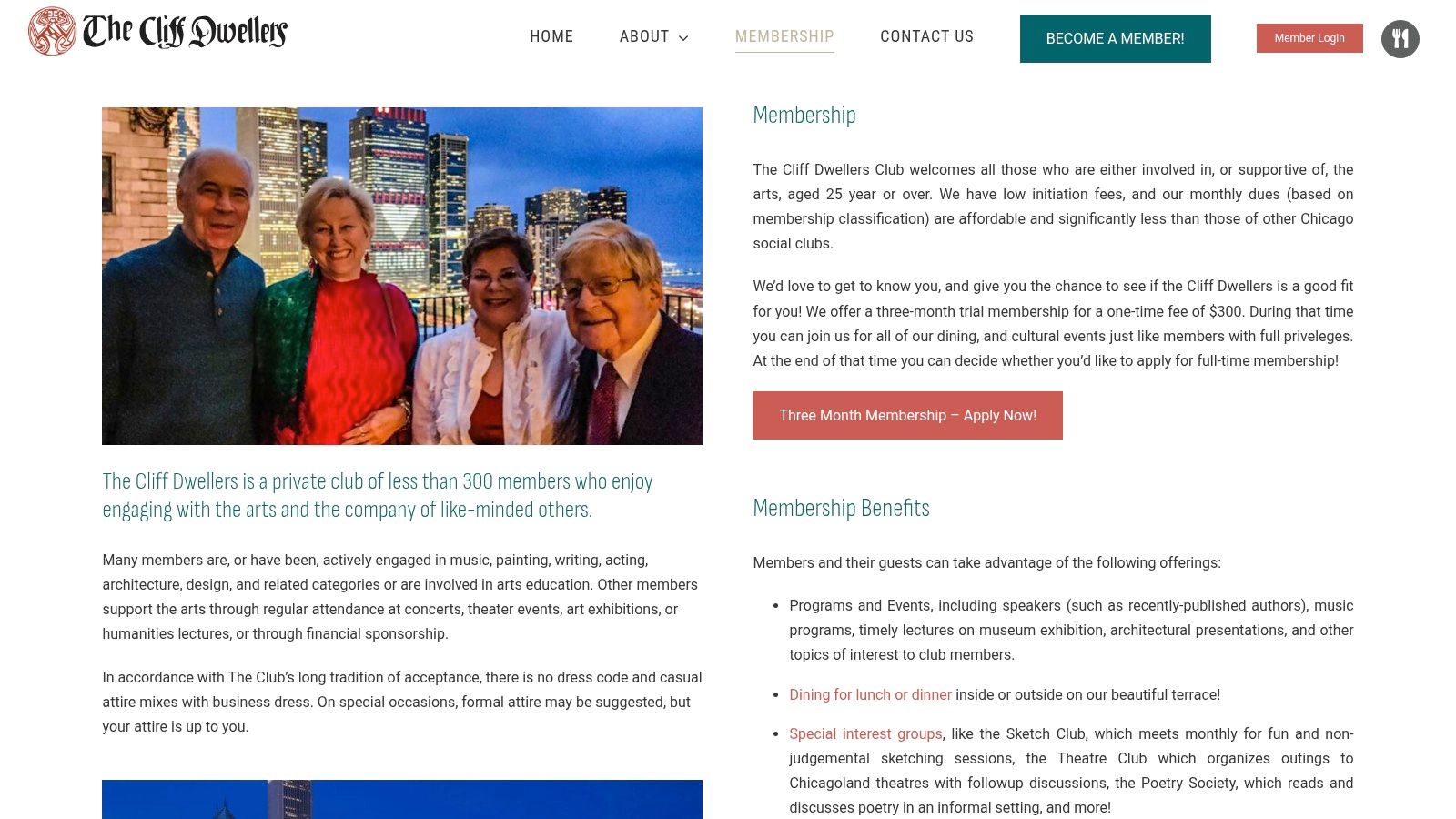
The Cliff Dwellers is the most distinct club on this list. It leans into arts, ideas, conversation, and a smaller community feel. If large clubs make you feel anonymous, this one might hit the sweet spot.
I like it for founders who think better around artists, architects, writers, and cultural people. Some businesses need that kind of oxygen.
Why it works
The smaller scale is a strength. It's easier to meet people, easier to become a regular, and easier to have real conversations. Terrace dining with views over Grant Park doesn't hurt either.
It also has a trial membership option, which I respect. Clubs are hard to judge from websites. A test drive is honest.
Where it lands for founders
This club is best when you want:
- Arts-centered conversation: Good for people who draw energy from culture.
- A more relaxed social code: Less stiff than many legacy clubs.
- A smaller community: Better odds of repeated interaction.
The tradeoff is focus. If you want broad business infrastructure or a heavy operator crowd, this is narrower than clubs built around commerce or founder support. I wouldn't choose it as my only professional base unless your work already lives close to creative practice.
Still, for the right person, it's a strong answer to private members club near me. Especially if what you're really asking is, “Where can I meet thoughtful people without walking into a giant status machine?”
7-Club Comparison: Chicago Private Members Clubs
If you're a founder searching private members club near me, don't compare these clubs like hotels. Compare them like operating environments. The right room gives you better conversations, better introductions, and better use of your time. The wrong one just gives you a nicer place to sit.
| Option | 🔄 Implementation complexity | ⚡ Resource requirements | ⭐ Expected outcomes | 📊 Ideal use cases | 💡 Key advantages |
|---|---|---|---|---|---|
| Chicago Brandstarters | Moderate, selective vetting and recurring small-group coordination | Low cost ($0) but requires time for biweekly dinners and active participation | High practical wins for early-stage founders (tactical advice, introductions) | Idea-stage to ~7‑figure Midwestern founders seeking peer mentorship | Free, intimate operator-led community and strong peer accountability |
| Soho House Chicago | Low, online application and tiered membership process | Moderate to high, paid membership, full facility access and programming | Strong creative networking, cultural exposure, and multi-city access | Creative professionals wanting social programming and global club access | Consistent branded experience, frequent events, published pricing |
| Union League Club of Chicago (ULCC) | High, traditional application, possible sponsorship required | High, extensive facilities, likely initiation and dues (not public) | Deep business, civic, and cultural engagement. Large event capacity | Members seeking consolidated business, civic, and event infrastructure | Wide range of on-site services, civic programming, reciprocal privileges |
| University Club of Chicago | High, nomination or sponsorship and degree requirement | High, full-service amenities and likely substantial fees | Prestigious venue with multigenerational networks and signature events | Professionals valuing tradition and landmark event spaces | Architecturally significant clubhouse and formal, multigenerational membership |
| The Chicago Club | High, invitation or sponsorship and private membership process | High, discreet, high-touch services. Pricing not public | Quiet, intimate business interactions and private entertaining | Senior leaders seeking discretion and upscale private entertaining | Longstanding reputation, privacy, and elegant meeting spaces |
| The Metropolitan (Willis Tower) | Moderate, Invited network enrollment with tiered access | Moderate, dues vary by level. Modern meeting and dining facilities | Efficient client entertaining and business-focused interactions | Business professionals needing flexible meeting spaces and city views | Panoramic skyline setting, work-friendly lounges, network benefits |
| The Cliff Dwellers | Low to moderate, smaller admin. Trial memberships available | Moderate, arts programming and limited hours. Smaller scale | High cultural engagement and closer creative connections | Artists, arts supporters, and those seeking intimate cultural community | Arts-forward programming, smaller membership, trial option to test fit |
One pattern jumps out fast. The traditional clubs ask for more money, more formality, and more patience. In return, you get status, facilities, and established networks. Chicago Brandstarters sits in a different category. It asks for participation, not dues, and gives founders direct peer access instead of polished club infrastructure.
That distinction matters.
If you're building a company, “resource requirements” is not code for dues alone. It means attention, calendar load, social energy, and whether the room helps you solve problems. I'd rather spend two hours with founders who will tell me the truth than in a beautiful dining room full of people who never talk about what it takes to make payroll, close customers, or survive a bad quarter.
Use the table that way. Paid private clubs make sense if you want client-facing polish, formal hosting, or legacy networks. A founder-focused group like Chicago Brandstarters makes more sense if you want practical feedback, warmer peer accountability, and a lower-cost way to stay around people actively building.
How to choose
Don't pick a club the way you'd pick a restaurant for one nice night. Pick it the way you'd pick a tool you'll use every week. Wrong tool, wrong result.
If you need a polished backdrop to impress clients or run business meetings, The Metropolitan is a smart move. It's direct, modern, and easy to understand. If you want creative energy, broad programming, and a recognizable social brand, Soho House Chicago is the obvious option. If you want civic gravity and a traditional downtown base, look hard at the Union League Club of Chicago. If formal tradition and old-school professional identity matter to you, the University Club of Chicago fits that lane.
The Chicago Club is for privacy-first people. I'd call it a later-stage move for founders who already know what room they want and why. The Cliff Dwellers is the outlier in a good way. It's smaller, arts-centered, and more conversational. Great for the founder who gets better ideas from cultural people than from generic business mixers.
But I'll be blunt. If you're early, lonely, building something uncertain, and searching private members club near me because you want people who get it, I'd choose Chicago Brandstarters first.
Why? Because founders usually don't need more polish. They need truth. They need a place where they can bring half-formed ideas, messy questions, awkward revenue problems, and the emotional weight that comes with trying to build a company while the rest of life keeps moving. Most clubs weren't built for that. Chicago Brandstarters was.
I also think a lot of early builders get tricked by exclusivity. Expensive or invitation-only doesn't always mean useful. Sometimes it just means harder to access. A beautiful room can make you feel successful for an hour. A small trusted community can change the decisions you make every week.
So ask yourself one question. Do you want a place that looks impressive, or a place that makes you better?
If the answer is “both,” start with the one that makes you better. The rest gets easier after that.
If you want a founder room instead of another networking room, apply to Chicago Brandstarters. It's free, vetted, Chicago-based, and built for kind people doing hard things. You'll meet in small dinners, talk openly in a private chat, and get support from people who care about building well, not looking busy.
Leave a Reply