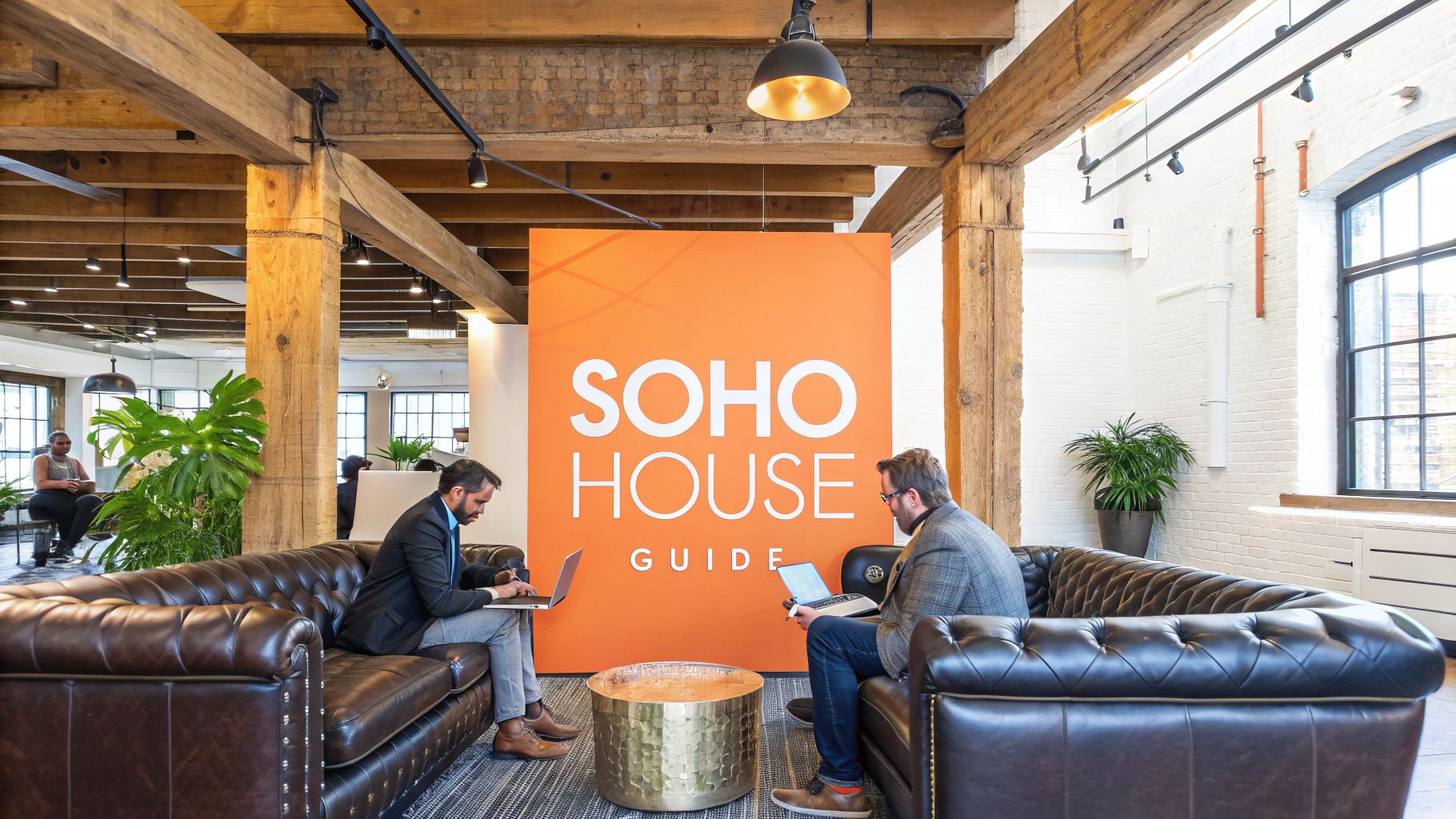
First, let's get one thing clear: Soho House Chicago is not your grandfather’s stuffy country club. Forget golf polos and quiet, wood-paneled rooms.
I think of it more like crashing at the massive, perfectly curated loft of your most creative and successful friend—you know, the one who seems to know everyone.
What Is Soho House In Chicago Really Like?
I want you to picture this: worn-in leather couches, amazing art on the walls, and the soft glow from dozens of laptops. That's the real vibe. I find it’s a space built for work, for making connections, and for just hanging out.
Planted right in the middle of Fulton Market, I feel the club has this unique energy—it feels exclusive, but it's also buzzing. You could be sketching out a business plan over coffee in the morning and then catching an indie film in their private cinema that same night. The whole point is for you to feel relaxed and at home, especially if you're in a creative field.
Before we get into the details, let's take a quick look at what makes the Chicago location so special to me.
Soho House Chicago at a Glance
This table breaks down the key stats and features that define the experience I've had at Soho House Chicago.
| Feature | Details |
|---|---|
| Location | 113-125 North Green Street, Fulton Market District |
| Building | Historic 1907 Chicago Belting Company factory |
| Size | 108,000 square feet (the largest Soho House globally) |
| Opened | August 2014 |
| Primary Vibe | Relaxed, creative, and professional |
| Target Member | "Creative souls" – founders, artists, designers, writers |
As you can see, the sheer scale and history of the building set it apart from your average coworking spot or social club.
A Historic Building With A New Soul
The building itself has a cool Chicago story. I think Soho House is a masterclass in turning old into new, taking a massive 108,000-square-foot belt factory from 1907 and making it a modern hub. This five-story brick giant was meticulously restored and opened back in August 2014 by founder Nick Jones.
You can still feel the building's industrial past in the exposed brick and original bones, but I love how it's blended with a layer of modern luxury. It’s the biggest Soho House in the world for a reason.
The whole idea behind Soho House is simple: it’s a private club for people in creative industries. But unlike old-school clubs that are all about your net worth, Soho House looks for a "creative soul." They want a mix of founders, artists, writers, and designers.
I believe this focus on who gets in is what makes the whole thing work. It creates a community where you can actually meet interesting people and have real conversations, not just exchange business cards.
For founders like you trying to expand their circle, understanding this is crucial. And if building a solid professional circle is on your mind, you should check out my go-to strategies for business networking.
Getting Into Soho House: Let's Break Down The Process
Trying to get into Soho House can feel like you're solving a puzzle in the dark. I'm here to turn on the lights for you. Your application isn't just a resume—think of it as a pitch for why you'd be a great person to grab a drink and swap ideas with.
Imagine the membership committee is casting for a fantastic dinner party. They're not just looking for your impressive job title. I know they're searching for interesting people who bring good energy to the room.
First, Let's Talk Tiers
Before you do anything else, you need to understand your options. Each one gives you a different level of access, so I advise you to pick the one that actually fits how you'll use the club.
- Every House: This is the golden ticket. It gets you into every single Soho House location across the globe, from London to Hong Kong. If you're always on a plane for work or fun, this is the one for you.
- Local House: This gives you full run of a single spot—in our case, Soho House Chicago. If you're just looking for a solid home base in the city to work, meet people, and unwind, I think this is your best bet.
- Under 27: If you’re under the age of 27, you can grab either a Local or Every House membership for a pretty big discount. I see it as their way of keeping the energy fresh and bringing in younger creatives.
Deciding is simple, really. It just comes down to one question: Where are you actually going to be? I wouldn't spring for the global pass if you know you’re mostly staying put in Chicago.
What's This "Creative Soul" Thing All About?
I know Soho House is always talking about looking for "creative souls," which can feel a little fuzzy. How does a founder like you, grinding away on a SaaS platform or an e-commerce brand, fit that mold when you're not exactly painting a masterpiece?
It’s all about how you tell your story. I believe building a startup from the ground up is one of the most creative things you can do. You’re making something out of nothing, finding new ways to solve old problems, and designing an entirely new experience for your customers.
Your application is your chance to tell the story of why you do what you do. Don't just list what your company sells. I want you to talk about the problem you’re obsessed with solving and the unique way you're trying to fix it.
This flowchart really gets to the heart of what I feel they care about.
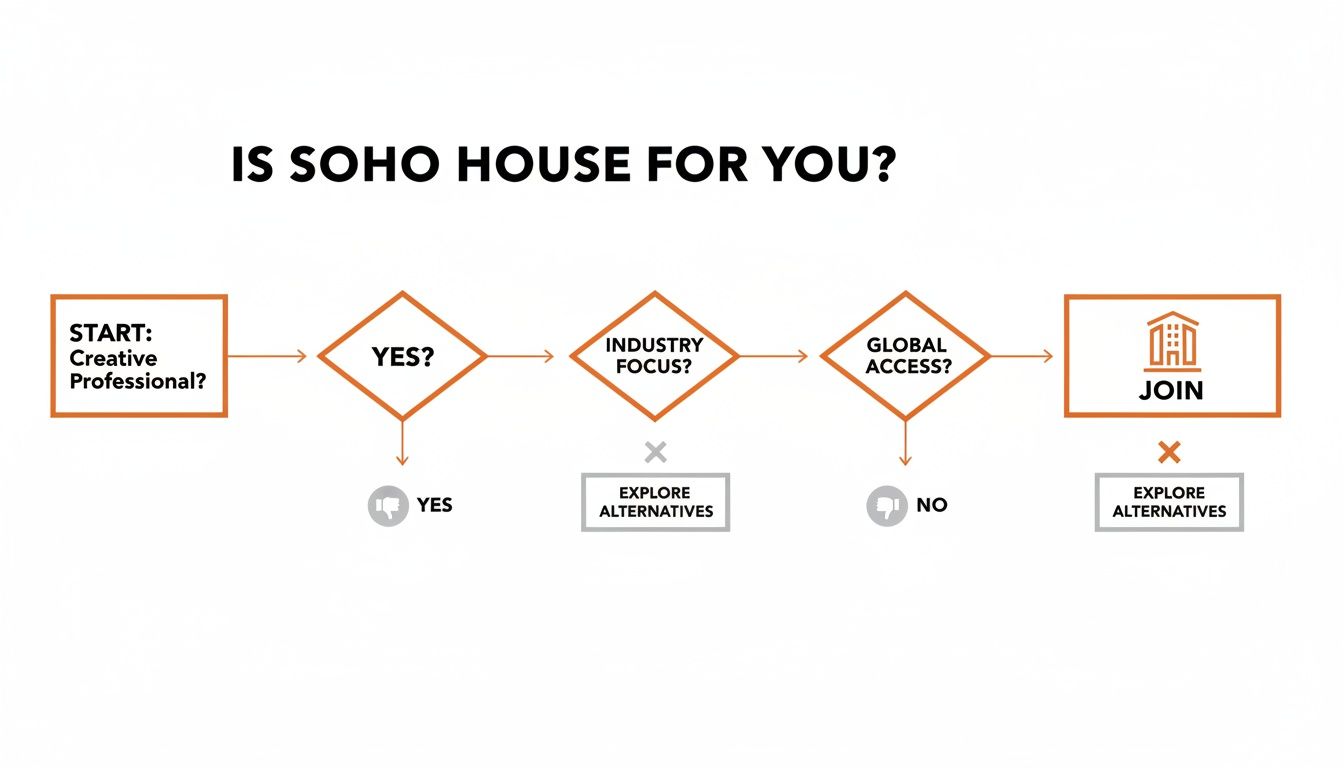
As you can see, it all comes back to having a creative spirit and profession, not just the traditional markers of success.
And here's what I consider the ultimate cheat code: get a referral from two current members. This is, by far, their most trusted signal that you’ll be a good addition to the community. If you don't know anyone inside, don't sweat it—just pour all your energy into making the creative story in your application as compelling as possible.
Maximizing the Amenities and Events

Okay, you’re in. Congrats! Now comes the fun part: figuring out how to actually use the place. I think getting a Soho House membership is like getting an all-access pass to a founder’s playground. The key is knowing which rides are worth your time.
Don't get me wrong, the famous rooftop pool is great. But as a founder, your biggest asset is time, and you need to see a real return on your monthly dues. A good tan doesn't pay my bills.
Let's talk about using the House to actually grow your business.
More Than Just a Pretty Space
I want you to think of Soho House Chicago as a strategic weapon that just happens to look like a stunning social club. The dedicated workspaces are my secret for getting out of a rut when my home office starts feeling like a cage. There’s an energy there that helps me get the gears turning again.
But the real magic for me is in the variety. The place is massive. It’s got a 40-seat screening room, a full-blown gym with its own boxing ring, and a spa. It’s all housed in the 1907 Allis Building, and they kept over 80% of the original architecture. This gives the space a soul you just can't find in a modern glass box. You can read more about the building's incredible history and restoration on the Linetec blog.
How to Use the Spaces Strategically
The real pro move, in my opinion, is learning which space to use for what purpose. You have to match the room to the mission.
- For Casual Investor Chats: I suggest you go to The Allis. It’s on the ground floor and open to the public, so it's a perfect low-pressure spot for that first coffee with a potential investor. You don't have to worry about a membership barrier.
- For Closing a Deal: You should book a private room upstairs. When you're talking numbers and need total privacy, I find the members-only spaces signal that this is a serious conversation.
- For Team Off-Sites: That screening room isn't just for movies. I've seen founders use it to present a big new deck or celebrate a huge win. It turns a regular meeting into a memorable event for your team.
- For De-Stressing: Seriously, use the boxing ring. After a brutal fundraising week or a launch that didn’t go as planned, hitting the heavy bag for 30 minutes works wonders. It’s one of the best ways I’ve found to reset.
Think of the spaces as tools. The Allis is your friendly hammer for first introductions. A private room is your precision screwdriver for when every detail matters.
Don't Sleep on the Events Calendar
Honestly, the real secret weapon of your membership is the event calendar. This isn't your standard, stale business networking. We're talking workshops, film screenings, and member mixers that I find are actually curated to bring interesting people together.
You might end up at a private dinner with a visiting artist or in a Q&A with a well-known filmmaker. I've found these aren’t the awkward events where everyone is just passing out business cards; they feel more like a dinner party with smart, creative people.
If you’re hunting for even more ways to connect with other founders, check out our guide to the best small business networking events in Chicago. My advice? Make it a goal to hit at least two Soho House events a month. That’s how I believe you’ll build real relationships and make those dues pay for themselves.
The Real Cost of Membership
Alright, let's talk money. Because joining Soho House Chicago is a lot more than just you paying the annual fee.
I want you to think of the membership fee as your ticket to the show. It gets you in the door, but you still have to pay for food, drinks, and any special events once you're inside. That sticker price is just the beginning.
Your membership card is the key, but every cocktail on the rooftop, every client lunch at the Allis, and every late-night Uber home adds up. You have to be real with yourself about your budget. I’ve seen people get a little star-struck by the vibe and accidentally rack up hundreds, if not thousands, in extra spending a month.
Breaking Down the Budget
To give you a clearer picture, let’s map out what a year could look like for a founder like you who actually uses the club. The membership fee is just the foundation. You've got members who just pay their dues and use the free coffee to get work done, and then you have members who practically live there, treating it as their main office, restaurant, and social hub.
The real question isn't just about the money you spend, but the value you get back. Are you making connections that lead to actual business opportunities, or are you just paying for a really expensive, good-looking social club?
Here’s a practical estimate of what your annual spending could look like, going way beyond that initial membership fee.
Estimated Soho House Chicago Costs (2026)
I've made this table to break down a sample budget for a founder who is actively using the club for both work and networking. Remember, these are just estimates to give you a ballpark idea.
| Cost Item | Estimated Annual Cost |
|---|---|
| Local House Membership (Over 27) | ~$2,800 |
| Food & Beverage (2 visits/week) | ~$5,200 |
| Member Events & Workshops | ~$600 |
| Guest Entertainment (Clients, etc.) | ~$1,200 |
| Total Estimated Annual Cost | ~$9,800 |
As you can see, all the other costs can easily double or triple the price of admission. A simple dinner for two with a couple of drinks can run you $150-$200 without you even trying. I've watched those costs stack up fast, turning what seems like a manageable fee into a major line item on your annual budget.
So, the question you have to ask yourself is brutally simple: Is it worth it for me?
For some founders, a single connection you make at the rooftop bar could land an investment that makes this entire budget look like a rounding error. For others, it’s just an expensive habit.
I urge you to be honest about your goals. If you're disciplined, show up to build your network, and host important meetings, I believe the investment can pay for itself many times over. But if you’re just looking for a cool place to hang out, I know there are probably better ways for you to spend $10,000 a year.
Finding Your Founder Community in Chicago
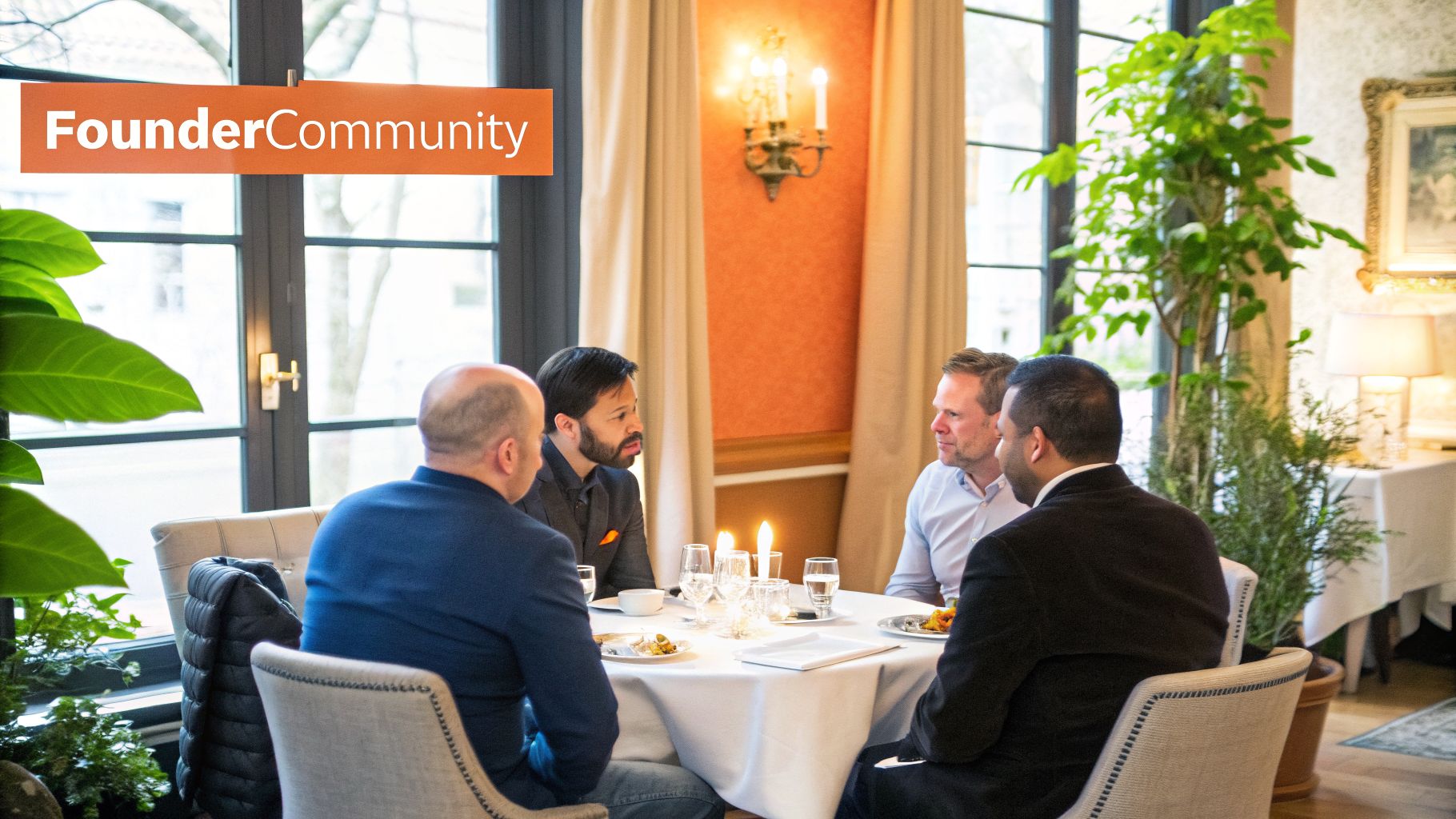
Look, I know Soho House Chicago is undeniably cool. It's a vibe. But let me ask you a real question: when your biggest launch ever goes sideways at 10 PM on a Tuesday, who are you going to call? Is it going to be someone you made small talk with for two minutes at the rooftop bar?
For most of us building companies in Chicago, the honest answer is a hard no. A beautiful room is one thing, but a real support system—a true tribe—is something else entirely.
Go Beyond the Beautiful Room
I’m talking about a community built on the shared struggle and that classic Midwestern kindness. It’s about finding your people who actually get the lonely reality of being a founder—the brutal failures, the quiet wins, and all the messy stuff in between.
That’s exactly why I started Chicago Brandstarters. This isn't some exclusive club. It’s a free, hand-picked community I've built for founders who believe in helping each other win, no strings attached.
Forget the transactional networking over pricey cocktails. We do small, private dinners. I want you to picture it: a table with six to eight other founders, all deep in the trenches just like you, sharing war stories, tactical advice, and genuine support.
We work hard to screen out the service-sellers and the self-promoters. This has to be a confidential space where kind, bold people can be vulnerable, ask for help, and build the friendships that actually move their businesses forward.
If you’re tired of surface-level chats and you're craving real connections with people who truly get the founder journey, this is your spot. My whole goal is to find the kind givers and help them build incredible things. You can see how it all works by checking out our mastermind groups for entrepreneurs.
Why Real Community Is Everything
Building something that lasts isn't easy, whether it's your startup or a place like Soho House. It demands a powerful network. In a funny way, I find the story of Soho House in Chicago is a perfect mirror for the founder’s journey. It celebrated its tenth anniversary in 2024 and has grown into the largest and one of the most successful locations in the world—a real anchor for the city's creative class.
That success is wild, especially when you learn the parent company has famously never turned a profit, projecting pre-tax losses of $73 million back in 2024. You can read more about Soho House Chicago's decade of influence on Time Out.
For us founders, I see a huge lesson there. Scaling from a shaky idea into something that lasts requires more than a great product; it needs a tough, supportive network. It proves that good old Midwestern hard work, mixed with the right kind of strategic connections, can create something truly special. That’s the kind of community we’re building.
Your Top Questions, Answered
Alright, let's get straight to it. People ask me about Soho House Chicago all the time. Here are the most common questions I get, with the honest, straightforward answers you need to decide if it's the right move for you.
Can I Actually Get Work Done There?
Yes, you absolutely can. During the day, it's my favorite kind of creative coworking space. You’ll see laptops sprinkled everywhere, from the main Club Floor to the quieter library spots. I find it beats a sterile, generic office any day of the week.
Just be aware of the "laptops away" rule that kicks in around 6 PM in most of the social areas. The energy shifts from a focused work hum to a social buzz. I think it’s actually a brilliant way to force you to shut down the computer and connect with the people around you.
Is It Worth the Money Just for That Rooftop Pool?
In a word: no. Don't get me wrong, I think the pool is spectacular and the view is one of the best in the city. But if that's the only reason you're thinking of joining, you're looking at a wildly expensive swim club.
Think of the pool as the cherry on top, not the whole sundae. I believe the real value is in the community you can tap into, the events you can attend, and the inspiring spaces you can use to actually move your business forward.
Can I Bring Guests to Soho House Chicago?
You can, but you need to know the rules of the road. As a member, you're allowed to bring up to three guests with you into the members-only areas. This is perfect for those small, important meetings or for treating your close friends to the experience.
Your guest pass is like a superpower—I want you to use it wisely. Bringing a potential investor or a key client into that exclusive environment can be a massive power move. Just remember, their behavior is a direct reflection on you.
If you're planning something bigger, you'll need to book one of their private event spaces. And don't forget, public-facing spots like The Allis on the ground floor are open to everyone. I find it's a great option for more casual meetups without using up your guest privileges.
At Chicago Brandstarters, we believe in building these kinds of durable, supportive networks for free. If you're a kind, bold founder looking for your tribe, learn more and join our community.