You have a good product, steady sales, and no reason for anyone to remember the name. Customers buy once, compare you with five alternatives, and forget you before the next purchase. That problem has less to do with your logo than with the meaning people attach to your company.
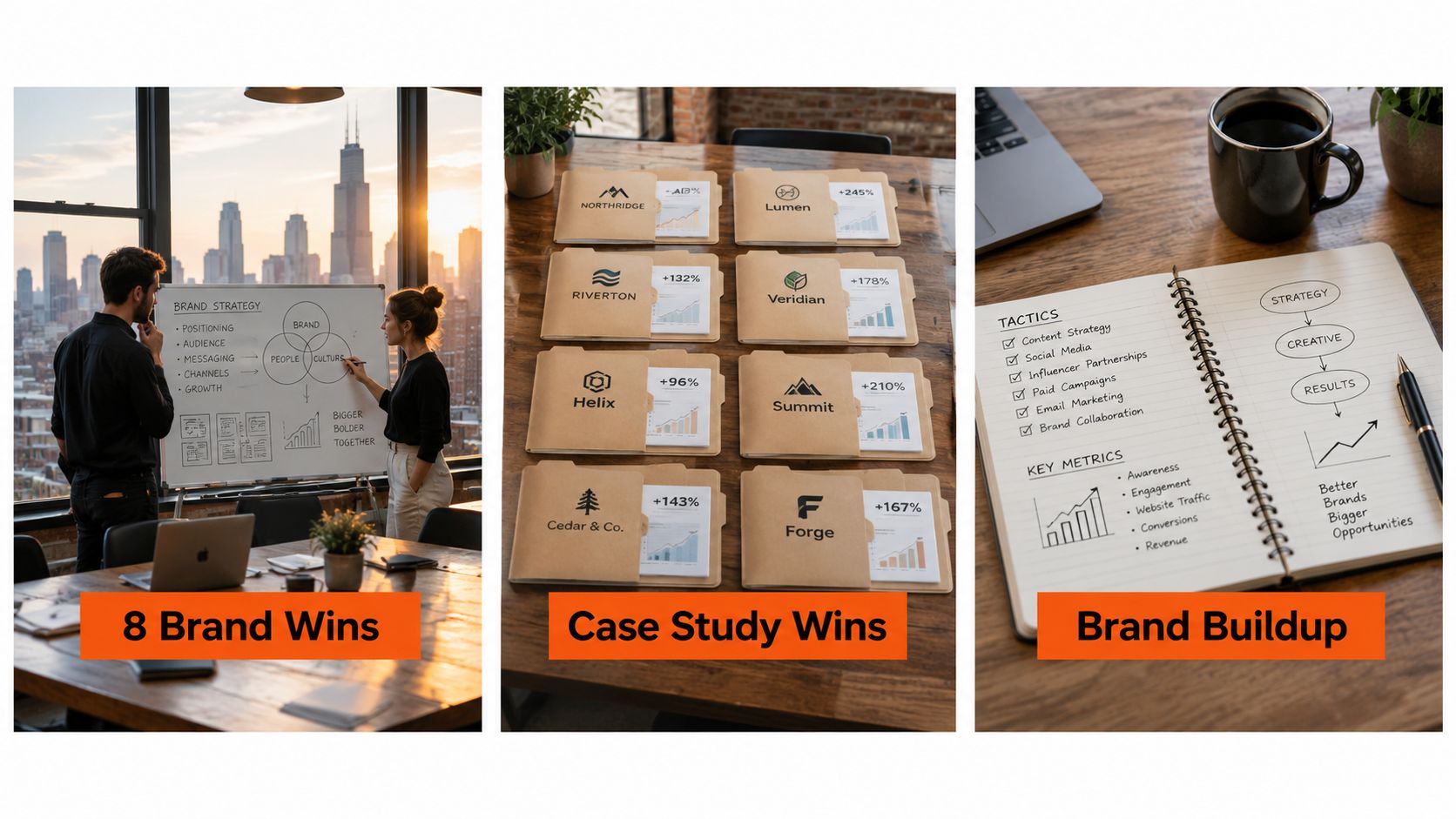
This brand building case study list breaks down eight recognizable moves from Apple, Patagonia, Nike, and five other examples. You'll see the problem each brand faced, the strategy it chose, the tactics it ran, and the lesson you can test in your own business. Each entry ends with one move you can make this quarter, whether you sell in Chicago, Milwaukee, Detroit, or across the Midwest.
You don't need a global budget to learn from a global brand. You need to separate the part that required scale from the part that required judgment. A founder can copy a clear promise, a better customer experience, a useful ritual, or a sharper point of view with a small team.
If your current marketing tracks reach but misses trust, start with this guide to go beyond impressions for brand trust.
1. Apple's Ecosystem Strategy Builds Loyalty Through Integration
You buy one device. Then another part of the experience starts doing work for you. Photos appear where you need them. Files follow you. Setup gets easier the next time. That is Apple's real advantage. The company builds brand loyalty through connected use, not through a single product alone.
That matters for a small team in Chicago or anywhere in the Midwest because the underlying move is affordable. You do not need hardware, subscriptions, and global retail to copy it. You need one offer that makes the next step easier, faster, or clearer for the customer.
Apple's system works like a good front desk at a boutique hotel. You should not have to repeat yourself every time you ask for help. The business remembers context, carries it forward, and removes small annoyances before they pile up.
A bookkeeping firm can apply that logic by connecting monthly reporting, tax planning, and cash-flow alerts. A skincare brand can pair a starter product with refill reminders and a simple routine guide. In both cases, the customer gets a better outcome because the pieces fit together.
Build the connection before you add products
Start with one customer journey that already matters. Look at what happens before purchase, during setup, after first use, and at the next logical action. Then identify the point where a second product, service, or message removes effort instead of creating another decision.
Use a simple checklist:
- Choose one anchor: Make one product or service the easiest place to start.
- Design the next step: Add a related offer only when it improves the first experience.
- Show the benefit: Explain what connected use saves, such as time, confusion, or repeated data entry.
- Avoid lock-in: Give customers a reason to stay because the experience is useful, not because leaving is painful.
You can see how repeat value shapes brand loyalty.
Practical rule: Build one smooth path before you build a broad product family.
Here is the trade-off. Apple can fund deep integration across devices and services. A smaller company usually cannot. What you can copy is the discipline behind it: shared language, consistent onboarding, customer records that carry over, and a clear next purchase that feels like help, not pressure.
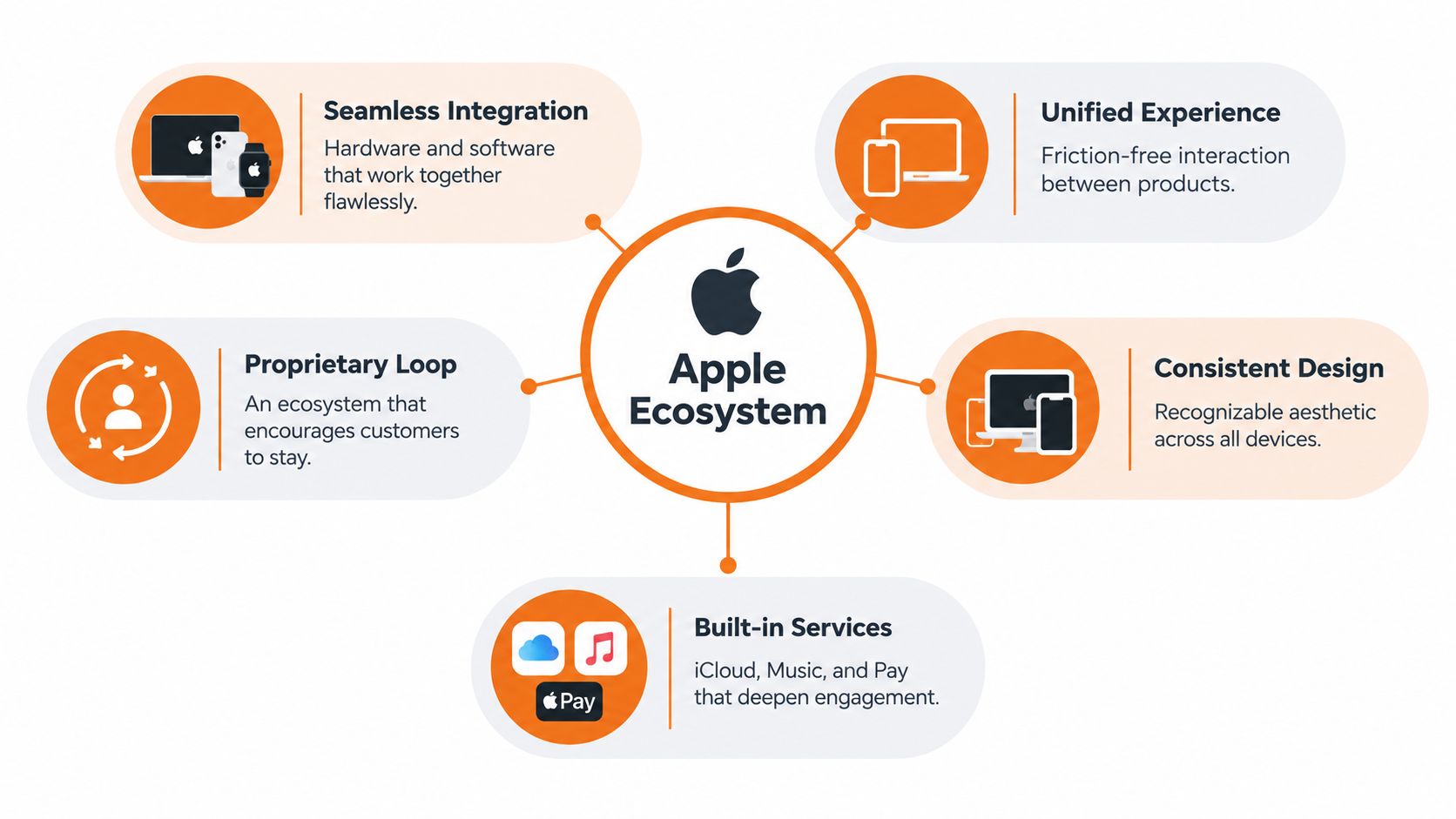
Here's a short visual example of connected product thinking:
Test to run: Pick one anchor offer and give ten customers a two-step journey using what you already sell. Track where they hesitate, what they ask twice, and whether the second step feels useful without a sales prompt.
2. Patagonia Makes Its Values Part of the Product
You buy a jacket, then see the brand show you how to keep it in use longer. That changes the job of the product. It is no longer just something to sell once. It becomes proof of what the company believes.
Patagonia built its brand around environmental responsibility, repair, and restraint. Those values show up in the product, the policies around it, and the behavior it asks from customers. That is why the brand feels harder to imitate than a nice mission statement on a website.
A better comparison is a restaurant that posts its sourcing rules and leaves the kitchen door open. Customers can inspect the choices behind the promise. That puts pressure on the business. It also gives the promise weight, because people can compare the message with the operation.
For a small Chicago or Midwest team, that is the key lesson. Do not copy Patagonia's scale or language. Copy the habit of making one value visible in the buying experience. A furniture maker can design for repair. A coffee company can explain sourcing choices in plain English. A software firm can avoid dark-pattern billing and show customers how data controls work.
Values become believable when they cost you something.
If your sustainability claim never changes packaging, pricing, suppliers, delivery, or product design, customers will read it as decoration. They are not asking for perfection. They are looking for evidence that your stated belief changes a decision.
Start with one page or one product line. Write down three things. What you will do. What you will not do. What customers can verify. That proof could be repair records, supplier notes, progress updates, or a plain-language policy page. These social impact strategies are useful if you need help turning a broad belief into work people can see.
There is a trade-off here. Strong purpose claims invite scrutiny. Silence avoids that pressure, but it also gives your team no filter for hard calls. Once you state a value in public, customers will test it against your behavior. That can sting. It also helps a small team choose faster when money, convenience, and principle pull in different directions.
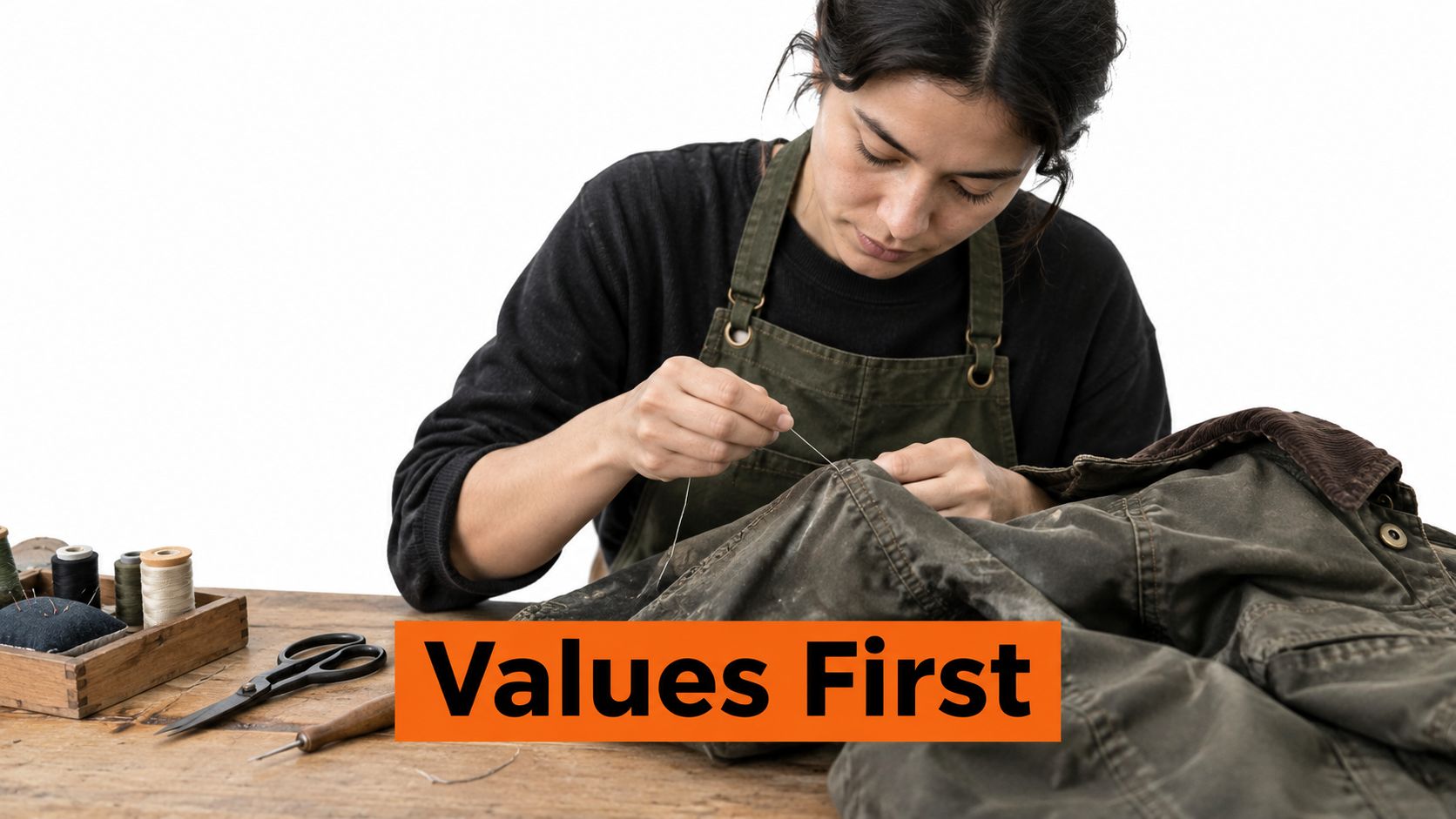
Test to run: Pick one offer and publish a short note that explains the value behind it, the shortcut you refused, and the proof a customer can check.
3. Nike Turns Aspiration Into Brand Identity
Interview five customers and ask one question: “Who are you trying to become?” You will hear language that has more value than a polished tagline. That is the move Nike has made for years. It speaks to effort, doubt, discipline, and progress, then uses products to back up that identity in the actual world.
For a small team in Chicago or the Midwest, this matters because you do not need celebrity scale to build a strong brand. You need a clear human promise. Nike can afford global athletes and major media buys. You can afford careful listening, sharper wording, and repeated proof.
A good way to frame it is simple. Nike works like a gym buddy who keeps reminding you why you started. The product is part of the system, but the message keeps the customer connected to the version of themselves they want to reach. A financial planner might speak to people who want control after years of money stress. A manufacturer might speak to operators who want to be known for dependable work. A career coach might focus on people ready to make one hard change.
Find the human promise
Start with a sentence that does not mention what you sell. Finish this line: “Our customers are people who want to…”
Then pressure test it. If the sentence sounds flattering but vague, keep working. If it points to a real struggle, a real routine, and a real kind of progress, you have something useful.
Use that sentence across your channels with discipline. Your email, social posts, events, packaging, and sales calls should support the same idea instead of pulling in five directions. This integrated marketing communication guide is a useful reference if your message keeps drifting between channels.
Then give the promise proof:
- Name the struggle: Use the words customers use for doubt, frustration, or hesitation.
- Choose real messengers: Feature people who already live the identity your brand supports.
- Show behavior: Tell stories about practice, repetition, and setbacks, not just outcomes.
- Create a ritual: Build a challenge, meetup, checklist, or progress marker customers can repeat.
There is a trade-off here. Aspiration can turn into empty brand theater fast. If you talk about identity without showing behavior, customers will spot the gap. Small teams usually win by being specific and local, not glossy. A monthly customer challenge, a short founder video, or five honest customer stories can carry more weight than a campaign that looks expensive but says nothing.
Test to run: Interview five customers about the person they are trying to become. Turn the repeated phrase into one campaign message, then track replies, referrals, and qualified inquiries for 30 days.
4. Warby Parker Removes Friction From the Buying Experience
A customer likes your product, gets to the checkout page, then stops. The question is usually small and expensive at the same time. Will this fit me. What if I pick the wrong one. How hard is it to return. Warby Parker built its brand by answering those questions before they turned into abandonment.
Its move was simple to understand and hard to copy well. Let people try frames at home, keep the path direct, and remove the awkward parts of the purchase. It works like bringing the fitting room to the customer instead of asking the customer to gamble.
That matters for small Chicago and Midwest teams because friction is often easier to fix than awareness. You may not have the budget to flood a market, but you can make buying feel safer and clearer than a larger competitor. A contractor can send a plain-language scope before the estimate. A furniture shop can show dimensions in real rooms. A food brand can explain shipping, storage, and refunds before anyone reaches checkout.
Start where people hesitate. Go through your emails, chat logs, reviews, abandoned carts, and sales calls. Look for the point where buyers ask for reassurance, not more hype. Then sort the pause into one of five buckets: price, choice, risk, information, or logistics.
From there, pick one fix that matches the actual objection:
- A decision tool: Use a quiz, comparison chart, sample kit, or guided consultation.
- A clear cost explanation: Show what the customer pays and what is included.
- A low-risk first step: Offer a sample, trial, inspection, or limited starter purchase.
- A direct support path: Let shoppers reach a real person with product questions.
Here is the trade-off. Convenience costs money. Home trials, free returns, and hands-on support can improve conversion, but they can also attract low-intent shoppers or create return volume a small team cannot absorb. Copy the principle, not the full program. If you cannot afford an at-home trial, offer a cheaper confidence builder, like a sample, short consult, or fit guide that answers the same fear.

Test to run: Pick the biggest buying objection and build one low-risk answer around it. Then ask every new customer which part reduced doubt enough to make them buy.
5. Dollar Shave Club Uses Humor to Make the Alternative Clear
You are selling in a crowded market. Every competitor sounds polished, serious, and weirdly similar. Then one brand shows up, says what customers are already muttering under their breath, and suddenly the choice feels easier to understand.
That was Dollar Shave Club's move. It did not win with a softer logo or prettier copy. It used humor to make an alternative feel obvious. The joke was not decoration. It was a shortcut to clarity.
Humor works like the one person at a dinner table who says the thing everyone else was politely avoiding. People pay attention because the point is true. That is the part small Chicago and Midwest teams can copy. You do not need a big production budget. You need a real frustration, plain language, and the nerve to say it cleanly.
Start with the sentence your customer would text a friend. Not your tagline. Not your mission statement. The annoyed, specific line they use when the category wastes their time, inflates the price, or hides the difference between options.
Then make a call. Will humor sharpen the truth, or distract from it?
If your product still has rough edges, comedy can backfire fast. A joke draws attention. It also raises the bar. If you mock a category problem you have not solved, customers will notice. If you joke at the buyer's expense, trust drops. Keep the target on the old, frustrating way of doing things, then show the better path in the next breath.
Small teams usually have an advantage here. Fewer approvals. Less committee language. More room for a voice that sounds like an actual person. The hard part is keeping that voice steady across emails, packaging, support replies, and sales calls. This brand voice consistency playbook is useful if you want simple rules another teammate can follow without flattening the tone.
Here is a practical way to build it. Pull phrases from support calls, reviews, and sales notes. Mark the lines that sound natural. Mark the lines that sound borrowed from your field. Keep the first group. Cut the second. Write a short voice guide with words you use, words you avoid, and one line on what your humor never does.
For a founder in Chicago, Milwaukee, or Indianapolis, the copyable tactic is simple. Write one short video script or email around a real customer complaint. Say it the way you would say it across a table. Then put proof right beside the joke: pricing, delivery, quality, returns.
Test to run: Send two versions of the same message to existing customers. One direct, one with light humor. Measure replies, not just clicks, and keep the version people quote back to you.
6. Glossier Lets Customers Shape the Brand
A customer buys a skincare product, posts her routine, mentions what felt confusing, and the brand answers in the same language she used. That is the move Glossier made well. Customers were not just an audience. They helped shape product language, creative, and feedback loops, so the brand felt more like an ongoing conversation than a polished announcement.
It works like a neighborhood bulletin board. The owner sets the frame. The value comes from what people add to it.
For a small team in Chicago, Milwaukee, or Indianapolis, that matters because you probably cannot outspend a bigger brand on shoots or media. You can stay closer to your buyers. A founder can do more with twenty honest customer notes than with a polished campaign built on guesses. Start small. Create a private group, invite a handful of repeat customers to test a product, or host a monthly call about names, packaging, and use cases. Ask where people hesitate, what surprised them, and what they wish was clearer.
The common mistake is asking for content when you really need signal. If you ask customers to perform excitement, you get flattery or silence. If you ask one narrow question, you get language you can use on a product page, in support replies, or in packaging copy.
Here are a few prompts that tend to work:
- Ask for a specific moment: What were you trying to fix or improve when you first used it?
- Get permission clearly: Tell people where a photo, quote, or review may appear.
- Reply like a person: Thank them, then answer the point they raised.
- Show the result: Tell contributors what changed because of their input.
- Keep real texture: A clear customer photo often does more than studio polish.
You can compare different UGC platforms for DTC brands, but a small Midwest team does not need fancy software first. Email, a basic form, or a private community can do the job if the question is good and someone on your team responds.

There is a trade-off. You give up some control when customers describe your product in their own words. That is usually useful. If their wording exposes a gap between what you promise and what they experience, fix the experience first.
Test to run: Ask ten existing customers one product question this week. Publish the most useful answers with permission, then track who joins the next feedback round.
7. Airbnb Sells Belonging Instead of a Room
A founder in Chicago can learn a lot from Airbnb without copying its scale. The company competes on the feeling of belonging, not on square footage or nightly rate. That gives it room to talk about hosts, local experience, longer stays, and a different kind of trip under one idea.
For a small team, the useful question is simple. What does the customer hope life feels like right after they buy?
Run five short customer interviews and listen for the emotional job. A neighborhood gym might hear, “I want to get back into a routine.” A food business might hear, “I miss the way home used to taste.” A B2B service firm might hear, “I need to feel in control again.” That is stronger than writing copy about features and hoping people connect the dots.
Airbnb's move works a lot like a good host at a dinner party. The table, chairs, and food matter. What you remember is whether you felt comfortable, included, and glad you came. Small Midwest teams can use that same logic. Sell the outcome people want to feel, then make the experience support it.
That is where teams get sloppy.
If your homepage promises warmth and your intake form feels stiff, the story falls apart. If you sell confidence but your onboarding creates uncertainty, customers notice the gap right away. Emotional positioning only works when the ordinary parts of the business carry it.
Use a simple check across the customer journey. Read your homepage headline, your confirmation email, your onboarding steps, your support replies, and your photos in one sitting. Ask one question of each touchpoint. Does this help the customer feel the thing we promise?
A small company can do this better than a large one in some ways. You can add a personal note. You can send a local recommendation. You can answer directly instead of routing people through layers of automation. What you cannot do is claim a broad community you have not built. The trade-off is clear. A narrower promise you can deliver beats a bigger one that collapses on contact.
One tactic to copy this week: pick one repeated customer feeling and build it into three places, your homepage headline, one welcome email, and one customer story.
A functional benefit gets attention. An emotional benefit stays with people.
Test to run: Ask five customers what they hoped to feel after buying from you. Use the most repeated answer in your homepage headline and one customer story, then compare the quality of incoming inquiries.
8. Craft Alcohol Brands Turn Place Into Community
A Friday release night at a neighborhood brewery does more than sell cans. It gives people a reason to show up at the same place, see familiar faces, and make the brand part of their routine. That is the move craft alcohol brands understand well, and it travels better than a lot of founders assume.
A taproom works like a front porch. The product starts the visit. The habit of coming back builds the bond.
That is why brands like Pipeworks get talked about through Chicago identity and customer relationships, not only through what is in the glass. For a small Midwest team, that matters. You may not have national reach or a big events budget. You can still make your brand feel local, lived-in, and worth returning to. I would rather see a founder run one dependable neighborhood ritual than six scattered campaigns nobody remembers.
Here is the practical part. Place has to show up in operations, not just in copy. If you put your city on the label but nothing in the business reflects that place, people feel the gap quickly. Local identity should affect what you make, who you appear with, and how customers join in.
A few ways to do it:
You can create a recurring ritual, a monthly tasting, seasonal drop, workshop, or customer night.
You can partner with nearby operators, restaurants, makers, shops, or community groups, and share an audience instead of renting attention.
You can tell local stories by putting customers, staff, and collaborators into your photos, emails, and event calendar.
You can use limited releases with restraint. Scarcity can spark conversation. Too much of it starts to feel staged.
You can make return visits easy with a predictable schedule people can remember.
This is also where large brands and smaller teams part ways. A large alcohol brand can spend big on festivals, sponsorships, and polished experiences. A Chicago bakery, studio, or software shop needs a version that fits the week you have. Host a breakfast for local operators. Run a rotating event inside a partner space. Build a neighborhood delivery loop. Publish a local guide tied to the product. Same principle, lower cost.
There is a trade-off. Community takes time. Partnerships need follow-through. A strong local identity can also narrow how far the brand stretches later. That is fine if the local version gives you real loyalty now.
Test to run: Pick one nearby partner and host the same small event twice in one month. Track repeat attendance, referrals, and how many buyers mention the event without being prompted.
8-Case Brand-Building Comparison
| Strategy | Implementation Complexity 🔄 | Resource Requirements | Expected Outcomes ⭐📊 | Ideal Use Cases 💡 | Key Advantages ⚡ |
|---|---|---|---|---|---|
| Apple's Ecosystem Strategy: Building Brand Loyalty Through Integration | Very high, long multi-product coordination and platform engineering 🔄 | Extremely high: capital, R&D, supply chain, cross-disciplinary talent | Exceptional retention, premium pricing, multiple recurring revenue streams ⭐📊 | Companies aiming for platform control and lifetime customer value 💡 | Seamless UX, high switching costs, strong pricing power ⚡ |
| Patagonia's Values-Based Brand Building: Making Mission Your Marketing | Medium–high, embed mission into operations, supply chain, and comms 🔄 | Ongoing investment in mission work, transparent sourcing, operations | Deep loyalty and advocacy; resilient customer base; earned media ⭐📊 | Brands with genuine social/environmental missions and niche audiences 💡 | Authenticity, organic word-of-mouth, employee alignment ⚡ |
| Nike's "Just Do It" Cultural Movement: Turning Aspiration Into Brand Identity | High, sustained cultural storytelling and partner management 🔄 | Large marketing spend, long-term ambassador relationships, creative teams | Strong emotional connection, premium brand equity, halo effect ⭐📊 | Brands seeking cultural relevance and aspirational positioning at scale 💡 | Emotional resonance, iconic identity, durable brand equity ⚡ |
| Warby Parker's DTC Disruption: Removing Middlemen to Rebuild Trust | Medium, build vertical ops, UX flows, and fulfillment systems 🔄 | Capital for distribution, fulfillment, product design, DTC tech | Increased trust, better margins, direct customer data and faster iteration ⭐📊 | Categories with opaque pricing or high purchase friction 💡 | Transparency, improved unit economics, direct customer insights ⚡ |
| Dollar Shave Club's Irreverent Brand Personality: Standing Out Through Authenticity and Humor | Low–medium, creative content focus with subscription ops 🔄 | Creative/content production, subscription infrastructure, comms | Potential rapid virality, strong recall, recurring revenue via subscriptions ⭐📊 | Brands able to leverage bold voice to disrupt commoditized categories 💡 | Memorable personality, low initial CAC from viral content, strong shareability ⚡ |
| Glossier's User-Generated Content and Community-First Approach: Making Customers Your Brand | Medium, active community management and UGC systems 🔄 | Social teams, moderation, UGC tooling, feedback loops | Higher trust, improved conversion from real content; organic growth ⭐📊 | Consumer brands on visual platforms with engaged users and product intimacy 💡 | Authentic UGC at low ad cost, close product-market feedback, loyal community ⚡ |
| Airbnb's Brand Narrative: From Product to Movement for Human Connection | High, maintain narrative across global operations and experiences 🔄 | Investment in storytelling, community/host support, brand consistency | Premium positioning, easy category expansion, strong word-of-mouth ⭐📊 | Services selling experiences or emotional benefits rather than just features 💡 | Emotional differentiation, scalable narrative, natural extension opportunities ⚡ |
| Craft Alcohol Brands Building Local Community: Creating Belonging Through Place | Low–medium, local events, partnerships, and place-based branding 🔄 | Local venue costs, event programming, partnerships and staffing | Strong local loyalty, word-of-mouth, perceived scarcity and demand ⭐📊 | Small businesses focusing on neighborhood identity and in-person rituals 💡 | Deep local ties, repeat visitation, efficient community-driven marketing ⚡ |
Pick One Case and Run It for 30 Days
You don't need to copy all eight brands. That would create a confused company with too many messages and too many projects. Pick the case that matches the problem you face now.
If customers buy once and disappear, test Apple's connected journey. Add a useful second step after the first purchase and remove one piece of friction. If your values appear in your copy but nowhere else, use Patagonia's approach. Change one operating decision and let customers see the choice.
If your product sounds interchangeable, use Nike's aspiration move. Interview customers about the identity they want to build, then write content around that human goal. If customers hesitate because they don't understand the price or risk, use Warby Parker's transparency play. Give them a sample, comparison, consultation, or clearer explanation.
If your category sounds stiff, test Dollar Shave Club's voice. Write one honest, lightly funny message that names the frustration customers already feel. If your customers already create useful content, use Glossier's feedback loop. Ask for a specific story, request permission, and tell people what you changed because of their input.
If your product works but your story feels narrow, use Airbnb's emotional framing. Ask customers what they wanted to feel after buying. If your business depends on local trust, use the craft alcohol play. Create one recurring ritual with another Midwest operator.
Track one number before you start. You might choose repeat orders, referrals from local friends, completed consultations, returning event attendees, or qualified inquiries. Don't track everything. One clear measure will help you decide whether the tactic earned another month.
Run the test for 30 days, and keep a short decision log. Record what you changed, what customers said, where people dropped off, and what you'll change next. If the result disappoints you, don't label the entire strategy a failure. Check whether the message reached the right audience, whether the experience supported the promise, and whether your team gave the tactic enough consistency to become recognizable.
Bring the result to a Chicago Brandstarters dinner. Explain what happened, including the part that didn't work. A useful peer group can help you separate a bad idea from a poor test, a weak offer from weak distribution, and a messaging problem from an operational problem.
Chicago Brandstarters is a free, vetted community for Chicagoans and Midwesterners building brands from the idea stage toward seven figures. Members join private small-group dinners every two weeks and an active group chat where founders share practical problems, tactics, and support. The community uses identity verification and LinkedIn vetting, and it keeps conversations confidential.
You don't need a perfect case study before you start. You need one customer problem, one brand move, one measure, and enough discipline to learn from the result. Choose the move you can support with your current team, then let customer behavior decide what stays.
Join Chicago Brandstarters to discuss your brand experiment with Chicago and Midwest founders through private dinners and an active group chat. Bring your 30-day test, the result, and the question you still can't answer, then find peers who can help you choose the next move.
Leave a Reply